Showing posts with label AJPW. Show all posts

Monday, 21 October 2024

A BATHING APE X All Japan Pro-Wrestling figure review


Blog #282 A BATHING APE x All Japan Pro-Wrestling figure set review: 


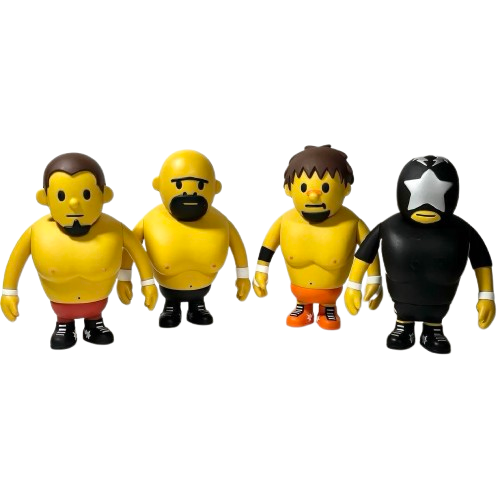
Figures from Japan with little-to-no coverage have always been my niche.  Such is the case with the A BATHING APE X AJPW figure set.


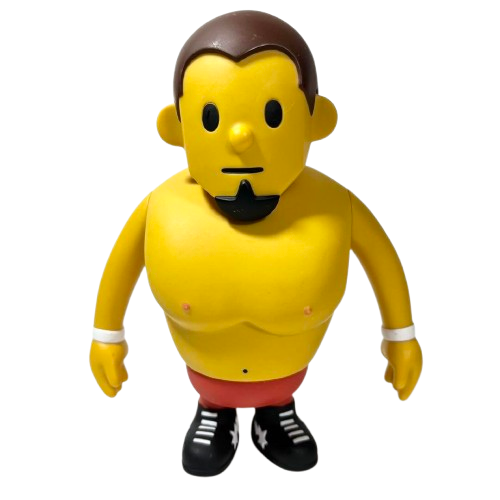
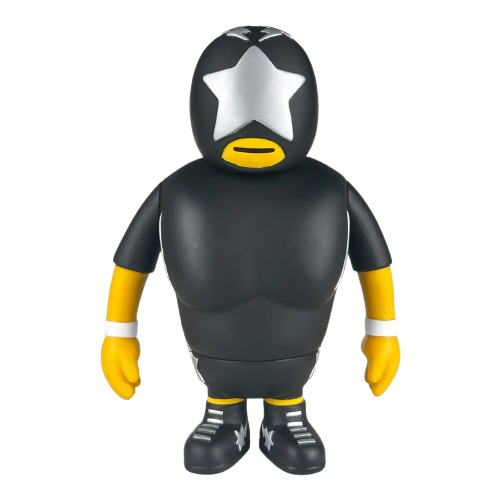
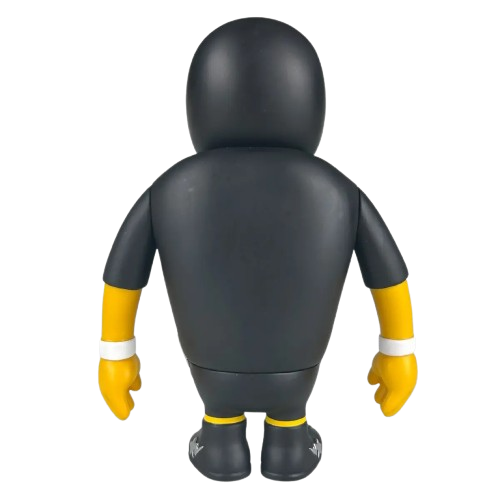
The four figure lineup. 


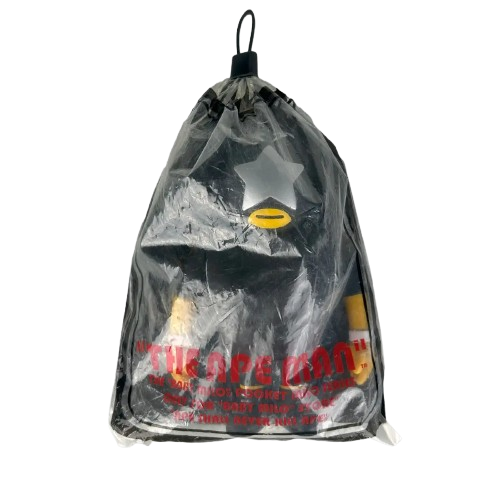
Each figure comes in a plastic drawstring bag that looks better-suited for some oranges at a grocery store. Despite being an officially-licensed product line, nicknames are included for each Wrestler on their respective bags. The figures are:

'KAZ' (Kaz Hayashi)

'Mr. 610' (Keiji Mutoh. The '610' in Japanese numbering translates to 'Mutoh', which has been a nickname of Mutoh's over the years; even naming his restaurant 'Dining 610' after it).

'KOJI' (Satoshi Kojima).

And the most obscure figure of them all 'THE APE MAN' (Apeman - a masked gimmick played by WWE's Jimmy Wang Yang)


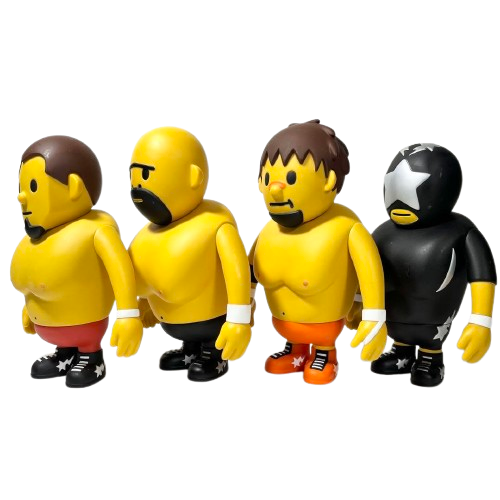
The figures themselves are modeled after the minimalist approach of modern designer art figures.
Specifically, figures made by Bearbrick.


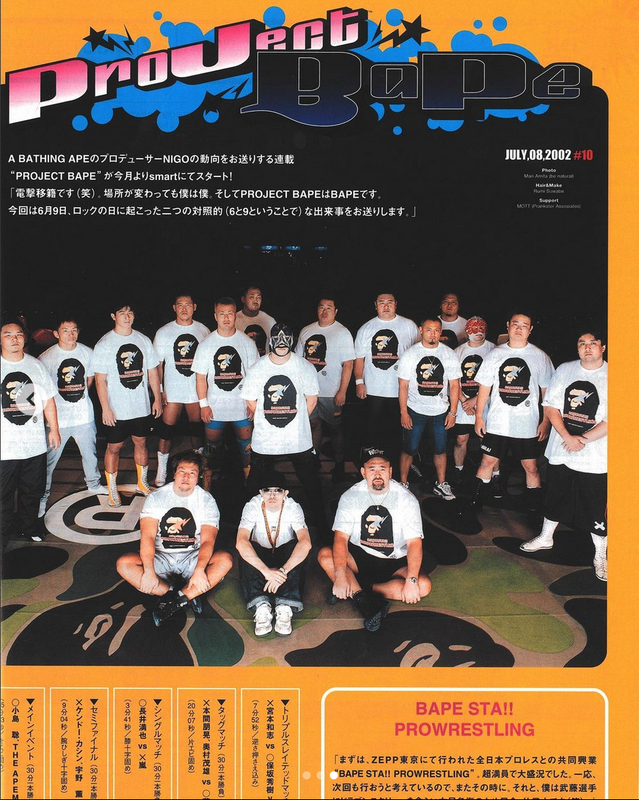
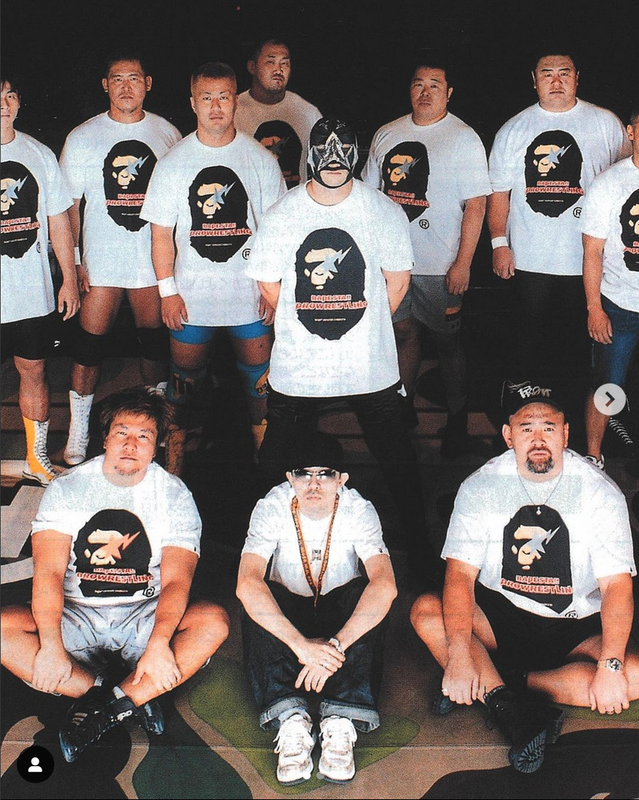
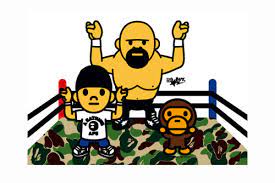
Bathing Ape, Apeman and the All Japan Pro-Wrestling roster in 2002 when both parties began collaborating.


Additional photos.


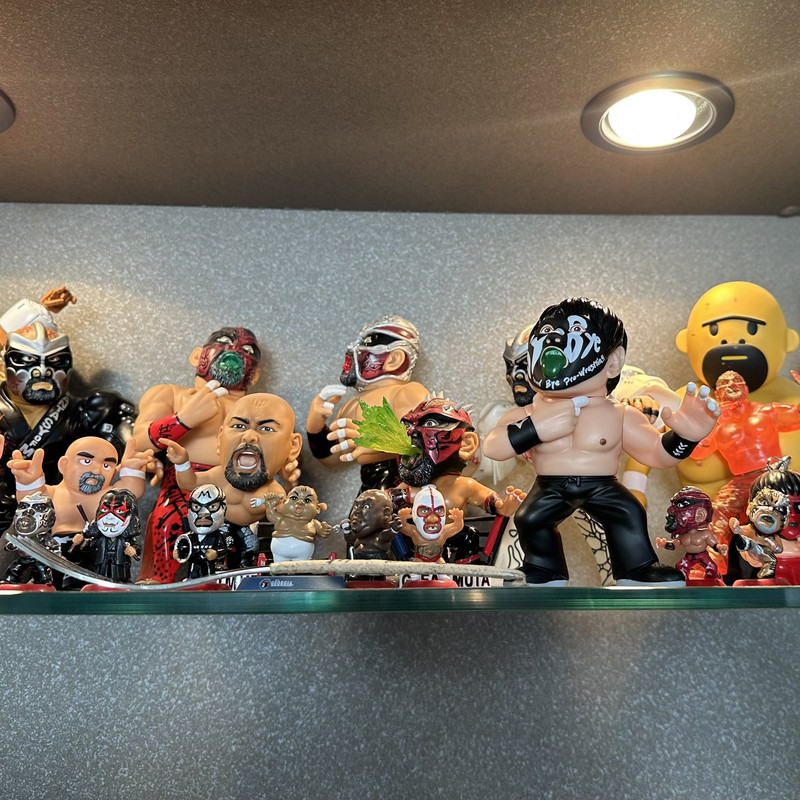
Keiji Mutoh owns his Bathing Ape figure; which can be seen at the back end to the right.

Scale-wise, these figures look to stand about 7 to 9 inches tall; when compared standing next to the HAO Collection Mech and Spider Muta figures.


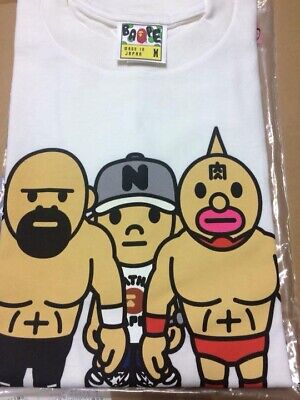
Outside of All Japan Pro-Wrestling, Bathing Ape also joined forces with Kinnikuman years before New Japan could ever strike a licensing deal.


Sunday, 20 October 2024

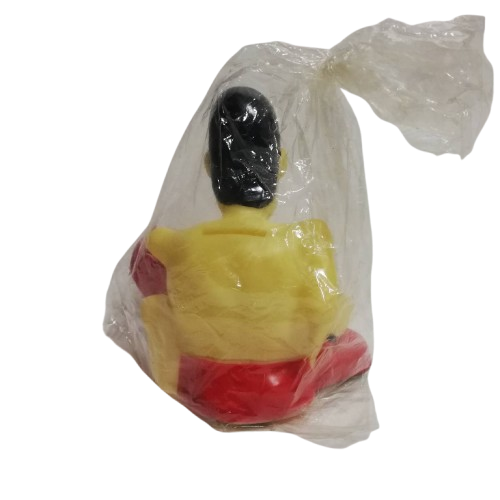
Giant Baba BABABANK figure review

 Blog #279 Giant Baba BABABANK figure review.

In previous posts, we've looked at several Giant Baba figures from the 1980's. Like the Giant Baba BABAWATCH, Upper-Upper World/EHKOH also released another Giant Baba collectible under
the similar-sounding name of the Giant Baba BABABANK. 


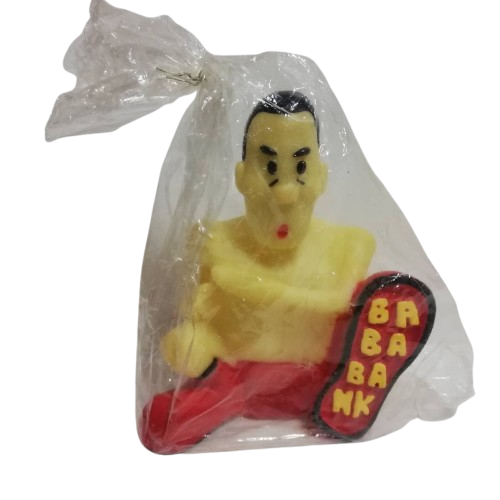
The BABABANK is a miniature soft vinyl coin bank of Baba.

As usual, Baba is sculpted performing his signature chop and 16mon kick techniques.


The coin slot is placed along Baba's backside.


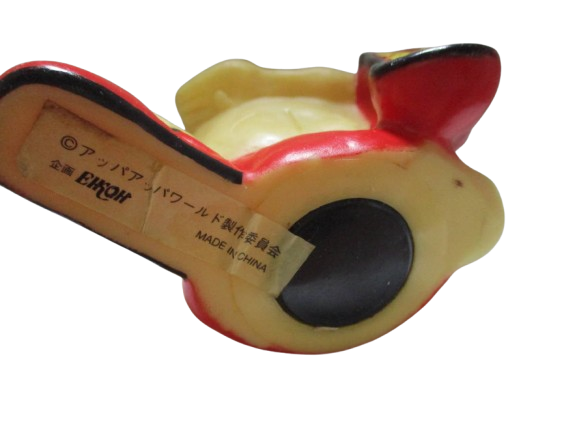
The bottom of the bank displays the corporate information for Upper-Upper World and EHKOH.

There is no date on the figure itself, but I would ascertain that the BABABANK was created 
around 1984.

Upper-Upper World and EHKOH's partnership was a brief but colourful one in the 1980's. While collectors may feel Antonio Inoki had the lion's share of figures made in his likeness (which there are), Giant Baba had the majority of licenses made in the 1980's. 

The BABABANK is a simple, yet interesting oddity from the Japanese Wrestling scene of the 1980's.
A collectible that isn't too hard to find, nor commanding that much from a resale perspective. Most examples can be found for less than $20 from Japanese merchants.

More figure reviews on the way! 


Giant Baba BABAWATCH review

 #Blog #277 BABAWATCH review


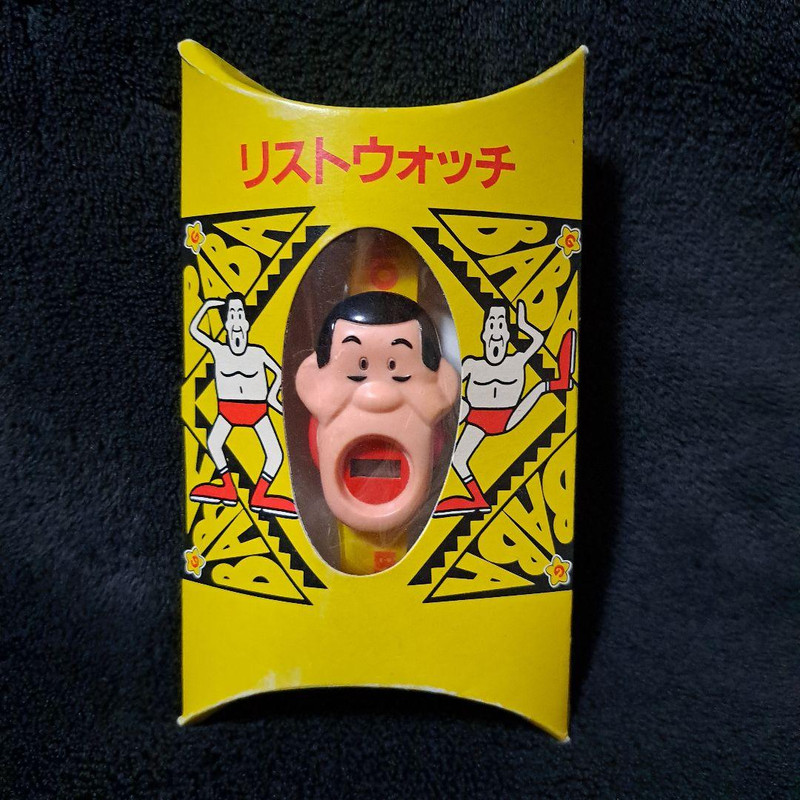
The next bizarre 80's Japanese Wrestling item is the Giant Baba BABAWATCH
(known in Japan as ジャイアント馬場【BABAWATCH】リストウォッチ).


The top of the package reads 'wristwatch' in Japanese.

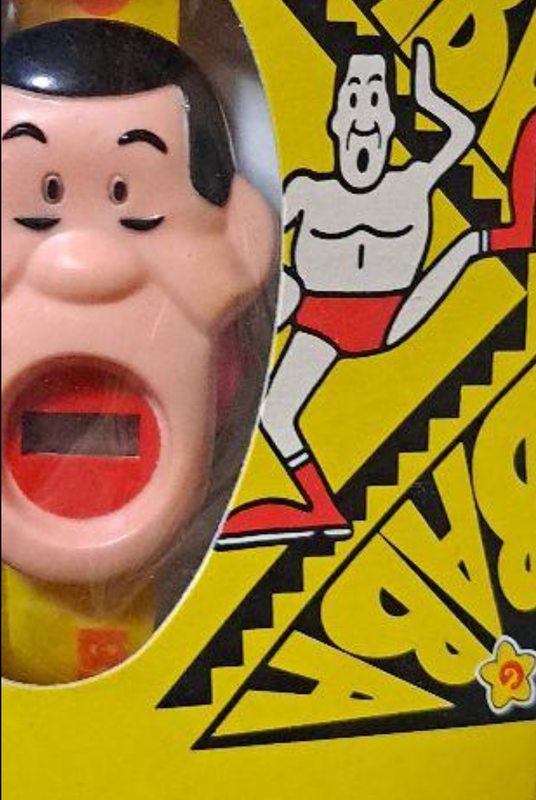
The front of the packaging includes illustrations of Baba. The first illustration on the left depicts Baba searching for something (or someone). The second illustration features Baba performing his two signature techniques: the Overhead Chop and the 16mon Kick on the right. 


The 'G Baba' text in each corner has a 60's Batman vibe to it.


The back of the packaging contains an illustration of Baba smiling. Again, the Japanese texts reads 'wristwatch'.


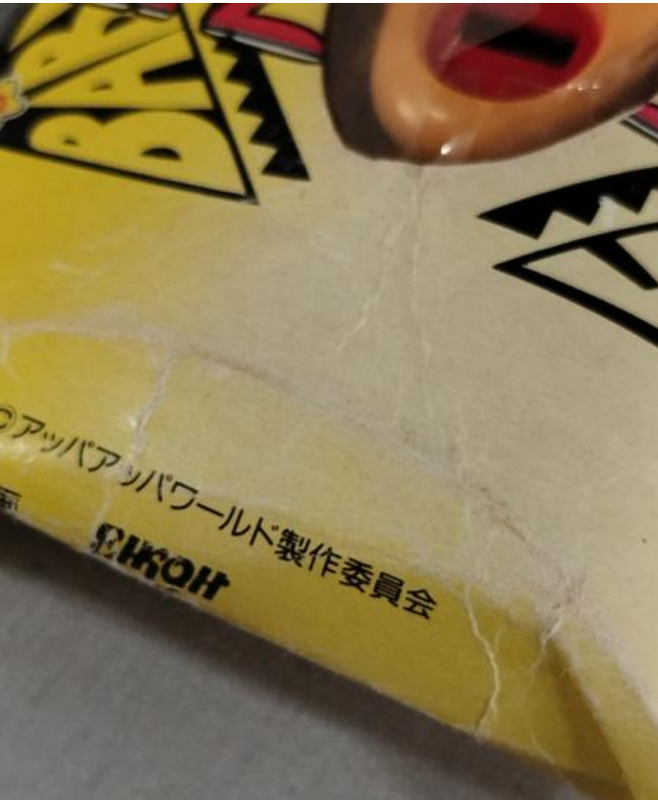
The bottom of the packaging contains the company info 'Upper Upper World Production Committee (EHKOH)'


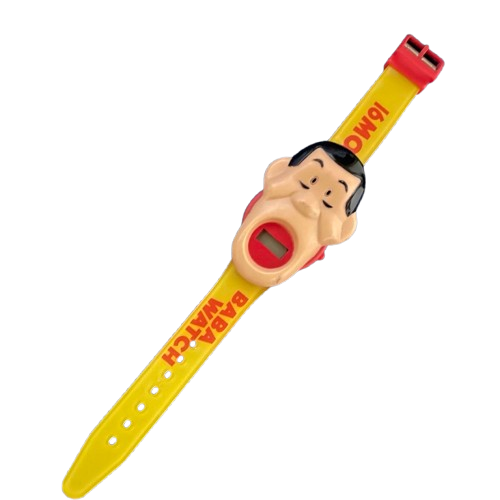
The watch's strap contains the text '16 MON' (short for 16mon Kick - Giant Baba's version of the big boot), along with 'BABA WATCH'.

Giant Baba had a lot of wacky products released during the 70's and 80's, from racecars to remote-controlled chopping figures, to piggy banks, board games and bendable figures. The BABA WATCH kid's watch is just the tip of the iceberg, really.

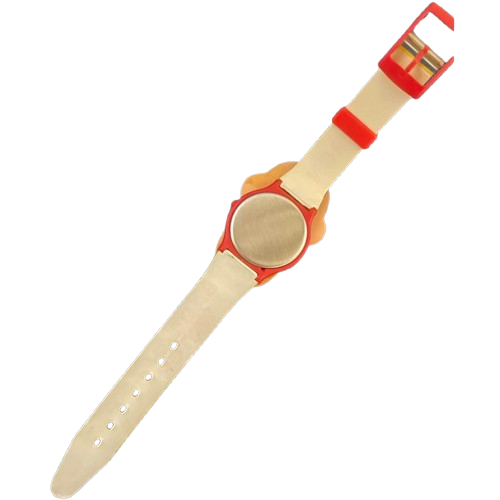
Given the watch's age, most sell for pretty low prices, as the original batteries in these watches have all long since petered out.


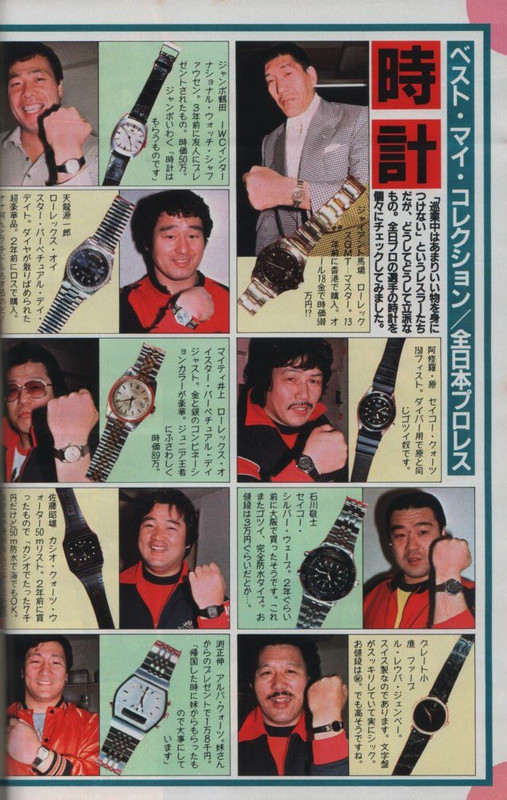
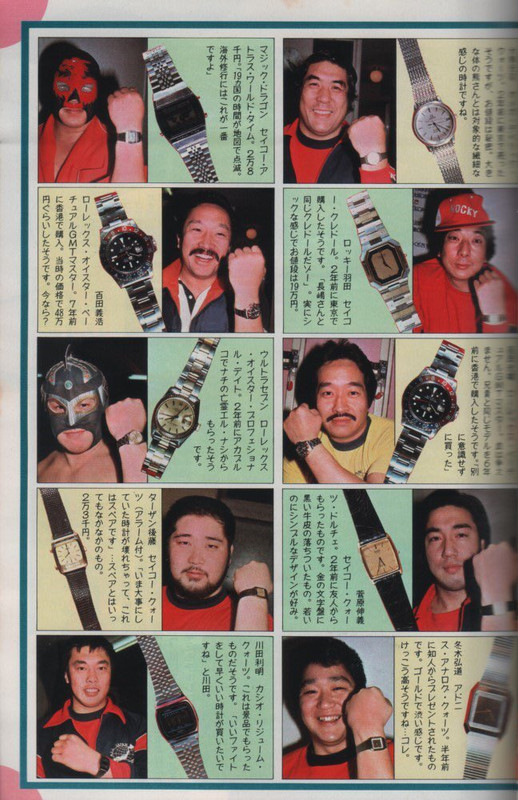
Special thanks to X/Twitter user Japones-lee for posting this two-page scan of the GONG July 1984 issue's MY COLLECTION article. 6 out of 19 of the All Japan roster wore Rolex watches.


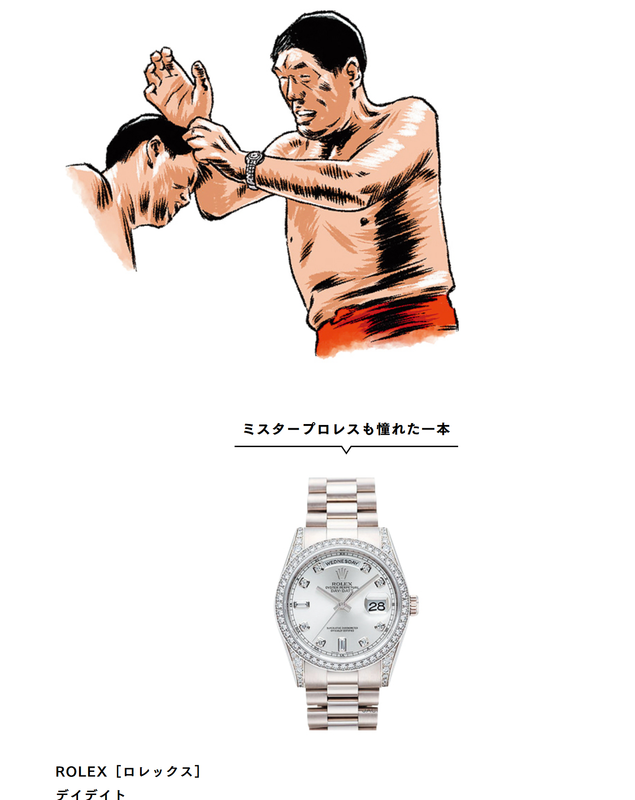
begin.jp posted an article of Giant Baba, stating the All Japan owner admired wearing a Rolex Daydate watch. The article also mentions that 'Mr. Puroresu' Genichiro Tenryu also owned the same watch after spotting Baba wearing one.


Thursday, 26 August 2021

All Japan Pro-Wrestling Rollertron Plush Figures

One trend that never goes out of style is Japan's love of claw vending machines.

Tucked away in many an arcade parlour or shopping mall in the west, claw vending machines
are a whole different animal in Japan - with some of the biggest licensed properties being
converted in crane prizes.

Previously, we already covered the first and second batches of plush figures that were sold
by Rollerton (which you can read HERE). For Blog #223, we'll be looking at Rollertron's All
Japan Pro-Wrestling plush figures.


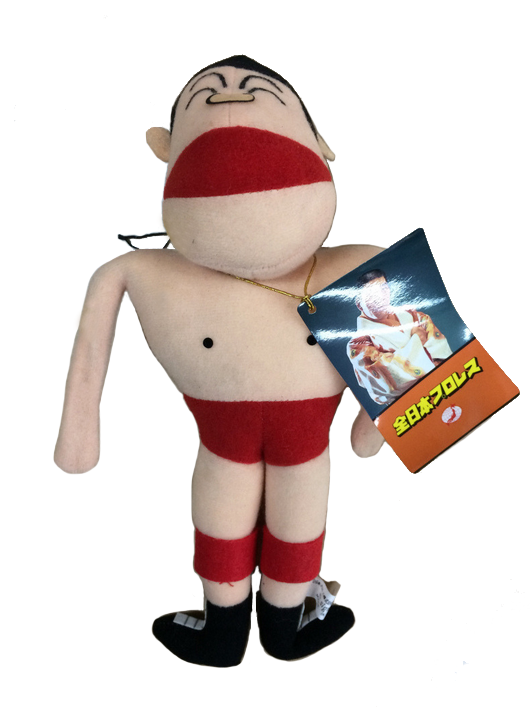
First up is "The Giant of The East" Giant Baba.

Baba was always known for his smile, but here, AJPW's Giant looks extra cheerful.

Each figure stands about 7 to 9 inches in height.


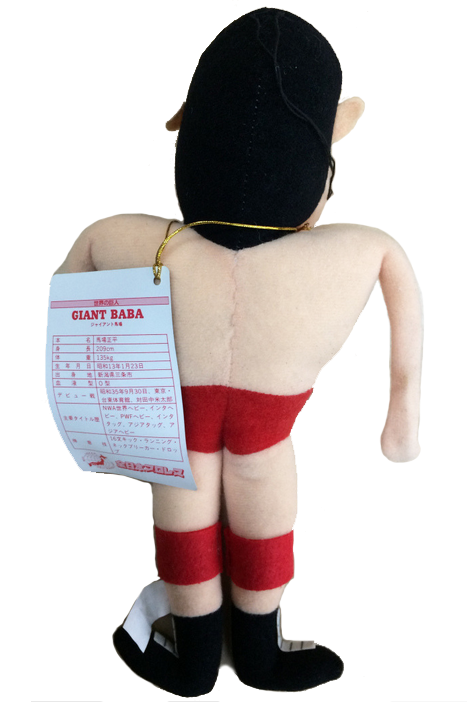
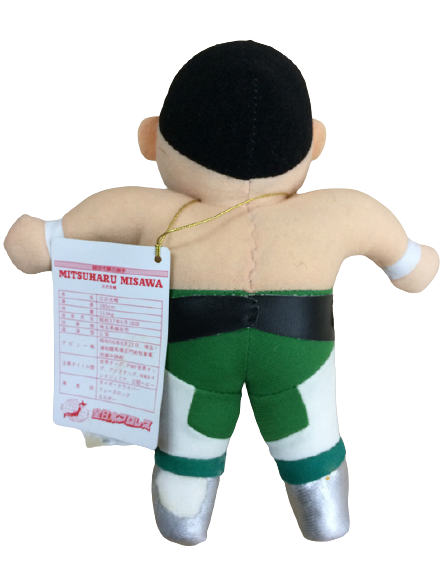
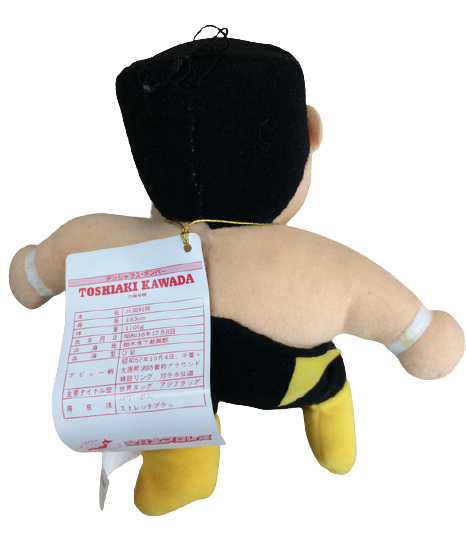
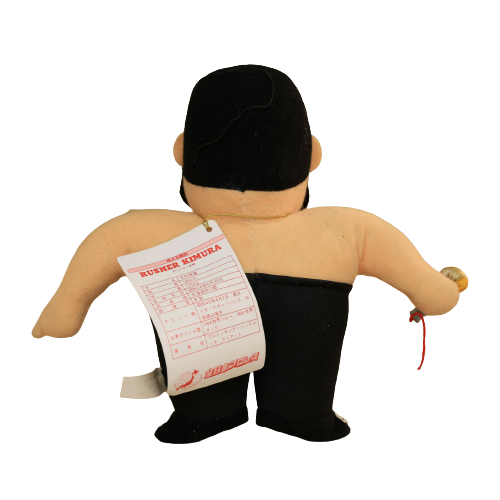
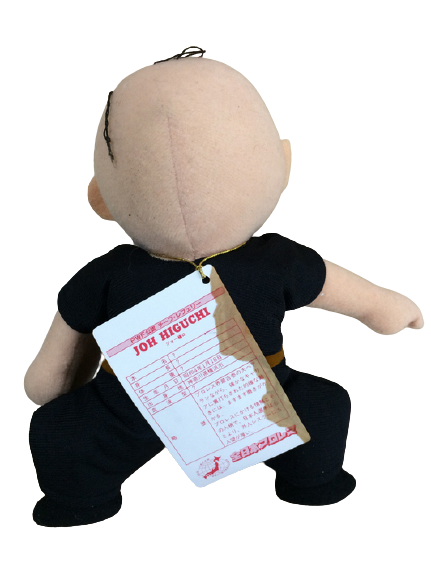
On the back of each tag is the corresponding Wrestler's profile. The profile reads:

Nickname:

Name:

Height:

Date of birth:

From:

Blood type:

Debut:

Titles:

Signature moves:


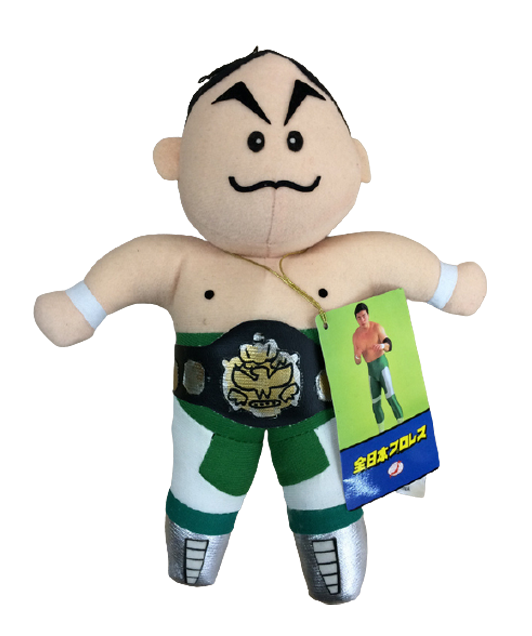
"Mr. Triple Crown" Mitsuharu Misawa.

The Misawa plush comes with one of All Japan Pro-Wrestling's Triple Crown Championship
belts. In this case, the included belt is the NWA International Heavyweight Championship.

Mitsuharu Misawa would become All Japan's 10th Triple Crown Champion in 1992.


I wouldn't recommend it, but the attached belt looks like it can be removed.


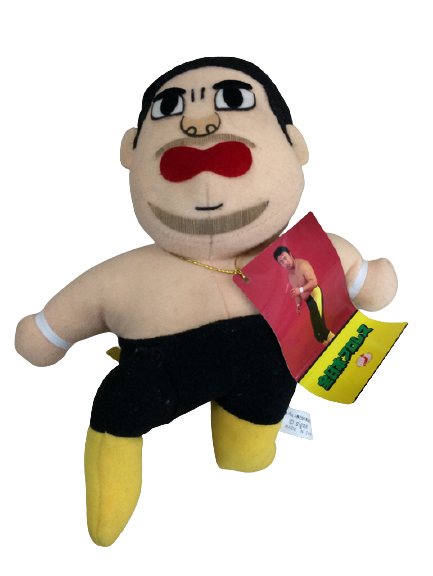
"Dangerous K" Toshiaki Kawada.

Kawada comes crafted with a raised knee pose and a surly facial expression. Someone
is certainly ready for a brawl!


Not having Akira Taue (the second half of infamous AJPW tag team Holy Demon Army)
makes me wonder if these Rollertron figures were made before 1993 (my personal guess
is around 1992).


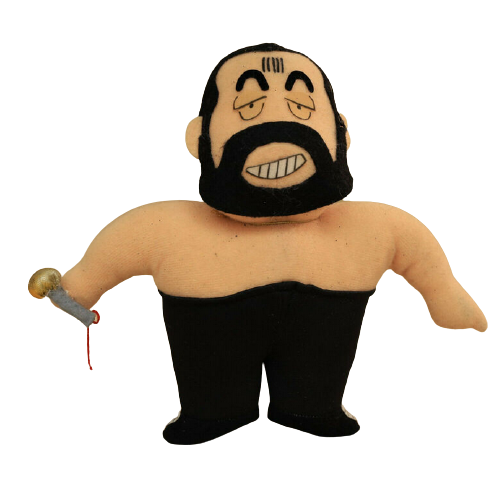
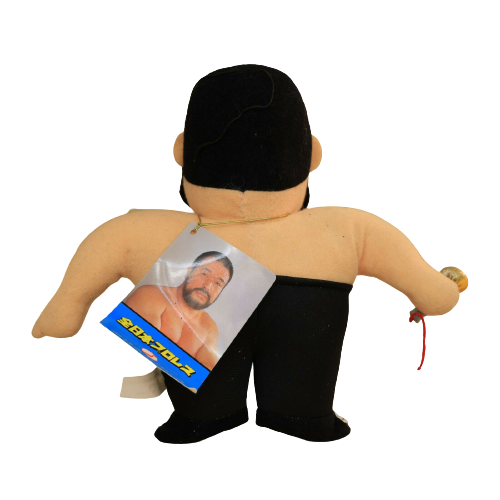
"The Demon of The Mic" Rusher Kimura!

Rusher Kimura was repackaged as a comedy relief by this point in his career. Kimura's
face includes blade marks (a nod to Kimura's bloody bouts from the past) as well as a
wise-cracking look on Kimura's face.
With microphone in hand, the Rusher Kimura plush figure is always ready to drop
a verbal evisceration.

And, of course, the included bio on the back of Rusher's tag.


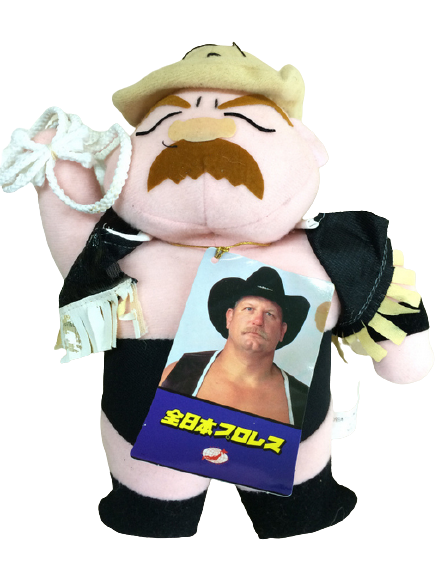
Stan "The Lariat" Hansen.

The Hansen plush figure contains the most detail with entrance vest, cowboy hat,
bullrope and signature Texas Longhorns pose.
                                

There's even a fringe pattern on Hansen's vest!


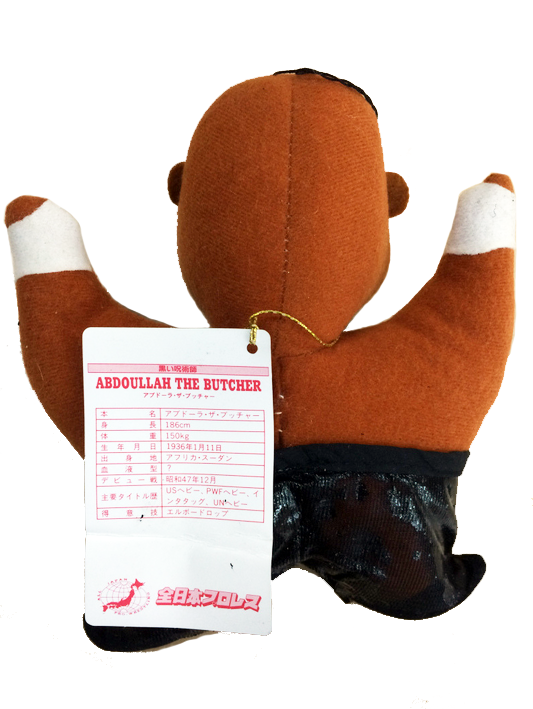
"The Black Shaman" Abdullah The Butcher's 2nd time as a plushie figure.

Like the attached photo of the real-life Butcher the Abdullah plushy is crafted in the
middle of Abby's karate routine.


Notice the small typo on Abdullah's name?

Each figure (except for Stan Hansen from what I can see) has a black string to hang
the plushies from a hook.


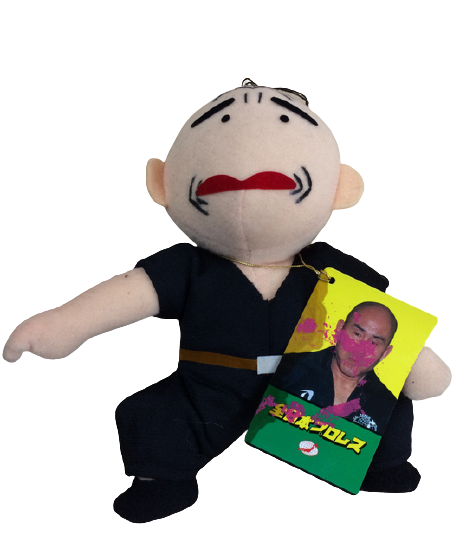
Often regarded as one of the greatest referees in Japan, the last figure in the Rollertron AJPW
set is referee Joe Higuchi.

Joe is crafted in a counting pose.


What makes this collectible even more special is the fact that this plush is the only
known figure made of Joe to date.


Original photo credits: Toy&JAN
Website: https://profile.ameba.jp/ameba/teppest8/


Stay tuned for more Japanese plush figures reviews to come!

Saturday, 31 July 2021

Character Product Tiger Jeet Singh DX figure review

Going back to pricier side of the figure spectrum, let's take a look at two more figure rarities from
Character Product's deluxe figure line. Blog #204 goes up against the Character Product Tiger
Jeet Singh Deluxe figures.


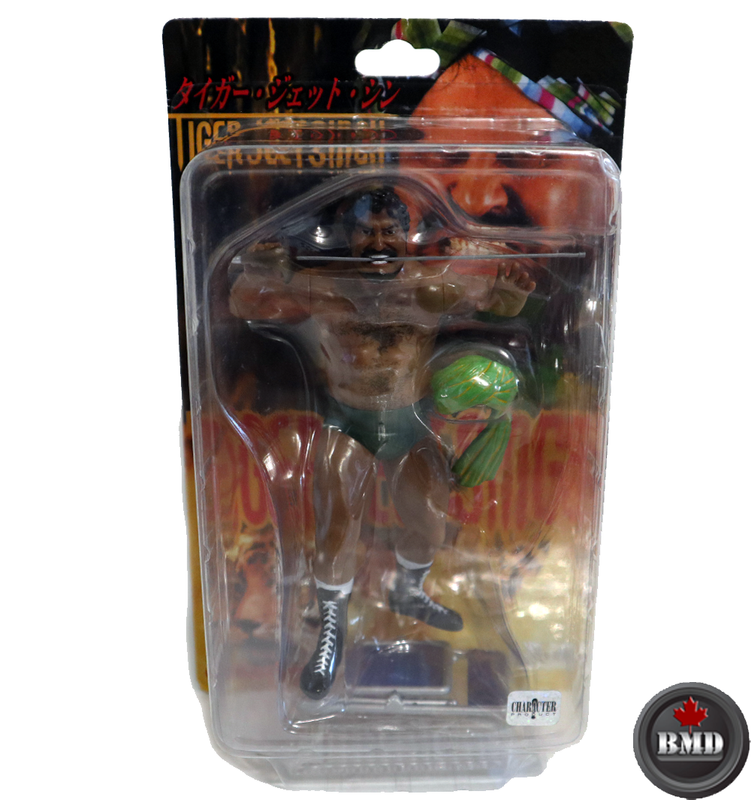
Tiger Jeet Singh was added to Character Product's deluxe legends line in the mid 2000's.

The cardboard backing contains an intense photo of Singh, a graphic of a tiger at the bottom,
a generous serving of fire and Singh's name in both English and Japanese Katakana.

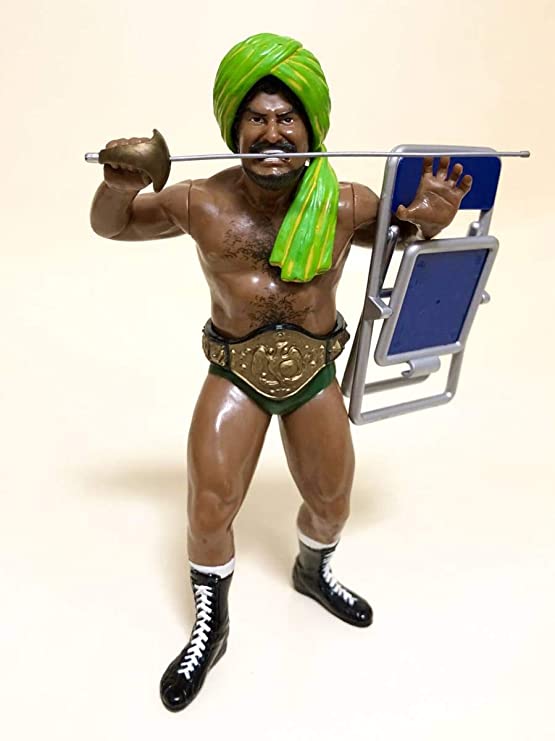
As a deluxe figure, Tiger also includes his entrance turban accessory, folded chair,
acrylic display base, acrylic foot holders and an acrylic wrestler name plate that reads
"TIGER JEET SINGH".


The back of the packaging contains the same graphic as the front along with Tiger's stats and
a bio. The full bio on the back of the packaging reads:


"TIGER JEET SINGH

Height: 190cm (6'2)
Weight: 120kg (264lbs)
Date of birth: 1944 Aburizal, Punjab, India
Nickname: Mad Tiger of India
Signature move: Cobra Claw
Debut: May 1973
(In actuality, Tiger Jeet Singh made his in-ring debut in 1965.
Tiger's debut in Japan happened in 1973).

Profile:
After completing his military service, he learned to wrestle the Great Gama, an ancient
Indian style of wrestling, and made his debut as a professional wrestler in Singapore in
1965. He then moved to Canada and started selling under the ring name "The Hindu
Hurricane" with the now deceased Fred Atkins as his manager.

For a long time, he mainly fought in Canada and Southeast Asia, but in May 1973, he
stopped by Japan with Flurry. He showed up at the New Japan Pro Wrestling event
(Kawasaki City Gymnasium, May 4, 1973). He broke into the ring and KO'd Kotetsu
with his special cobra claw, which led to his rapid progress and forced him to participate
in the series. This was the start of his war with Antonio Inoki.

On the evening of November 5 of the same year, he attacked and injured Inoki
while he was shopping in front of Isetan in Shinjuku, Tokyo. On March 15, 1975,
he defeated Inoki at the Hiroshima Prefectural Gymnasium to become the 15th NWF
-certified heavyweight champion. He successfully defended the title twice, but on June
26, 1975, he was defeated by Inoki at Kurashiki in Tokyo and fell from the title. He then
won the championship match against Seiji Sakaguchi to win the Asian Heavyweight Championship (July 29, 1976, Osaka Prefectural Gymnasium). He also teamed with his
evil ally Umanosuke Ueda to win the North American Tag Team Title from Sakaguchi
and Strong Kobayashi at Osaka Prefectural Gymnasium on February 2, 1977.

On January 17, 1980, he won the UWA World Heavyweight Title from Canek in Mexico
City. On April 13, 1980, he was defeated by A Inoki, who had travelled from Japan, at El
Torreo in Mexico City and lost the title. However, on October 24 of the same year, at the Okubusan Gymnasium in Okinawa he succeeded in regaining the belt. However, on
February 17, 1981, he lost to Kanek in Mexico City and fell from the title again.

In July 1981, he put an end to his eight-year feud with A Inoki and moved to All Japan
Pro Wrestling. On July 26, 1983, he and Ueda defeated Giant Baba and Jumbo Tsuruta
at the Fukuoka Sports Center to win the 32nd International Tag Team Championship,
but the title was vacated by Giant Baba and Jumbo Tsuruta on August 1, 1983 at the
Korakuen Hall in Tokyo.

In September 1990, he returned to his old team New Japan. On September 30, at the
"Antonio Inoki 30th Anniversary Memorial Festival" held at the Yokohama Arena, he
teamed up with Antonio Inoki for the first time to defeat Big Bang Vader and Animal Hamaguchi, showing a friendship that went beyond grudges. On December 8 of the same
year fought Hiroshi Hase at Ganryujima for the right to fight Antonio Inoki, but lost.
(Ganryujima is an island in Japan that was made famous for an island deathmatch between
Antonio Inoki and Masa Saito).

In June of 1992, he sought a new battlefield in FMW, and declared war on Atsushi Onita.
He fought to the death in Sekigahara (June 30, 1992 = no-rope barbed wire current bombing match) and Yokohama Stadium (September 19, 1992 = barbed wire landmine bombing match). However, he parted ways with FMW after his visit to Japan in March 1993.

In May of the same year, he joined NOW. After that, he fought bloody battles with Terry Funk, Shoji Nakamaki and others mainly in IWA Japan. In 1997, he briefly joined forces with Go Ryoma, but returned to the IWA in 1999, where he remains to this day.

In 2002, he made his CD debut with Gorgeous Matsuno as his manager. At the IWA Pre-10th Anniversary Tournament on September 29, 2003, he teamed up with Matsuda to face Williams and Miyake. This was his first matchup with Williams, and they formed a deep bond. He is a legend along with Butcher."


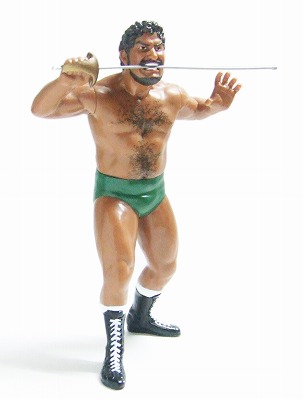
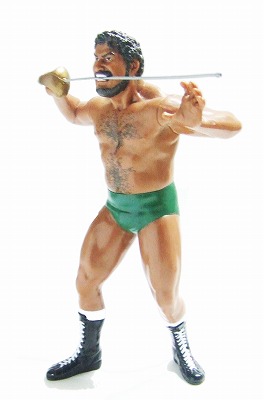
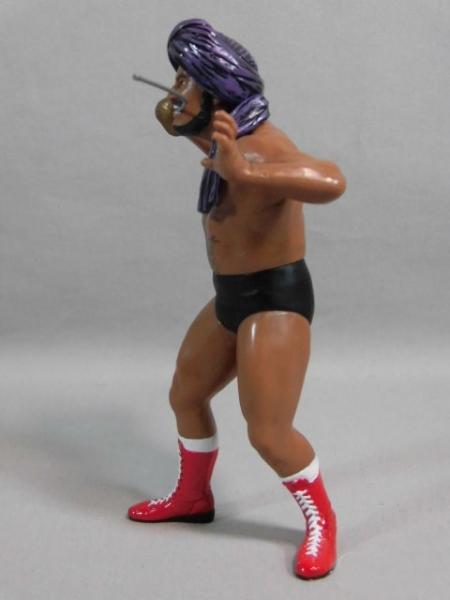
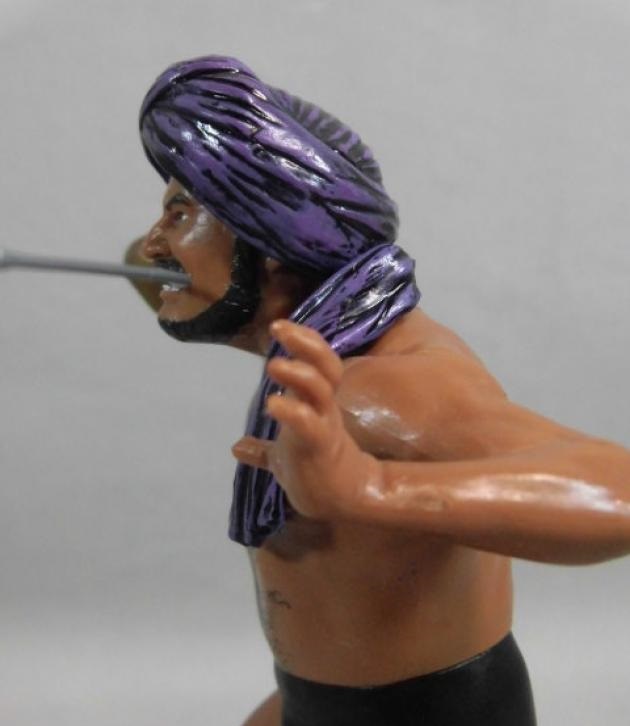
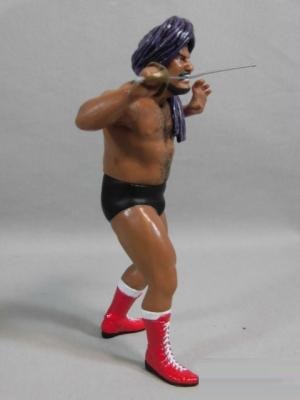
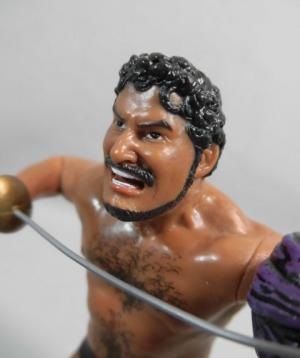
Tiger is sculpted with his signature sabre sword in teeth pose.

Like Bruiser Brody, Tiger was known for his insane entrances. Cutting through crowds
while swinging his sabre like a madman.


Both arms can move up and down.


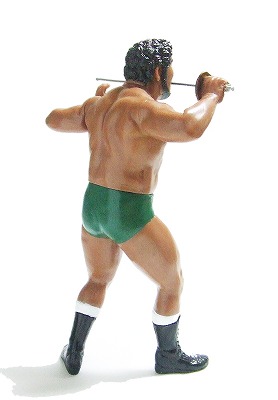
Tiger's attire and look are inspired from the early 1970's - early 1980's when Tiger
competed in New Japan Pro-Wrestling.


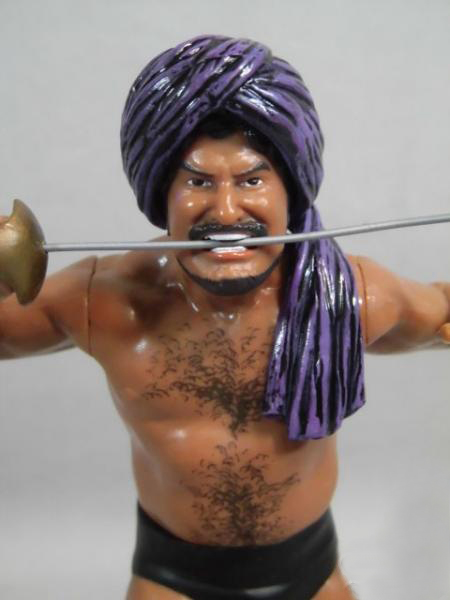
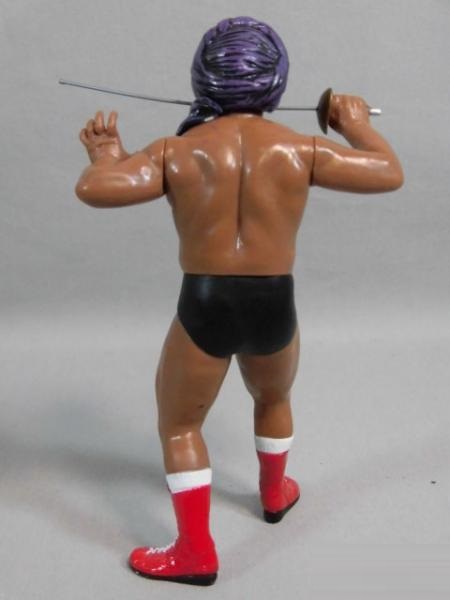
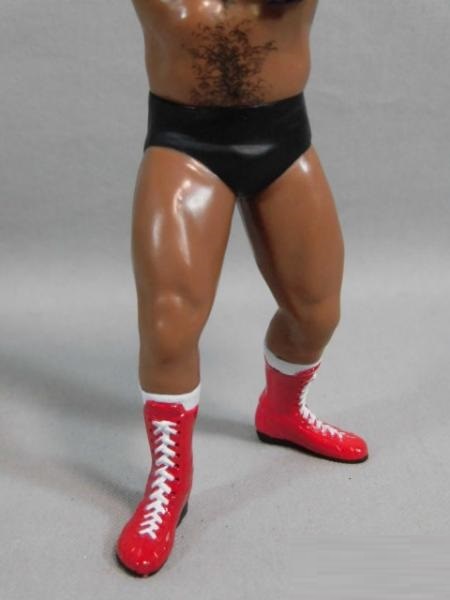
Character Product would also release an alternate colour variant with a purple turban,
black trunks and red boots.


Singh's black trunks, red boots and purple turban were probably lifted from Singh's match
against Abdullah The Butcher in All Japan Pro-Wrestling on June 8th, 1990.


The purple version is considered the limited edition alternate colour variant and harder to
find example of the two. Usually rare variants are limited to 500 copies or less for Japanese
Pro-Wrestling figures.


The only thing that is really missing from either variant is Singh's entrance tunic. Though,
Singh is the only Character Product figure to come packaged with a chair accessory; a
throwback to Singh's heel tactics from outside the ring.


Both versions can remove the sabre sword from Tiger's teeth; showing Tiger's intimidating
snare.


The green version with chair accessory, turban and a NWF belt accessory (in which Tiger
was renown for holding in NJPW) that was borrowed from Toukon Shop's Antonio Inoki
Super Star Figure Collection 23 figure.


Character Product would also add Tiger Jeet Singh to the fifth volume of Mini Big Head
figures 2005; complete with entrance tunic!


Closing thoughts:

Tiger Jeet Singh's deluxe Charapro figures are some of the most expensive Pro-Wrestling
figures you can find in Japan. They also have a reputation for being bought up quickly in
certain Japanese shops when they do show up for sale.

Other than the KING OF TOY Tiger Jeet Singh soft vinyl figures, Tiger never had an action
figure of his own beforehand; making the Character Product deluxe variants all the more
collectible.

To date, there are about seven different Tiger Jeet Singh figures in total. Most of which are
Keshigomu and minifigures made by BoFord.

In Japan, the high prices for the deluxe Tiger figures can partially be explained by Tiger's
association to Antonio Inoki. Tiger's infamous (and staged brawl with Inoki in broad
daylight within a Shinjuku shopping district stirred up a lot of controversy in the press. So
much so that complaints AND charges were filed against New Japan Pro-Wrestling for
the brawl.

In the end, the publicity from Tiger and Inoki's antics spurred a massive boost in ticket
sales during the early years of New Japan Pro-Wrestling. In the eyes of the Japanese
public, the homegrown hero Antonio Inoki had finally met an adversary dangerous enough
to make each match a life or death situation; and the fans continued to line up in droves to
see what would happen next.