Showing posts with label figure review. Show all posts

Monday, 21 October 2024

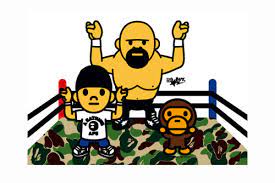
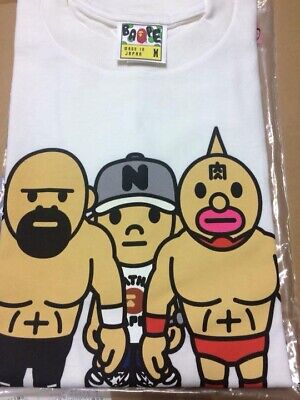
A BATHING APE X All Japan Pro-Wrestling figure review


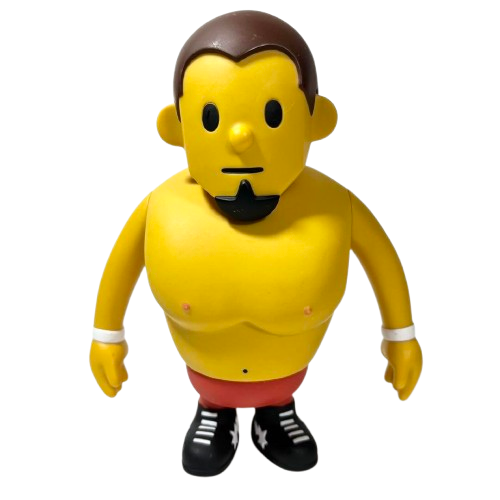
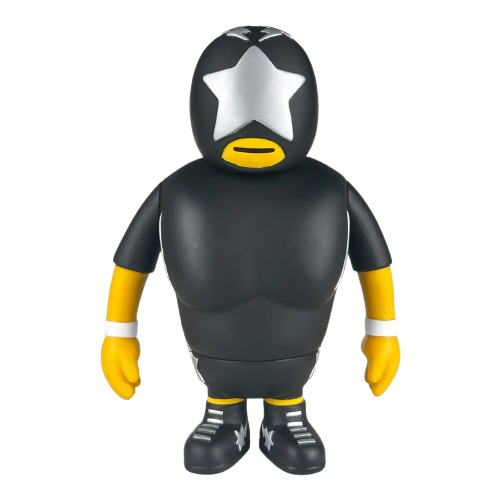
Blog #282 A BATHING APE x All Japan Pro-Wrestling figure set review: 


Figures from Japan with little-to-no coverage have always been my niche.  Such is the case with the A BATHING APE X AJPW figure set.


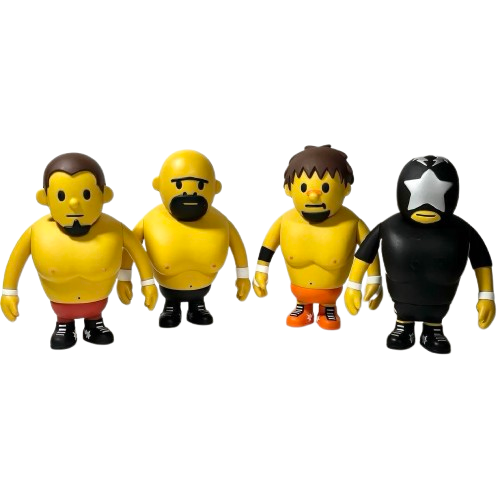
The four figure lineup. 


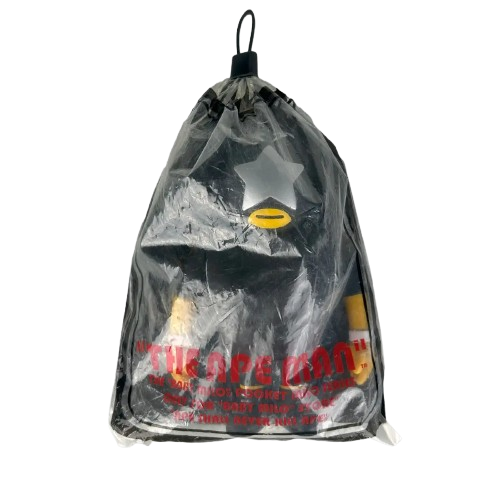
Each figure comes in a plastic drawstring bag that looks better-suited for some oranges at a grocery store. Despite being an officially-licensed product line, nicknames are included for each Wrestler on their respective bags. The figures are:

'KAZ' (Kaz Hayashi)

'Mr. 610' (Keiji Mutoh. The '610' in Japanese numbering translates to 'Mutoh', which has been a nickname of Mutoh's over the years; even naming his restaurant 'Dining 610' after it).

'KOJI' (Satoshi Kojima).

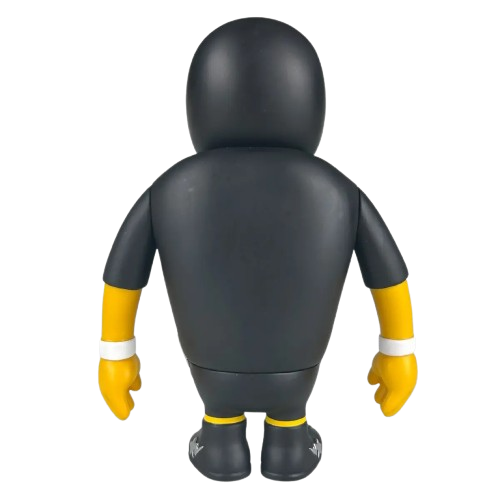
And the most obscure figure of them all 'THE APE MAN' (Apeman - a masked gimmick played by WWE's Jimmy Wang Yang)


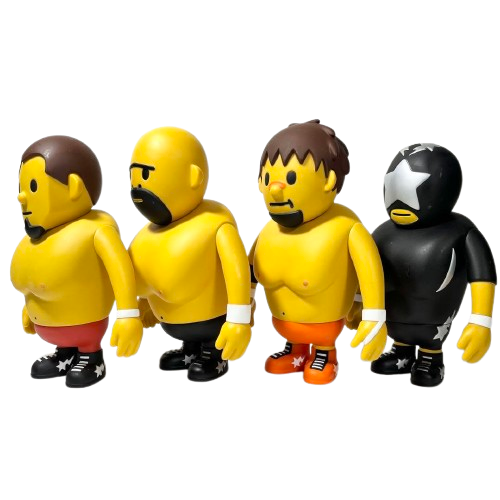
The figures themselves are modeled after the minimalist approach of modern designer art figures.
Specifically, figures made by Bearbrick.


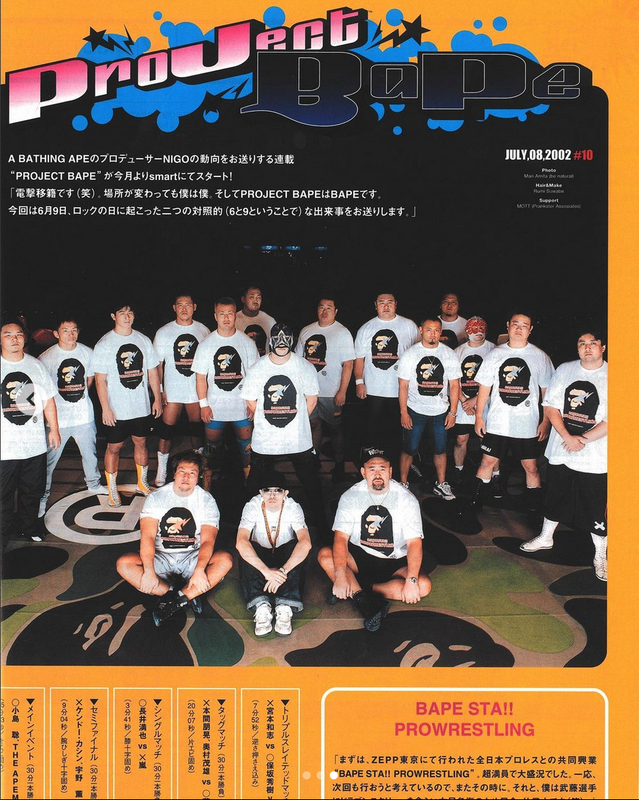
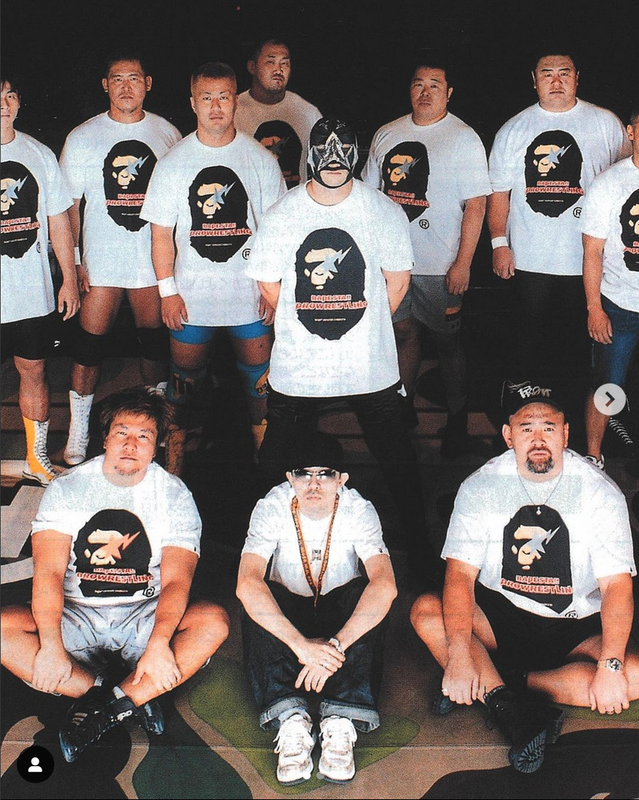
Bathing Ape, Apeman and the All Japan Pro-Wrestling roster in 2002 when both parties began collaborating.


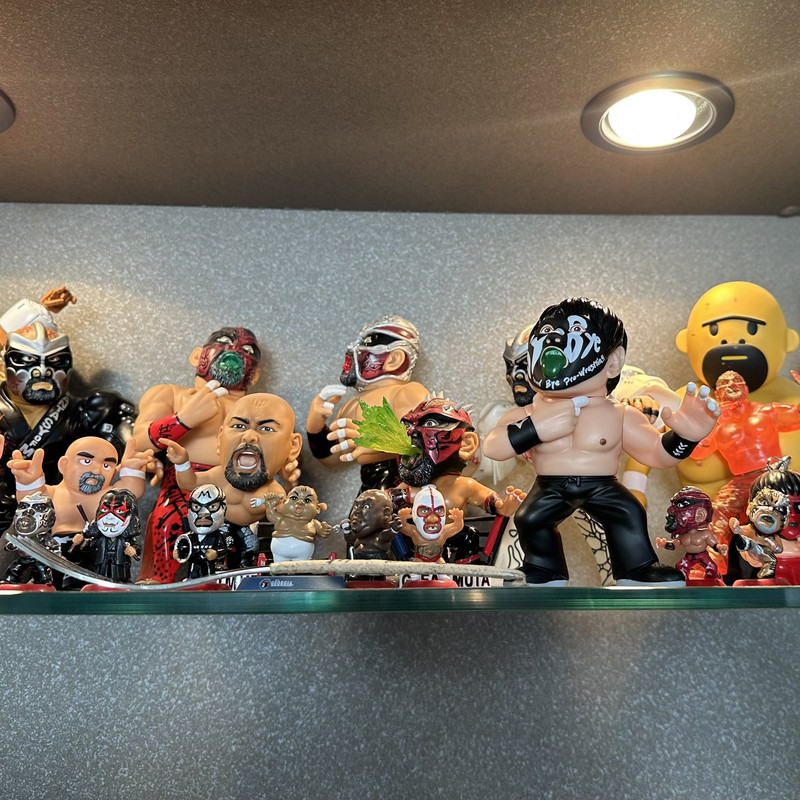
Additional photos.


Keiji Mutoh owns his Bathing Ape figure; which can be seen at the back end to the right.

Scale-wise, these figures look to stand about 7 to 9 inches tall; when compared standing next to the HAO Collection Mech and Spider Muta figures.


Outside of All Japan Pro-Wrestling, Bathing Ape also joined forces with Kinnikuman years before New Japan could ever strike a licensing deal.


Sunday, 20 October 2024

Imperial Pro-Wrestling Federation figure review


Continuing to share obscure Japanese Wrestling collectibles with the world, I present four more sofubi figures:


Blog #281  Imperial Pro-Wrestling Federation figure review.

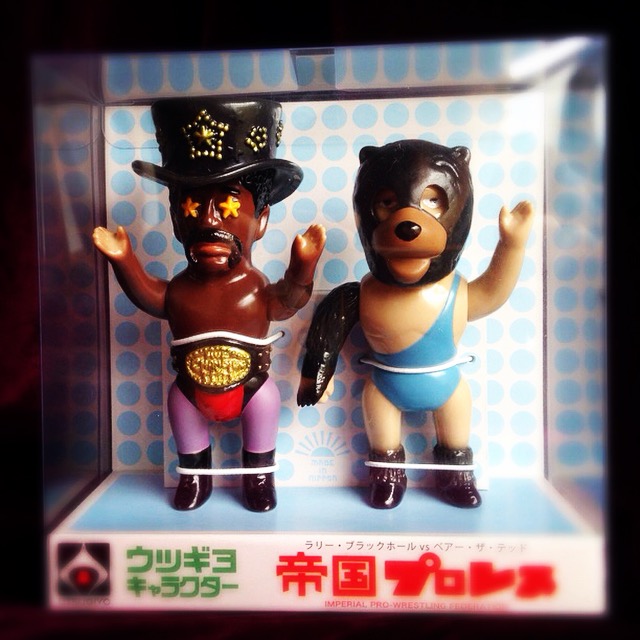
Imperial Pro-Wrestling Federation is a line of sofubi figures that were released by Japanese toymaker Utsugiyo in 2015.


Each figure stands about 4.5 - 5 inches (which is less than half the size of older Sofubi figures released in Japan). The design of the figures are meant to resemble the traditional Bullmark sofubi figures from the 60's and early 70's.


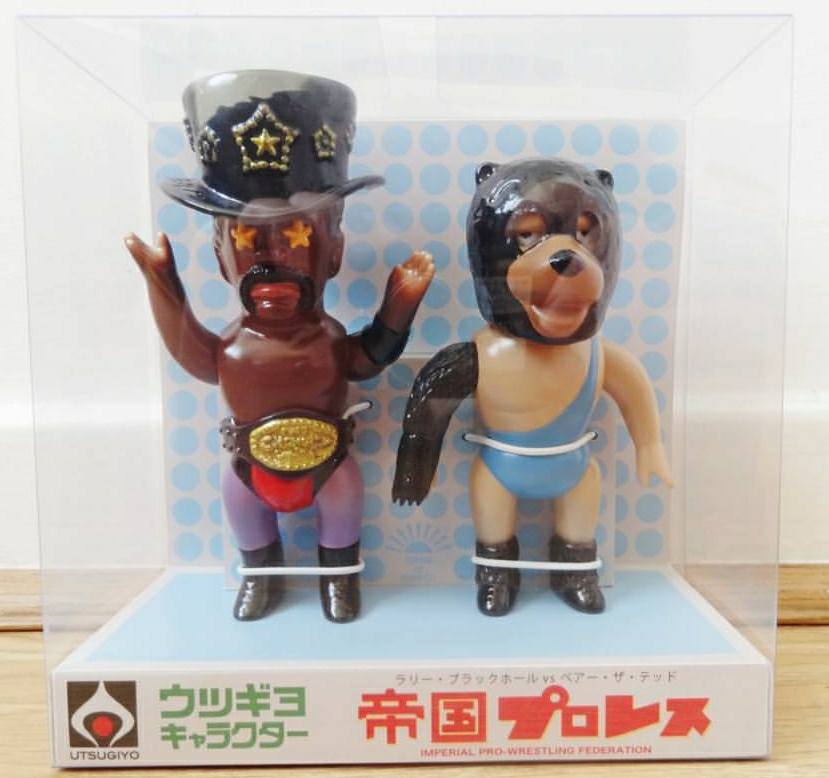
Design-wise, Utsugiyo states that the Champion Series two-pack features two protagonists: Larry Blackhole and Bear the Ted.


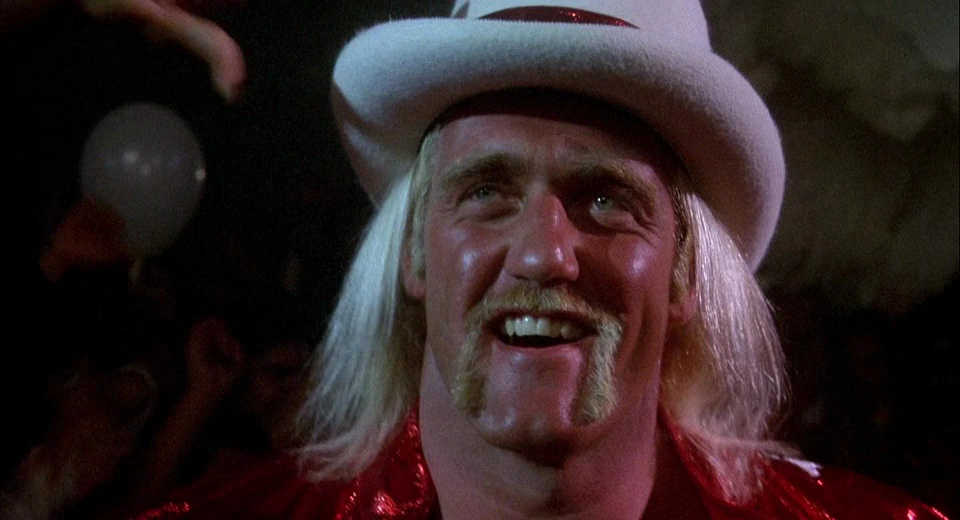
Personally speaking, I think Larry is based on Thunderlips. The hat and handlebar mustache, plus IGWP-inspired belt  seem reminiscent of Hulk's likeness. Additionally, I feel Bear the Ted is a tribute to Tiger Mask and Bruiser Brody (note Ted's furry boot coverings).


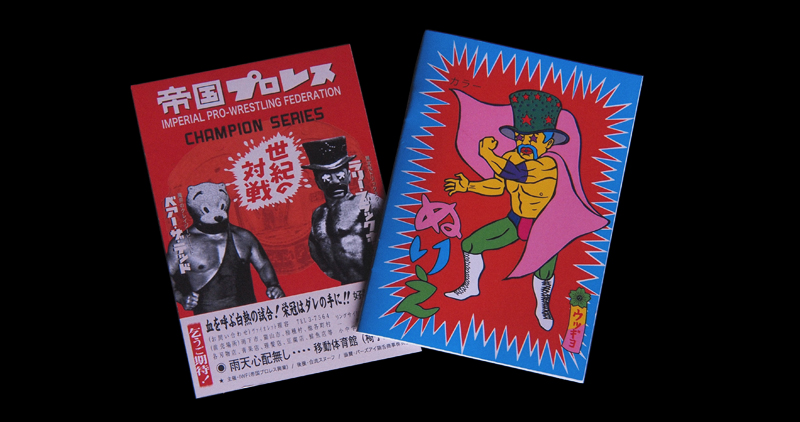
The Champion Series two-pack originally sold for 14,000 yen ($117 USD), which also came with a colouring book and poster. The poster's design was meant to replicate the look of classic Puroresu posters from the 1960's (specifically, the JWA).

Just like Thunderlips in Rocky III, Blackhole also features a cape of his own.

Only 27 sets were created, and anyone who didn't pre-order by May 7th had to be entered into a lottery in hopes of bagging the pair.

If you thought $117 for two miniature sofubi's was a tad much, be prepared to feast your eyes on the following:


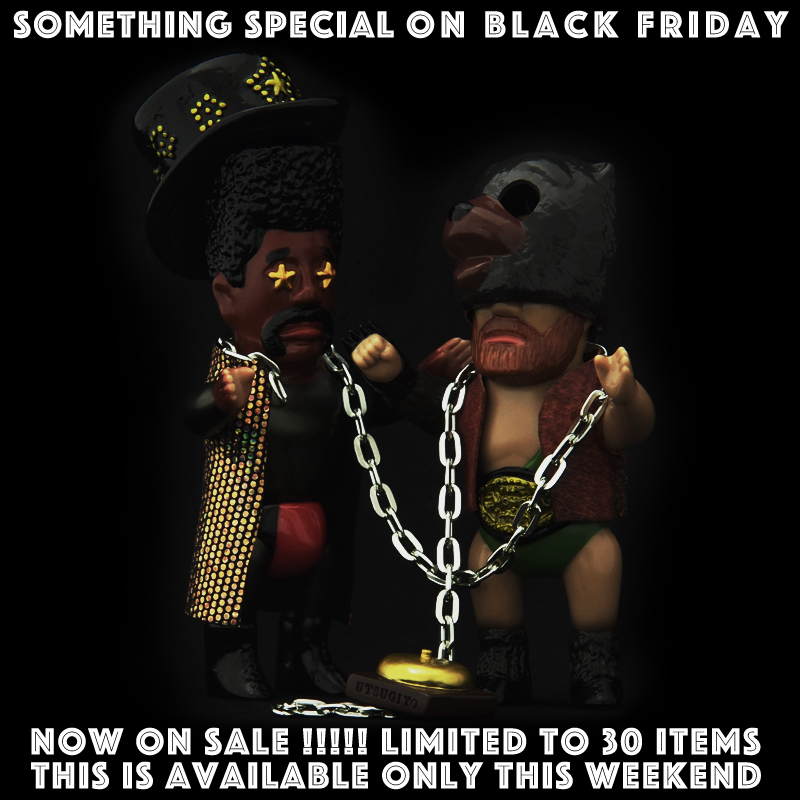
Utsugiyo released a special variant set that was only available over the weekend.

Unlike the original Champion Series set, this special two-pack included multiple removable accessories. Teddy's vest chains and beard look reminiscent of Bruiser Brody here.

Released in 2018, this special set was sold for a jaw dropping 49,999 yen ($367 USD plus shipping!). Welcome to the expensive world soft vinyl 'designer art toys'.


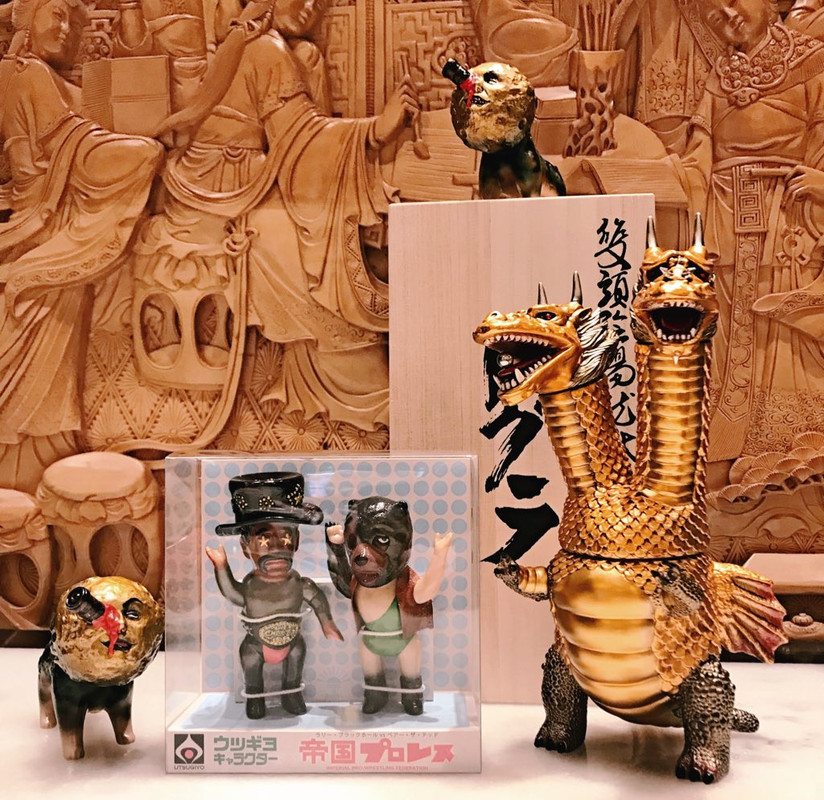
The only known photo I could find of the packaged Black Friday version. I wonder if the extra accessories are tucked away inside the packaging, or were removed at the last second? We may never know.

At 1 to $400+, would you consider hunting down these designer art Wrestling figures? 

The Pro-Wrestling statues of Dr. Takuro Horikawa - Part 2.

Blog #280 showcases more Pro-Wrestling sculptures by Dr. Takuro Horikawa.
 
After a number of gallery appearances, Dr. Takuro Horikawa continued to sculpt more pieces.
Broadening his inspirations beyond the realms of Pro-Wrestling, Dr. Horikawa's followup 
creations embodied interests from historical figures, movie likenesses, MMA greats, and
even Dinosaurs. 


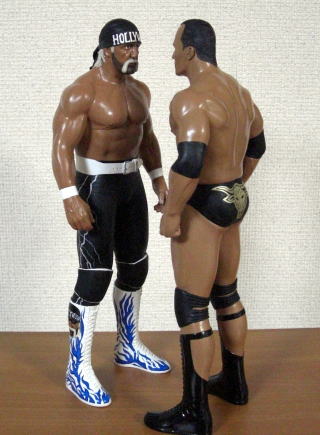
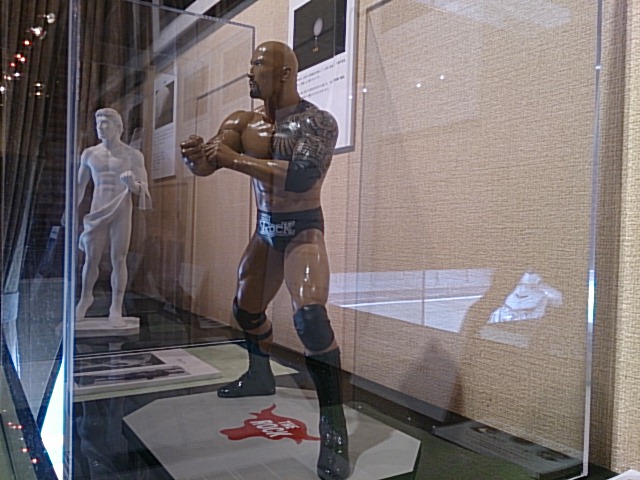
Hollywood Hogan and The Rock's infamous staredown at WM X8 in 2002.


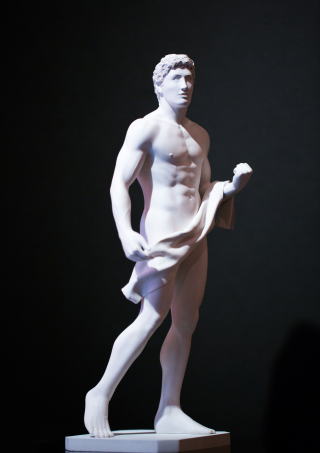
Dr. Horikawa's interests also go beyond Wrestling itself with a sculpture of Greek Olympian figure Apollo.


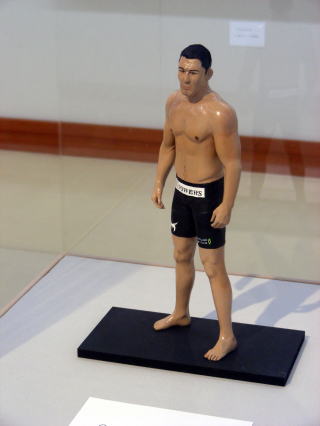
Antônio Rodrigo Nogueira.


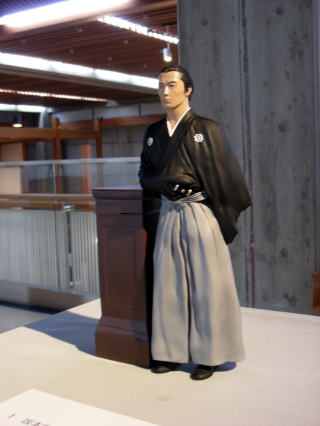
Edo period Samurai and influential figure Ryoma Sakamoto; as portrayed by Japanese Actor Masaharu Fukuyama.


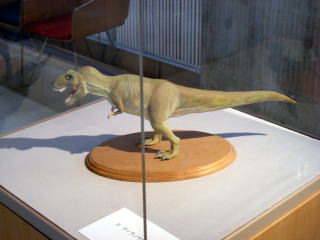
On a smaller scale, Dr. Horikawa's work has extended to recreating Dinosaurs. Such is the case with this T-Rex sculpture.


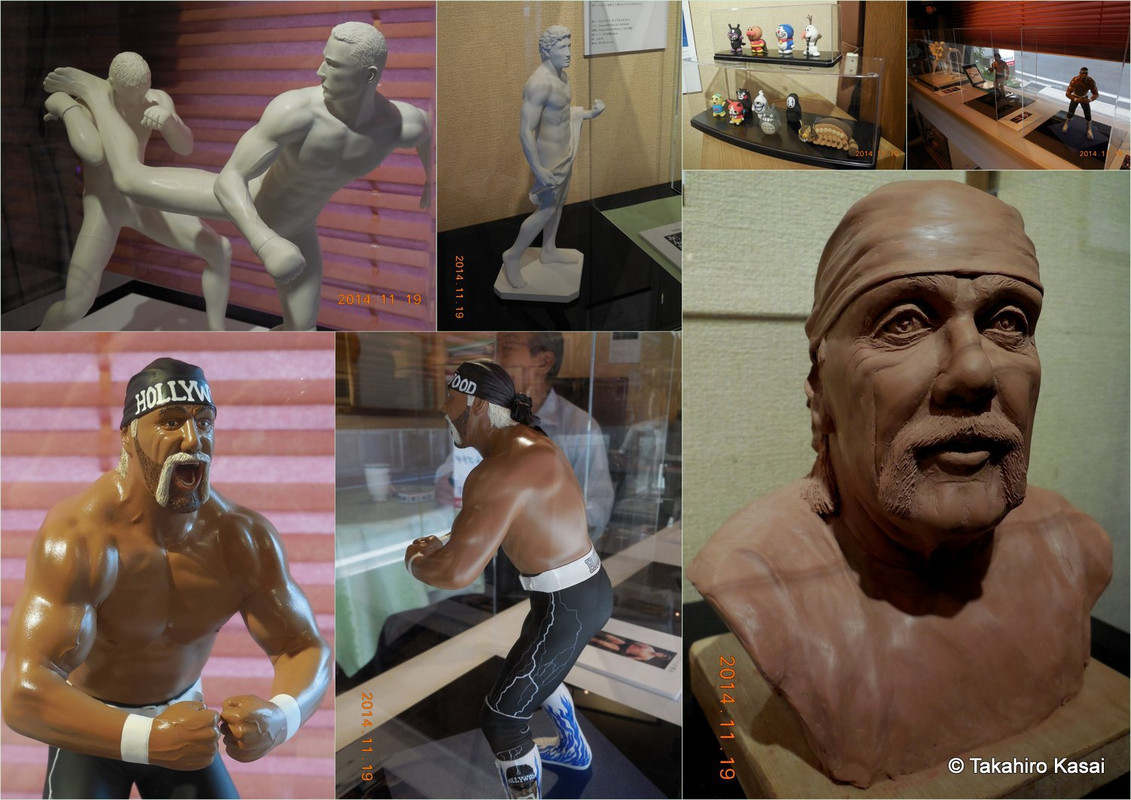
Candid office photos of Dr.Horikawa's Wrestling sculptures taken back in 2014.


Out of all of Dr. Horikawa's work, I think Horikawa's Pro-Wrestling sculptures are the best. You can clearly see Horikawa's passion as a Pro-Wrestling fan carved into these pieces.


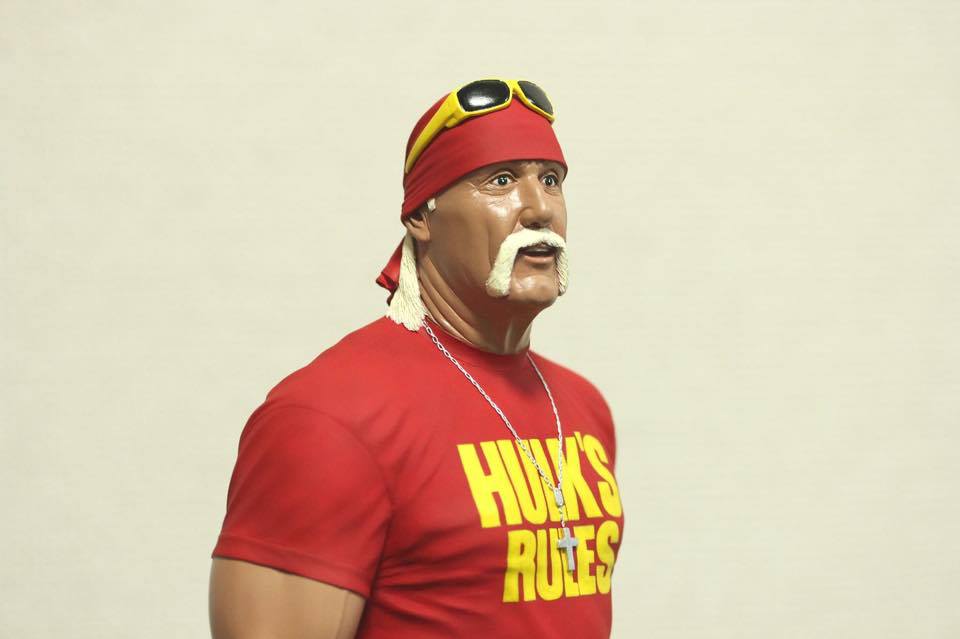
Another Hogan statue from 2015. 

Again, the realism here is amazing. Whereas most Hogan statues feature the Hulkster tearing
through his shirt, or striking a muscle-flexing pose, it's interesting to see Hogan depicted 
in a casual sculpt.

Would a sculpture like this be something you would collect?


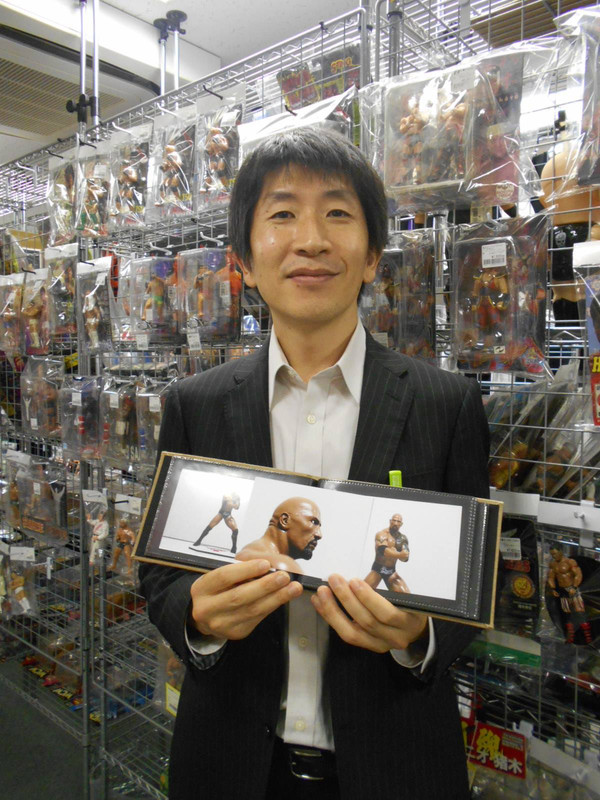
Takuro Horikawa pictured at famed Puroresu store Toudoukan holding a mini photo album of his sculptures for sale.

Sadly, the above posts are the extent of the information that I could gather on Takuro. The few Japanese articles that did talk about Takuro stated that his love of Pro-Wrestling was rekindled after a lengthy absence. Crafting Wrestling figures (and sculpting in general) continued to remain a hobby for him beyond his daytime work as a Dentist.

Maybe Takuro's love of Pro-Wrestling will rekindle once again one day, and we'll have more Wrestling sculptures presented on display throughout Japan.

Further reading:

marmalade3232.ashita-sanuki.jp/e864309.html
This appears to be the blog of the Gallery that hosted Horikawa's sculptures.

wwwb.pikara.ne.jp/horitake/newpage4.html
Event photos from when Horikawa's work was featured at the Kagawa Prefectural Culture Hall in April 2011. The event was called Takeshi Horikawa Oil Painting & Takuro Figure Exhibition”; as Dr. Horikawa's father also had oil paintings on display.

www.rnc.co.jp/ent/photom/calendar/rcar/20141112
More gallery coverage from 2014. Includes additional photos of Dr. Horikawa and the previously-seen sculptures.


Giant Baba BABABANK figure review

 Blog #279 Giant Baba BABABANK figure review.

In previous posts, we've looked at several Giant Baba figures from the 1980's. Like the Giant Baba BABAWATCH, Upper-Upper World/EHKOH also released another Giant Baba collectible under
the similar-sounding name of the Giant Baba BABABANK. 


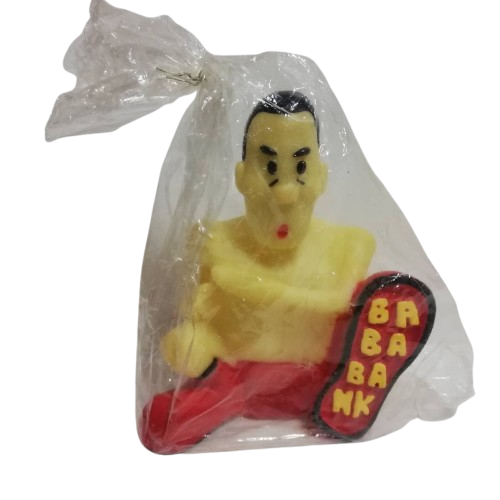
The BABABANK is a miniature soft vinyl coin bank of Baba.

As usual, Baba is sculpted performing his signature chop and 16mon kick techniques.


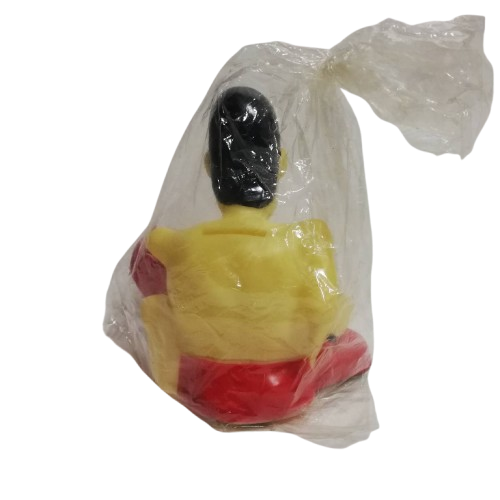
The coin slot is placed along Baba's backside.


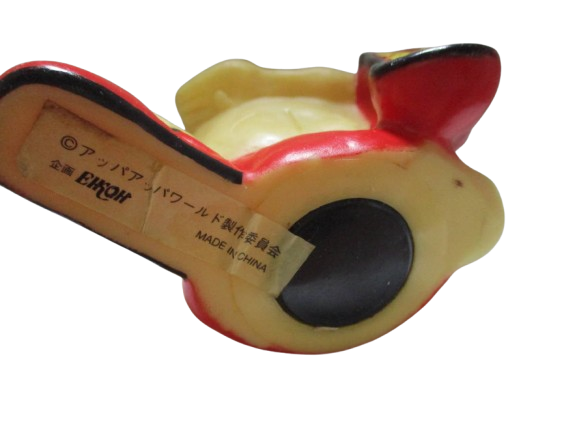
The bottom of the bank displays the corporate information for Upper-Upper World and EHKOH.

There is no date on the figure itself, but I would ascertain that the BABABANK was created 
around 1984.

Upper-Upper World and EHKOH's partnership was a brief but colourful one in the 1980's. While collectors may feel Antonio Inoki had the lion's share of figures made in his likeness (which there are), Giant Baba had the majority of licenses made in the 1980's. 

The BABABANK is a simple, yet interesting oddity from the Japanese Wrestling scene of the 1980's.
A collectible that isn't too hard to find, nor commanding that much from a resale perspective. Most examples can be found for less than $20 from Japanese merchants.

More figure reviews on the way! 


Friday, 7 April 2023

Haniwa Pro-Wrestling figure set review

On the subject of recognizable merchandising brands, few Japanese toymakers are regarded
as highly as TAKARA TOMY.

In this blog's seven year existence, we have covered several of TAKARA's more notable.
releases. Products ranging from wind-up racecars, to vintage, tabletop board games that
predate the commercial resurgence of video games in the mid 1980's.

Today, we'll be taking a look at one of TAKARA's more obscure pieces of Puroresu
merchandise. A line that mixes the pageantry and visual excitement of the squared circle,
along with a nod to one of Japan's ancient forms of model making.

Article #235 focuses on TAKARA TOMY's Haniwa Pro-Wrestling line:
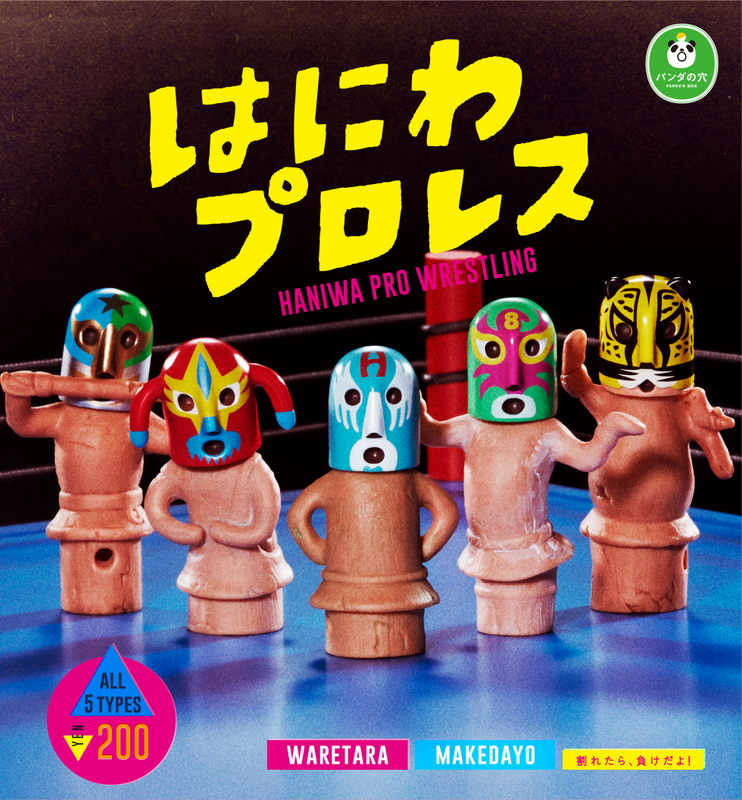


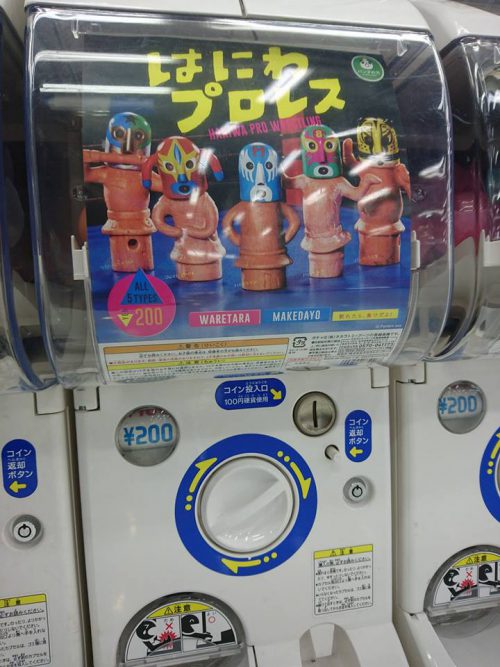
Known in Japan as 'はにわプロレス', the Haniwa Pro-Wrestling line was released by TAKARA/Panda's Ana. The line's edgy slogan "waretara makedayo" roughly translates
to "if you crack it, you lose".


"But what are haniwa"?


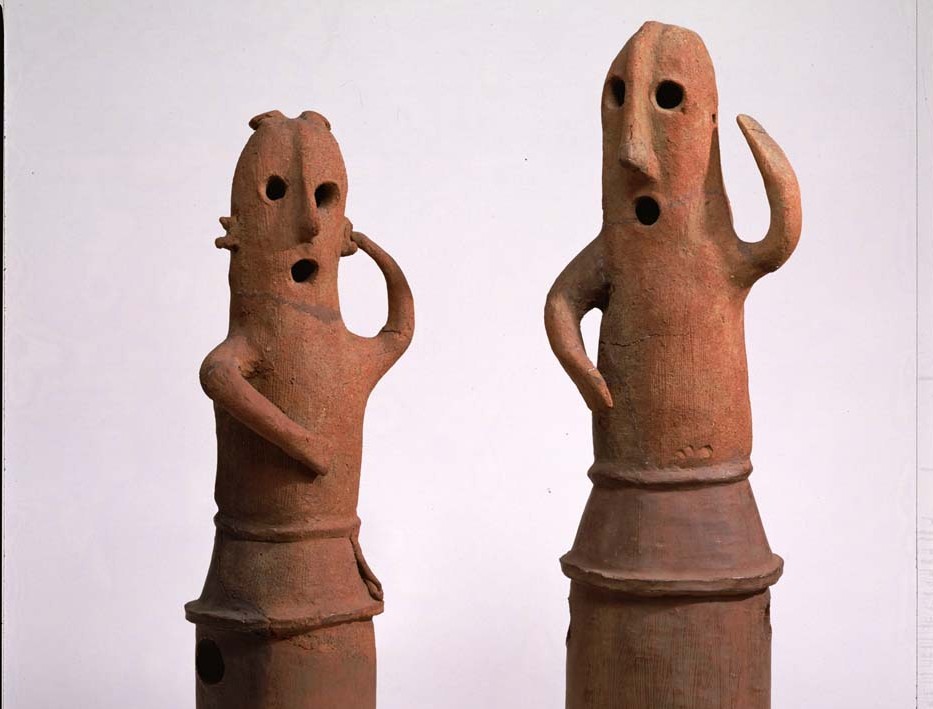
                                 Original haniway singer sculptures.

Haniwa are clay, terracotta figures that date back thousands of years. In Japanese culture,
haniwa were initially used as markers for borders of burial grounds. It wasn't until the 4th
century that sculptors began fashioning the haniwa into sculptures of dancers, animals and
even warriors; serving as protection totems and funerary objects that were buried with the
dead.


From historical artifacts to pop culture phenomena - haniwa in modern society:


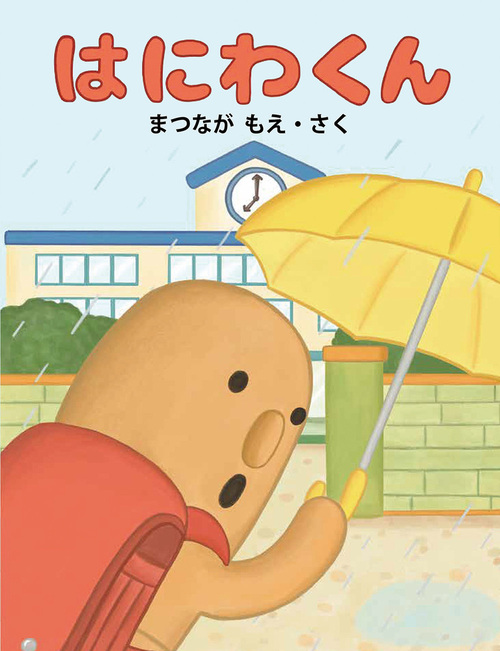
 'Haniwa-kun', a children's picture book presenting the haniwa sculptures in a light
hearted fashion.


Despite their rather grim history, the image of haniwa figures have taken on a more
animated approach in Japanese media. Over the last twenty years in particular, the
haniwa have evolved from artifacts of historical significance to depictions of
mischievous, sentient beings. More so, these enchanted characters have made
appearances in cartoons, video games and even trading card adaptations; softening
the haniwa's image in the public's eyes over time.

Aesthetically, the antiquated design of the haniwa have also been embraced as a
popular art form; garnishing praise from aspiring model makers and art lovers alike.


Like many Japanese minifigures, the Haniwa Pro-Wrestling line were originally sold in
gashapon (gumball vending machines that sell buildable model kit toys in Japan) format
for 200 yen (about $2 USD) each. Figures were distributed at random; encouraging kids
to trade with their friends to track down a full set.
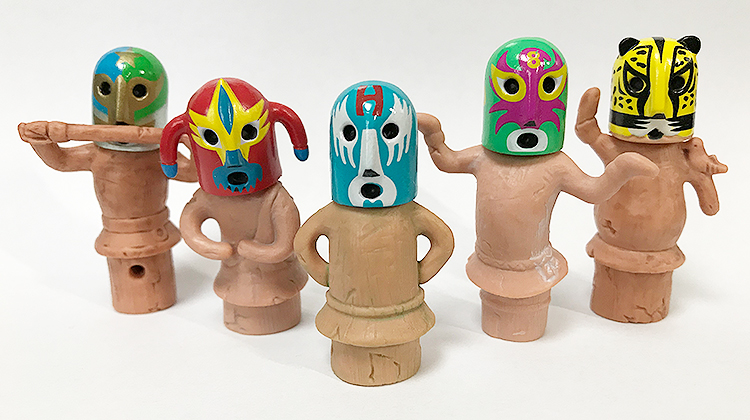

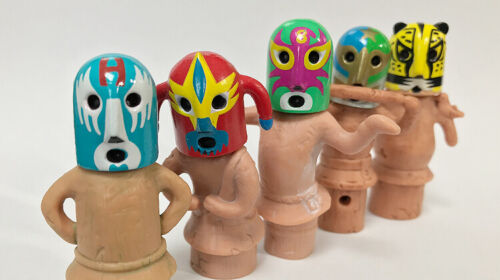
There are five figures to collect in the Haniwa Pro-Wrestling line; each one displaying a specific
pose and colourful Wrestling mask.

Seasoned fans of Pro-Wrestling may recognize some of the masks, as these particular designs
are copyright-friendly tributes to some of Japan's most popular real-life Pro-Wrestlers. The
figures are named (left to right):

Taihar Nitto Wan
(タイハー・ニット・ワン) - His name sounds just like Tiger Jeet
Singh. He's also carrying a weapon (or is that a flute) in the same fashion as Tiger would
with a sabre sword.
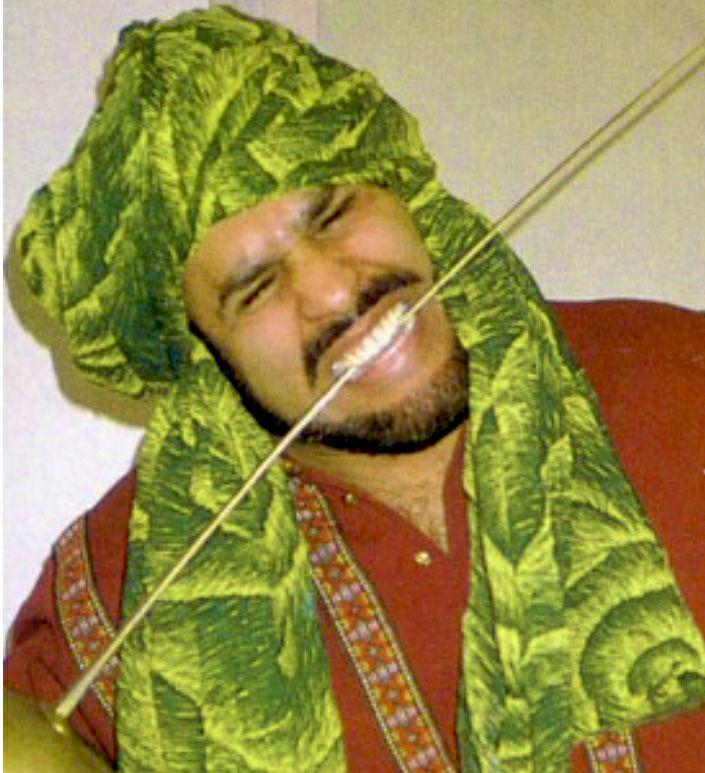
                              
                                  Tiger Jeet Singh with sword between his teeth.

Wanimaru Haniguchi (ワニマル・ハニグチ) - Sounds like Animal Hamaguchi.
Wanimaru's mask seems to resemble Tiger Mask's Red Devil.

Hanidozan (ハニドウザン) -  It seems most of the characters' incorporate the word
"haniwa" into their names. The mask design and pose is obviously based on Mil Mascaras.
Though, this Wrestler's name is clearly inspired by 'the father of Puroresu' Rikidozan.
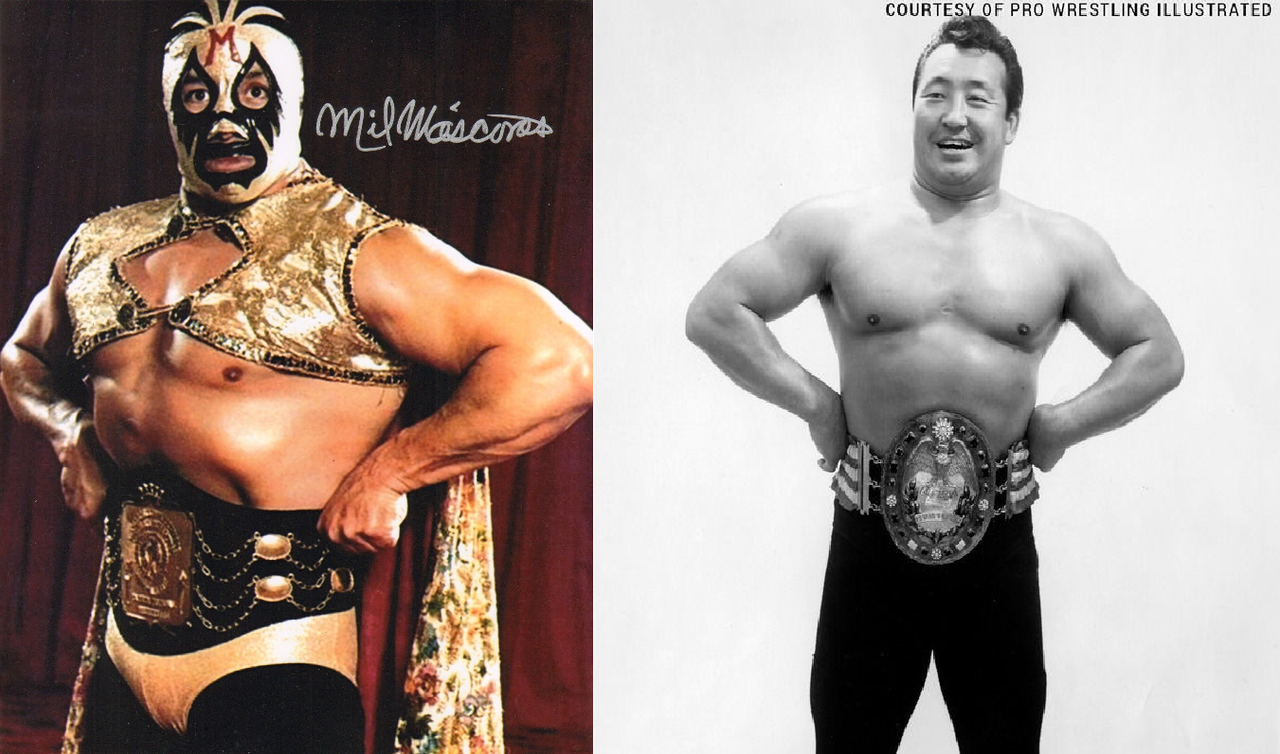

    Mil Mascaras and Rikidozan - two legends who inspired TAKARA's Haniwa line.

Hanito Muwa (ハニド・ムワ) This is another tough one. The mask depicts an octopus
with the number 8 (obviously referencing the Octopus' 8 appendages). A standard Japanese
Wrestling hold is also the "manji-gatame" (Octopus Stretch).

Hambo Wanita (ハンボ・ワニタ)- Another Tiger Mask character knockoff. There's even
a small bird resting on Wanita's left shoulder.


Closing thoughts:

TAKARA's involvement with Pro-Wrestling is a long and storied one. The majority of which
centred around officially-licensed products that were created for Japan's biggest Puroresu
promotions: New Japan and All Japan Pro-Wrestling, respectively. 

On it's own, the Haniwa Pro-Wrestling line is a unique concept in the world of Japanese
collectibles. These 2 inch gashapon kits are an interesting tribute to the Wrestling legends
of the squared circle from the 1950's to the early 1980's. Talent who, for the most part, only
receive figures created in the form of sofubi/soft vinyl.

As interesting as these collectibles are, TAKARA never released a second wave of Haniwa
Pro-Wrestling figures; making the crossover concept of haniwa and Puroresu a relatively
short one.

On a positive note, collectors interested in adding these eccentric gashapons to their figure
collections can purchase the entire set: --------->HERE<------
Wednesday, 1 September 2021

TAKARA Giant Baba and Stan Hansen Choro-Q racer figures review

A few blog posts ago, we touched on TOYBOX's early 1980's AJPW racer figures line (for
those interested, the full review can be read HERE<-----). Next up, we'll be looking at another
pair of figure oddities that feature All Japan's two biggest stars. Blog #227 goes for the gold
with TAKARA's AJPW Choro-Q Wrestler figures.


Known in Japan as  "チョロQレスラー" (ChoroQ Wrestler), the ChoroQ Wrestler figures
were released by TAKARA in 1984. ChoroQ is the name of TAKARA's long-running rev-up
car series that dates back to 1978.

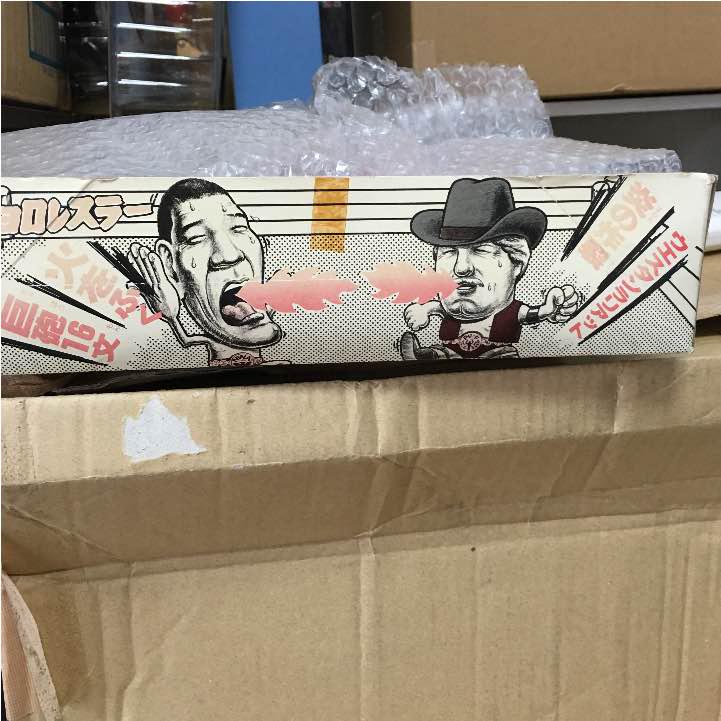
The box depicts Giant Baba on the left and Stan Hansen on the right.

You're probably wondering why Giant Baba and Stan Hansen are both breathing fire and
sweating. Short answer: these specific figures were inspired by TAKARA's other "flame
breathing" figures that actually shot sparks from their mouths!

The packaging also lists both Wrestler's signature moves. In Baba's case "16mon Kick"
(Big Boot) and, for Hansen, "Western Lariat" is written.


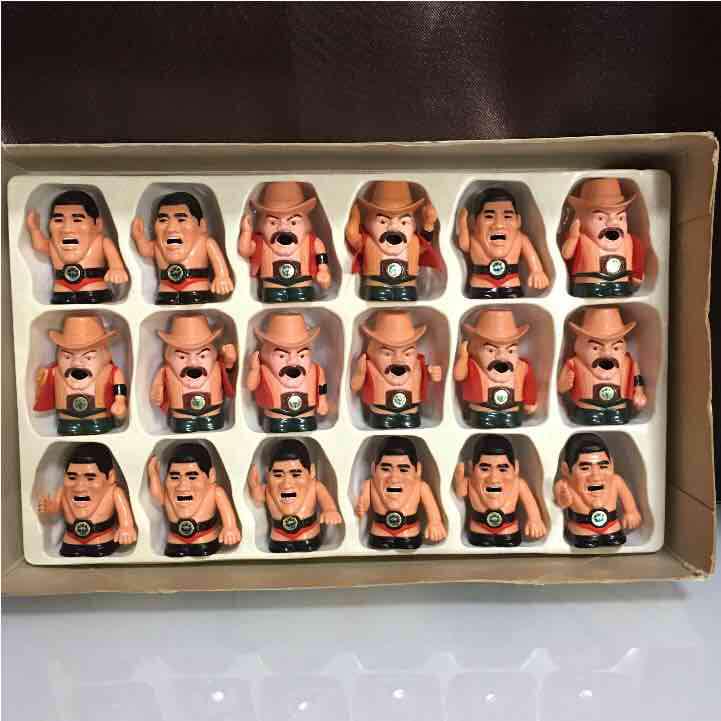
Inside the box. An 18 piece assortment of Giant Baba and Stan Hansen figures.
I'm guessing this was a shipping box for stores that carried TAKARA merchandise
in Japan.


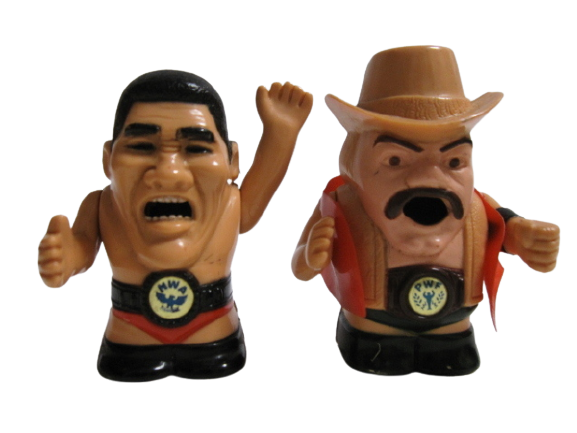
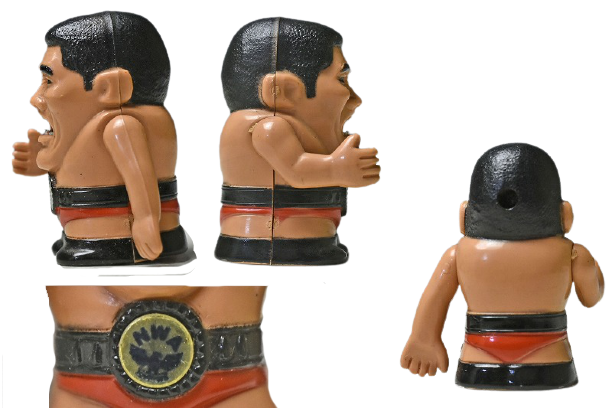
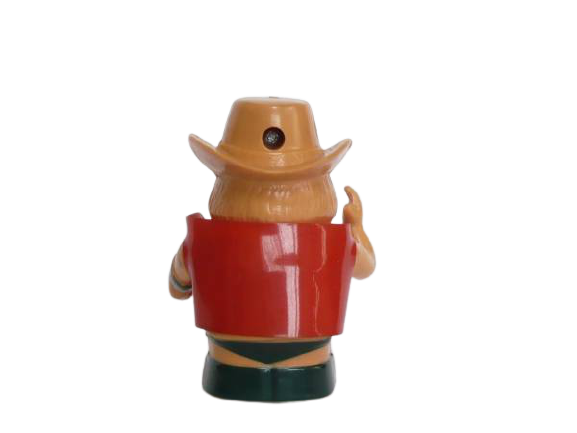
Both figures contain a specific All Japan Pro-Wrestling belt. Giant Baba contains the NWA International Heavyweight Championship; while Stan Hansen is holding the PWF Heavyweight
Championship belt.


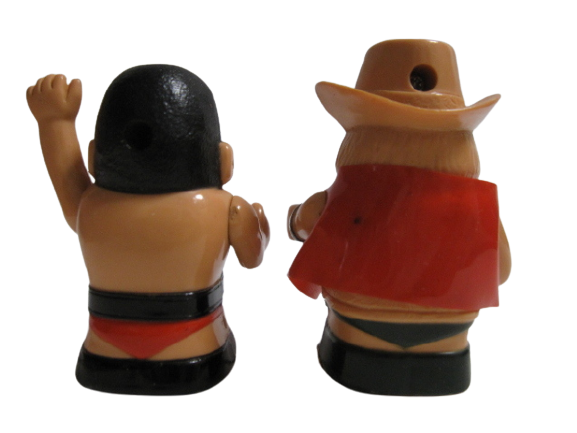
Both figures stand at 50mm (just under 2 inches tall) and contain moving arms. Giant
Baba is sculpted in a chop pose while Hansen contains his trademark Lariat.

Due to the age of both figures, collectors should pay close attention to each figure's overall
condition; as the included belts have been known to discolour over time.


Out of the pair, the Stan Hansen ChoroQ figure is harder to come by.


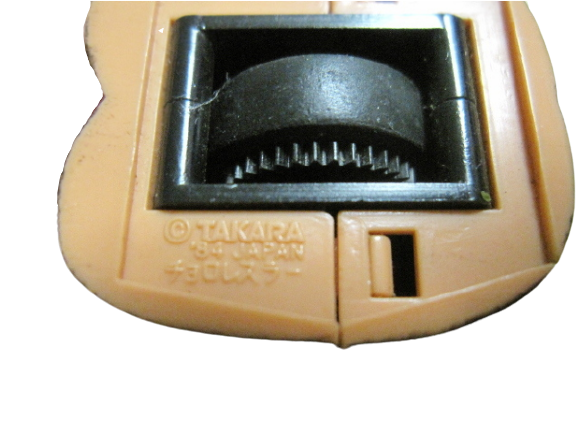
Both figures are stamped with "(C) TAKARA '84 JAPAN Choro Wrestler" (left) and
"All Japan Pro-Wrestling" (right) signifying that both the Stan Hansen and Giant Baba
Choro figures were officially licensed.

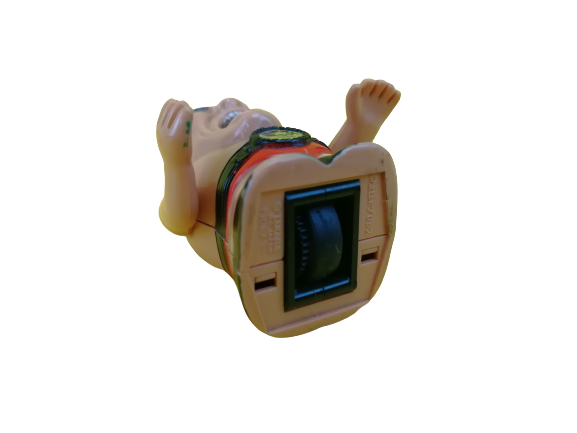
Next to the rev-up wheel is a gear mechanism that shoots sparks whenever either car is
in motion (I really doubt the equivalent of a lighter on wheels would be marketed to
kids these days).

As the case with older figures, many collectors have stated that their figures have lost
or contain a diminished spark.


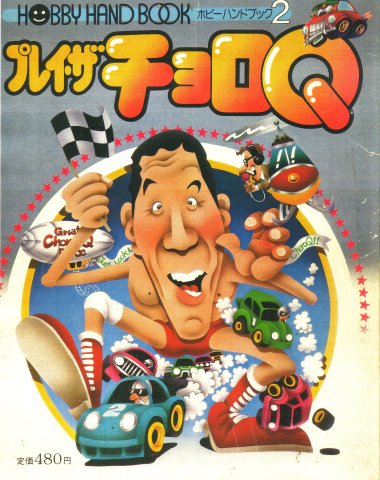
A 1983 issue of Hobby Handbook that promoted TAKARA's Wrestler racers with
Giant Baba on the cover.


Closing thoughts:

While action figures were still a few decades away, All Japan Pro-Wrestling did have
an interesting assortment of merchandise that was released throughout the 1970's
into the 1980's.

It's worth noting that TAKARA would eventually own TOYBOX (the company responsible
for the other 1980's All Japan Pro-Wrestling car series).

Really, how many Japanese Pro-Wrestling figures can you think of that shoots sparks?!


For those interested to track down these figures themselves, you can use these Japanese
keywords:

チョロQレスラー スタン・ハンセン (ChoroQ Wrestler Stan Hansen)

チョロQレスラー ジャイアント馬場 (ChoroQ Wrestler Giant Baba)