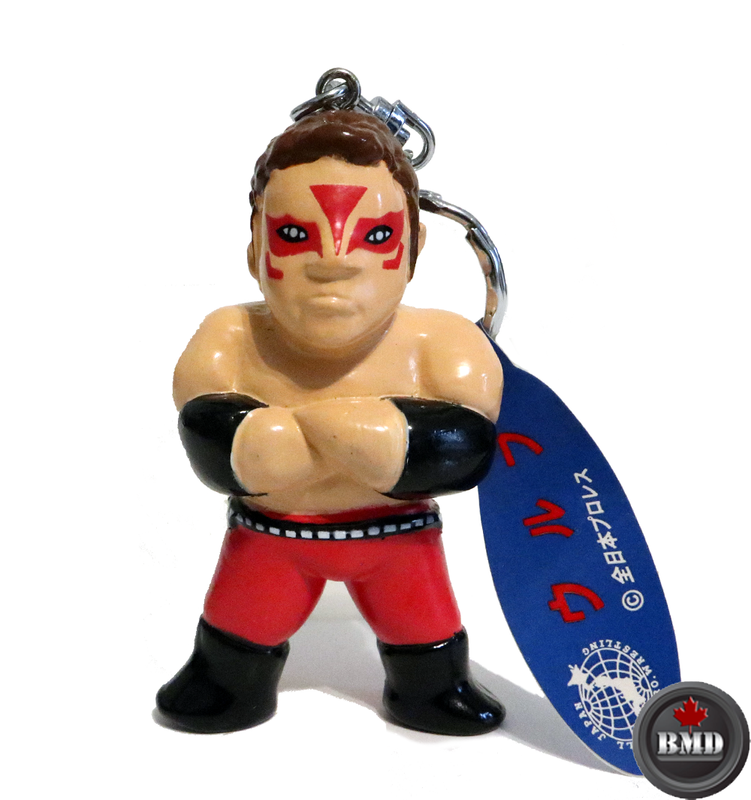
Showing posts with label Giant Baba. Show all posts

Sunday, 20 October 2024

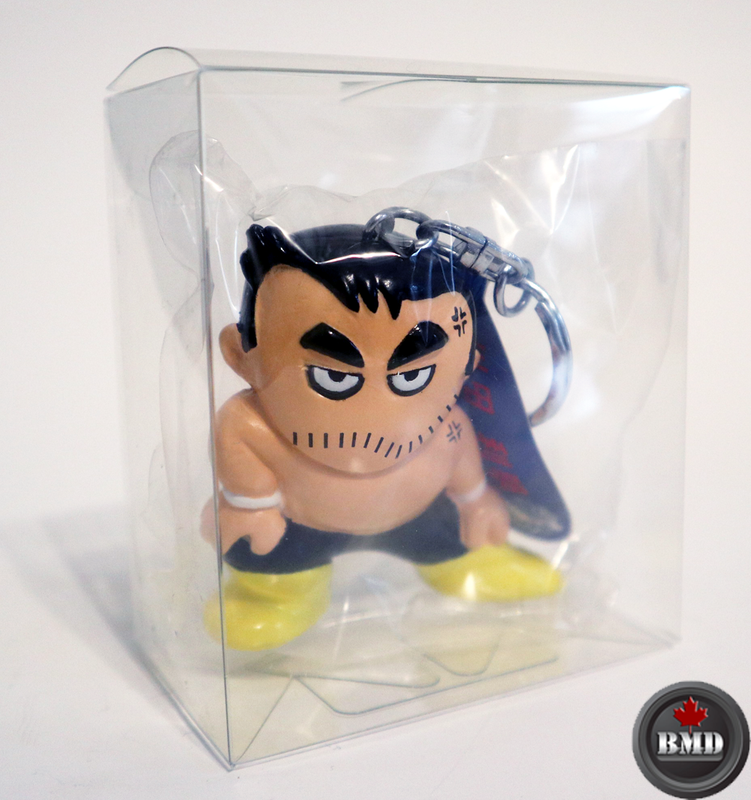
Giant Baba BABABANK figure review

 Blog #279 Giant Baba BABABANK figure review.

In previous posts, we've looked at several Giant Baba figures from the 1980's. Like the Giant Baba BABAWATCH, Upper-Upper World/EHKOH also released another Giant Baba collectible under
the similar-sounding name of the Giant Baba BABABANK. 


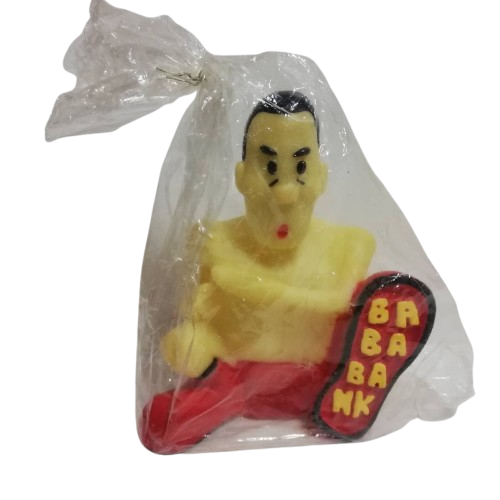
The BABABANK is a miniature soft vinyl coin bank of Baba.

As usual, Baba is sculpted performing his signature chop and 16mon kick techniques.


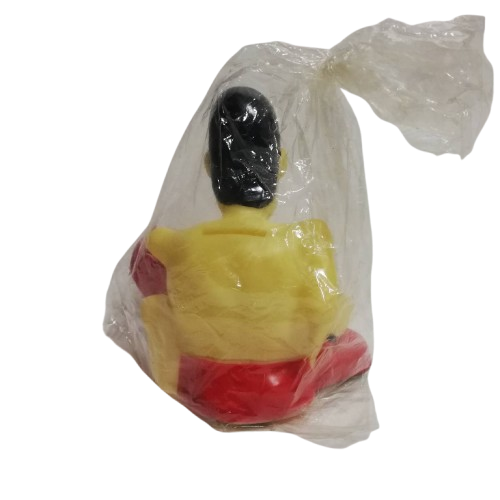
The coin slot is placed along Baba's backside.


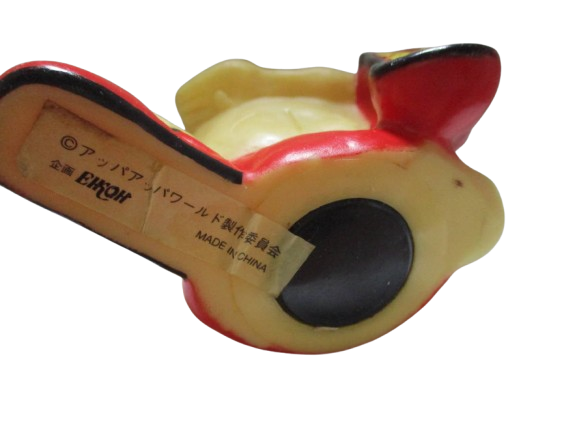
The bottom of the bank displays the corporate information for Upper-Upper World and EHKOH.

There is no date on the figure itself, but I would ascertain that the BABABANK was created 
around 1984.

Upper-Upper World and EHKOH's partnership was a brief but colourful one in the 1980's. While collectors may feel Antonio Inoki had the lion's share of figures made in his likeness (which there are), Giant Baba had the majority of licenses made in the 1980's. 

The BABABANK is a simple, yet interesting oddity from the Japanese Wrestling scene of the 1980's.
A collectible that isn't too hard to find, nor commanding that much from a resale perspective. Most examples can be found for less than $20 from Japanese merchants.

More figure reviews on the way! 


Giant Baba Remote Control Wrestler review


Blog #278 The Giant Baba Remote Control Wrestler review.


By the early 80's, merchandising was in full-swing with All Japan Pro-Wrestling. Being the founder and star of the promotion, Giant Baba was the central figure in All Japan's merchandising boom of the era. 

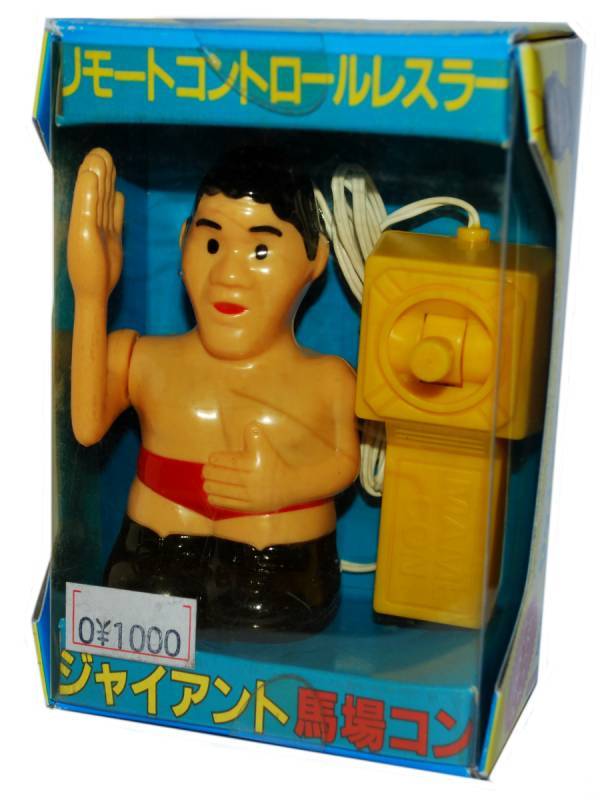
Our next wacky figure was released by Japanese toymaker MAME CON in 1984.


Special thanks to Wrestlefigs.com for the above photo.

The Giant Baba remote control figure sold for $6 USD upon it's initial release.


The packaging reads
'Remote Control Wrestler
Giant Baba Con'


(リモートコントロールレスラー
ジャイアント馬場コン).

In case you were wondering, the word 'con' is short for controller.


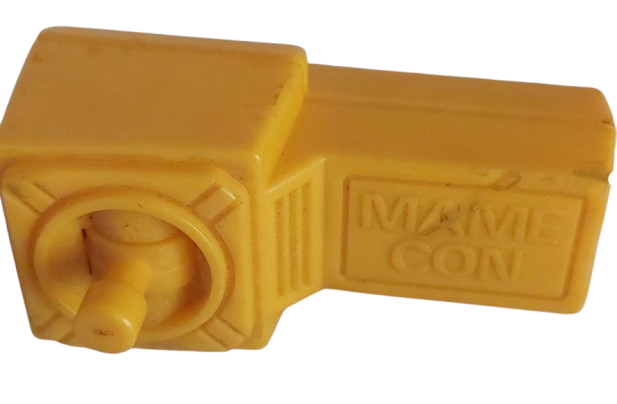
As expected, the controller makes Giant Baba move and perform chops simultaneously. Notice the 'MAME CON' company logo on the controller.


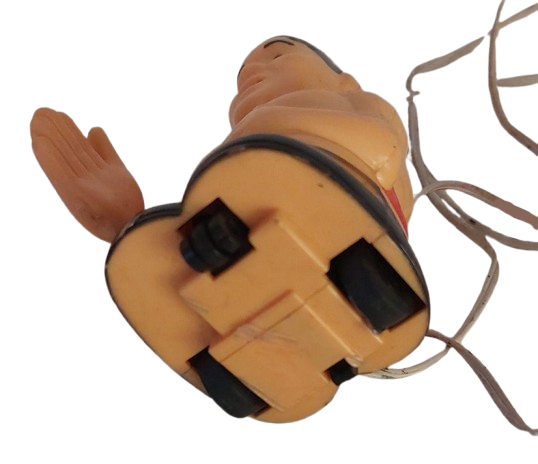
Providing chops on the-go: the Mame Con Giant Baba operates with three wheels at the bottom of the toy.


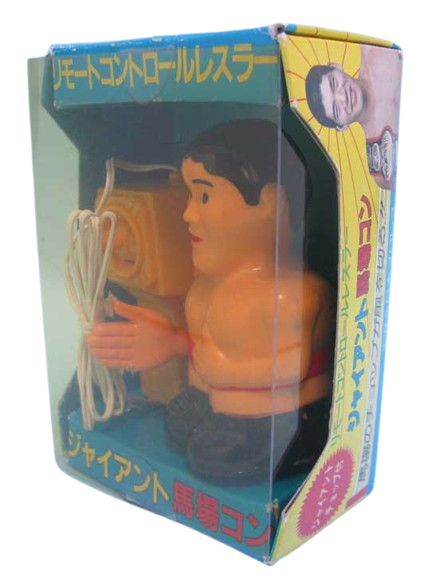
A belt-wearing Giant Baba is pictured on the sides of the box.

Sadly, no other likeness was added to expand upon MAME CON's Remote Control Wrestler concept. Stan Hansen would have been a perfect fit swinging his bullrope or Lariat. A fork-stabbing/throat-choppin' Abdullah The Butcher could have been a cool idea, too. Though, Abdullah wouldn't return to AJPW for another 4 years.

Giant Baba BABAWATCH review

 #Blog #277 BABAWATCH review


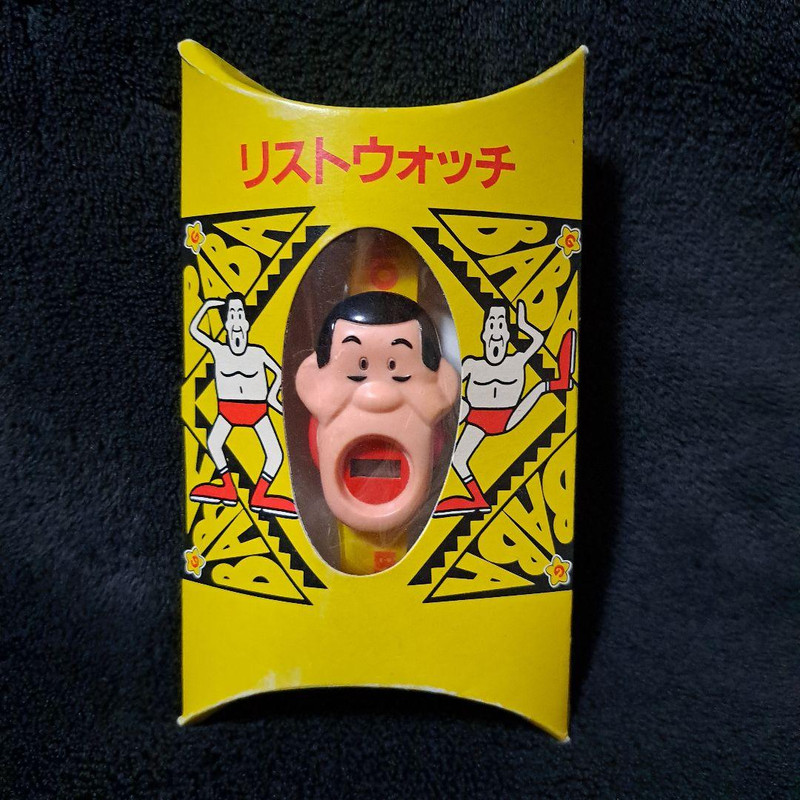
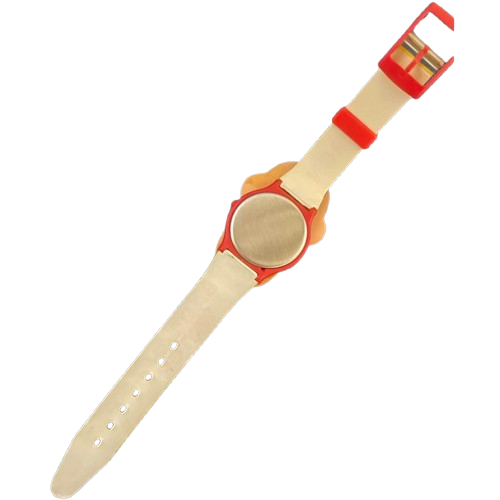
The next bizarre 80's Japanese Wrestling item is the Giant Baba BABAWATCH
(known in Japan as ジャイアント馬場【BABAWATCH】リストウォッチ).


The top of the package reads 'wristwatch' in Japanese.

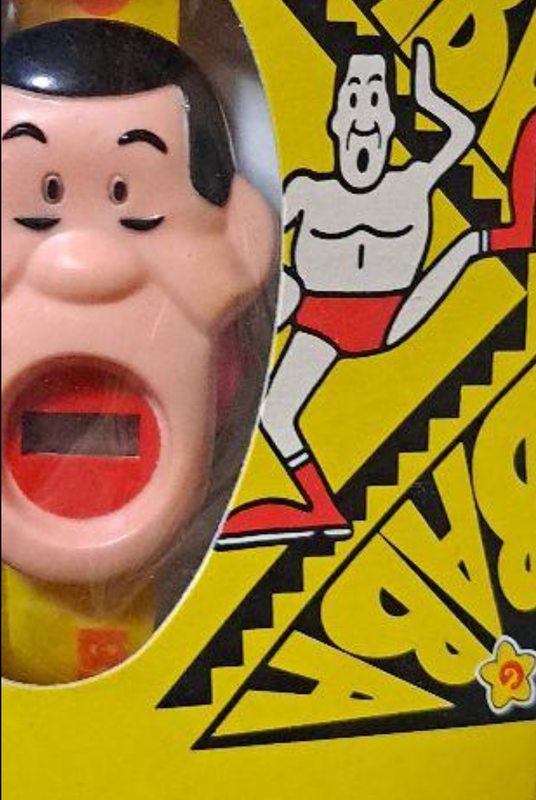
The front of the packaging includes illustrations of Baba. The first illustration on the left depicts Baba searching for something (or someone). The second illustration features Baba performing his two signature techniques: the Overhead Chop and the 16mon Kick on the right. 


The 'G Baba' text in each corner has a 60's Batman vibe to it.


The back of the packaging contains an illustration of Baba smiling. Again, the Japanese texts reads 'wristwatch'.


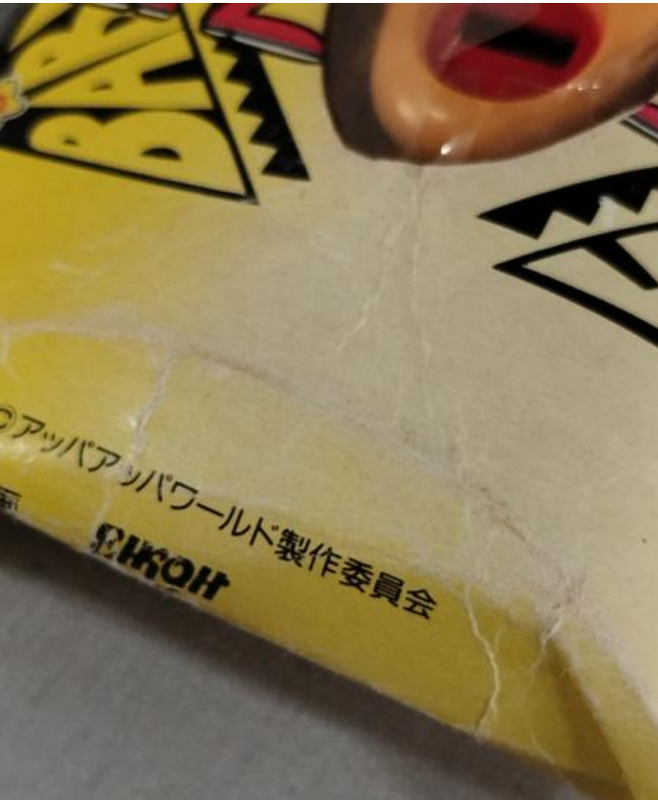
The bottom of the packaging contains the company info 'Upper Upper World Production Committee (EHKOH)'


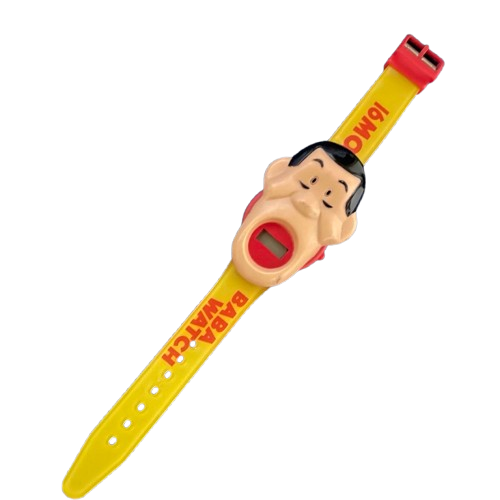
The watch's strap contains the text '16 MON' (short for 16mon Kick - Giant Baba's version of the big boot), along with 'BABA WATCH'.

Giant Baba had a lot of wacky products released during the 70's and 80's, from racecars to remote-controlled chopping figures, to piggy banks, board games and bendable figures. The BABA WATCH kid's watch is just the tip of the iceberg, really.

Given the watch's age, most sell for pretty low prices, as the original batteries in these watches have all long since petered out.


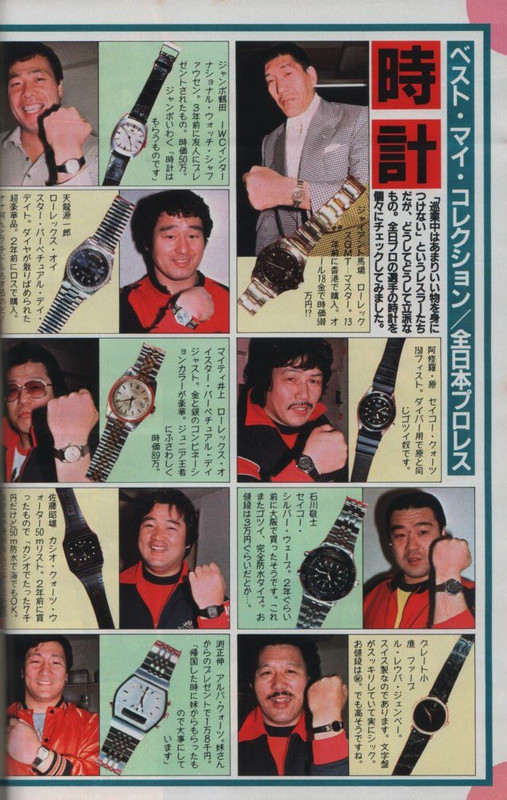
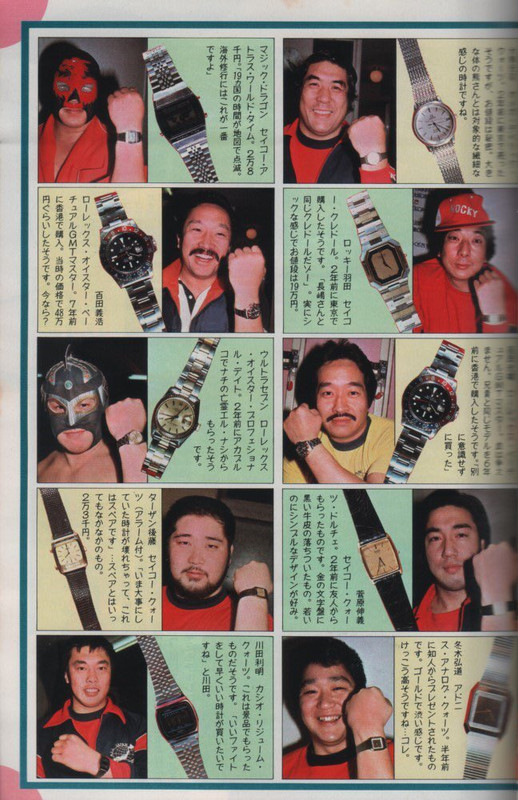
Special thanks to X/Twitter user Japones-lee for posting this two-page scan of the GONG July 1984 issue's MY COLLECTION article. 6 out of 19 of the All Japan roster wore Rolex watches.


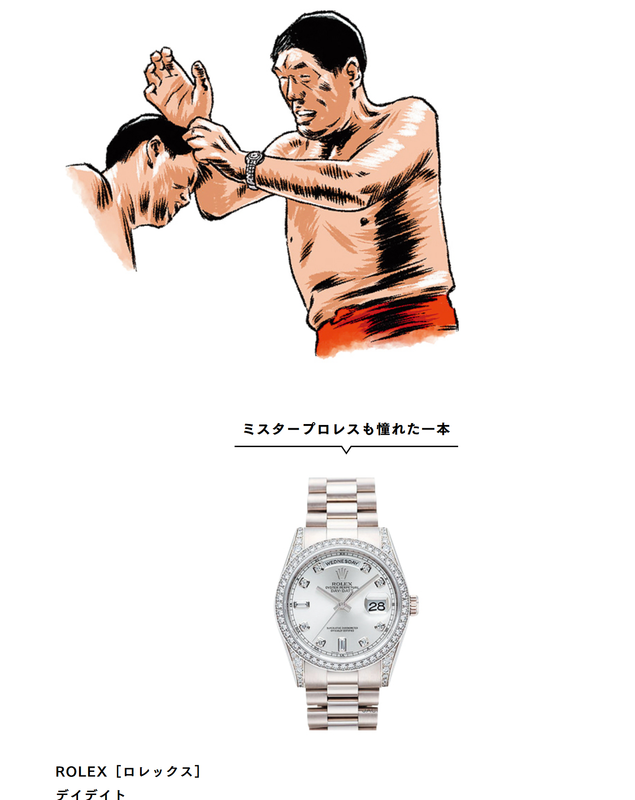
begin.jp posted an article of Giant Baba, stating the All Japan owner admired wearing a Rolex Daydate watch. The article also mentions that 'Mr. Puroresu' Genichiro Tenryu also owned the same watch after spotting Baba wearing one.


Wednesday, 1 September 2021

TAKARA Giant Baba and Stan Hansen Choro-Q racer figures review

A few blog posts ago, we touched on TOYBOX's early 1980's AJPW racer figures line (for
those interested, the full review can be read HERE<-----). Next up, we'll be looking at another
pair of figure oddities that feature All Japan's two biggest stars. Blog #227 goes for the gold
with TAKARA's AJPW Choro-Q Wrestler figures.


Known in Japan as  "チョロQレスラー" (ChoroQ Wrestler), the ChoroQ Wrestler figures
were released by TAKARA in 1984. ChoroQ is the name of TAKARA's long-running rev-up
car series that dates back to 1978.

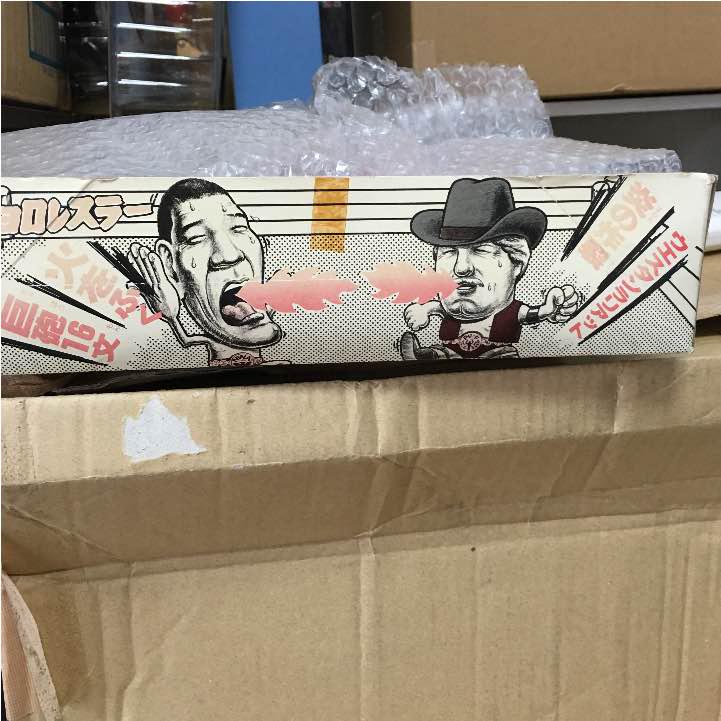
The box depicts Giant Baba on the left and Stan Hansen on the right.

You're probably wondering why Giant Baba and Stan Hansen are both breathing fire and
sweating. Short answer: these specific figures were inspired by TAKARA's other "flame
breathing" figures that actually shot sparks from their mouths!

The packaging also lists both Wrestler's signature moves. In Baba's case "16mon Kick"
(Big Boot) and, for Hansen, "Western Lariat" is written.


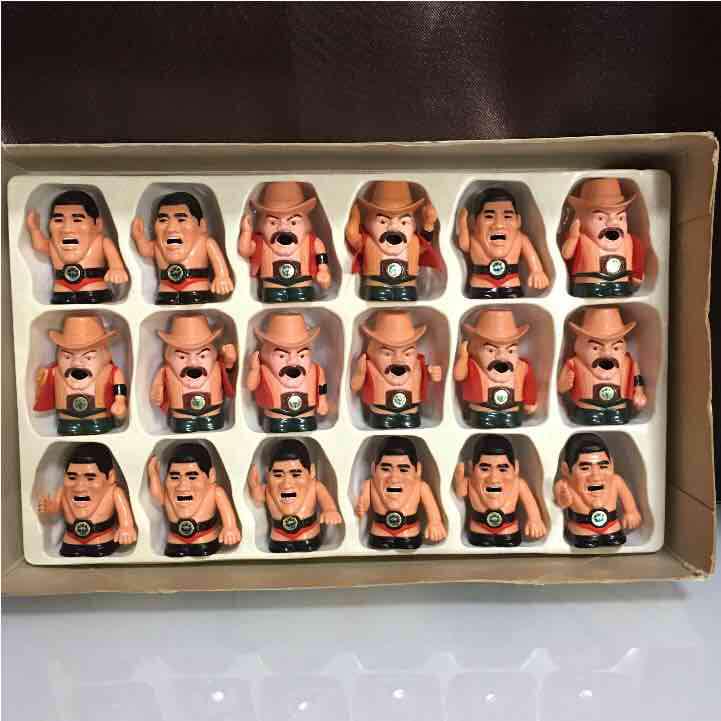
Inside the box. An 18 piece assortment of Giant Baba and Stan Hansen figures.
I'm guessing this was a shipping box for stores that carried TAKARA merchandise
in Japan.


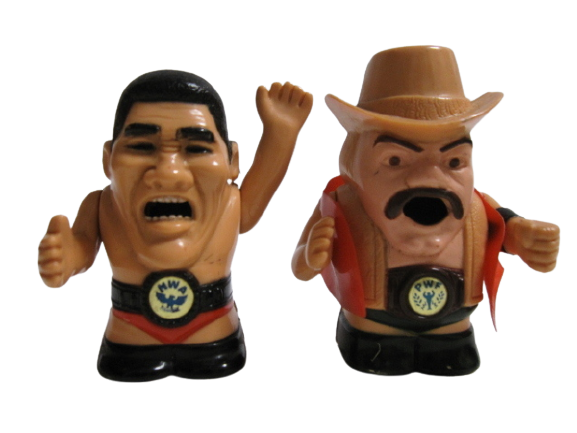
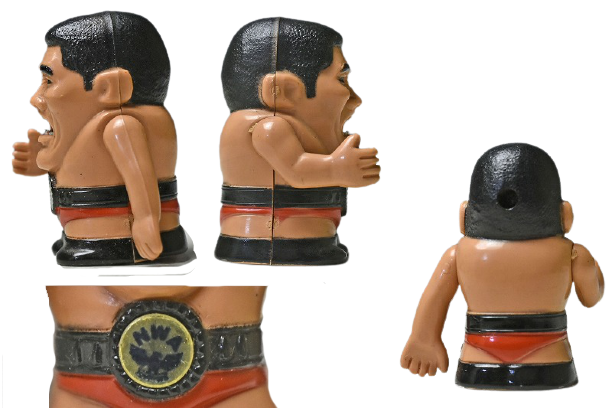
Both figures contain a specific All Japan Pro-Wrestling belt. Giant Baba contains the NWA International Heavyweight Championship; while Stan Hansen is holding the PWF Heavyweight
Championship belt.


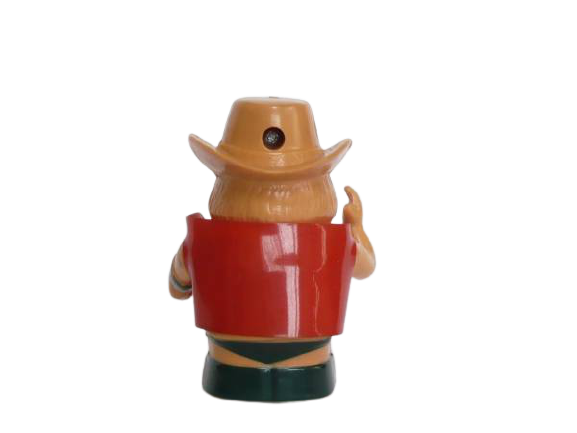
Both figures stand at 50mm (just under 2 inches tall) and contain moving arms. Giant
Baba is sculpted in a chop pose while Hansen contains his trademark Lariat.

Due to the age of both figures, collectors should pay close attention to each figure's overall
condition; as the included belts have been known to discolour over time.


Out of the pair, the Stan Hansen ChoroQ figure is harder to come by.


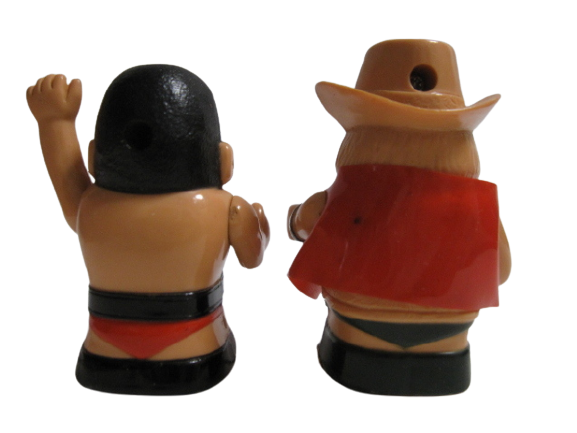
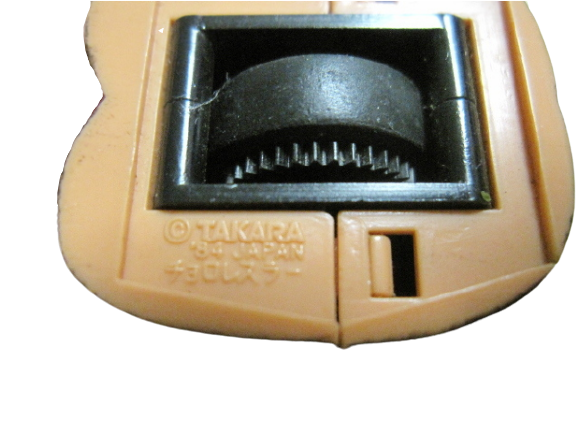
Both figures are stamped with "(C) TAKARA '84 JAPAN Choro Wrestler" (left) and
"All Japan Pro-Wrestling" (right) signifying that both the Stan Hansen and Giant Baba
Choro figures were officially licensed.

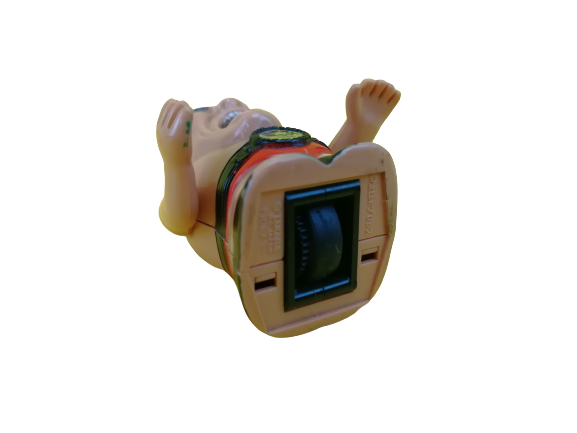
Next to the rev-up wheel is a gear mechanism that shoots sparks whenever either car is
in motion (I really doubt the equivalent of a lighter on wheels would be marketed to
kids these days).

As the case with older figures, many collectors have stated that their figures have lost
or contain a diminished spark.


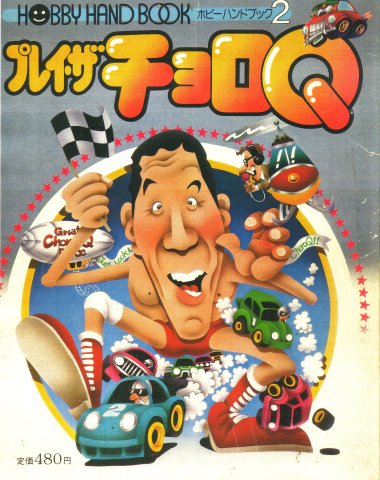
A 1983 issue of Hobby Handbook that promoted TAKARA's Wrestler racers with
Giant Baba on the cover.


Closing thoughts:

While action figures were still a few decades away, All Japan Pro-Wrestling did have
an interesting assortment of merchandise that was released throughout the 1970's
into the 1980's.

It's worth noting that TAKARA would eventually own TOYBOX (the company responsible
for the other 1980's All Japan Pro-Wrestling car series).

Really, how many Japanese Pro-Wrestling figures can you think of that shoots sparks?!


For those interested to track down these figures themselves, you can use these Japanese
keywords:

チョロQレスラー スタン・ハンセン (ChoroQ Wrestler Stan Hansen)

チョロQレスラー ジャイアント馬場 (ChoroQ Wrestler Giant Baba)

Sunday, 5 May 2019

All Japan Pro-Wrestling Tokyo Dome figure set review

Our next figure review features another stand out collection released by All Japan Pro-Wrestling in the late 1990's.

Blog #131 is all about the All Japan Pro-Wrestling Tokyo Dome figure set.
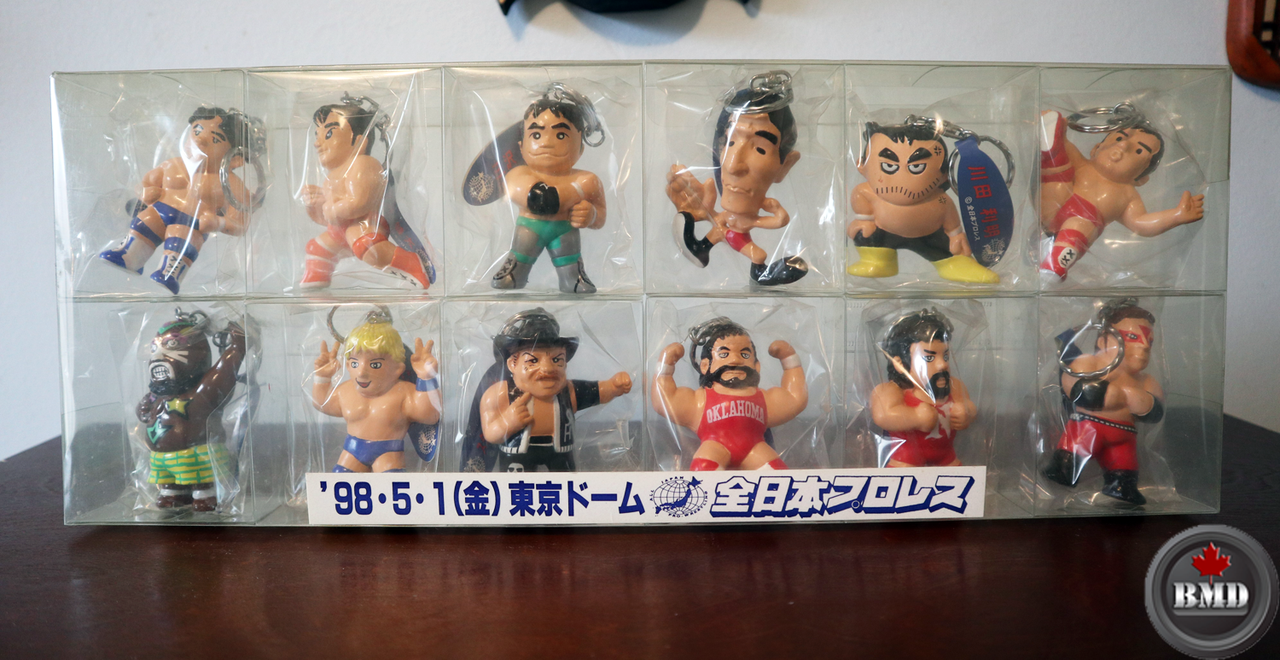


The 12 figure set comes in a stylish, clear window packaging that is made of durable plastic.
The attached sticker reads "'98.5.1. (金) 東京ドーム 全日本プロレス" (May 1st, 1998
(Gold) All Japan Pro-Wrestling).

I'll assume the word "Gold" is a reference to the main event of the show which would see
Toshiaki Kawada defeat long-time rival Mitsuharu Misawa for the prestigious Triple Crown
titles.

Historically, this event (officially named "Shodown at the Egg") would mark the second
time All Japan Pro-Wrestling would perform at the Tokyo Dome since the 1990 NJPW/
AJPW/WWF Wrestling Summit supershow (and the first time All Japan performed at
the Tokyo Dome on it's own).

Let's take a look at the figures themselves!


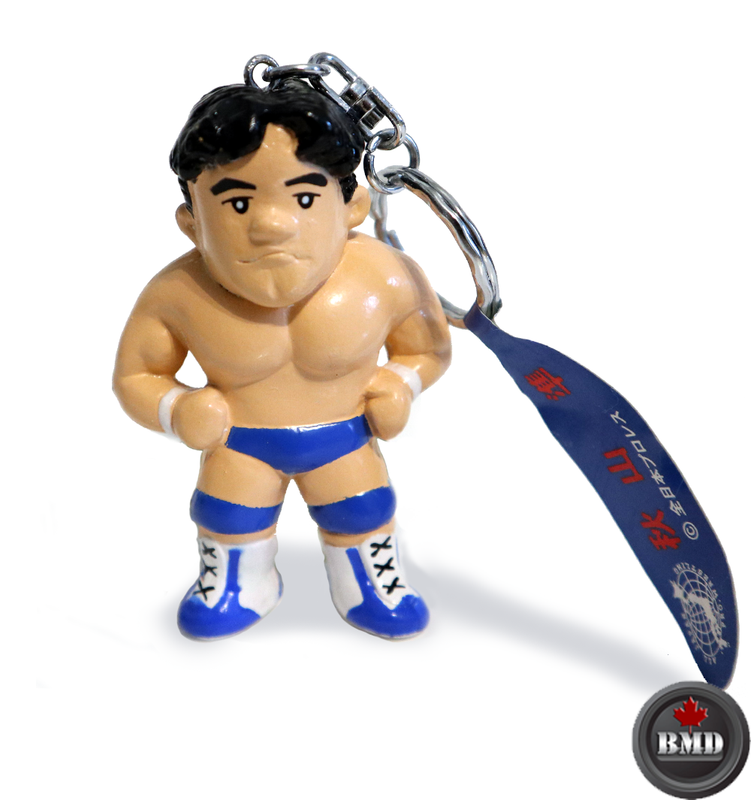
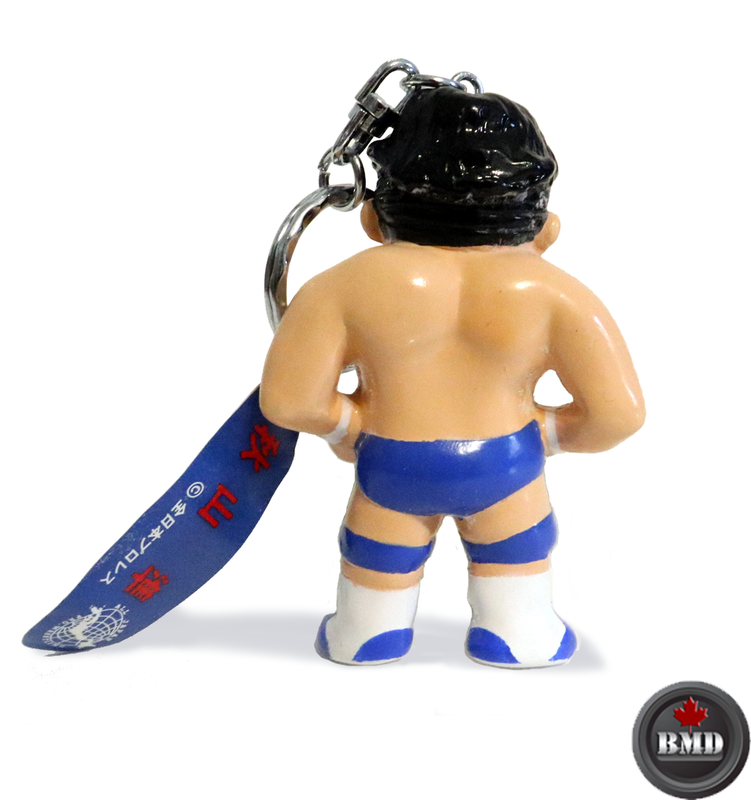
First up is "Blue Thunder" Jun Akiyama with a confident pose.


Jun is dressed in his era-accurate blue trunks with white and blue wrestling
boots.

Each Wrestler's name is written in red text on the included tag.


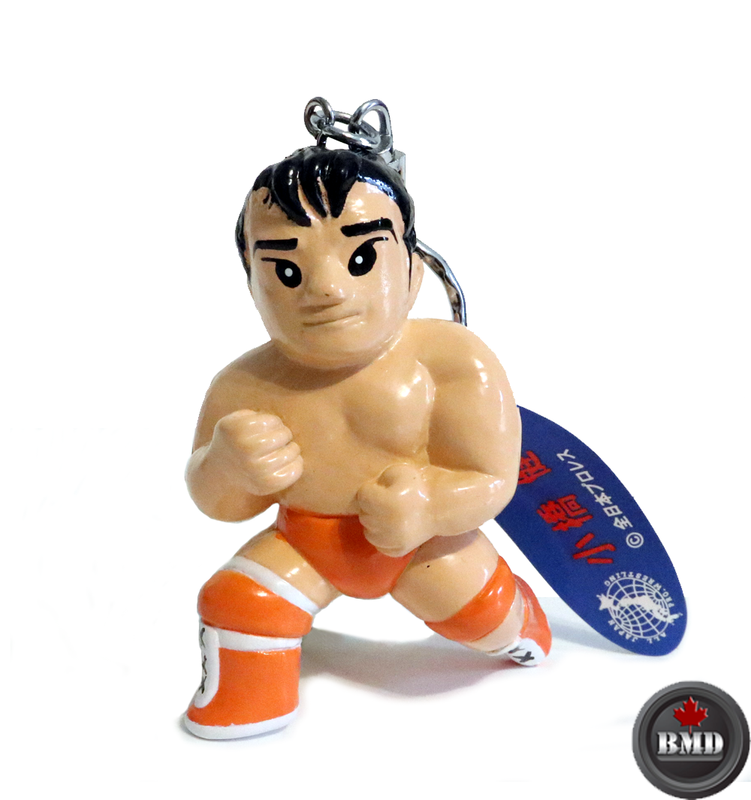
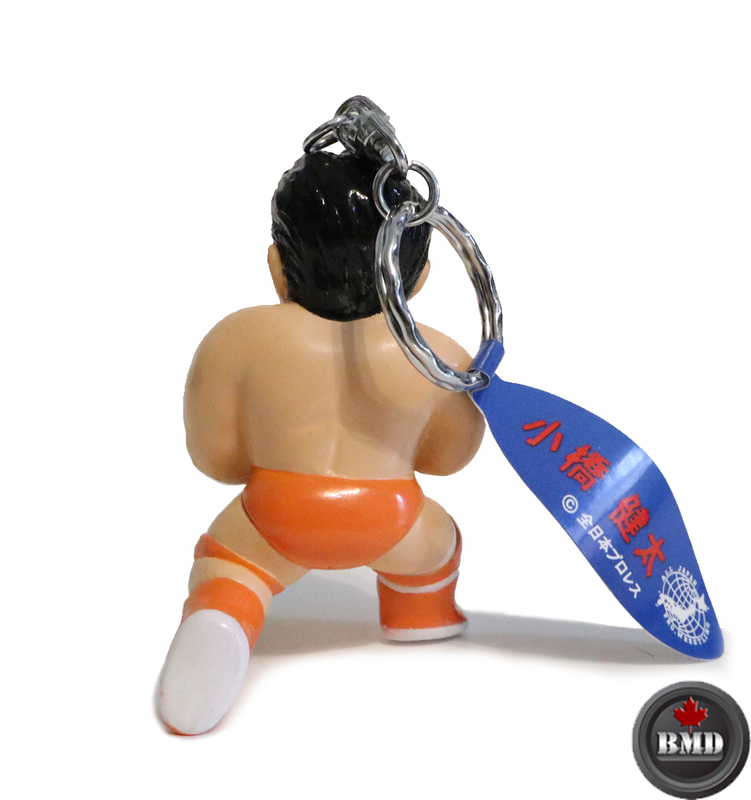
"The Maximum Innovator" and All Japan underdog:Kenta Kobashi.

Kobashi is in a kneeling stance with what looks like his signature never give
up pose.


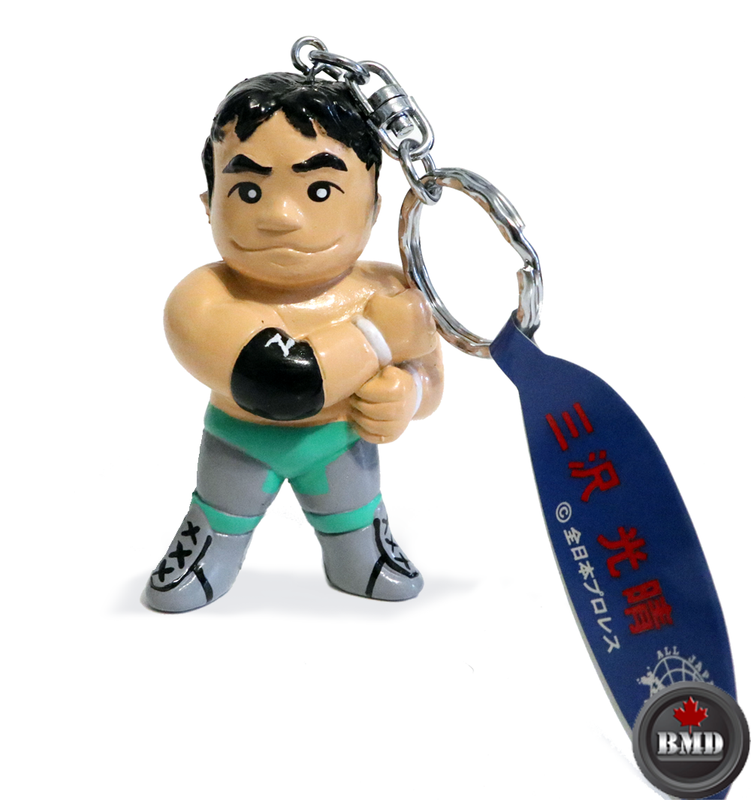
"Mr. Triple Crown" himself: Mitsuharu Misawa!
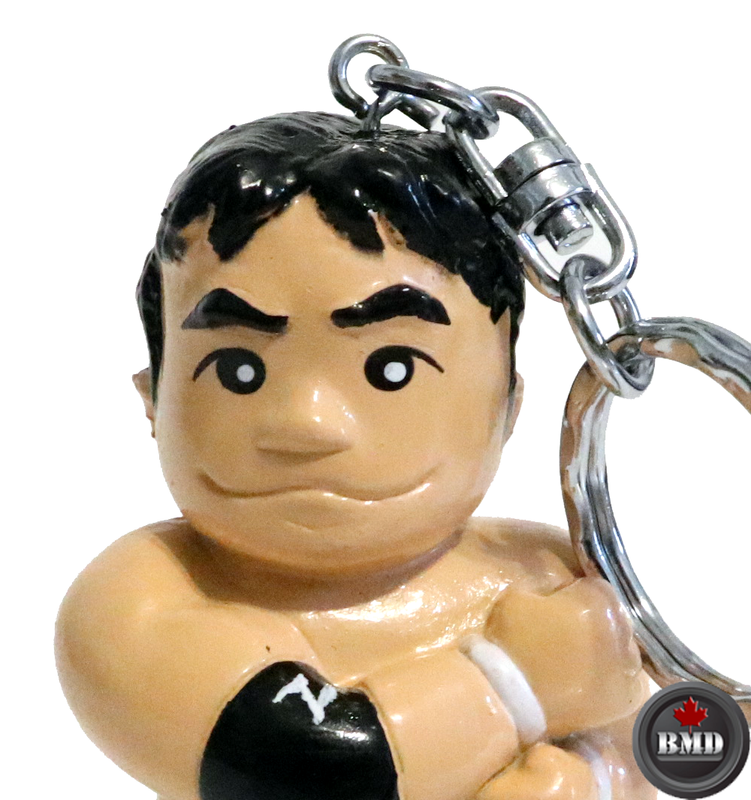


I can't think of too many figures that feature the stoic Misawa with a smile on his face!
Notice the "Z" initial on Misawa's elbow pad?
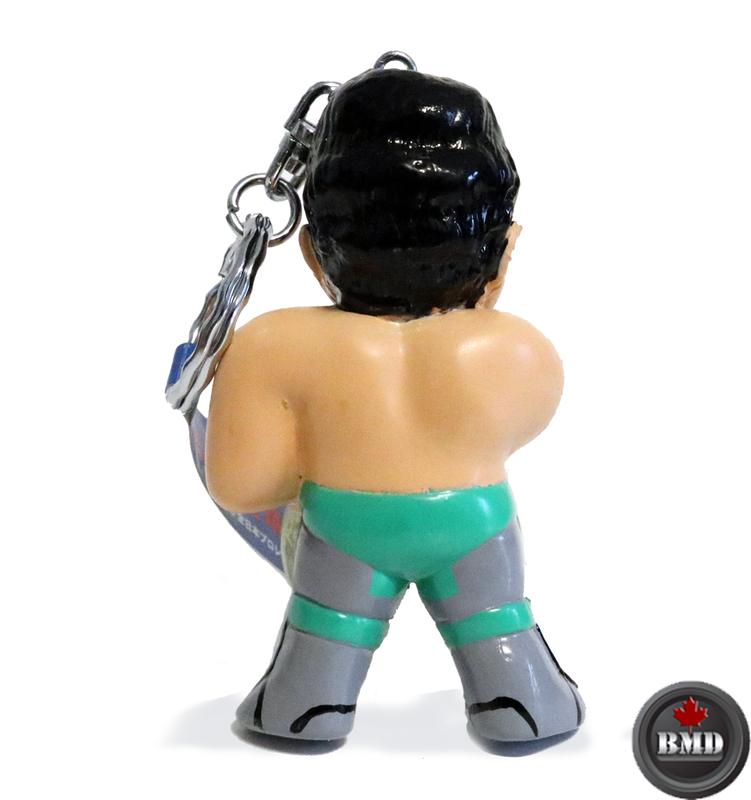
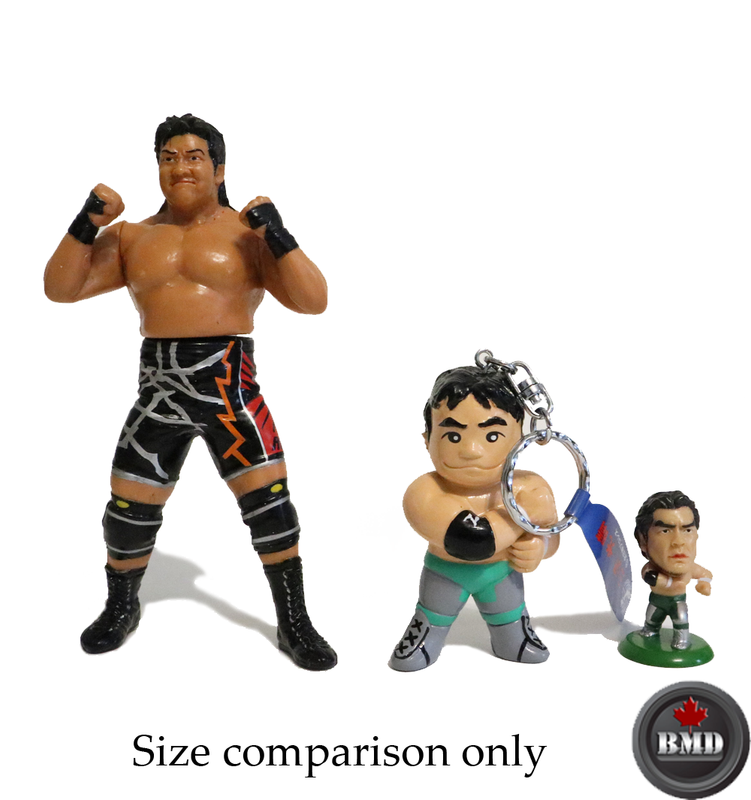


The size of the All Japan keychains measures about 3-4" inches in height; towering
over the more recent Mini Big Heads line.
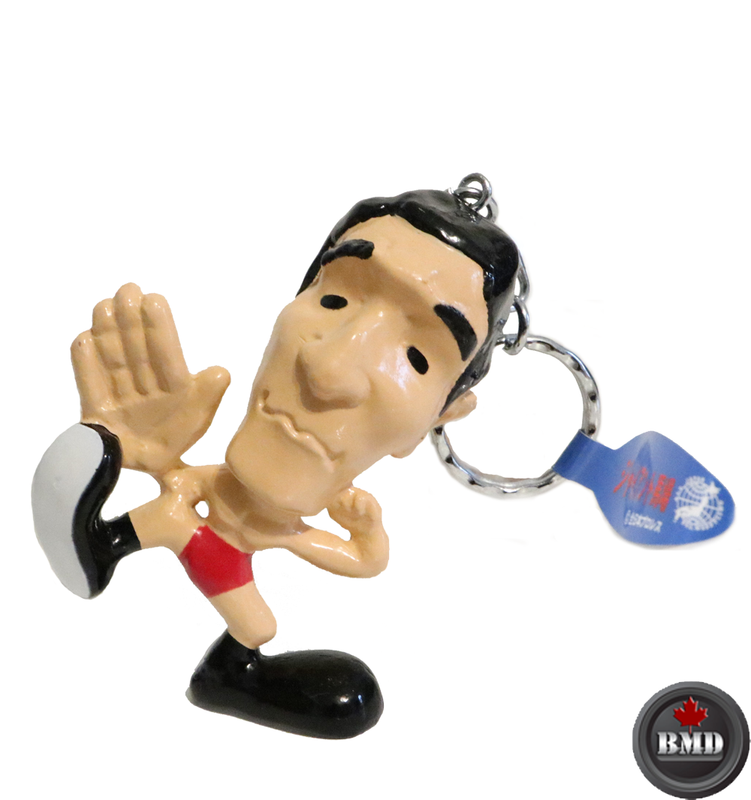
                                      

Next up is All Japan Pro-Wrestling founder and legend himself: Giant Baba!

The Giant Baba figure's pose is an exact replica of the Giant Baba mascot
design featured on several pieces of merchandise from the era and depicts
Baba providing a big boot and one of Baba's signature chops.
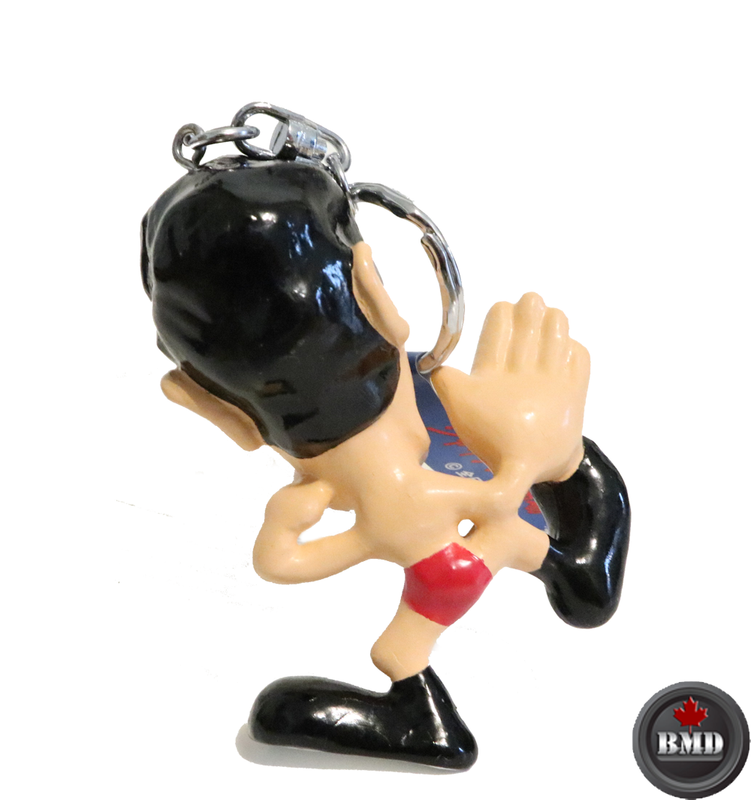


Each keychain is quite bulky (the pictures really don't do these figures justice)
and glossy with a noticeable shine.
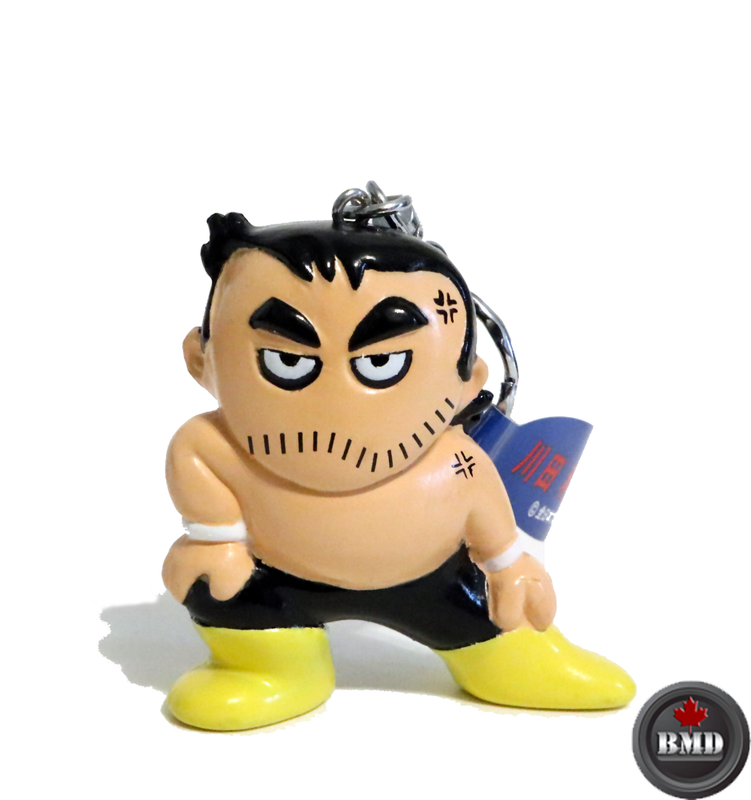


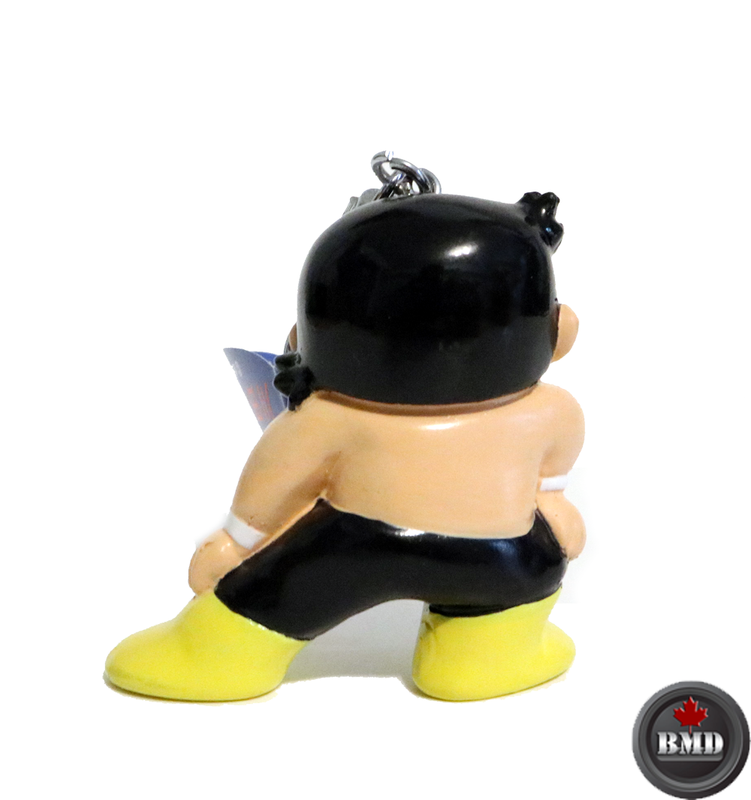
One of my favorite figures from the set is  - the first half of the"Holy Demon Army"
tag team: Toshiaki "Dangerous K" Kawada!

Despite not having a mouth, it's clear with his furrowed brows, throbbing veins and
warm up stance that Kawada is ready to fight!


Each of the 12 figures comes in it's own separate casing and cellophane wrapper;
just in case you'd prefer displaying certain figures separately.
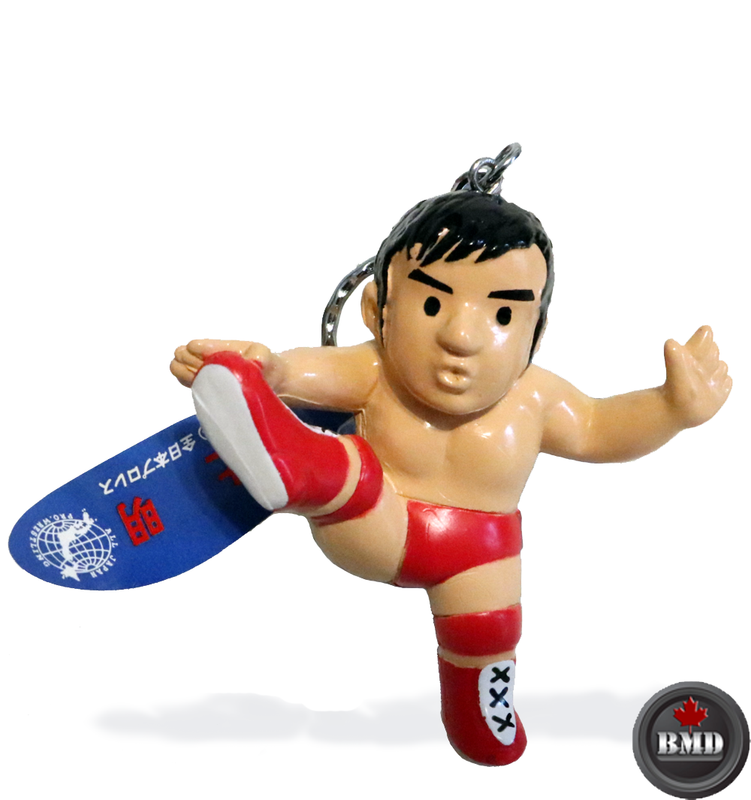


The second half of the "Holy Demon Army" tag team: "Dynamic T" Akira
Taue!
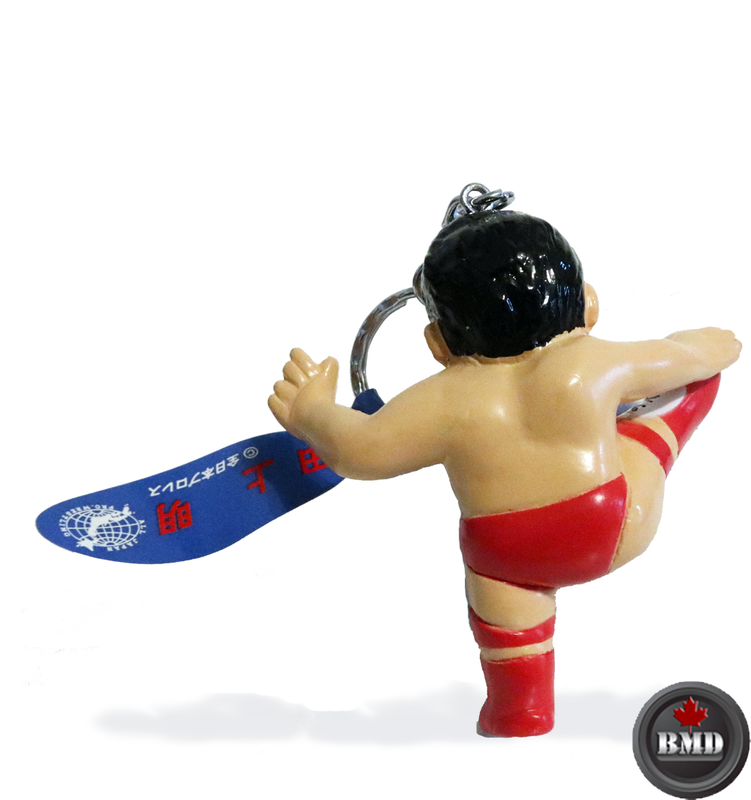
                             

Taue is posed in a big boot stance (one that sadly can't stand on it's own).


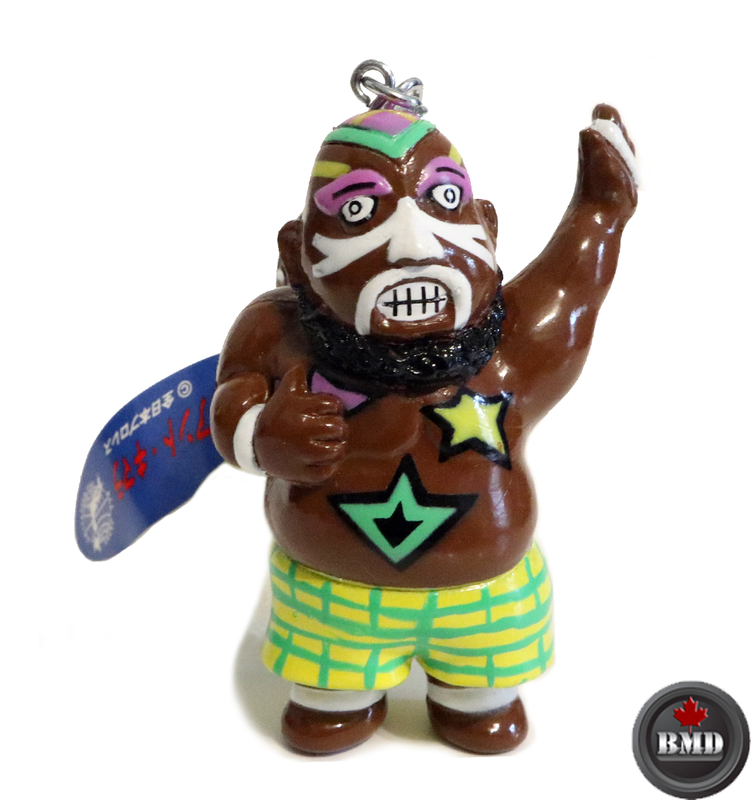
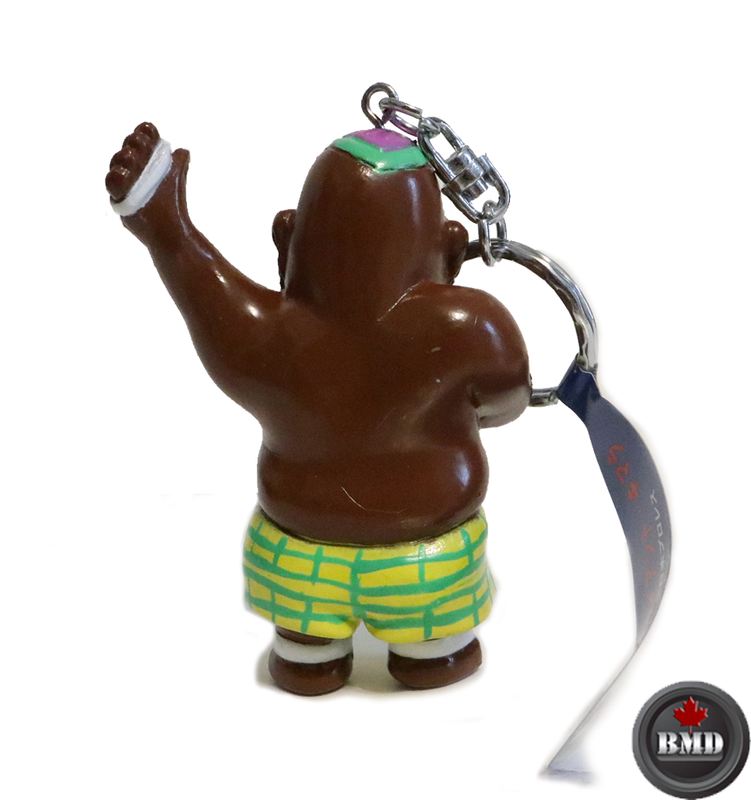
Hands down, my favourite figure from the set is that of Giant Kimala II.
The goofy cartoonish appearance really stands out here with the colours
of Kimala's face/body paint and overhead chop pose.

For those that aren't aware, Giant Kimala II is actually not James Harris.
It's Benjamin Peacock who was best known for tagging with the original
Kimala (referred to as "Giant Kimala" in Japan) and Abdullah The Butcher
in the early 1990's.


Like a handful of figures in this roster, I'm pretty sure this is the only figure
ever released of Giant Kimala/Kimala II in Japan!


Love him or hate him, very few gaijins were pushed for stardom in All Japan
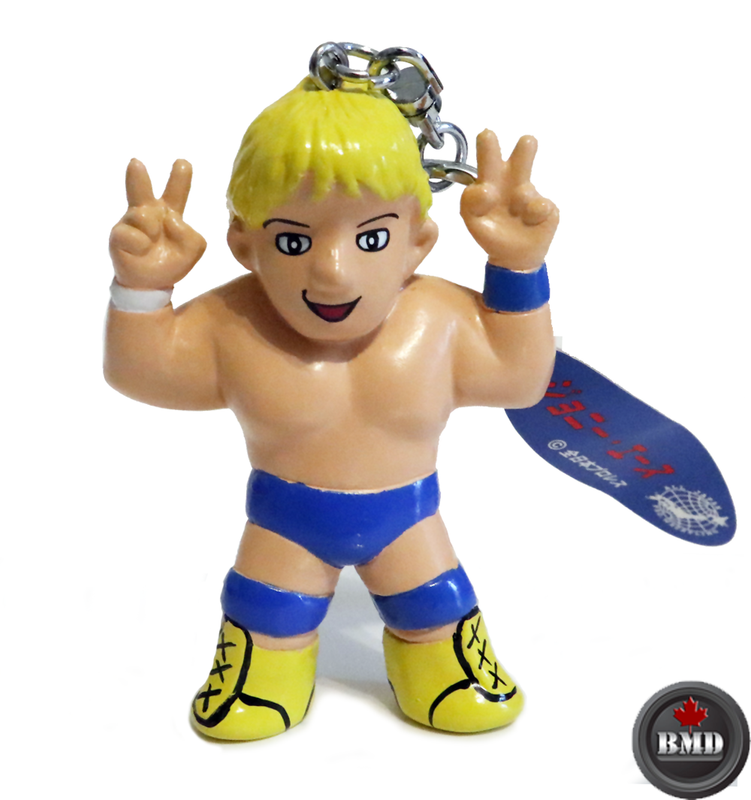
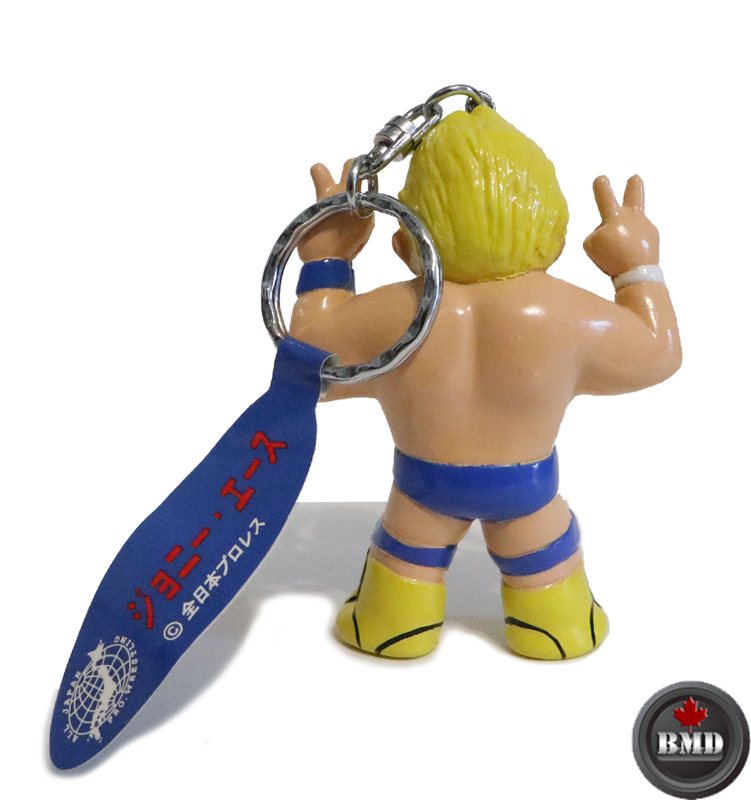
Pro-Wrestling as much as Johnny Ace (John Laurinaitis to the WWE universe)
was.

Ace comes sculpted performing a peace pose with  mixing blue and white
wristbands.


Another legendary veteran joins the 12 figure set in the form of "The Bad Man
from Borger Texas" Stan "The Lariat" Hansen!

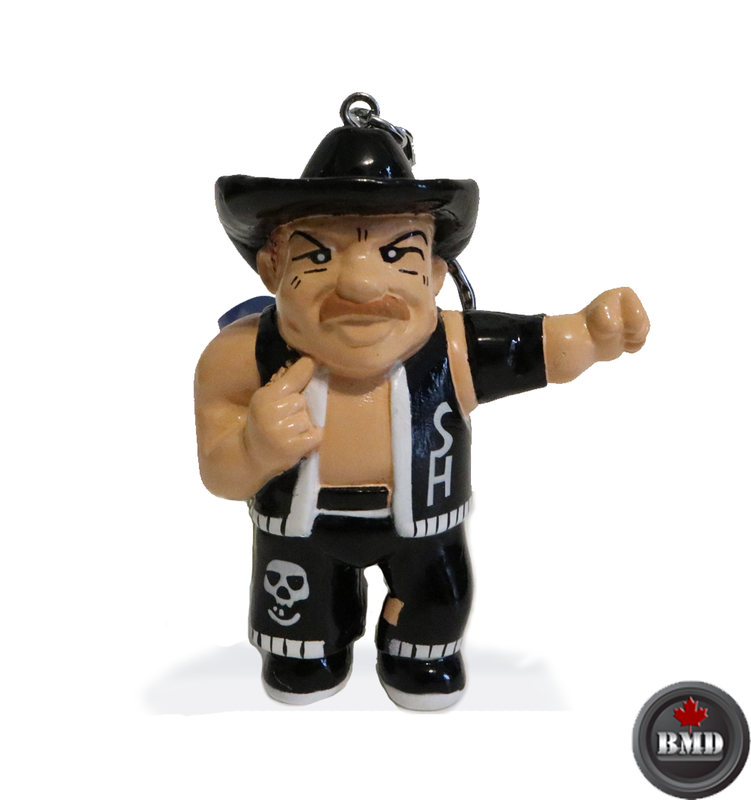
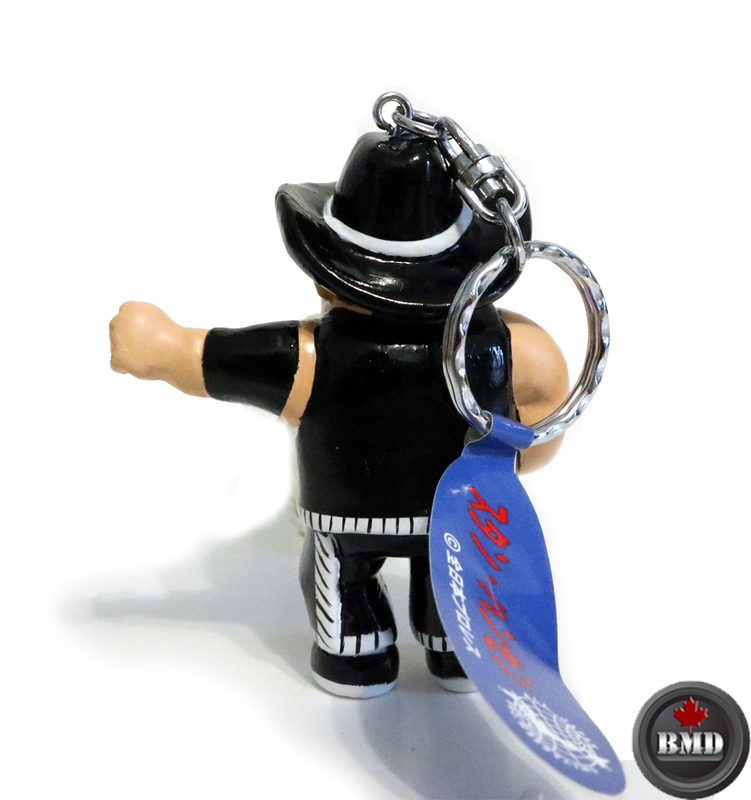
Stan is decked out in his classic black and white cowboy entrance attire with
vest, hat and matching chaps.

Like the Giant Baba figure from the set, the Stan Hansen figure's arms are
a mixture of Hansen's signature "texas longhorns" taunt and Hansen's
deadly finisher "The Western Lariat"!


Another highlight is the master of the "Oklahoma Stampede": "Dr. Death" Steve
Williams!


Death's stylish fire decal boots and muscle-flexing pose are just a few small
reminders of this All Japan legend.


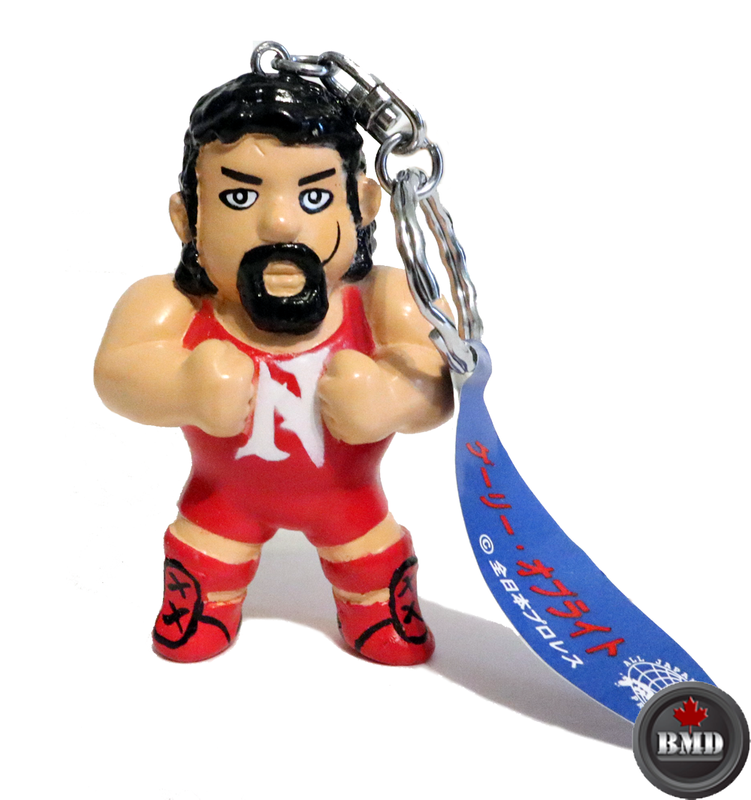
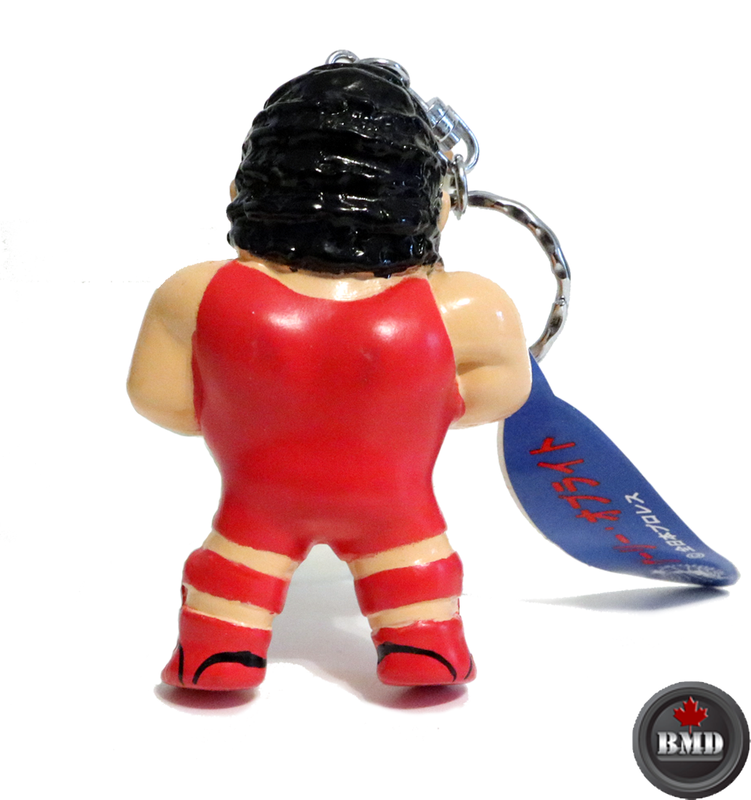
One of the few figures made of "The Suplex Machine" Gary Albright.

The half-smile "scar" on Albright's left cheek is actually that...just a scar.
Originally, I thought Albright's scar was a painting error, but the scar is
also featured in Gary Albright's Yujin SR series figure, too.
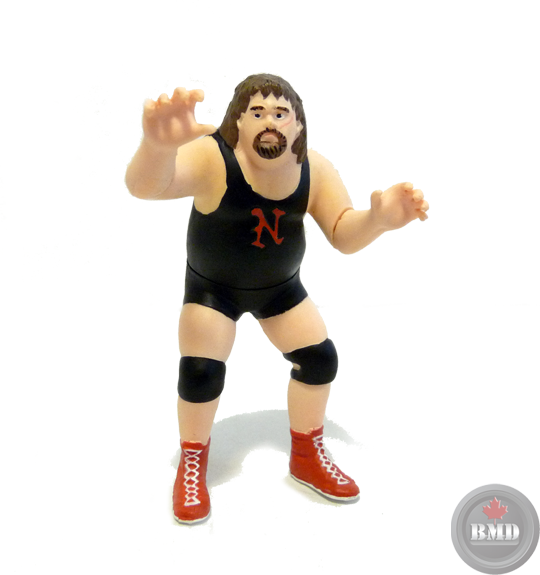


Albright comes dressed in his signature wrestling leotard with "N" initial
(which is a tribute to Albright's collegiate Wrestling background from the
University of Nebraska).


The last figure from the set (and another, quite possibly, one-off obscurity) is
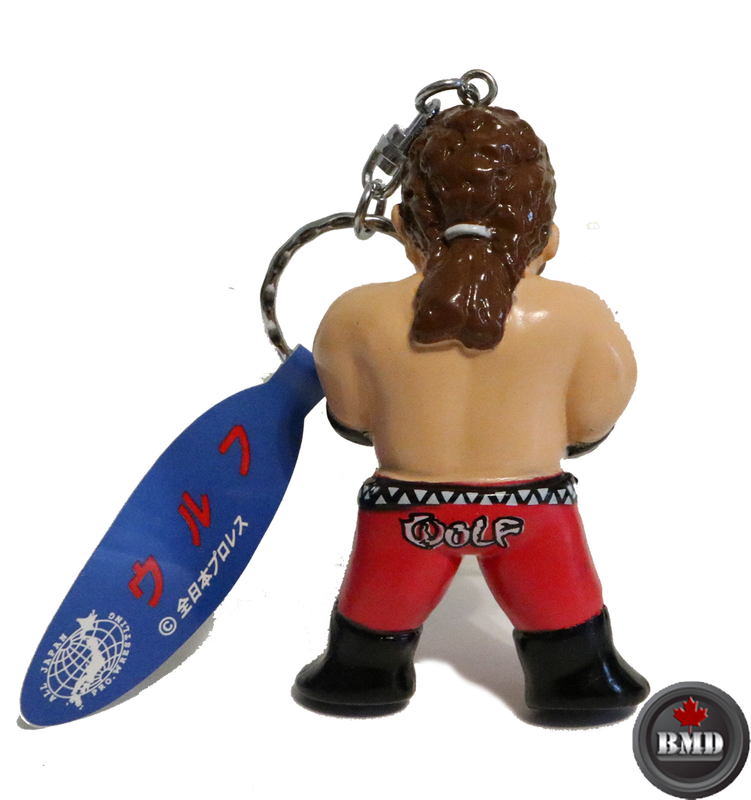
Wolf Hawkfield.

The Wolf Hawfield gimmick (played by Jim Steele in All Japan)  is actually based
on a video game character of the same name from the popular Virtua Fighter series
of fighting games.
                                 Image result for all japan pro wrestling featuring virtua arcade

The odd pairing is most likely a product tie-in with Sega's "All Japan Pro-Wrestling
featuring Virtua" video game that was released a year prior in Arcades and on the
Sega Saturn game console.


Strangely, Wolf's tag is the only figure to only have a Wrestler's first name.
In Wolf's case, Wolf's tag simply reads "WOLF" in Japanese Katakana.


-----

While rival promotion New Japan Pro-Wrestling was better known for putting
out numerous pieces of merchandise throughout the 1990's, the 1998 All Japan
Tokyo Dome set shows that, when inspired, All Japan could release some splendid
collectables, too (when given the chance).

Looking back, 1998 was the calm before the storm in All Japan. Giant Baba's
health was declining and Mitsuharu Misawa was just one year away from briefly
inheriting the position of All Japan president following Baba's passing on January
31st, 1999.
If anything, the All Japan figure collection serves as a transition from Giant
Baba's old-fashioned booking (colourful gimmicks, lots of prominent gaijin
talent, factions inspired by the territory days, etc) to the slicked-back, modern
-ized approach that placed a larger emphasis on Japan's native talent in the
form of Mitsuharu Misawa's Pro-Wrestling NOAH promotion.