Showing posts with label toy review. Show all posts

Monday, 21 October 2024

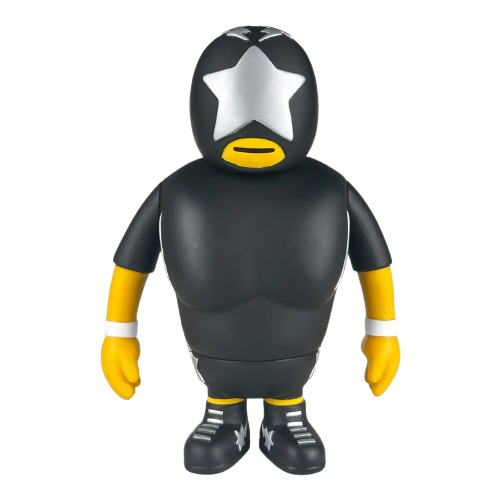
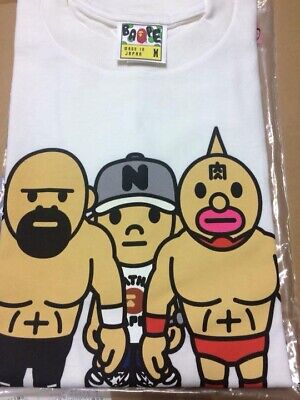
A BATHING APE X All Japan Pro-Wrestling figure review


Blog #282 A BATHING APE x All Japan Pro-Wrestling figure set review: 


Figures from Japan with little-to-no coverage have always been my niche.  Such is the case with the A BATHING APE X AJPW figure set.


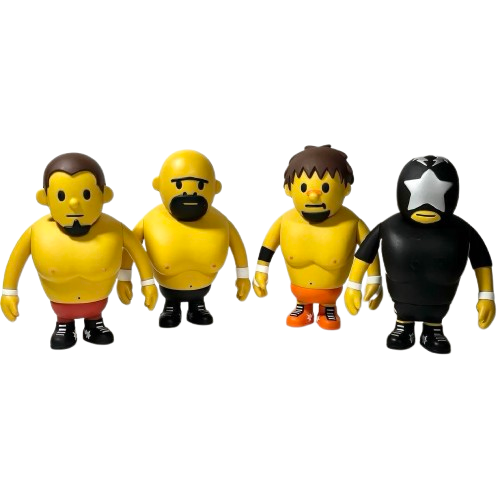
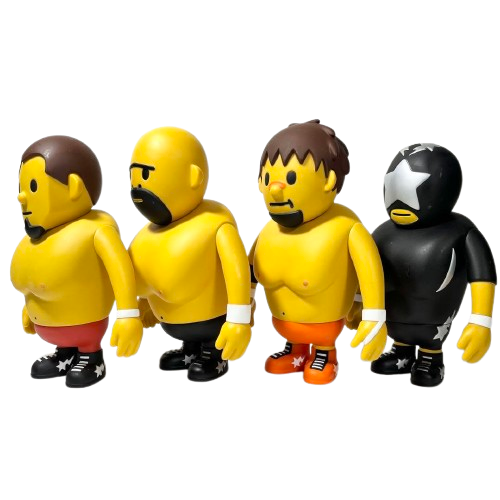
The four figure lineup. 


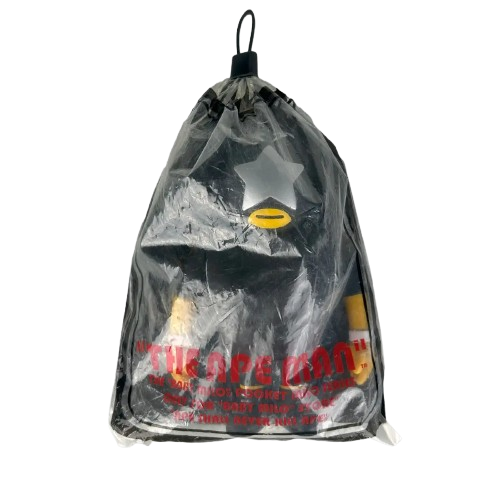
Each figure comes in a plastic drawstring bag that looks better-suited for some oranges at a grocery store. Despite being an officially-licensed product line, nicknames are included for each Wrestler on their respective bags. The figures are:

'KAZ' (Kaz Hayashi)

'Mr. 610' (Keiji Mutoh. The '610' in Japanese numbering translates to 'Mutoh', which has been a nickname of Mutoh's over the years; even naming his restaurant 'Dining 610' after it).

'KOJI' (Satoshi Kojima).

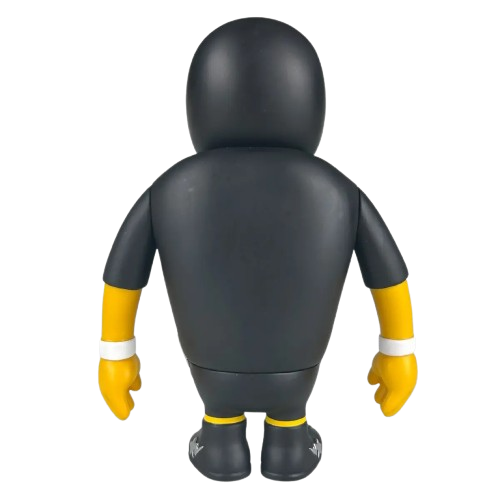
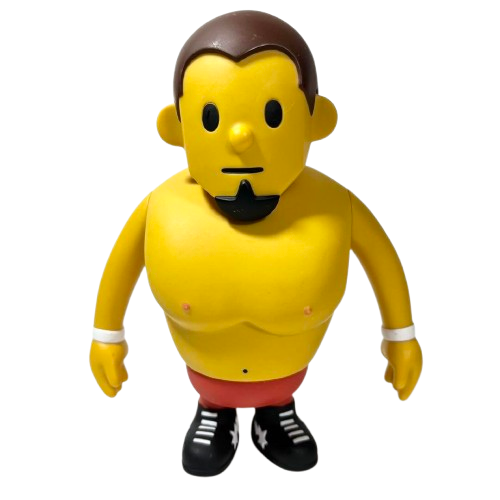
And the most obscure figure of them all 'THE APE MAN' (Apeman - a masked gimmick played by WWE's Jimmy Wang Yang)


The figures themselves are modeled after the minimalist approach of modern designer art figures.
Specifically, figures made by Bearbrick.


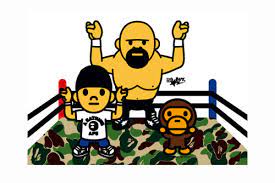
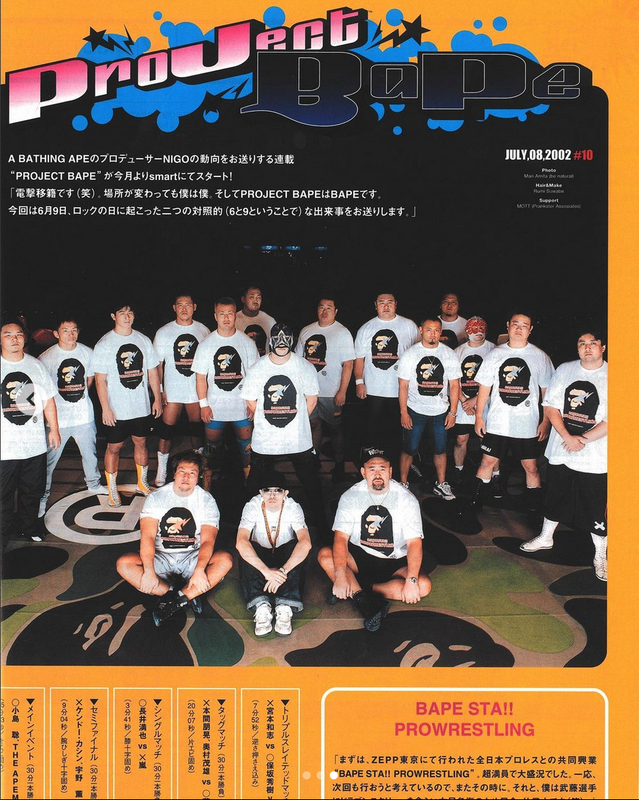
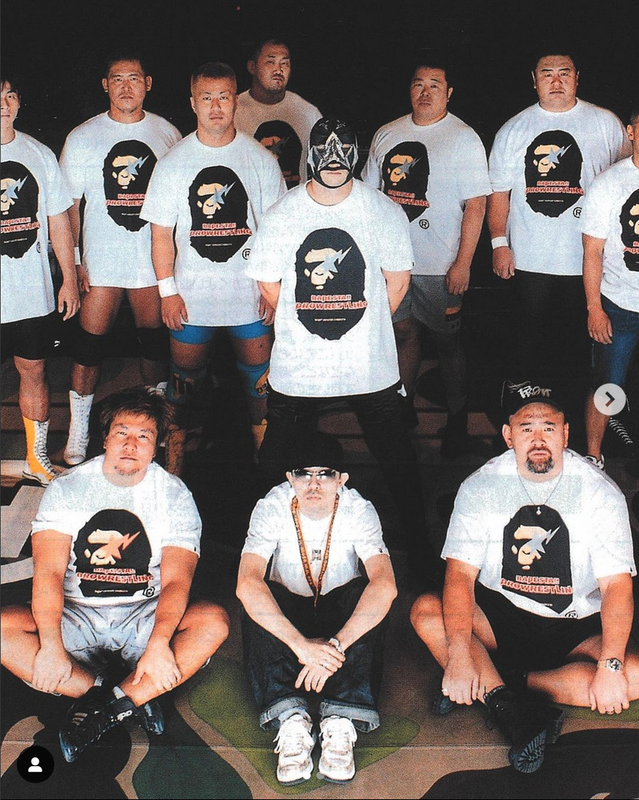
Bathing Ape, Apeman and the All Japan Pro-Wrestling roster in 2002 when both parties began collaborating.


Additional photos.


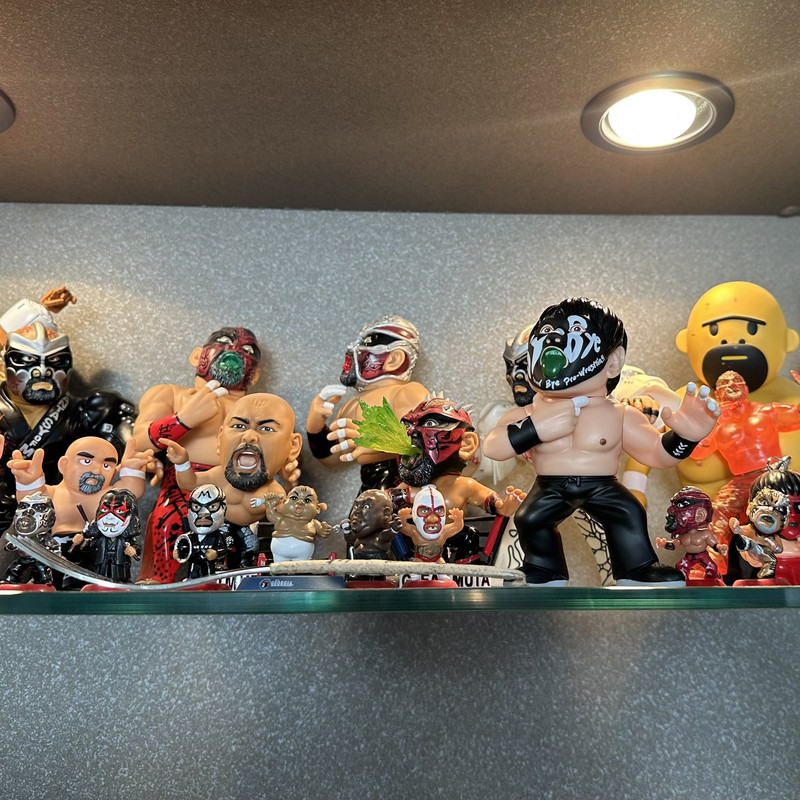
Keiji Mutoh owns his Bathing Ape figure; which can be seen at the back end to the right.

Scale-wise, these figures look to stand about 7 to 9 inches tall; when compared standing next to the HAO Collection Mech and Spider Muta figures.


Outside of All Japan Pro-Wrestling, Bathing Ape also joined forces with Kinnikuman years before New Japan could ever strike a licensing deal.


Sunday, 20 October 2024

Imperial Pro-Wrestling Federation figure review


Continuing to share obscure Japanese Wrestling collectibles with the world, I present four more sofubi figures:


Blog #281  Imperial Pro-Wrestling Federation figure review.

Imperial Pro-Wrestling Federation is a line of sofubi figures that were released by Japanese toymaker Utsugiyo in 2015.


Each figure stands about 4.5 - 5 inches (which is less than half the size of older Sofubi figures released in Japan). The design of the figures are meant to resemble the traditional Bullmark sofubi figures from the 60's and early 70's.


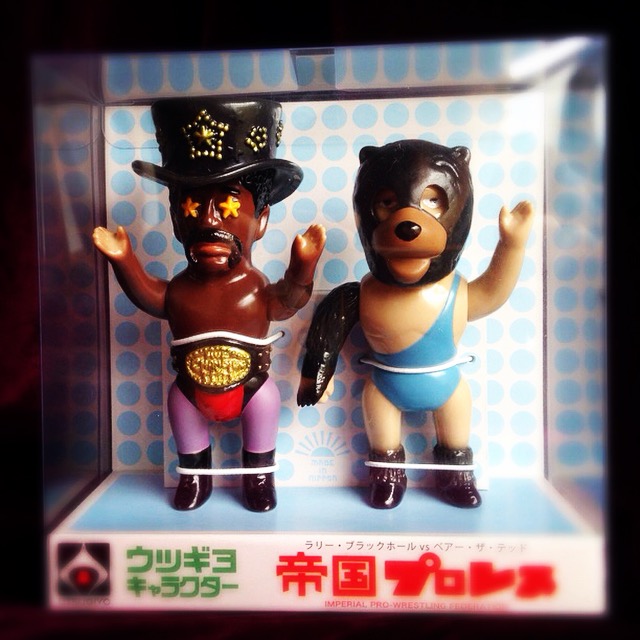
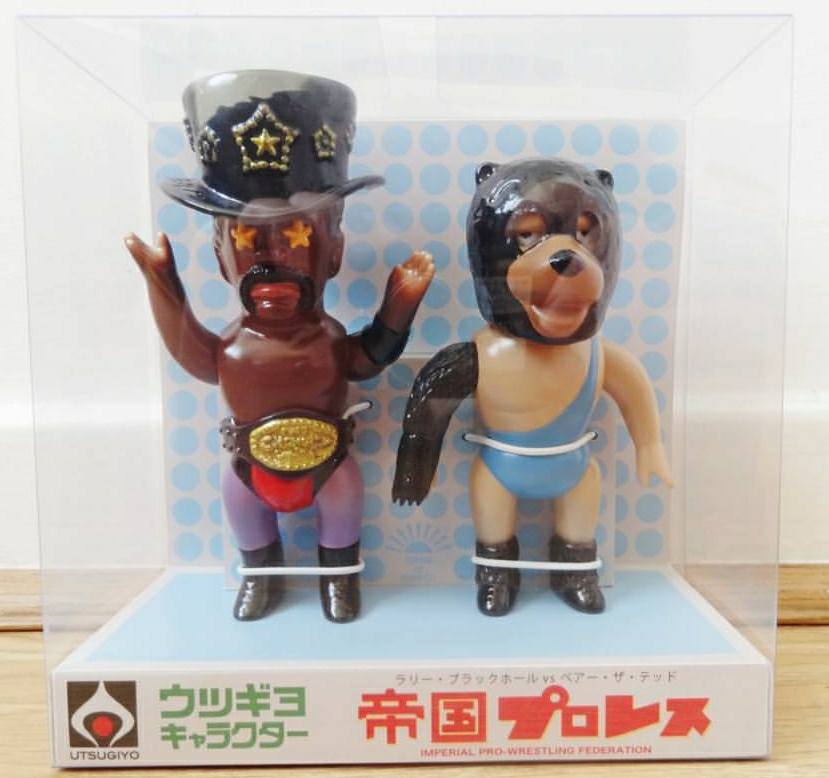
Design-wise, Utsugiyo states that the Champion Series two-pack features two protagonists: Larry Blackhole and Bear the Ted.


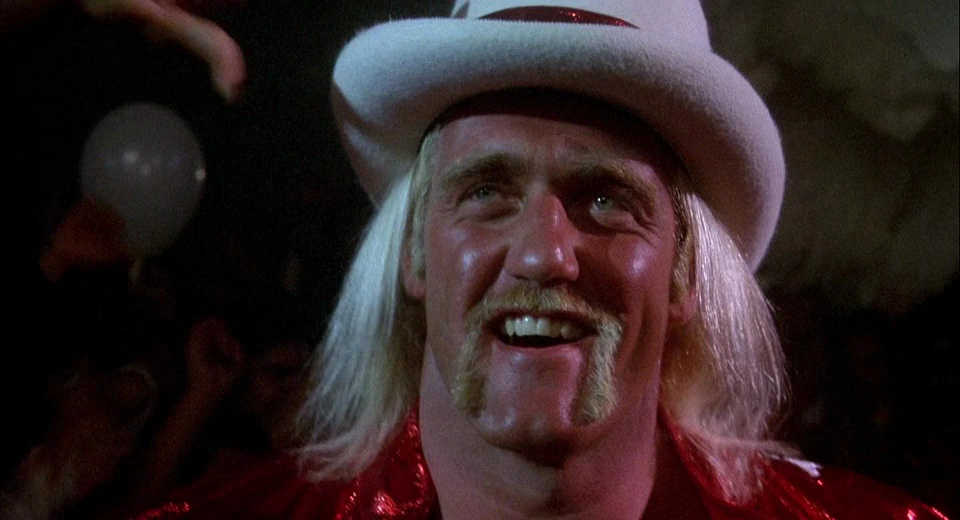
Personally speaking, I think Larry is based on Thunderlips. The hat and handlebar mustache, plus IGWP-inspired belt  seem reminiscent of Hulk's likeness. Additionally, I feel Bear the Ted is a tribute to Tiger Mask and Bruiser Brody (note Ted's furry boot coverings).


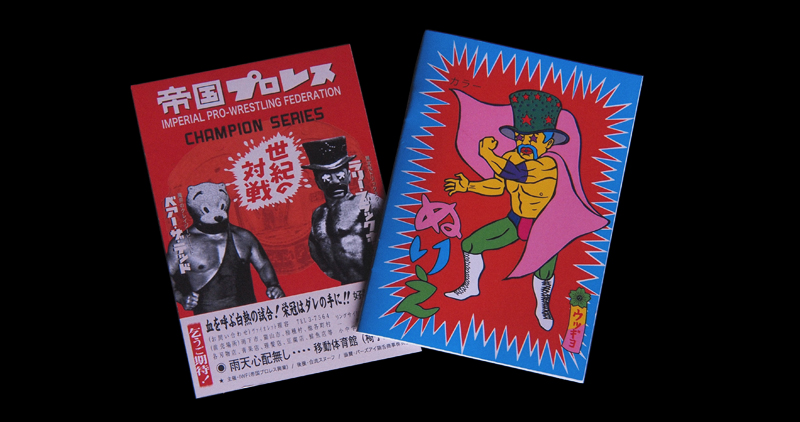
The Champion Series two-pack originally sold for 14,000 yen ($117 USD), which also came with a colouring book and poster. The poster's design was meant to replicate the look of classic Puroresu posters from the 1960's (specifically, the JWA).

Just like Thunderlips in Rocky III, Blackhole also features a cape of his own.

Only 27 sets were created, and anyone who didn't pre-order by May 7th had to be entered into a lottery in hopes of bagging the pair.

If you thought $117 for two miniature sofubi's was a tad much, be prepared to feast your eyes on the following:


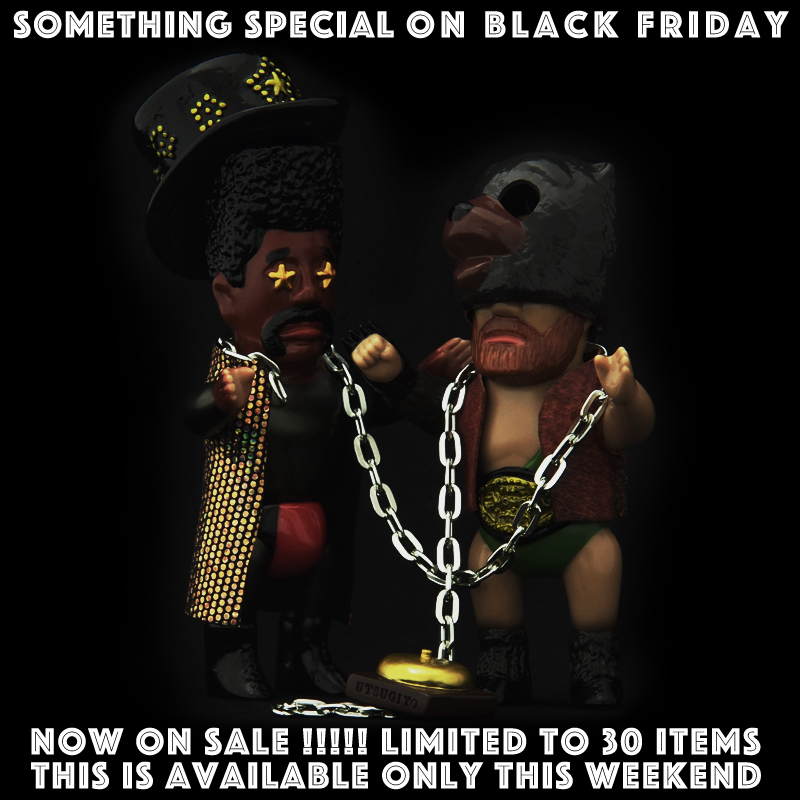
Utsugiyo released a special variant set that was only available over the weekend.

Unlike the original Champion Series set, this special two-pack included multiple removable accessories. Teddy's vest chains and beard look reminiscent of Bruiser Brody here.

Released in 2018, this special set was sold for a jaw dropping 49,999 yen ($367 USD plus shipping!). Welcome to the expensive world soft vinyl 'designer art toys'.


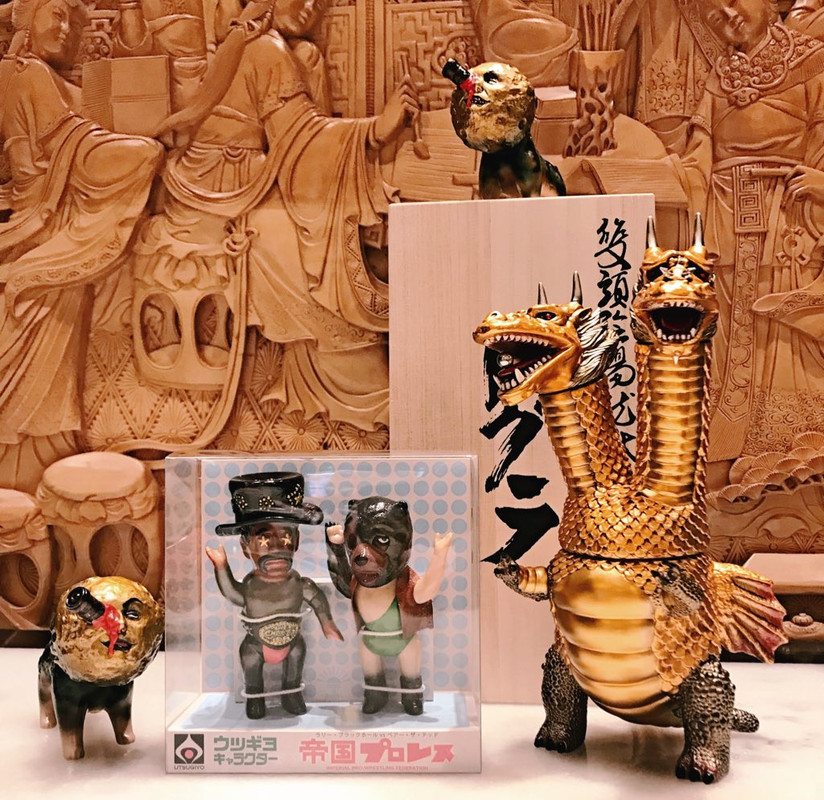
The only known photo I could find of the packaged Black Friday version. I wonder if the extra accessories are tucked away inside the packaging, or were removed at the last second? We may never know.

At 1 to $400+, would you consider hunting down these designer art Wrestling figures? 

Giant Baba Remote Control Wrestler review


Blog #278 The Giant Baba Remote Control Wrestler review.


By the early 80's, merchandising was in full-swing with All Japan Pro-Wrestling. Being the founder and star of the promotion, Giant Baba was the central figure in All Japan's merchandising boom of the era. 

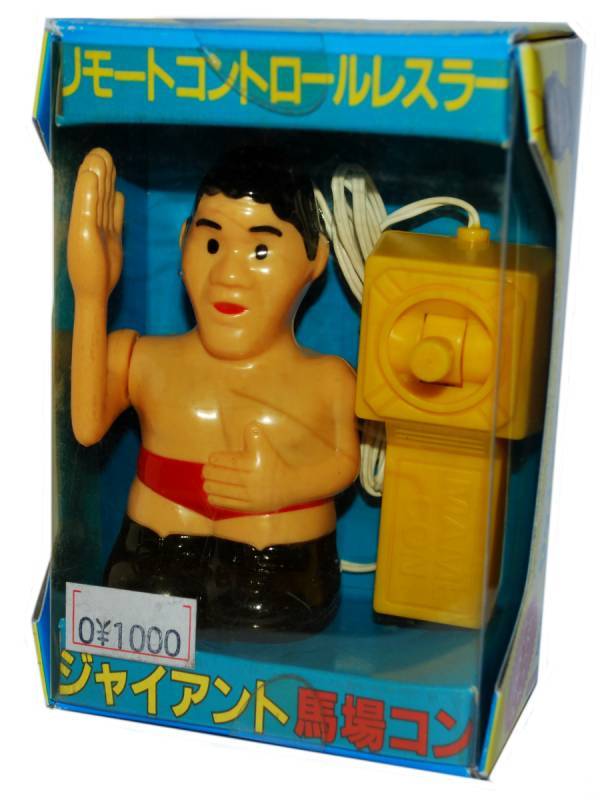
Our next wacky figure was released by Japanese toymaker MAME CON in 1984.


Special thanks to Wrestlefigs.com for the above photo.

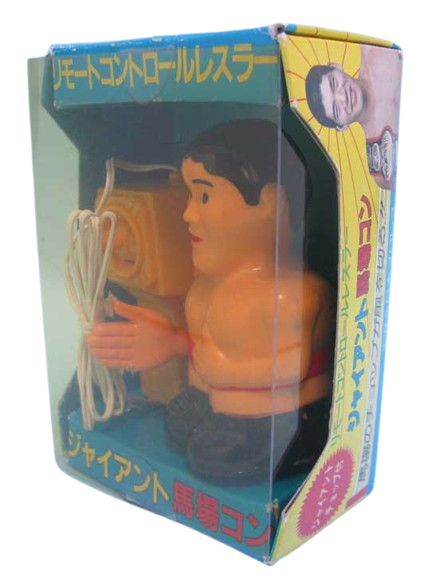
The Giant Baba remote control figure sold for $6 USD upon it's initial release.


The packaging reads
'Remote Control Wrestler
Giant Baba Con'


(リモートコントロールレスラー
ジャイアント馬場コン).

In case you were wondering, the word 'con' is short for controller.


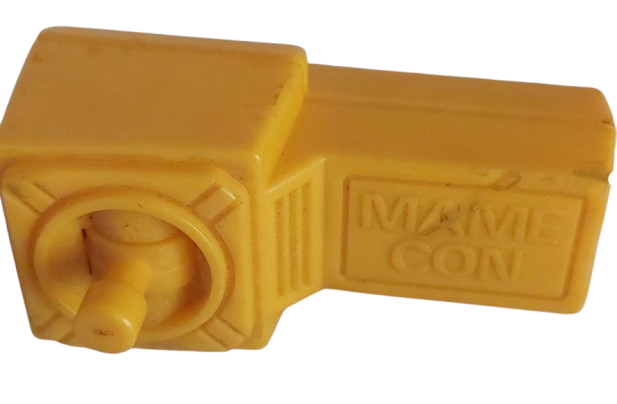
As expected, the controller makes Giant Baba move and perform chops simultaneously. Notice the 'MAME CON' company logo on the controller.


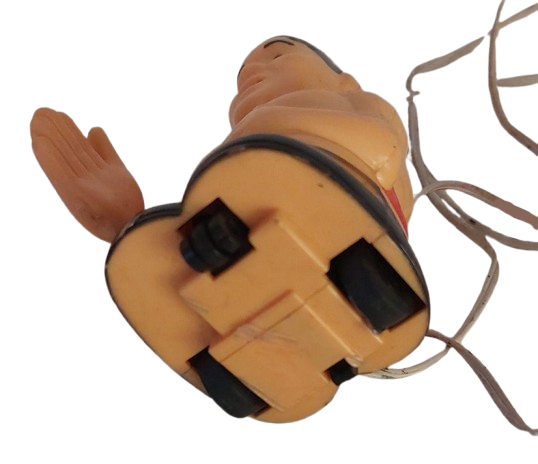
Providing chops on the-go: the Mame Con Giant Baba operates with three wheels at the bottom of the toy.


A belt-wearing Giant Baba is pictured on the sides of the box.

Sadly, no other likeness was added to expand upon MAME CON's Remote Control Wrestler concept. Stan Hansen would have been a perfect fit swinging his bullrope or Lariat. A fork-stabbing/throat-choppin' Abdullah The Butcher could have been a cool idea, too. Though, Abdullah wouldn't return to AJPW for another 4 years.

Saturday, 31 August 2024

16d Collection Terry Funk figure review

 
Outside of the realms of WWE merchandising, Terry Funk has been included in numerous
figure lines over the years. Most prominently, the lion's share of those depictions can be
found overseas exclusively in Japan.

From POPY's iconic Superstars figure line to Clockworks' Beyond The Mat movie exclusive,
BoFord's Martial Arts Box collection, and even Bandai's seemingly endless assortment of
keshigomu eraser figures, fans of the Texas Bronco have plenty of figures to choose from.

Today, we'll be taking a look at the newest Terry Funk depiction from Japan. Blog #262
laces up against the 16d Collection Terry Funk sofubi figure.


Legendary rivals reunite in the 16d line.

While most of the Terry's figures veer towards the tail-end on the Dirty Funker's career as a
hardcore legend, this particular figure is based on Terry's late 1970's - early 1980's run in All
Japan Pro-Wrestling.

At the time, Terry and his brother Dory Funk Jr. were considered two of the promotion's top
foreign babyfaces.


Terry's name is written on the front of his jacket. Though, if collectors want to appreciate the
writing clearly, they'll have to rotate Terry's arms. Like the 16d Giant Baba figures, I found
moving Terry's arms to be very quite tedious at first. Though, with a little persistence, it is
possible.

Another thing I discovered that the GoodSmile shop doesn't tell you is that Terry's wrists are
also articulated; both being able to rotate a full 360 degrees.

In terms of articulation, Terry features movable arms, wrists, neck and waist.


'Texas Broncos' is written on the back of Terry's entrance jacket.

In the world of Puroresu, The Funks' bomber jackets from this era are considered holy grails
among collectors. Often times selling for thousands of dollars to diehard fans.

The Great Kabuki himself was gifted one of these jackets by Dory Funk Jr. himself, along with
one of Stan Hansen's iconic cowboy hats. Two treasures the legend displays in his BIG DADDY restaurant in Japan.


Like most 16d figures, the sole of Terry's boots contains a copyright from the Wrestler himself.
In Funk's case, the license is a posthumous one; being the first figure released after Terry's
passing.


The side of the packaging reveals Terry's profile:

D.O.B.: July 30th, 1944
Birthplace: America, Indiana
Debut: December 9th, 1965
Height/Weight: 188cm (6'2), 118kg (260lbs)
Signature moves: Spinning Toe Hold, Rolling Cradle, Texas Clover Hold
(Texas Cloverleaf).


Closing thoughts:

After years of waiting, it's nice to see Terry finally added to the 16d line. Like a majority
of HAO's craftmanship, I feel the 16d figure depiction is one of the most realistic representations
of Terry to date. Terry's resemblance is spot-on in soft vinyl form.

Here's hoping we'll get Dory Funk Jr. (who just earned the distinction of being the oldest Wrestler
to Wrestle at the age of 83) along with other gaijin legends added to the 16d line in the future.


Thursday, 29 August 2024

Utsugiyo Imperial Pro-Wrestling Federation figures review


Continuing to share obscure Japanese Wrestling collectibles with the world, I present blog
#260 which squares off against Utsugiyo's Imperial Pro-Wrestling Federation figures.


The Imperial Pro-Wrestling Federation figures are a line of soft vinyl figures that were released
by Japanese toymaker Utsugiyo in 2015.


Each figure stands about 4.5 - 5 inches (which is less than half the size of older Sofubi figures
released in Japan). The design of the figures are meant to resemble the traditional Bullmark
sofubi figures from the 60's and early 70's.


Design-wise, Utsugiyo states that the Champion Series two-pack features two protagonists:
Larry Blackhole and Bear the Ted.


Personally speaking, I think Larry is based on Thunderlips. The hat and handlebar mustache,
plus IGWP-inspired belt seem reminiscent of Hulk's likeness. Additionally, I feel Bear the
Ted is a tribute to Tiger Mask and Bruiser Brody (note Ted's furry boot coverings).


The Champion Series two-pack originally sold for 14,000 yen ($117 USD), which also came
with a colouring book and poster. The poster's design was meant to replicate the look of classic Puroresu posters from the 1960's (specifically, the JWA).

Just like Thunderlips in Rocky III, Blackhole also features a cape of his own.

Only 27 sets were created, and anyone who didn't pre-order by May 7th had to be entered into
a lottery in hopes of bagging the pair.

If you thought $117 for two miniature sofubi's was a tad much, be prepared to feast your eyes
on the following:


Utsugiyo released a special variant set that was only available over the weekend.

Unlike the original Champion Series set, this special two-pack included multiple
removable accessories. Teddy's vest chains and beard look reminiscent of Bruiser
Brody here.

Released in 2018, this special set was sold for a jaw dropping 49,999 yen ($367 USD
plus shipping!). Welcome to the expensive world soft vinyl 'designer art toys'.


The only known photo I could find of the packaged Black Friday version. I wonder if the
extra accessories are tucked away inside the packaging, or were removed at the last second?
We may never know.

At 1 to $400+, would you consider hunting down these designer art Wrestling figures?

Saturday, 27 May 2023

Grape Brain X Great Muta sofubi figures review


In the realm of Japanese Wrestling merchandise, few competitors have received as many
figures as The Great Muta. With striking facepaint, intricately-detailed ring masks,
an endless variety of phantasmagorical entrance attires, along with a penchant for
influencing countless Wrestlers with his innovative in-ring techniques, it's no wonder
that the 'Pearl of The Orient' continues to remains an indelible icon in the world of
professional Wrestling.

Our next batch of figures pay homage to Muta's early years, with a crossover project
sure to turn heads. Blog #236 summons Grape Brain's Great Muta sofubi figures.

Enter the Grape Brain Genius
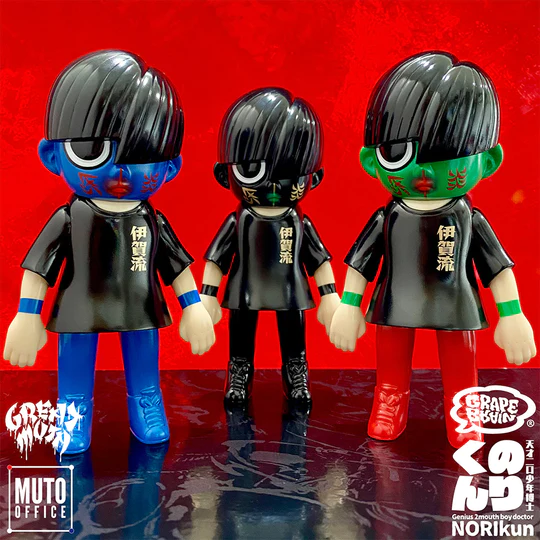
Grape Brain is a Japanese artist who is best known for his characters Origiri and Norikun.
Known as the "2 mouth genius boy doctor", Norikun casts a sinister presence with
bangs obscuring one of Nori's eyes. Norikun also includes a second face - a monstrous,
alter-ego that is located at the back of Nori's head.
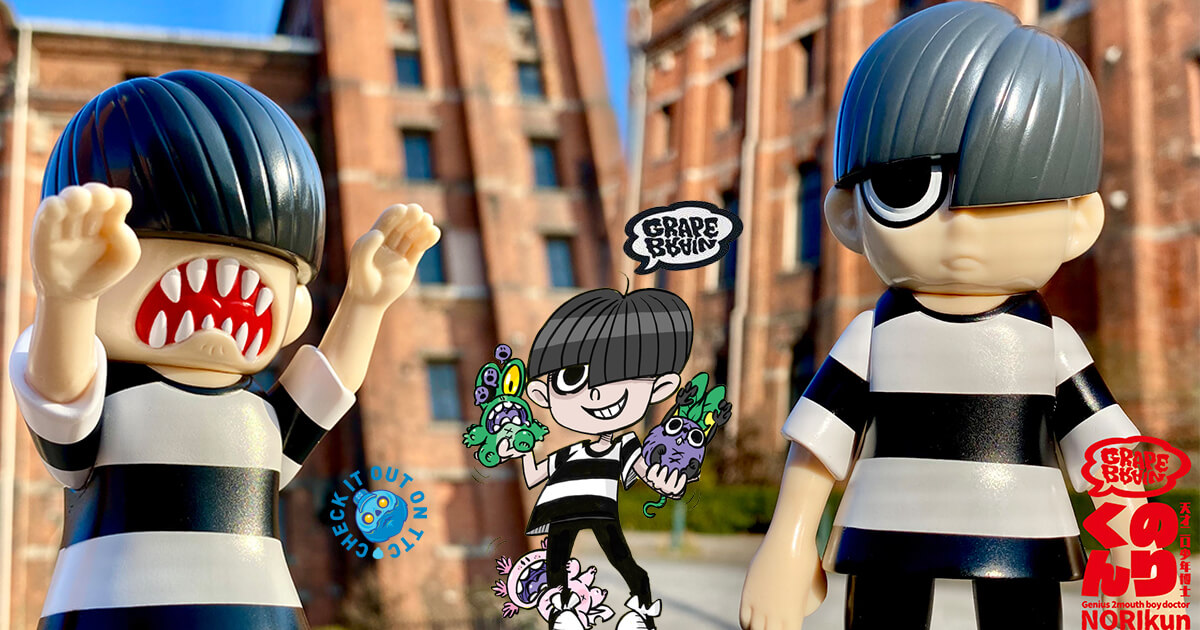

By turning Norikun's head, collectors can display either one of Nori's personalities.

Visually, Norikun's appearance reminds me of the mid 90's early 2000's cartoon animation
found on Nickelodeon or Cartoon Network. Cartoons like Dexter's Lab and, later, Teen
Titans comes to mind.

Enter the Grape Brain Great Muta crossover

Capitalizing on The Great Muta's 2023 retirement run, Grape Brain, in conjunction with
Pro-Wrestling NOAH, created a series of soft vinyl figures inspired by the Wrestling legend.


Following the trend of other designer toy brands such as BearBrick, KAWS, Kidrobot
and, in extension, even Funko POPS!, Grape Brain has redesigned Norikun to resemble
The Great Muta, as he appeared in the late 80's to early 90's.

Each Norikun figure stands 14cm or 5.5 inches tall and is made of soft vinyl. 
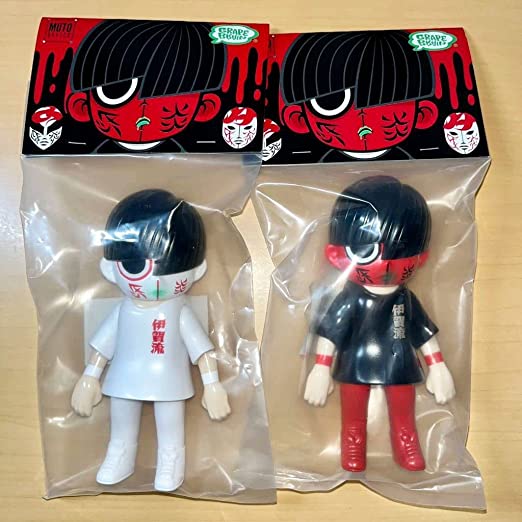


In the traditional style of sofubi figure packaging from the 1960's and 1970's, the Grape
Brain Great Muta figures come in simple shrinkwrap packaging with attached cardboard
backings.
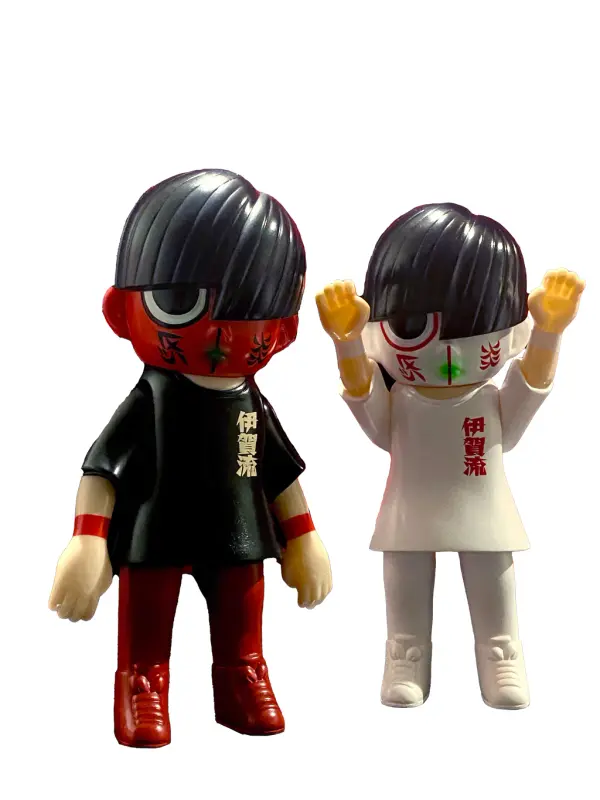
In terms of articulation, only the arms and head can be rotated.

I love how the Norikun figures ever have green lips, a nod to Muta's poison mist attack.


From Pro-Wrestling NOAH's official shop, the following text reads
"Great Muta X Norikun Sofubi NEW colour ver."

The text also mentions the website price of 11,000 yen (roughly $80 USD) per figure.
With five colour variants available (Black, Blue, Green, White and Red), acquiring
each variant would cost collector's over five hundred dollars.

Since the Norikun Great Muta figures were made in very limited numbers, each edition
sold out rather quickly. The few examples of Grape Brain's work that have made it to
the secondary market now fetch upwards of five hundred dollars per figure!
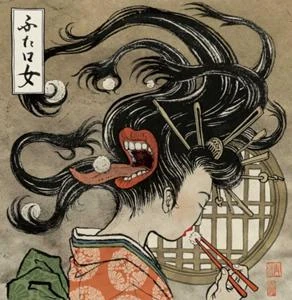
                                 

My theory is that the monstrous head at the back of Norikun's skull is a reference
to the Japanese yokai legend of Futakuchi Onna; an early example of a split
personality imbued with supernatural powers.
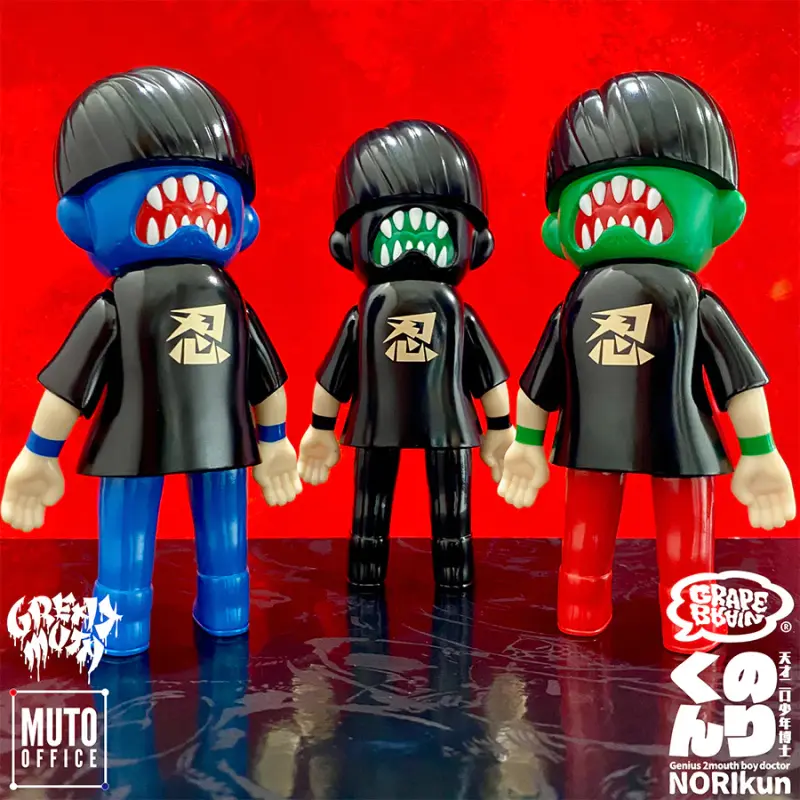


The Japanese Kanji on the front of Norikun's shirt reads '伊賀流', which translates
to Iga-Ryu. One of two historically significant ninja clans in Japan.The text alludes
to the Great Muta's early entrance attires, which were based on classical Ninja hoods.

The writing on the back of the Norikun figure's shirt reads '忍' (Ninja).
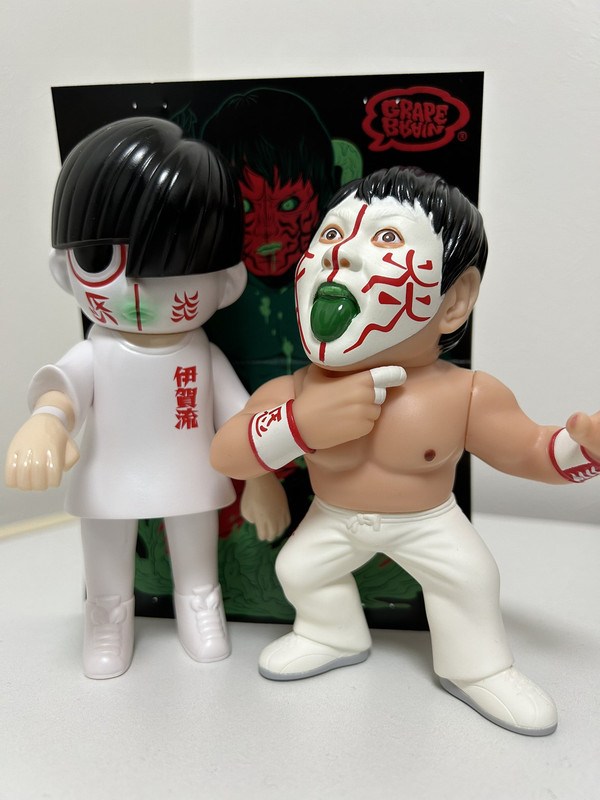


When displayed next to 16d Collection's Great Muta (white paint ver.) sofubi figure.


Closing thoughts:

Only the most hardcore of Great Muta fans will consider purchasing the Grape
Brain Norikun Great Muta figures. As renown as Grape Brain's work may be
in the art community, their merchandise isn't as recognizable as designer art toys
made by more recognizable brands. The rather steep base price of 11,000 yen per
figure is also a hard bargain to reason with as well.

Should the Grape Brain Muta variants ever made it to the secondhand market,
collectors can expect paying at least double to triple the original retail price;
making these soft vinyl oddities even more costly in the long run.
Friday, 7 April 2023

Haniwa Pro-Wrestling figure set review

On the subject of recognizable merchandising brands, few Japanese toymakers are regarded
as highly as TAKARA TOMY.

In this blog's seven year existence, we have covered several of TAKARA's more notable.
releases. Products ranging from wind-up racecars, to vintage, tabletop board games that
predate the commercial resurgence of video games in the mid 1980's.

Today, we'll be taking a look at one of TAKARA's more obscure pieces of Puroresu
merchandise. A line that mixes the pageantry and visual excitement of the squared circle,
along with a nod to one of Japan's ancient forms of model making.

Article #235 focuses on TAKARA TOMY's Haniwa Pro-Wrestling line:


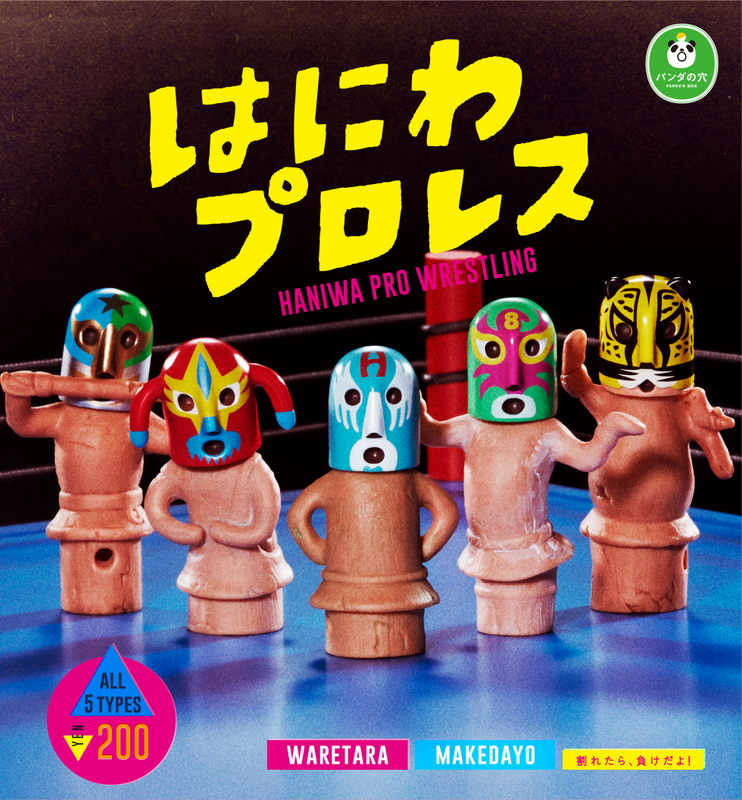
Known in Japan as 'はにわプロレス', the Haniwa Pro-Wrestling line was released by TAKARA/Panda's Ana. The line's edgy slogan "waretara makedayo" roughly translates
to "if you crack it, you lose".


"But what are haniwa"?


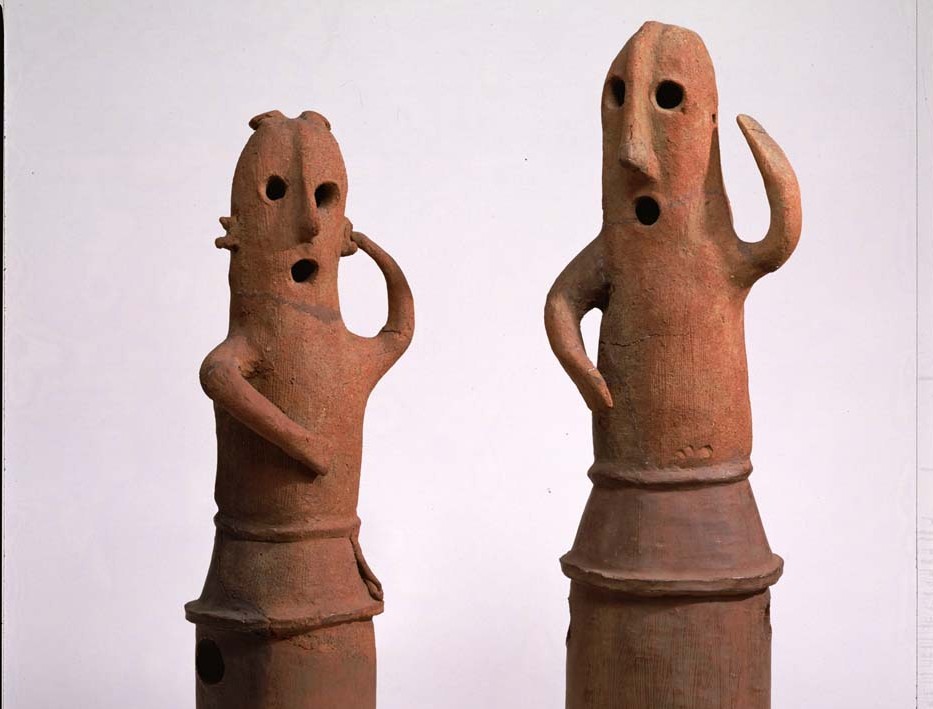
                                 Original haniway singer sculptures.

Haniwa are clay, terracotta figures that date back thousands of years. In Japanese culture,
haniwa were initially used as markers for borders of burial grounds. It wasn't until the 4th
century that sculptors began fashioning the haniwa into sculptures of dancers, animals and
even warriors; serving as protection totems and funerary objects that were buried with the
dead.


From historical artifacts to pop culture phenomena - haniwa in modern society:


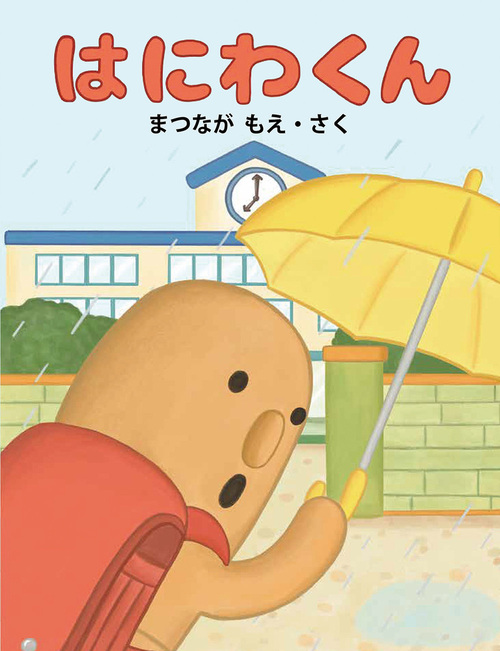
 'Haniwa-kun', a children's picture book presenting the haniwa sculptures in a light
hearted fashion.


Despite their rather grim history, the image of haniwa figures have taken on a more
animated approach in Japanese media. Over the last twenty years in particular, the
haniwa have evolved from artifacts of historical significance to depictions of
mischievous, sentient beings. More so, these enchanted characters have made
appearances in cartoons, video games and even trading card adaptations; softening
the haniwa's image in the public's eyes over time.

Aesthetically, the antiquated design of the haniwa have also been embraced as a
popular art form; garnishing praise from aspiring model makers and art lovers alike.


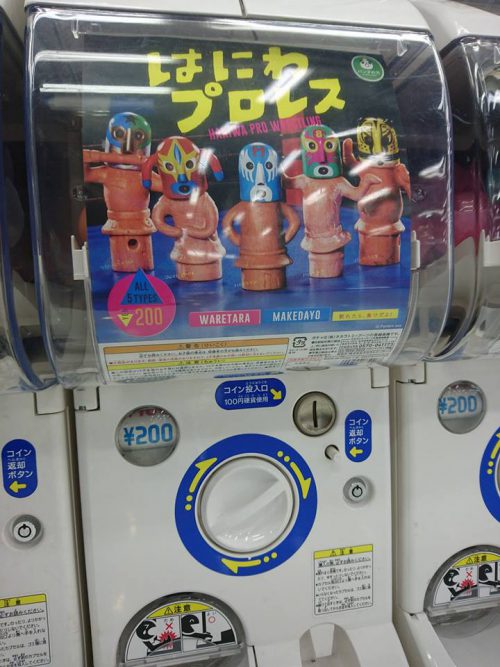
Like many Japanese minifigures, the Haniwa Pro-Wrestling line were originally sold in
gashapon (gumball vending machines that sell buildable model kit toys in Japan) format
for 200 yen (about $2 USD) each. Figures were distributed at random; encouraging kids
to trade with their friends to track down a full set.


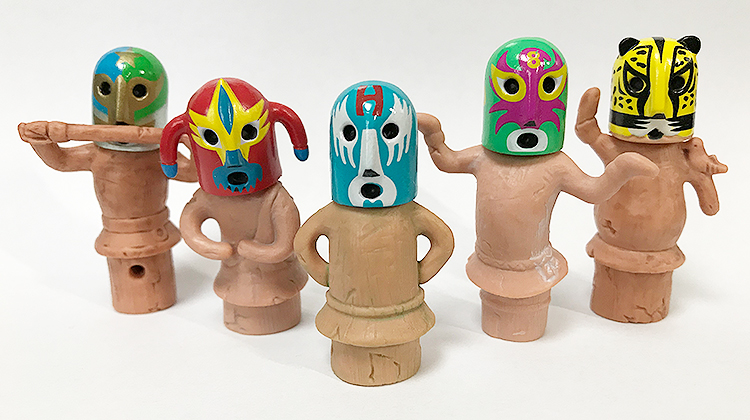
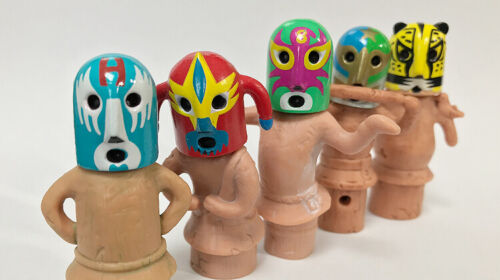
There are five figures to collect in the Haniwa Pro-Wrestling line; each one displaying a specific
pose and colourful Wrestling mask.

Seasoned fans of Pro-Wrestling may recognize some of the masks, as these particular designs
are copyright-friendly tributes to some of Japan's most popular real-life Pro-Wrestlers. The
figures are named (left to right):

Taihar Nitto Wan
(タイハー・ニット・ワン) - His name sounds just like Tiger Jeet
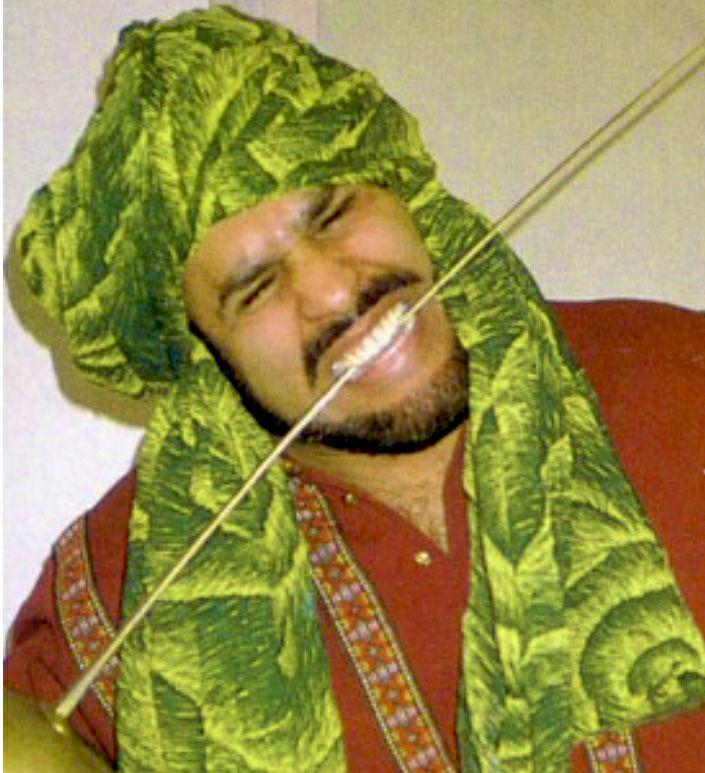
Singh. He's also carrying a weapon (or is that a flute) in the same fashion as Tiger would
with a sabre sword.

                              
                                  Tiger Jeet Singh with sword between his teeth.

Wanimaru Haniguchi (ワニマル・ハニグチ) - Sounds like Animal Hamaguchi.
Wanimaru's mask seems to resemble Tiger Mask's Red Devil.

Hanidozan (ハニドウザン) -  It seems most of the characters' incorporate the word
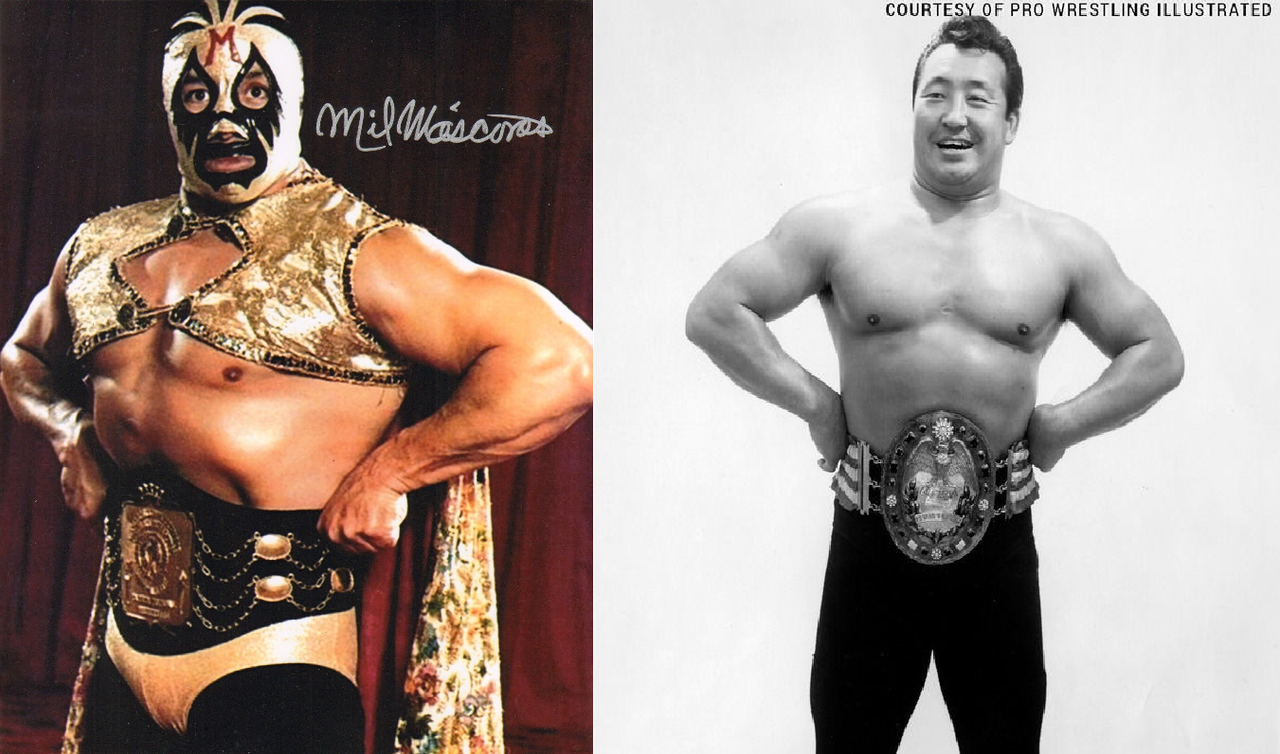
"haniwa" into their names. The mask design and pose is obviously based on Mil Mascaras.
Though, this Wrestler's name is clearly inspired by 'the father of Puroresu' Rikidozan.


    Mil Mascaras and Rikidozan - two legends who inspired TAKARA's Haniwa line.

Hanito Muwa (ハニド・ムワ) This is another tough one. The mask depicts an octopus
with the number 8 (obviously referencing the Octopus' 8 appendages). A standard Japanese
Wrestling hold is also the "manji-gatame" (Octopus Stretch).

Hambo Wanita (ハンボ・ワニタ)- Another Tiger Mask character knockoff. There's even
a small bird resting on Wanita's left shoulder.


Closing thoughts:

TAKARA's involvement with Pro-Wrestling is a long and storied one. The majority of which
centred around officially-licensed products that were created for Japan's biggest Puroresu
promotions: New Japan and All Japan Pro-Wrestling, respectively. 

On it's own, the Haniwa Pro-Wrestling line is a unique concept in the world of Japanese
collectibles. These 2 inch gashapon kits are an interesting tribute to the Wrestling legends
of the squared circle from the 1950's to the early 1980's. Talent who, for the most part, only
receive figures created in the form of sofubi/soft vinyl.

As interesting as these collectibles are, TAKARA never released a second wave of Haniwa
Pro-Wrestling figures; making the crossover concept of haniwa and Puroresu a relatively
short one.

On a positive note, collectors interested in adding these eccentric gashapons to their figure
collections can purchase the entire set: --------->HERE<------