Very few Wrestlers in Japan could touch the level of product that has
featured Inoki's image over the last 60 years. A number of figures that
is easy to lose track of.
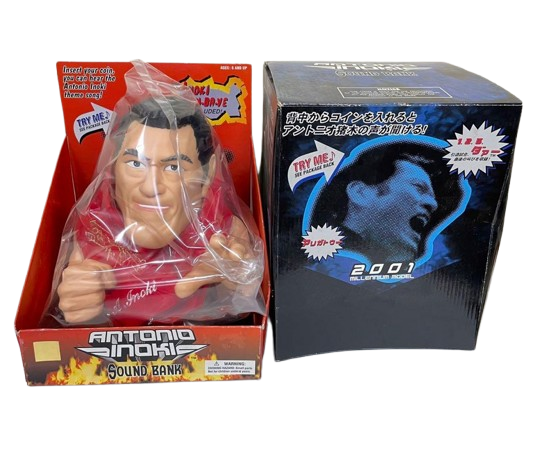
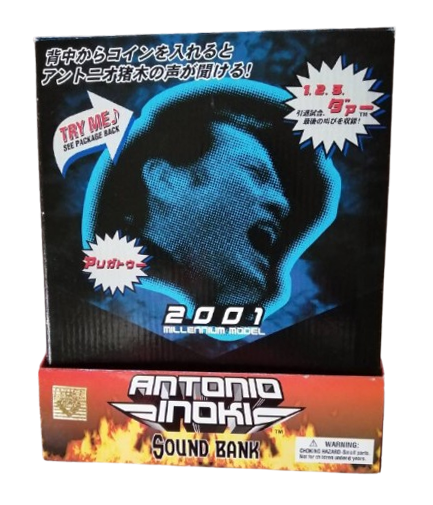
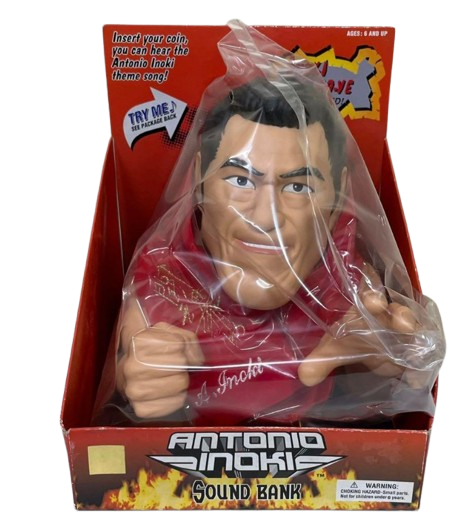
Here's another Japanese figure some of you may have never seen before. Blog #289 Antonio Inoki Sound Bank 2001 Millennium Model Known in Japan as:アントニオ猪木 サウンドバンク
The
closest thing to having the real Antonio Inoki shouting his famous
catchphrases in your home. This sound bank was released in 2001.
The packaging mentions that this is the 2001 millennium model.
As
for advertising, the box also displays two soundbites 'arigato' and
'1-2-3-Daaa!'. The top left corner states that inserting a coin will play Inoki's Inoki Bom-Ba-Ye theme song, too.
The
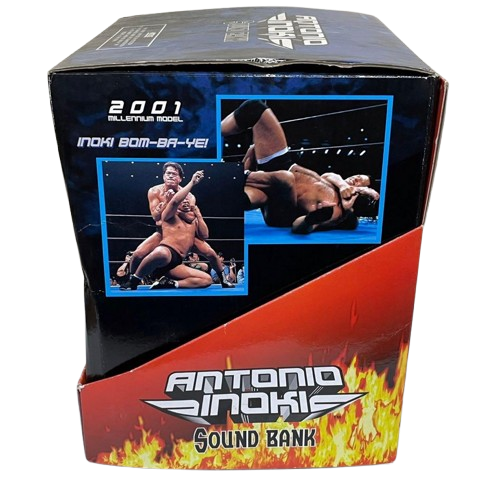
packaging can be broken up into a shelve display and a regular box.
Extra steps were certainly taken to make sure this bank wasn't broken in
transit.
The
back of the box provides a brief bio on Inoki's Wrestling career. Even
mentioning Rikidozan discovering a young Inoki while on a Wrestling
excursion in Brazil.
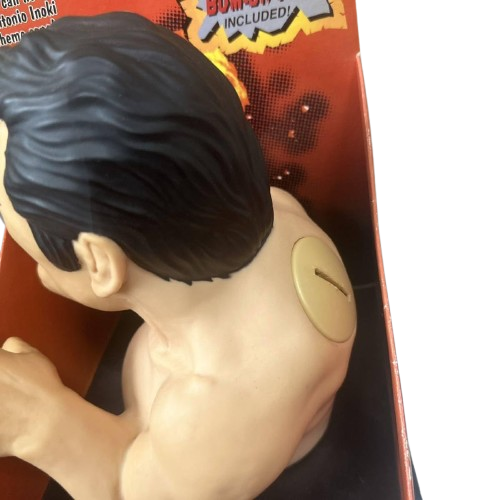
Coins are placed into the back of the bank, which then activates a sound clip of one of Inoki's catchphrases.
It's quite common to find these obscurities still polybagged.
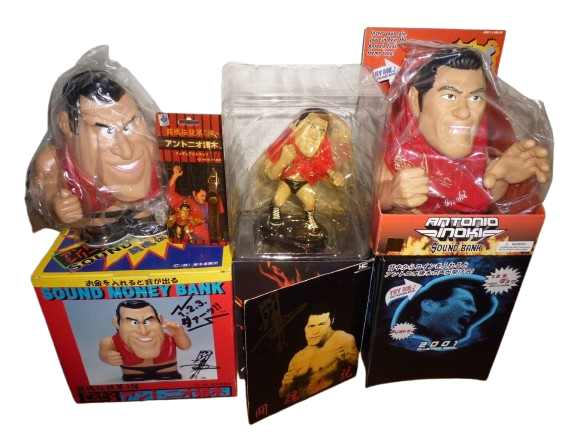
To give you an idea on scale, the Inoki sound bank placed next to the HAO Collection Inoki statue and Sound Money Bank figures.
Like
the HAO Collection Inoki polystone statue, the Inoki sound bank also
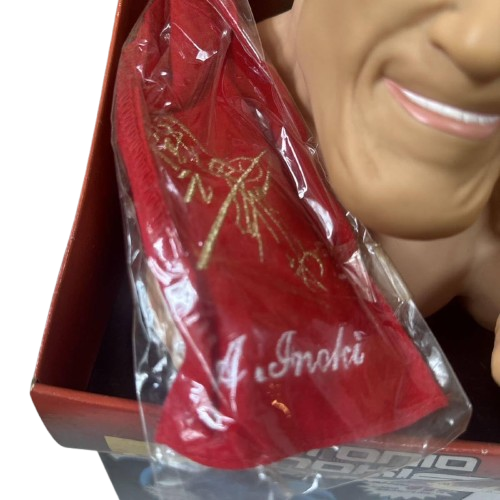
includes a fabric fight towel stitched with Inoki's 'Fighting Spirit' signature in gold, along with Inoki's name in white directly underneath.
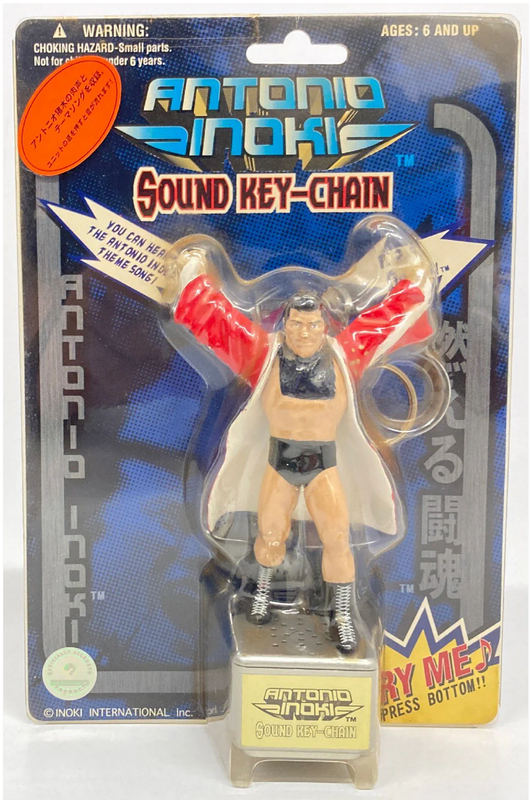
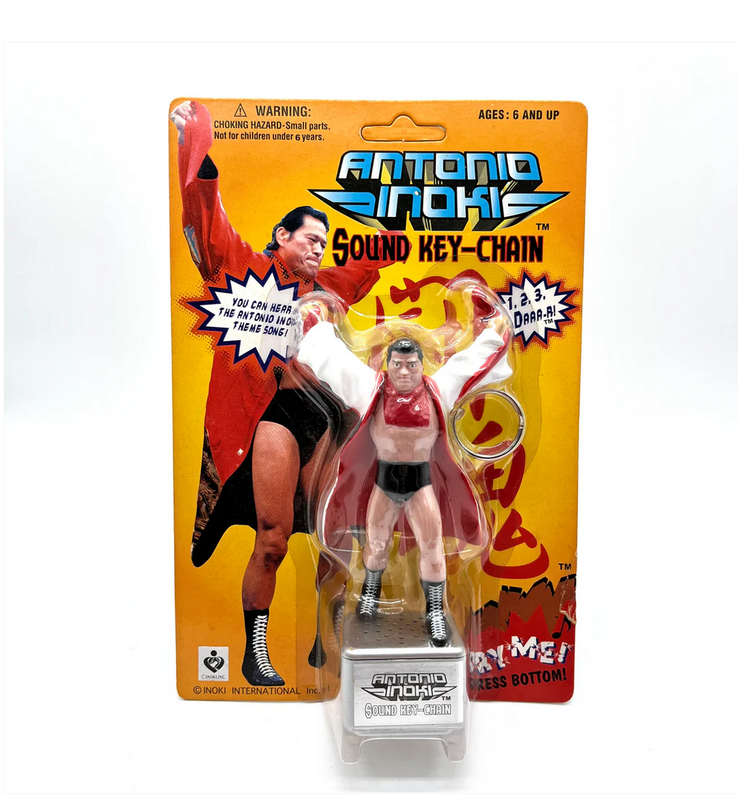
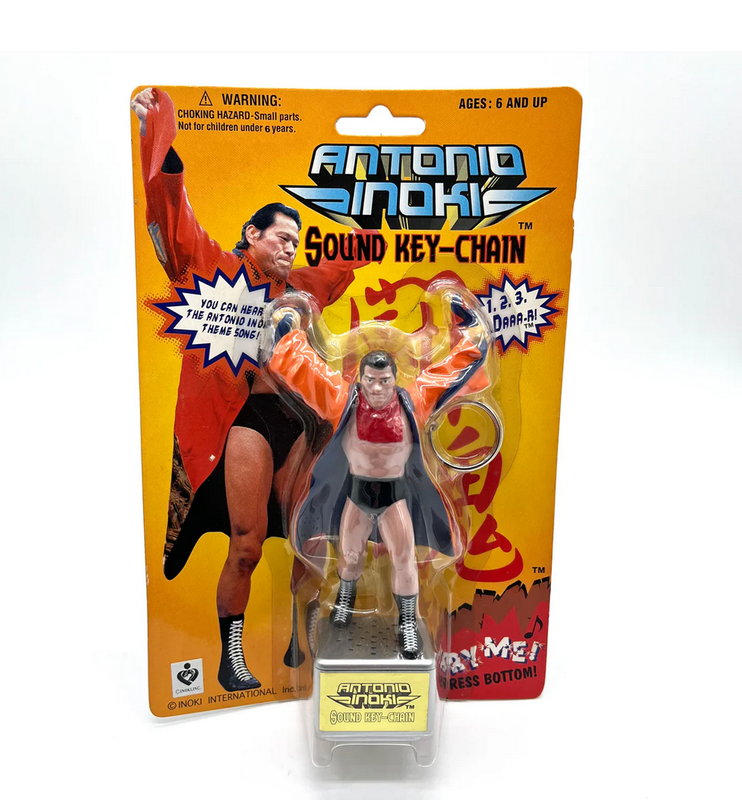
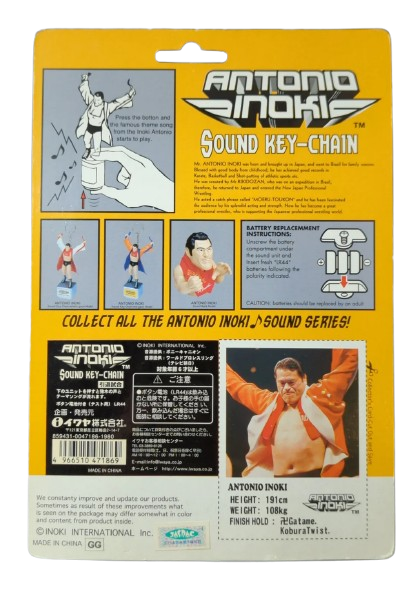
The Inoki Sound Bank was made by Iwaya in Japan. The same manufacturer that released Inoki keychains with sound clips as well.
The Inoki Sound Bank is mentioned on the back of the keychain figures' packaging.
Blog #284 Nostalgic Showa Pro-Wrestling figure collection review.
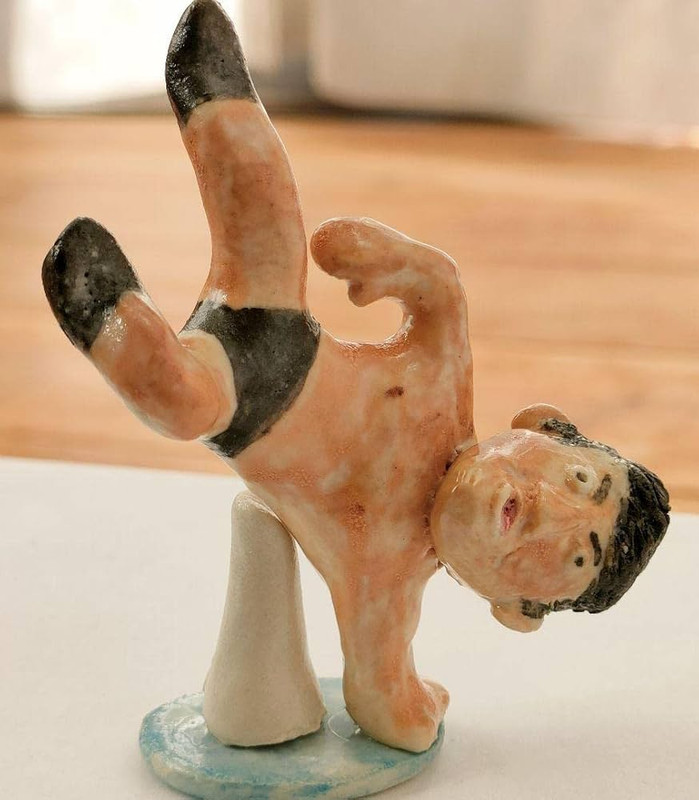
While browsing for content on the Nendo Pro-Wrestling figure exhibition, I came across two listings on Amazon Japan which caught my attention.
These figures are made of clay ceramic; which was a common trend for collectibles in Japan during the 1980's. In fact, famous Japanese Wrestler Riki Choshu had a collection of them officially made under his Riki Pro banner during the era.
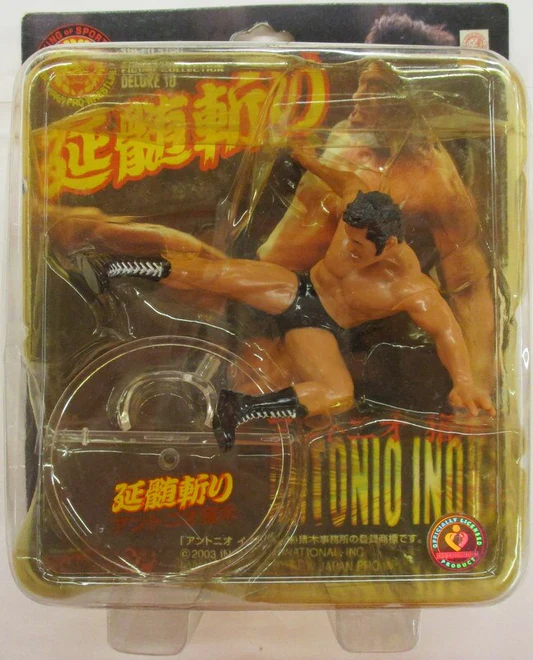
The first figure is the Fighting Spirit Enzuigiri figure. The figure is based off of Antonio Inoki performing his signature Enzuigiri finisher.
With attached stand, I was reminded of the fantastic Antonio Inoki Enzuigiri figure by Charapro.
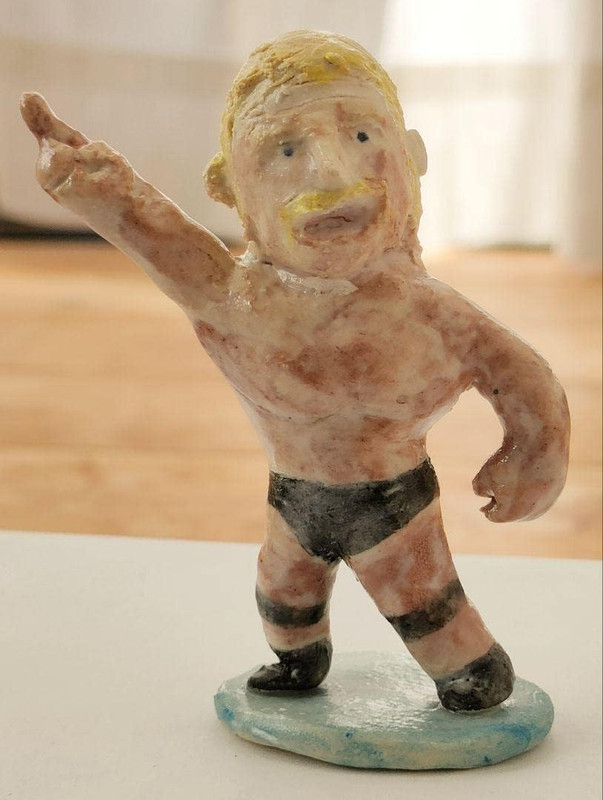
At first, I thought this next figure was a poorly sculpted Stan Hansen or Karl Gotch. Alas, it's officially listed as 'Superman Hulk Hogan'. This is, without a shadow of a doubt, the worst Hulk Hogan figure ever created. Even in ceramic form, it takes an extra special level of talent to mess up the Hulkster this badly.
There is no brand behind these figures. They were listed to Amazon in 2022 and are essentially bootleg figures. You can find the listings by typing:
In the realm of Japanese Wrestling figures, there are few Wrestlers who can match the popularity and merchandising appeal of Jushin Thunder Liger.
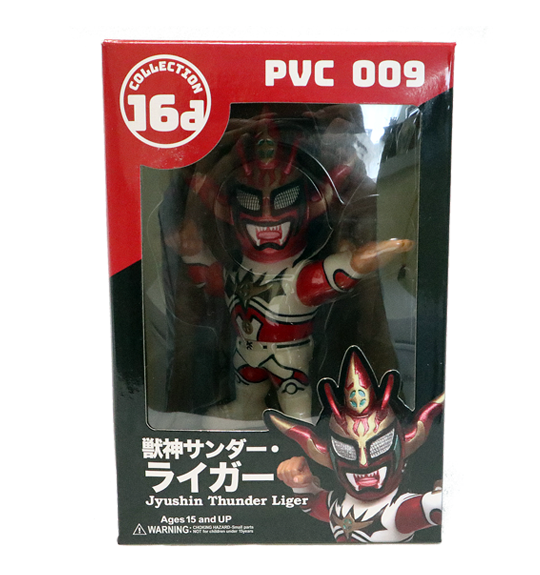
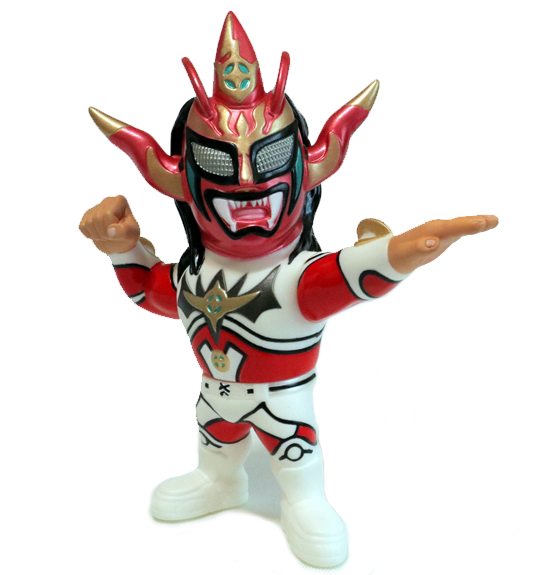
The Beast God returns once again for Blog #217 which covers the 16d Jushin Thunder Liger figure.
Announced on September 6th 2019 (for pre-order) and officially released on December of the same year, Jushin Thunder Liger is the 9th figure in the 16d collection.
Today, we'll be looking at the standard colour variant.
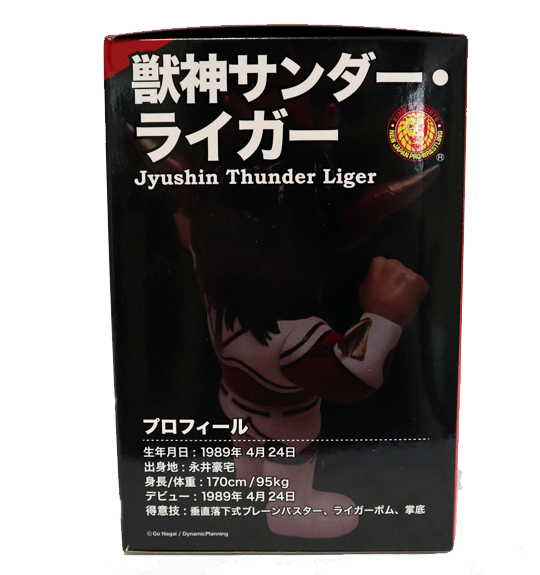
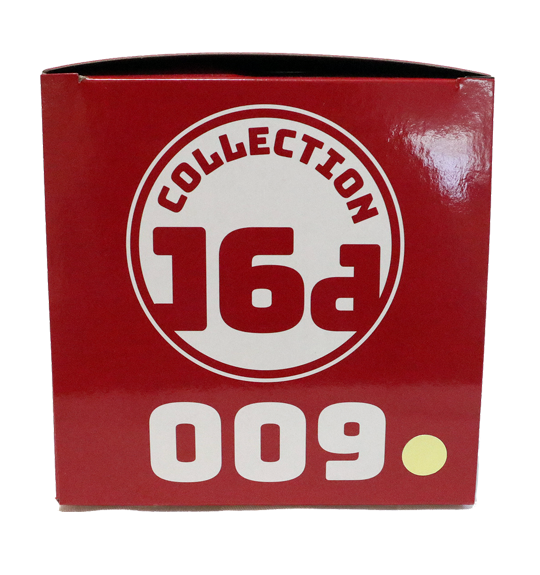
The right side of the packaging reads:
"Jushin Thunder Liger
Profile ................................................................................................................................... Date of Birth: April 24th, 1989 (the birth of the Liger character in Wrestling form) Birthplace: Go Nagai's house (the creator of the Manga/Anime Jushin Liger character) Debut: April 24th, 1989 Signature Moves: Vertical Drop Brainbuster, Liger Bomb, Palm Bottom"
The very bottom of the box also contains the text
"(C) Go Nagai / Dynamic Planning". Dynamic Planning being the company Go Nagai operates in association with the Jushin Liger namesake.
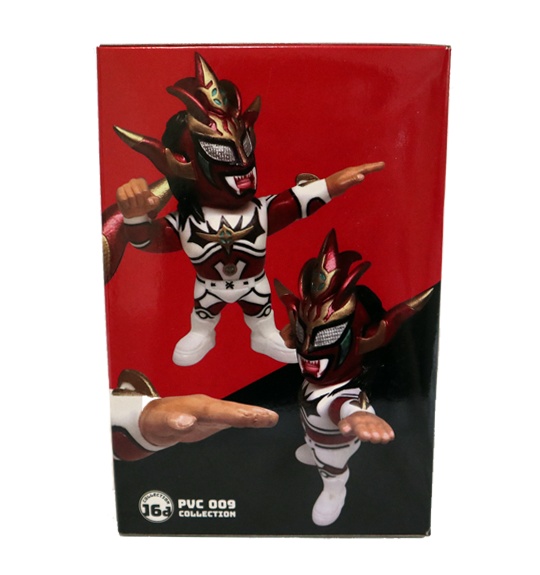
The opposite side of the packaging displays high quality photos of Liger.
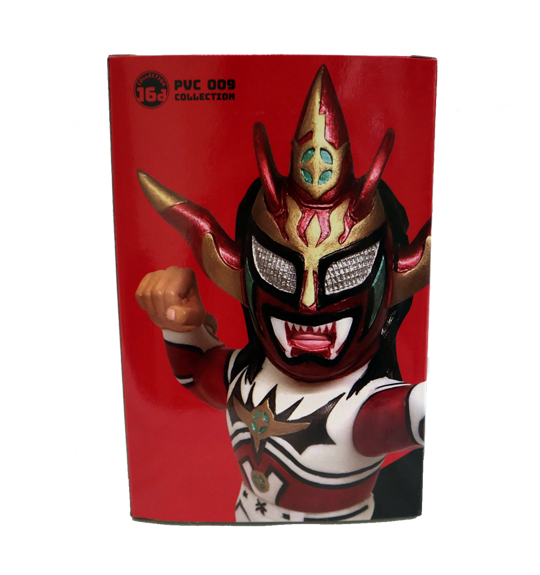
The back of the box has one close-up shot of the Beast God.
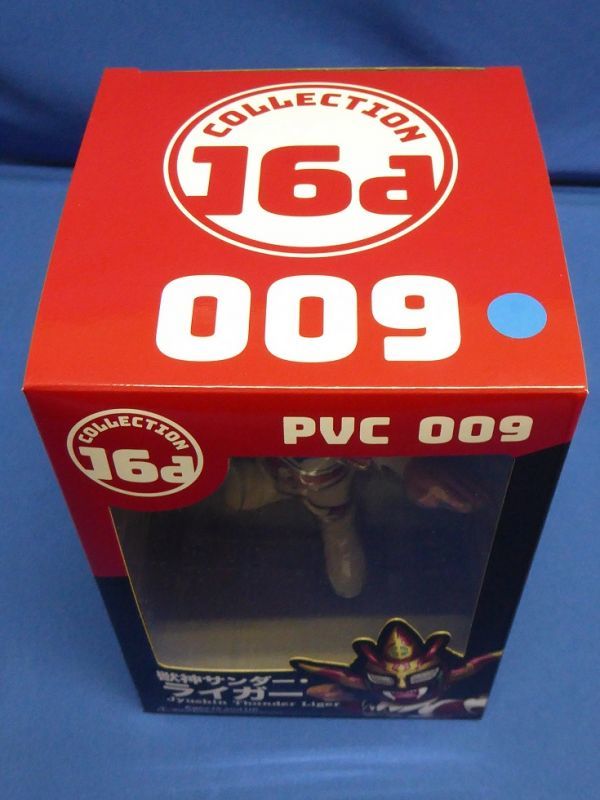
The only difference in packaging between the two Liger variants is the coloured sticker at the top of the box. In this case, the standard colour contains a gold sticker.
The second variant (referred to as the "limited edition color") contains a blue sticker at the top of the packaging.
The bottom of the box contains Dynamic Planning, 16d's parent company and mention of the Liger figure being made of soft vinyl (PVC).
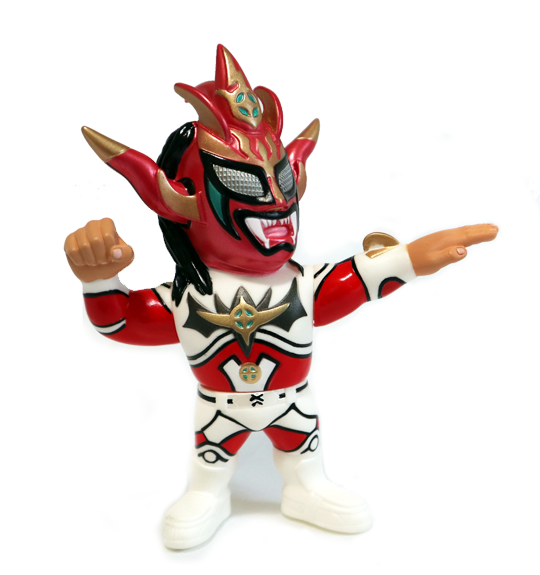
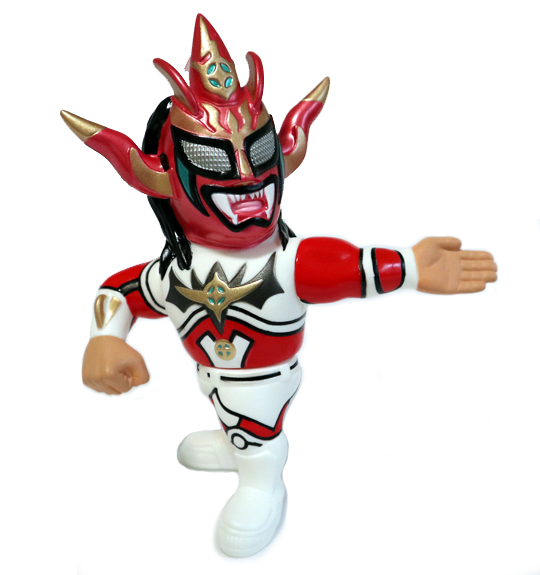
Ever the character, the soft vinyl Jushin Thunder Liger figure is sculpted in a flexing pose.
Jushin Thunder Liger was sculpted by renown figure maker HAO. This would be the third figure sculpted by HAO (the last being released in two variants back in the mid 2000's as part of the HAO Collection).
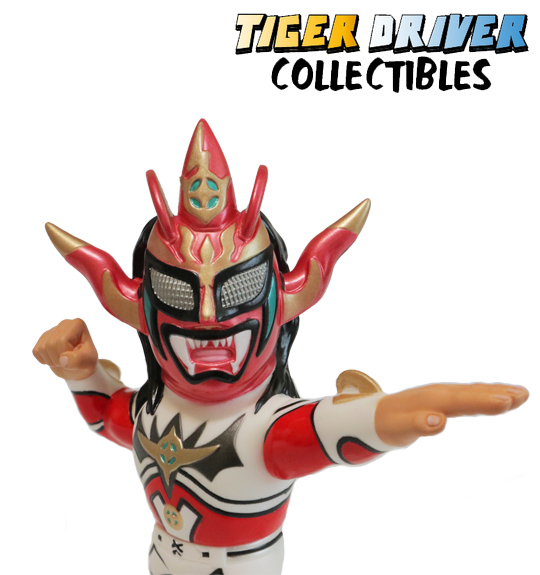
The detailing with Liger's mask is well painted and accurate.
Even the grainy glitter-like effect is present in Liger's chest plate.
Liger stands 13.5cm in height (5.3 inches).
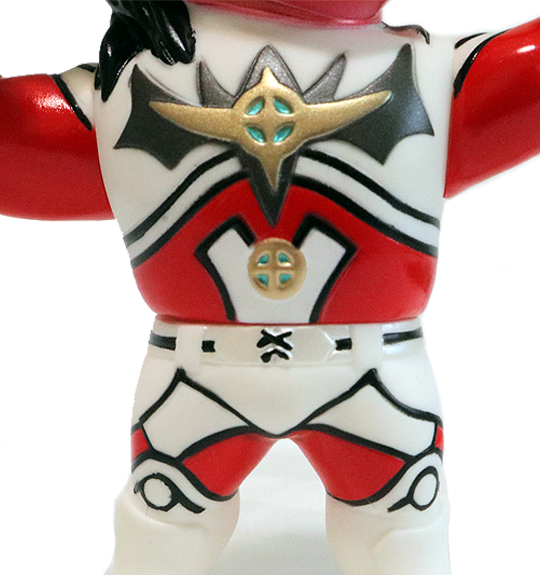
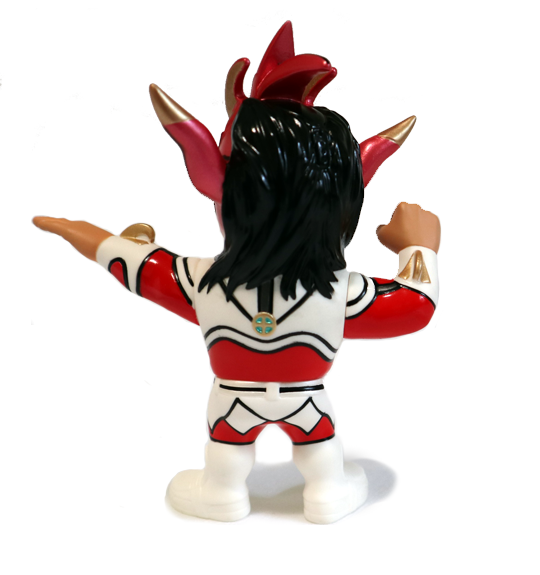
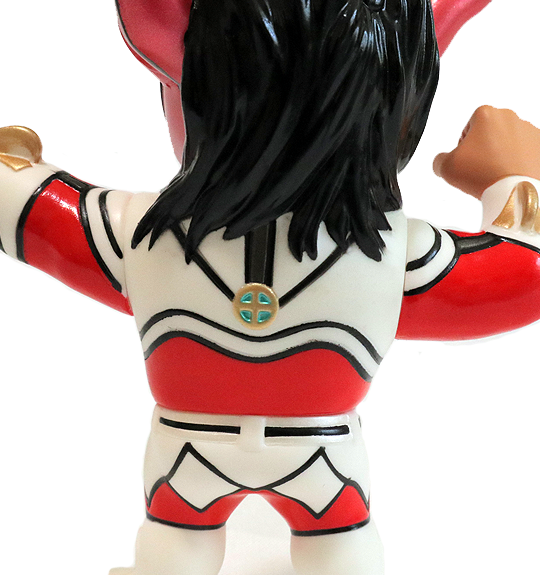
The intricacies of Liger's instantly-recognizable ring attire continues onto the back of the Liger figure.
Go Nagai and Dynamic Planning are once again referenced on the bottom of the 16d Liger figure.
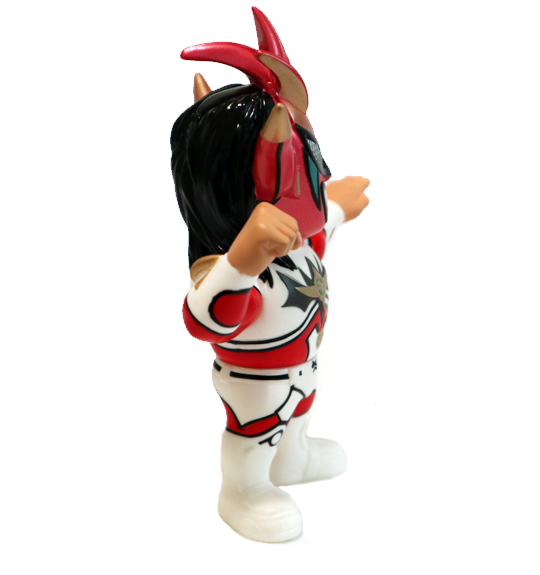
In terms of movable pieces, Jushin Liger contains articulation at the shoulders and waist.
Closing thoughts:
Jushin Thunder Liger combines the colourful attire of a modern day superhero with the allure of a Wrestling legend. A figure, in my humble estimation, that could even appeal to toy collectors who aren't fans of Pro-Wrestling or Go Nagai's work.
While smaller in scale compared to HAO Collection's Jushin Liger figure from about 14 years ago (which are taller at 6 inches in height for comparison's sake), the detail for the 16d figure equivalents I personally feel are superior.
Collectors should keep an eye out for the limited edition 16d Liger variant which features blue highlights on Liger's mask and ring attire. Though, as a scarce piece, the limited edition usually sells for double the price of the standard variant from what I seen in the past.
Less than a month later, Jushin Liger would retire from being an active Pro-Wrestler on January 5th, 2020; ultimately following Genichiro Tenryu, Riki Choshu and Abdullah The Butcher in regards to figures made by 16d around the time of each legend's retirement.
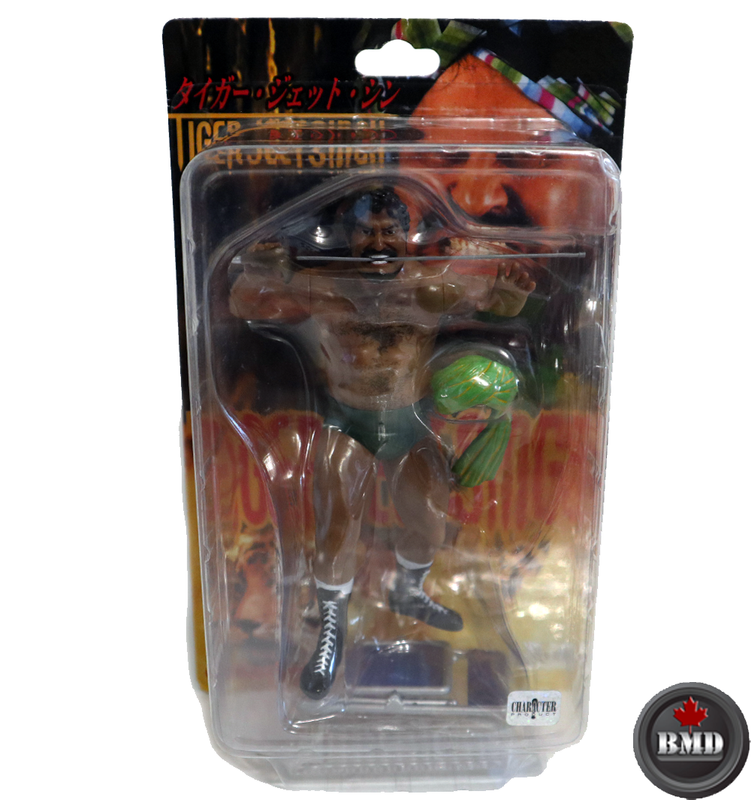
Going back to pricier side of the figure spectrum, let's take a look at two more figure rarities from Character Product's deluxe figure line. Blog #204 goes up against the Character Product Tiger Jeet Singh Deluxe figures.
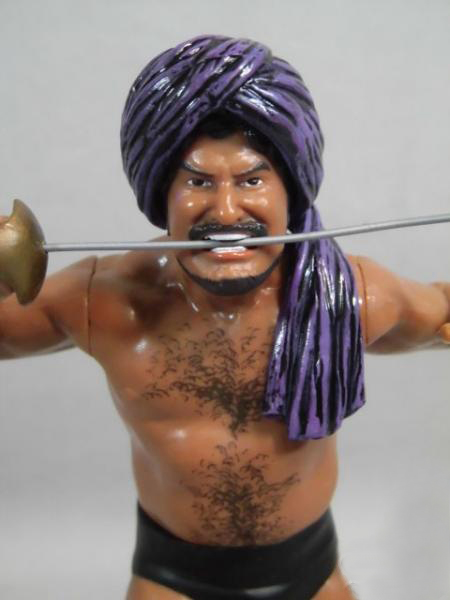
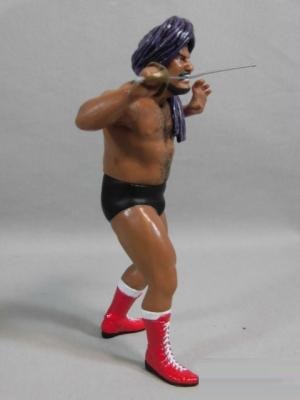
Tiger Jeet Singh was added to Character Product's deluxe legends line in the mid 2000's.
The cardboard backing contains an intense photo of Singh, a graphic of a tiger at the bottom, a generous serving of fire and Singh's name in both English and Japanese Katakana.
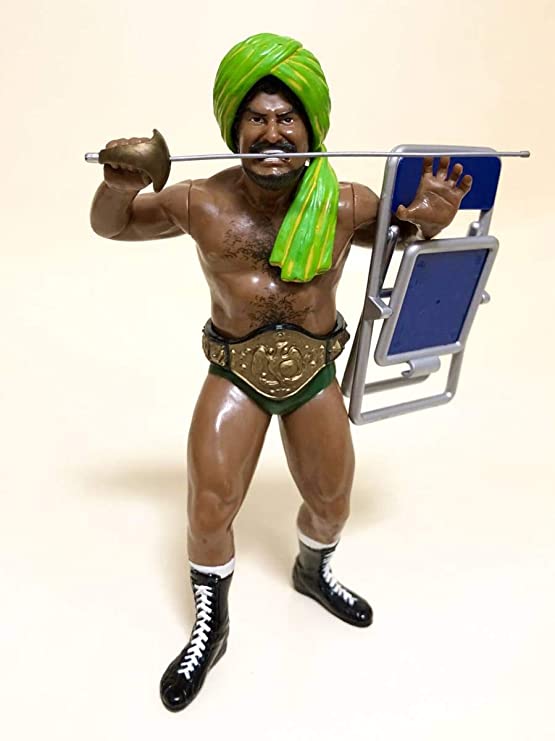
As a deluxe figure, Tiger also includes his entrance turban accessory, folded chair, acrylic display base, acrylic foot holders and an acrylic wrestler name plate that reads "TIGER JEET SINGH".
The back of the packaging contains the same graphic as the front along with Tiger's stats and a bio. The full bio on the back of the packaging reads:
"TIGER JEET SINGH
Height: 190cm (6'2) Weight: 120kg (264lbs) Date of birth: 1944 Aburizal, Punjab, India Nickname: Mad Tiger of India Signature move: Cobra Claw Debut: May 1973 (In actuality, Tiger Jeet Singh made his in-ring debut in 1965. Tiger's debut in Japan happened in 1973). Profile: After completing his military service, he learned to wrestle the Great Gama, an ancient Indian style of wrestling, and made his debut as a professional wrestler in Singapore in 1965. He then moved to Canada and started selling under the ring name "The Hindu Hurricane" with the now deceased Fred Atkins as his manager.
For a long time, he mainly fought in Canada and Southeast Asia, but in May 1973, he stopped by Japan with Flurry. He showed up at the New Japan Pro Wrestling event (Kawasaki City Gymnasium, May 4, 1973). He broke into the ring and KO'd Kotetsu with his special cobra claw, which led to his rapid progress and forced him to participate in the series. This was the start of his war with Antonio Inoki.
On the evening of November 5 of the same year, he attacked and injured Inoki while he was shopping in front of Isetan in Shinjuku, Tokyo. On March 15, 1975, he defeated Inoki at the Hiroshima Prefectural Gymnasium to become the 15th NWF -certified heavyweight champion. He successfully defended the title twice, but on June 26, 1975, he was defeated by Inoki at Kurashiki in Tokyo and fell from the title. He then won the championship match against Seiji Sakaguchi to win the Asian Heavyweight Championship (July 29, 1976, Osaka Prefectural Gymnasium). He also teamed with his evil ally Umanosuke Ueda to win the North American Tag Team Title from Sakaguchi and Strong Kobayashi at Osaka Prefectural Gymnasium on February 2, 1977.
On January 17, 1980, he won the UWA World Heavyweight Title from Canek in Mexico City. On April 13, 1980, he was defeated by A Inoki, who had travelled from Japan, at El Torreo in Mexico City and lost the title. However, on October 24 of the same year, at the Okubusan Gymnasium in Okinawa he succeeded in regaining the belt. However, on February 17, 1981, he lost to Kanek in Mexico City and fell from the title again.
In July 1981, he put an end to his eight-year feud with A Inoki and moved to All Japan Pro Wrestling. On July 26, 1983, he and Ueda defeated Giant Baba and Jumbo Tsuruta at the Fukuoka Sports Center to win the 32nd International Tag Team Championship, but the title was vacated by Giant Baba and Jumbo Tsuruta on August 1, 1983 at the Korakuen Hall in Tokyo.
In September 1990, he returned to his old team New Japan. On September 30, at the "Antonio Inoki 30th Anniversary Memorial Festival" held at the Yokohama Arena, he teamed up with Antonio Inoki for the first time to defeat Big Bang Vader and Animal Hamaguchi, showing a friendship that went beyond grudges. On December 8 of the same year fought Hiroshi Hase at Ganryujima for the right to fight Antonio Inoki, but lost. (Ganryujimais an island in Japan that was made famous for an island deathmatch between Antonio Inoki and Masa Saito).
In June of 1992, he sought a new battlefield in FMW, and declared war on Atsushi Onita. He fought to the death in Sekigahara (June 30, 1992 = no-rope barbed wire current bombing match) and Yokohama Stadium (September 19, 1992 = barbed wire landmine bombing match). However, he parted ways with FMW after his visit to Japan in March 1993.
In May of the same year, he joined NOW. After that, he fought bloody battles with Terry Funk, Shoji Nakamaki and others mainly in IWA Japan. In 1997, he briefly joined forces with Go Ryoma, but returned to the IWA in 1999, where he remains to this day.
In 2002, he made his CD debut with Gorgeous Matsuno as his manager. At the IWA Pre-10th Anniversary Tournament on September 29, 2003, he teamed up with Matsuda to face Williams and Miyake. This was his first matchup with Williams, and they formed a deep bond. He is a legend along with Butcher."
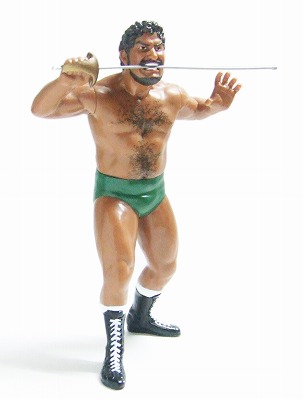
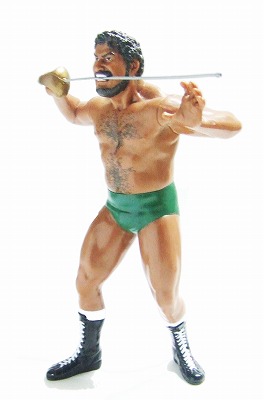
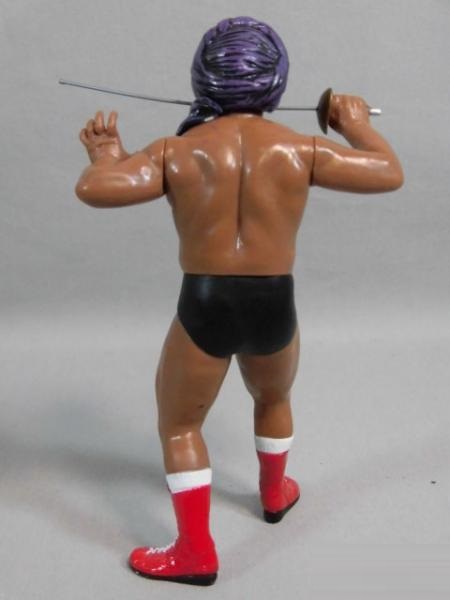
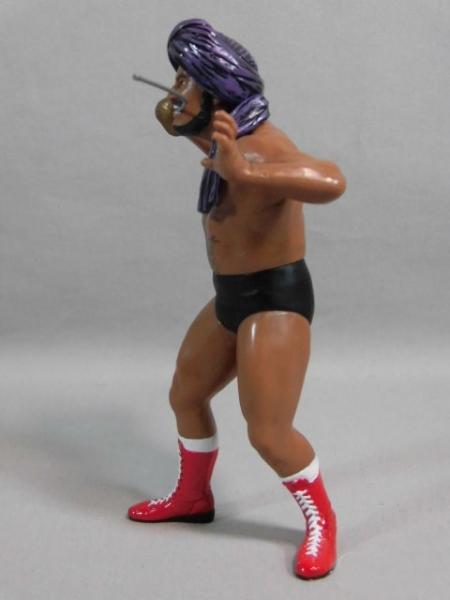
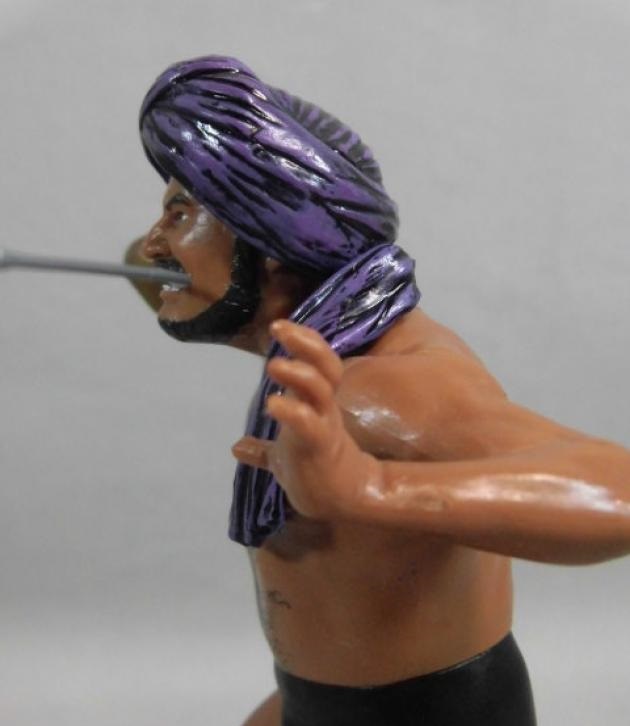
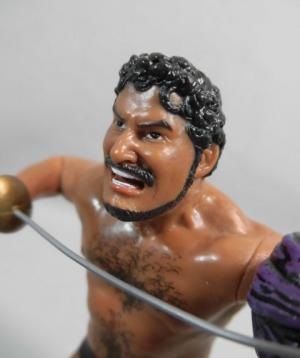
Tiger is sculpted with his signature sabre sword in teeth pose.
Like Bruiser Brody, Tiger was known for his insane entrances. Cutting through crowds while swinging his sabre like a madman.
Both arms can move up and down.
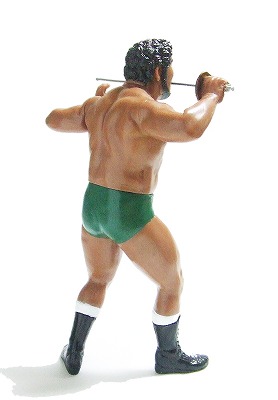
Tiger's attire and look are inspired from the early 1970's - early 1980's when Tiger competed in New Japan Pro-Wrestling.
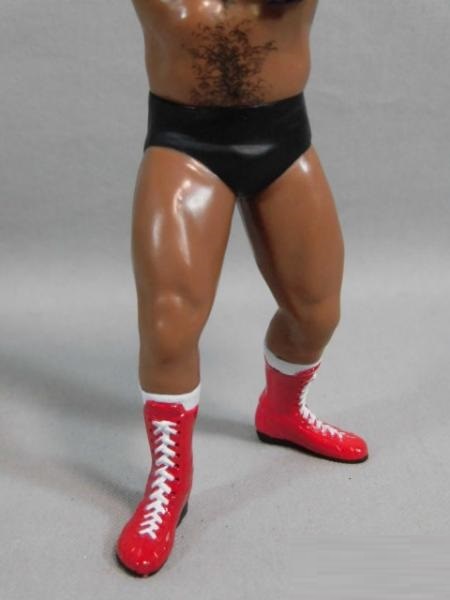
Character Product would also release an alternate colour variant with a purple turban, black trunks and red boots.
Singh's black trunks, red boots and purple turban were probably lifted from Singh's match against Abdullah The Butcher in All Japan Pro-Wrestling on June 8th, 1990.
The purple version is considered the limited edition alternate colour variant and harder to find example of the two. Usually rare variants are limited to 500 copies or less for Japanese Pro-Wrestling figures.
The only thing that is really missing from either variant is Singh's entrance tunic. Though, Singh is the only Character Product figure to come packaged with a chair accessory; a throwback to Singh's heel tactics from outside the ring.
Both versions can remove the sabre sword from Tiger's teeth; showing Tiger's intimidating snare.
The green version with chair accessory, turban and a NWF belt accessory (in which Tiger was renown for holding in NJPW) that was borrowed from Toukon Shop's Antonio Inoki Super Star Figure Collection 23 figure.
Character Product would also add Tiger Jeet Singh to the fifth volume of Mini Big Head figures 2005; complete with entrance tunic!
Closing thoughts:
Tiger Jeet Singh's deluxe Charapro figures are some of the most expensive Pro-Wrestling figures you can find in Japan. They also have a reputation for being bought up quickly in certain Japanese shops when they do show up for sale.
Other than the KING OF TOY Tiger Jeet Singh soft vinyl figures, Tiger never had an action figure of his own beforehand; making the Character Product deluxe variants all the more collectible.
To date, there are about seven different Tiger Jeet Singh figures in total. Most of which are Keshigomu and minifigures made by BoFord.
In Japan, the high prices for the deluxe Tiger figures can partially be explained by Tiger's association to Antonio Inoki. Tiger's infamous (and staged brawl with Inoki in broad daylight within a Shinjuku shopping district stirred up a lot of controversy in the press. So much so that complaints AND charges were filed against New Japan Pro-Wrestling for the brawl.
In the end, the publicity from Tiger and Inoki's antics spurred a massive boost in ticket sales during the early years of New Japan Pro-Wrestling. In the eyes of the Japanese public, the homegrown hero Antonio Inoki had finally met an adversary dangerous enough to make each match a life or death situation; and the fans continued to line up in droves to see what would happen next.
Today, we're returning back to a familiar destination with 16d's soft vinyl series. Blog #203 applies the Muta Lock on the 16d Collection Great Muta figures. On October 13th, 2020 Japanese toymaker 16 Directions announced the upcoming release of The Great Muta as part of the company's soft vinyl figure collection.
A video of the 16d Great Muta figure prototype that was uploaded on October 19th, 2020.
Great Muta would be officially released three months later in January of 2021; becoming the 16th Wrestler overall to be featured in the 16d Collection.
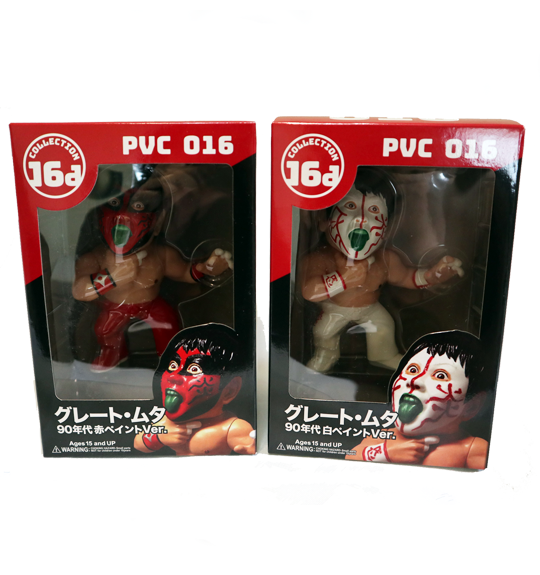
I like how both figure variants come in different packages while mentioning the specific figure variant in Japanese.
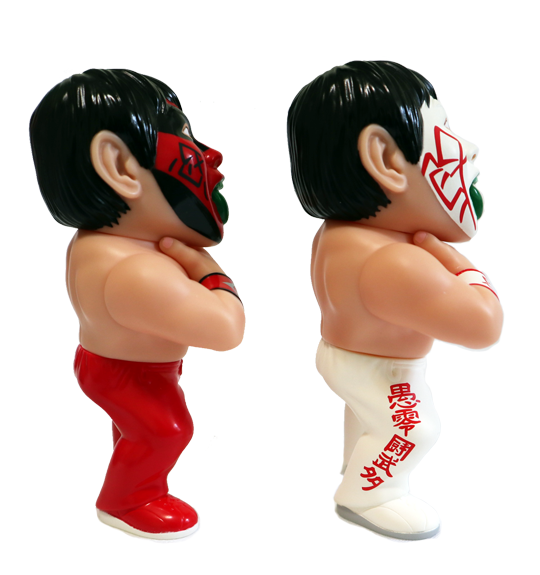
The front of the packaging for both variants translates to: グレート・ムタ (Great Muta 90年代赤ペイント Ver. 90's Red Paint Ver.)
グレート・ムタ (Great Muta 90年代白ペイント Ver. 90's White Paint Ver.)
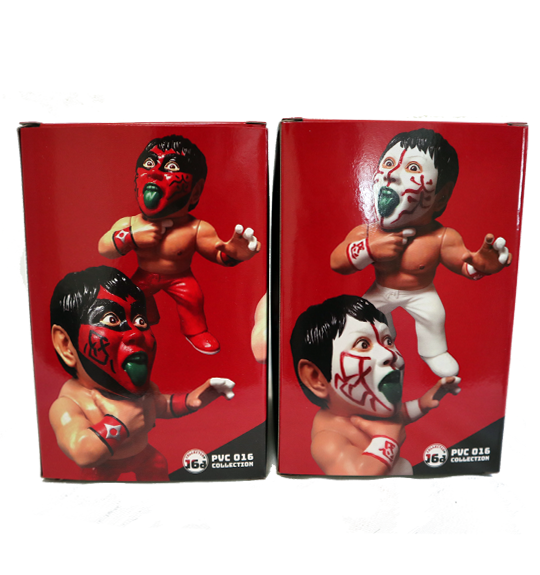
The left side of each variant's respective packaging. Again featuring different shots of both figures.
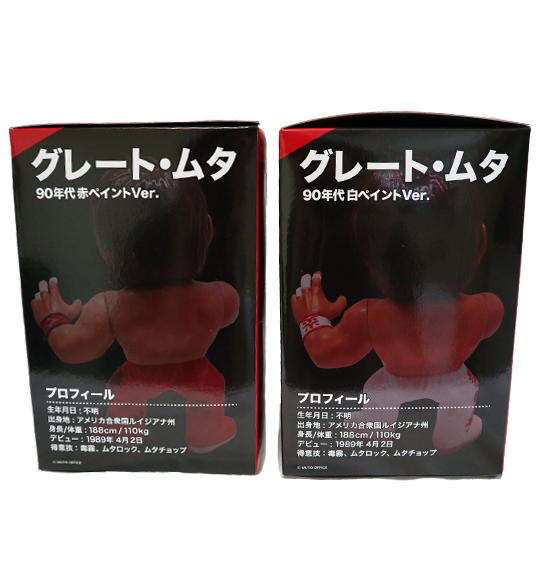
The right side of the packaging contains Muta's stats and a brief dossier.
The text reads:
"PROFILE ................................. Date of birth: Unknown Birthplace: Louisiana, United States Height/Weight: 188cm (6'2") / 110kg (242lbs) Debut: April 2nd, 1989 (As The Great Muta) Signature moves: Poison Mist, Muta Lock, Muta Chop"
In actuality, Great Muta's "birthplace" and debut happened a month prior on March 12th 1989 against Cougar Jay in Atlanta, Georgia.
The backs of both packages.
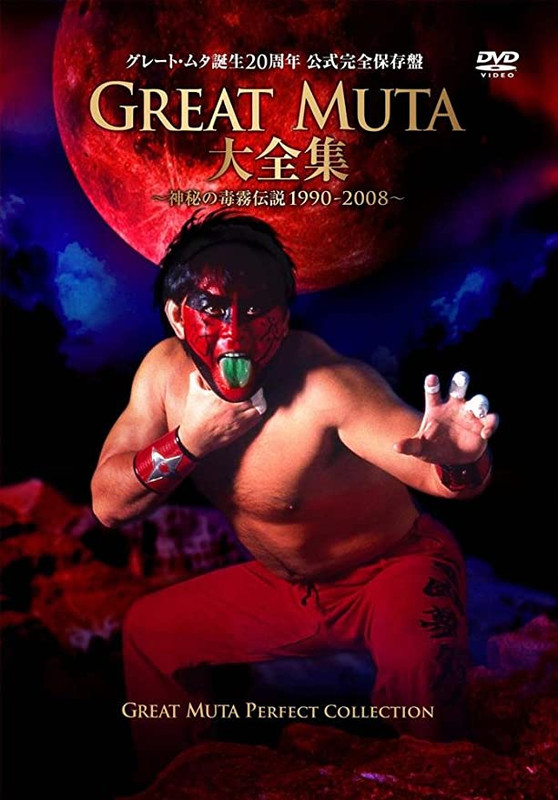
I'm pretty sure the sculpt for the 16d Great Muta figures were heavily inspired by this photo.
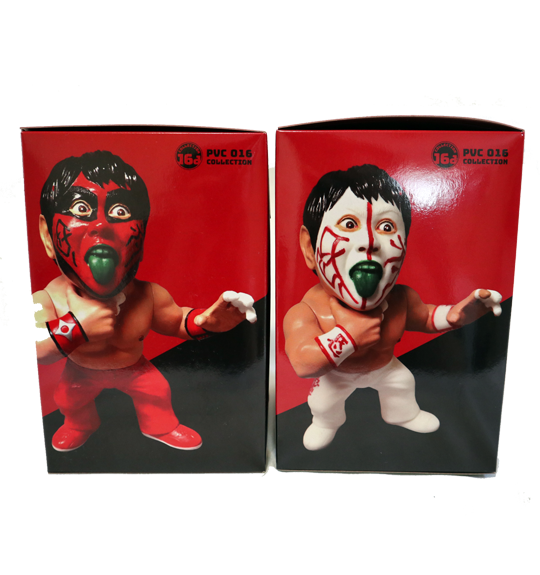
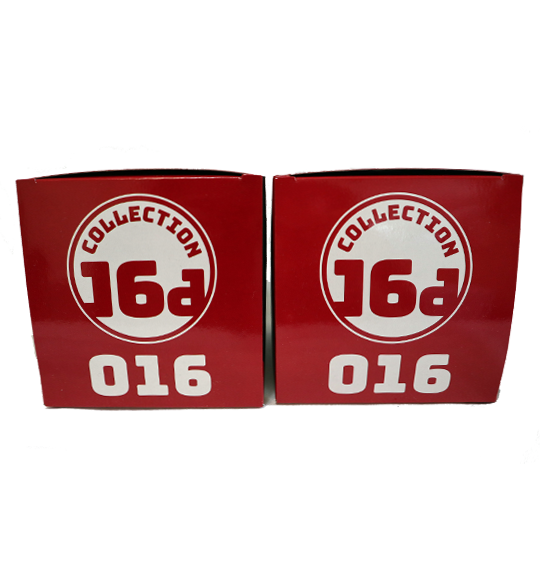
The tops of both packages. Unlike the Abdullah The Butcher or Jushin Thunder Liger 16d figures, there are no coloured stickers placed on the top of the boxes to help differentiate figure variants.
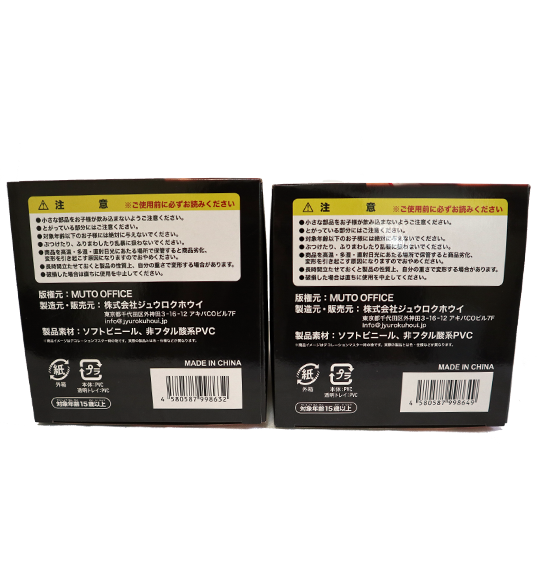
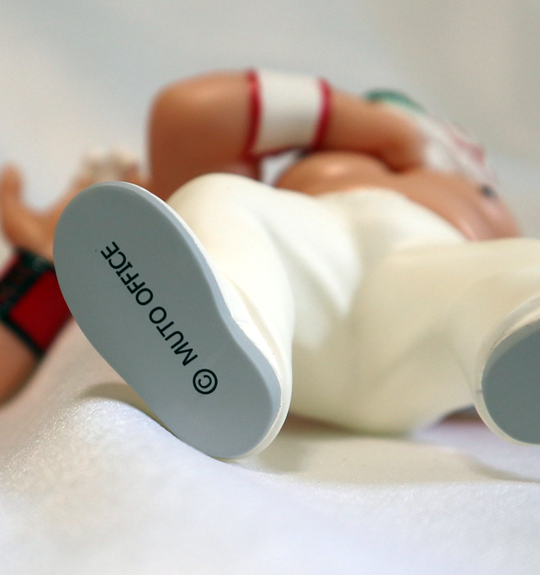
The bottom of both boxes contains the standard safety precautions, 16d's parent company, the material of the vinyl figures and a copyright licensing from Keiji Mutoh's new merchandising company and online store MUTO OFFICE.
Now, on to the figures themselves:
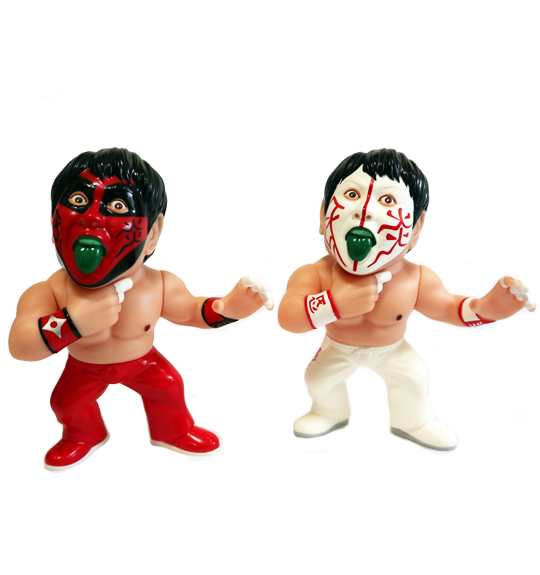
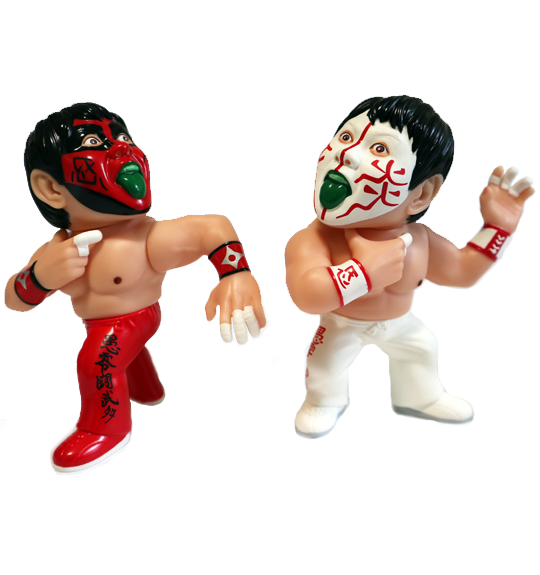
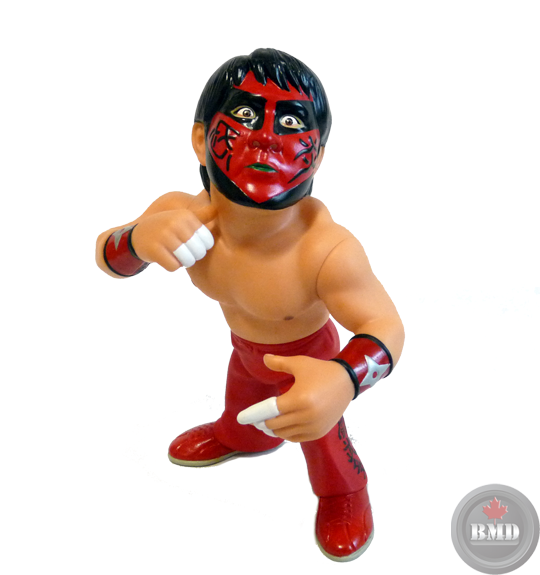
The Great Muta 16d figures are based on The Great Muta's early 1990's New Japan Pro-Wrestling appearance and were created by renown figure sculptor HAO (Keiichi Hao).
The white paint variant is listed as an online exclusive.
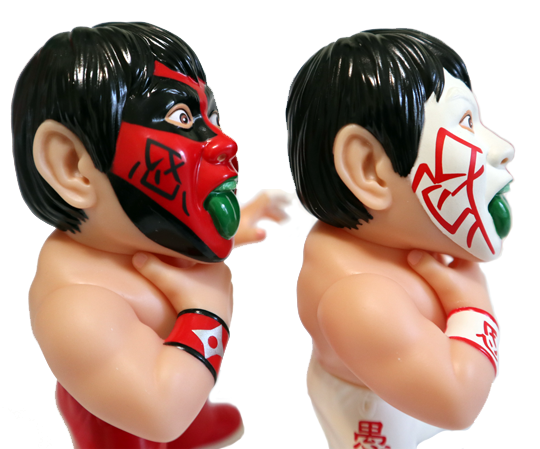
I especially love Muta's sculpted pose here. With the green teeth and tongue, Muta is ready to spray his patented Poison Mist!
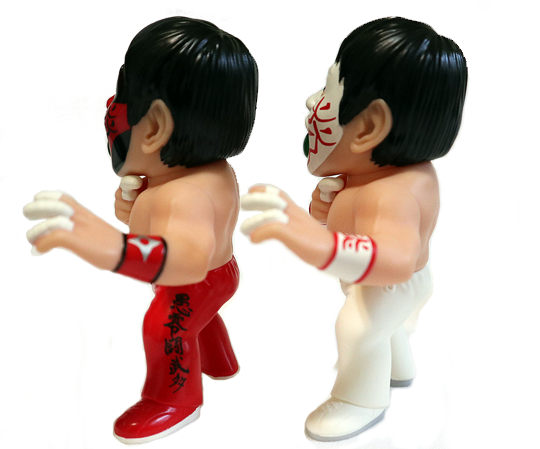
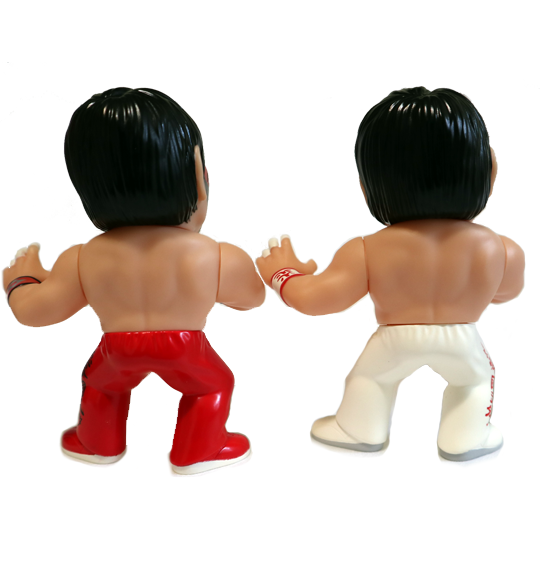
The white paint variant contains the following text on the figure's right pant leg:
"愚 Gu 零 Rei 闘 Tou 武 Mu 多 Ta
Put all the Japanese kanji together and you have "Great Muta".
The Kanji on Muta's right cheek reads "忍" (Shinobi); a reference to Muta's Ninja characteristics.
The white paint variant has a noticeably larger version of the Kanji scrawled across Muta's cheek.
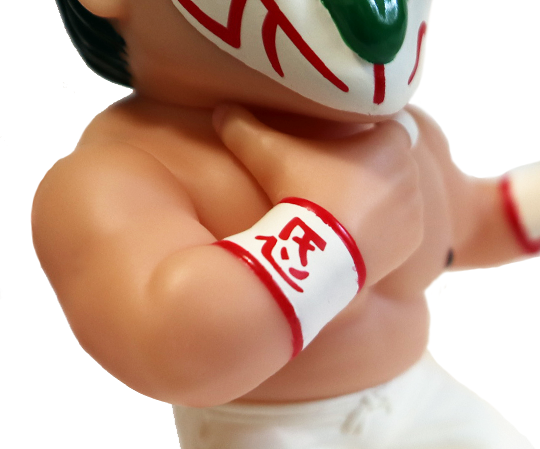
While the red paint version has a ninja star on both wristbands, the white paint variant has the kanji "Shinobi" repeated once again on Muta's right wristband.
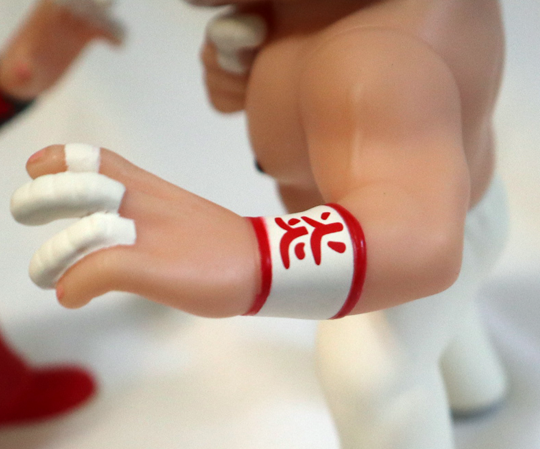
The Kanji on the left side of Muta's cheek reads "炎" (fire, flames).
Along the red variant's pants, the same text (Great Muta) has been written in black.
Both variants contain finger tape. The white variant also contains the kanji "Fire/Flames" on the figure's right wristband (parallel to the same kanji on the white version's face).
If you look closely, you may notice Muta's bicep scar, too!
The Great Muta 16d figures stand approximately 12.5 cm (4.9 inches) tall.
The sole of both figures contains Keiji Mutoh's MUTO OFFICE stamp.
Both figure variants are articulated at the left arm, neck and waist. The right arm (while still slightly poseable) is pretty much fixed in place.
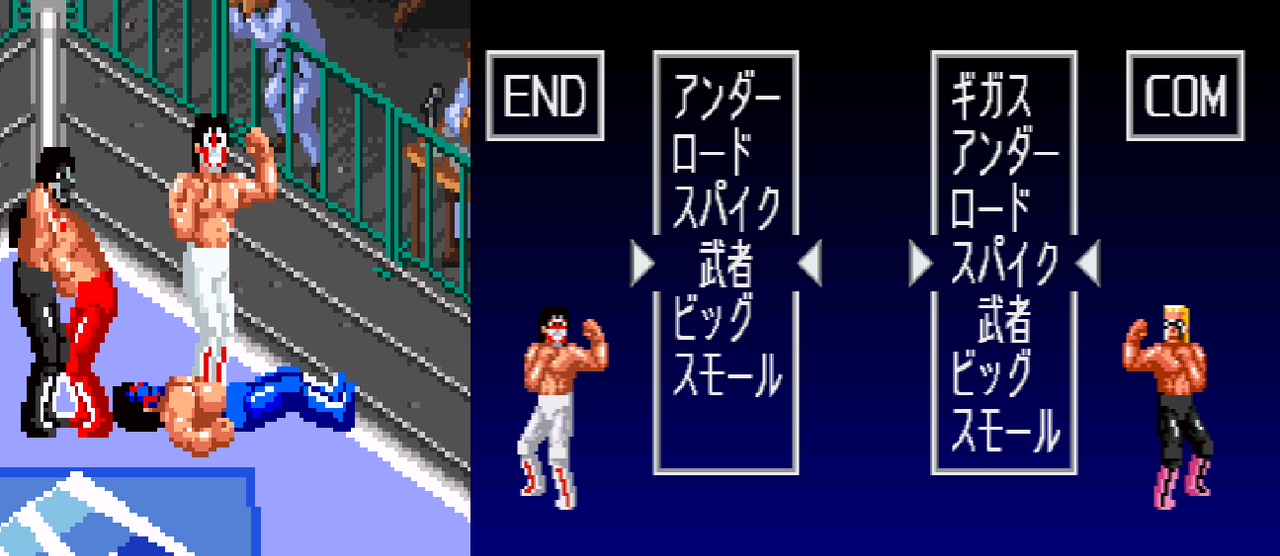
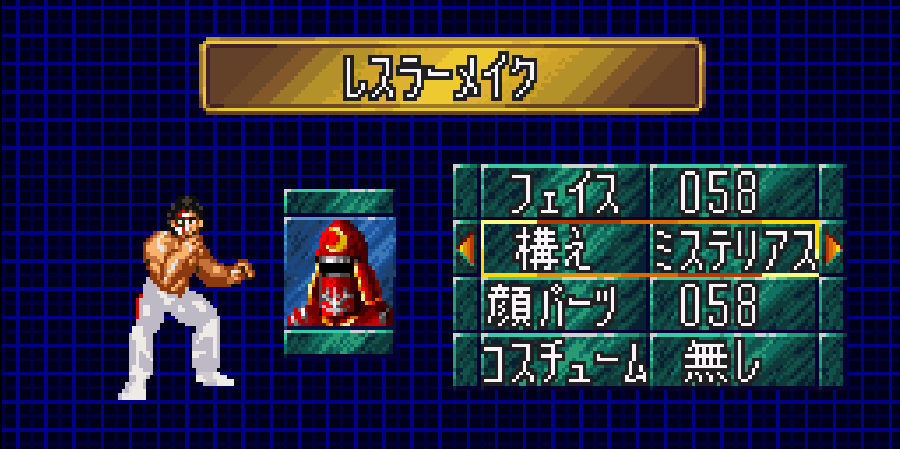
In Super Fire Pro Wrestling III Final Bout/Easy Type (1993) on the Super Famicom, Blade Musha (Great Muta)'s white and red attire is featured as the 2nd player costume. The same costume is also available as Muta's fourth attire in the follow up title Super Fire Pro Wrestling Special (1994).
Using the Edit mode, it is also possible to recreate Muta's white and red attire in Super Fire Pro Wrestling X/X Premium (1996).
Other than a few unofficial video game appearances, this is the first time the Great Muta received a figure in his white and red ring attire colours.
The last time Great Muta's classic facepaint look was sculpted by HAO was in the mid 2000's as part of HAO's black card series.
Scale-wise, the HAO Great Muta figure stands noticeably taller at about 6 to 7 inches in height when compared to it's 16d counterparts.
The HAO version (while removing articulation in Muta's neck) offers two extra points of articulation from the wrists.
Closing thoughts:
When I first began collecting Wrestling figures from Japan, the two brands that I started with were Character Product's Mini Big Heads and Toukon Shop's action figures. Then I purchased my first HAO figure (The Great Muta classic facepaint black card series ver.) and was blown away.
Whereas most Japanese action figures stand about 5 inches tall, I wasn't prepared for the HAO figures which regularly stand between 6 to 8 inches in height. The attention to detail, figures available and resealable packaging instantly converted me into a fan of HAO's work.
While the 16d figures aren't as tall as the original HAO ones from nearly 20 years ago, they still contain the same charm and attitude of their taller counterparts. The same can be said for the 16d Great Muta figures. A cooler pose, better facial expression and two variants to collect. What's not to like?
When I reviewed the Genichiro Tenryu retirement figure back in 2017, I praised the overall design of HAO's work and welcomed the idea of more figures being produced in this style. Ten days later, Tetsuya Naito was announced as the first official figure in the 16d lineup and the 16d Collection line has continued to gain momentum ever since.




.png)