One of the greatest aspects of collecting Wrestling figures from Japan is the
sheer number of obscurities that were released throughout the 1980's.
Another discovery that I recently came across is an obscure board game that
I felt would be the perfect subject for a brand new blog post.
For blog #123, we'll be looking at the "All Japan Pro-Wrestling Game".
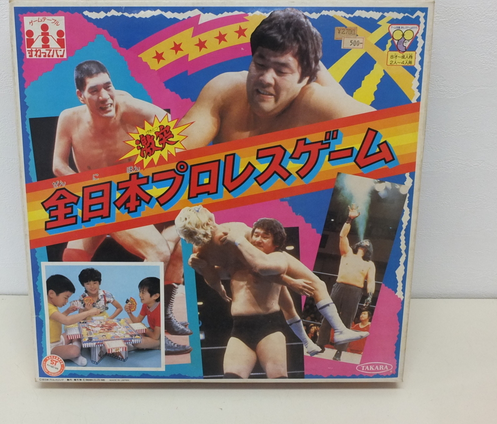
Years before All Japan had their own video games, toy maker TAKARA (better
known as TOMY stateside) would release a special board game called "全日本プ
ロレスゲ ーム" (All Japan Pro-Wrestling Game) in 1985.
Above the title (and the name of the actual game itself ) is written in Japanese
Kanji as "必殺技" (and also in Hiragana as "ひっさつわざ" - which means
"Death Blow").
The front of the packaging depicts Giant Baba (top left), Jumbo Tsuruta (top
right), The Great Kabuki (bottom right) and Genichiro Tenryu (bottom middle
- who looks like he's ready to Powerbomb Nick Bockwinkel).
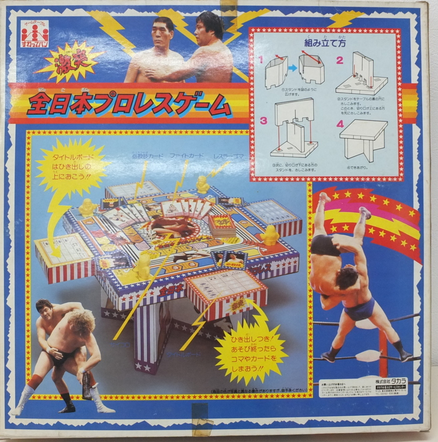
The back of the packaging contains graphics of Jumbo Tsuruta and Giant Baba
(who were noted for their tag team pairings throughout the era).
The two bottom graphics depict Tsuruta performing an Octopus Stretch on Terry
Gordy and a Vertical Suplex from the top ropes.

A close-up of the back of the packaging shows the fully-assembled board game.
The board itself even includes stands and attachable drawers which act as each
player's score card.
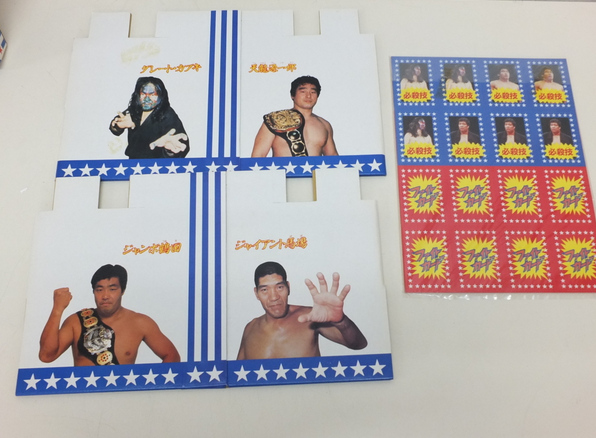
A shot of the items bundled with the All Japan board game which include: the
board's cover, leg stands, un-punched game cards and game manual.
Each of the four stands depicts the four featured All Japan Wrestlers. To the right
is a sample of the game cards.
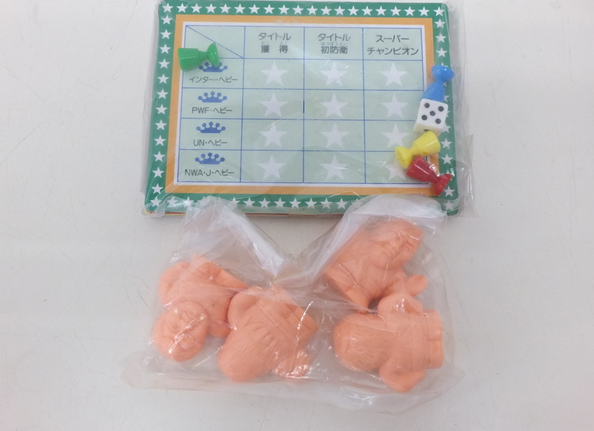
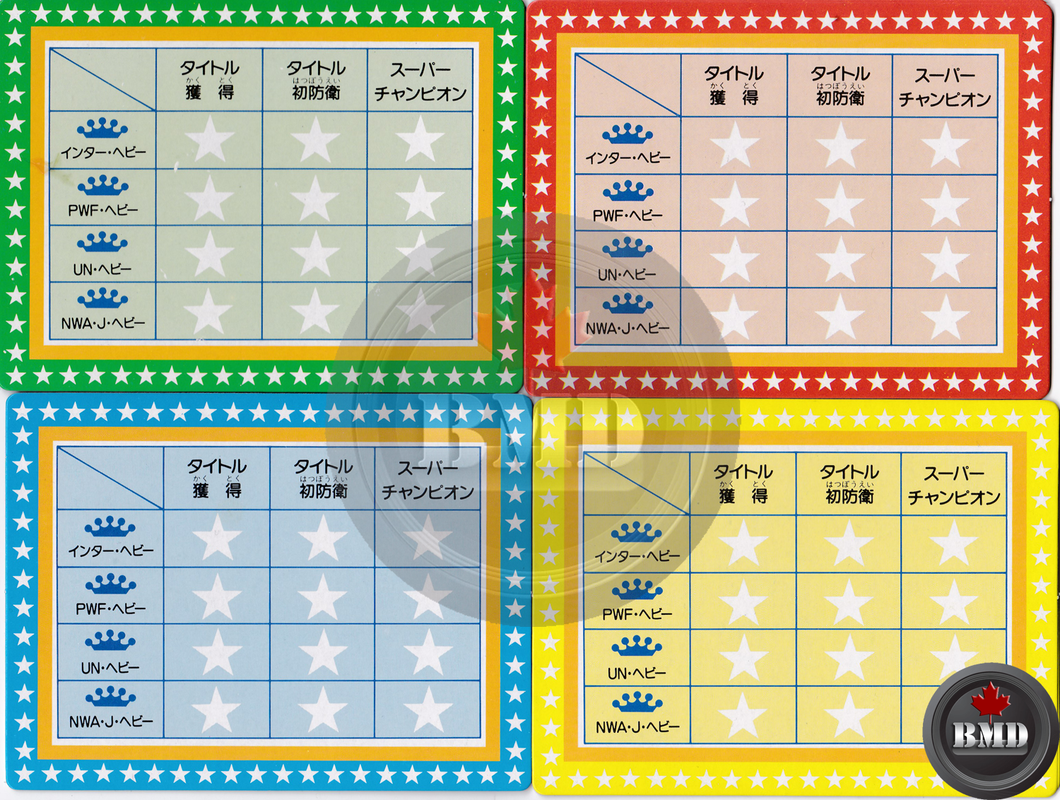
Each player's score card features a layout similar to one of All Japan's real-life
league tournaments. The score cards read:
Across:
Title, Title (second), Super Champion
Down:
International Heavyweight
PWF Heavyweight
NWA United National Heavyweight
NWA Jr. HeavyweightI'm guessing "SUPER CHAMPION" is for the player who wins three
out of four of the Championship belts first (thus, winning the game).
Incidentally, the All Japan Pro-Wrestling Game came out four years
before Jumbo Tsuruta became All Japan's first Triple Crown Champion.
Tsuruta would unify the PWF , NWA United and NWA International
Heavyweight Championship belts (all of which are featured in the
All Japan board game) on March 18th, 1989 against Stan Hansen
in Tokyo, Japan.
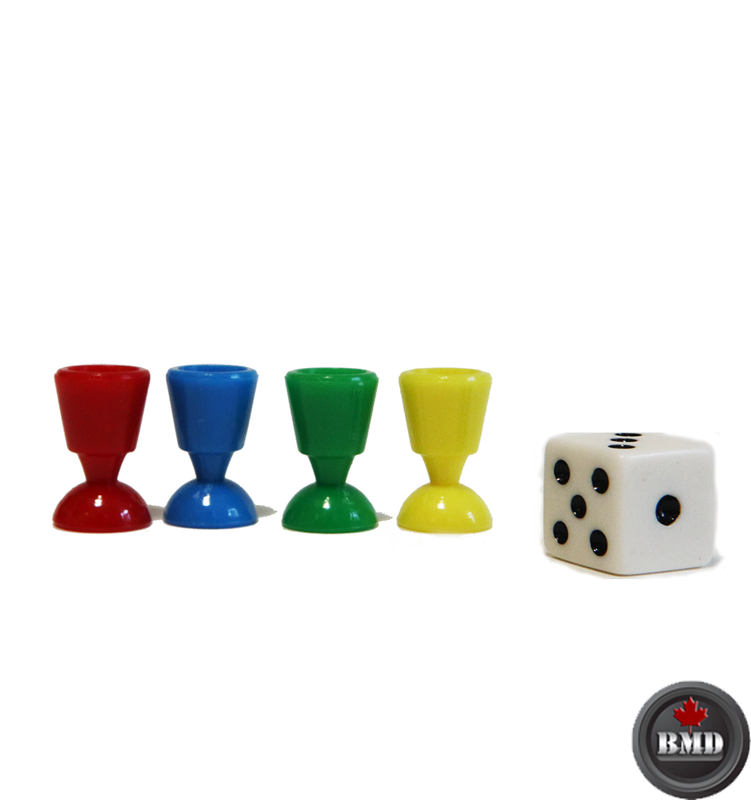
For mini trophies and a standard playing dice are also included. Each trophy
represents each Wrestler: Red (Giant Baba), Blue (Genichiro Tenryu), Green
(Jumbo Tsuruta) and Yellow (The Great Kabuki).
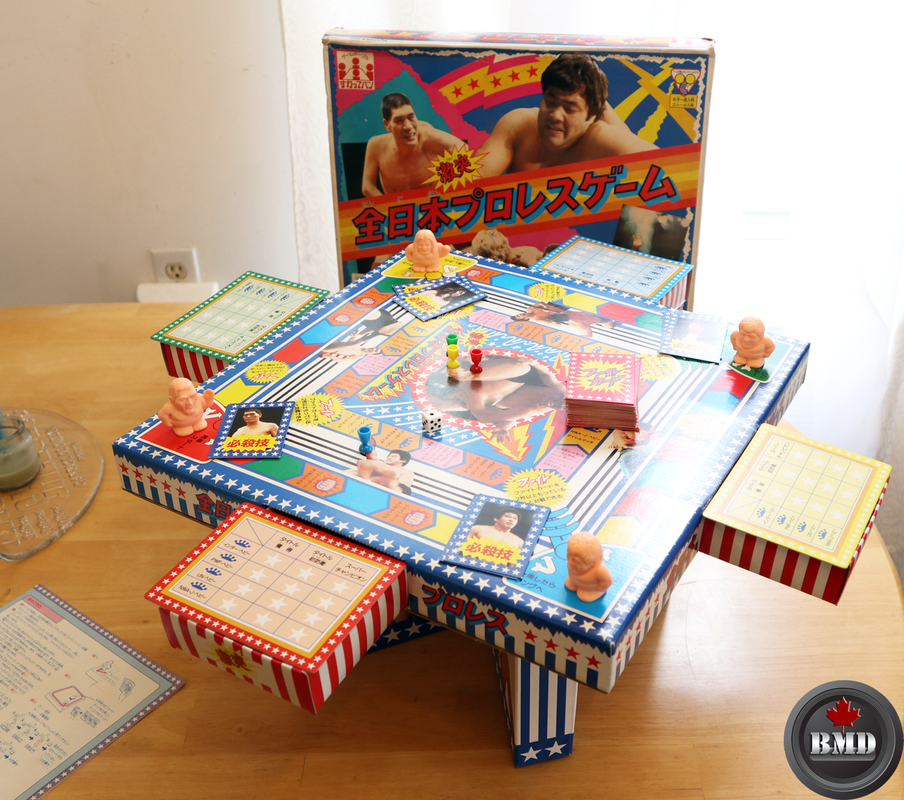
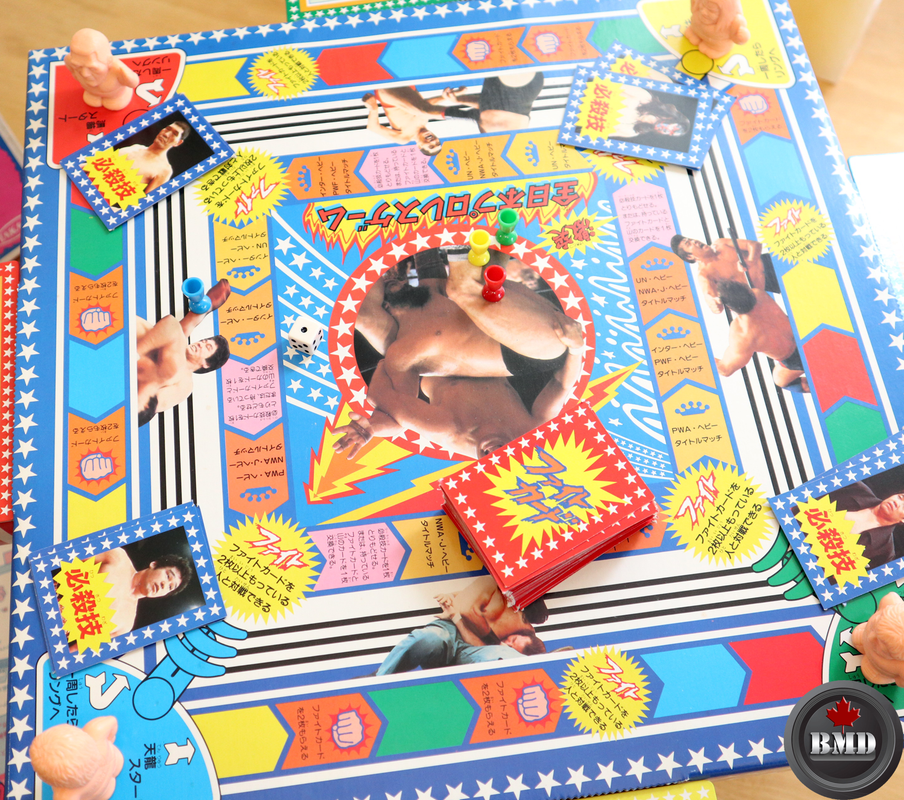
The game board is finally set up and ready to play!
An overhead view of the colourful game board.
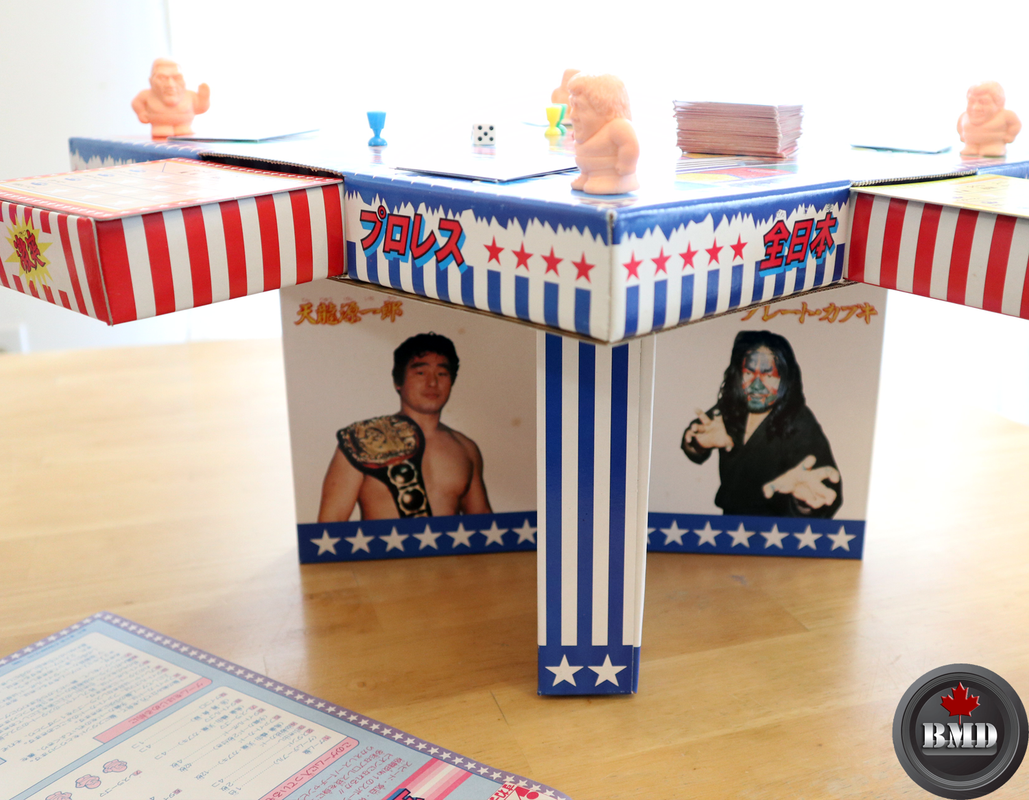
The entire game board and standards are made of cardboard. The board itself
is one solid piece while the legs (which fold and open up into a 3-dimensional
state) are connected to form an "X" shape which is then attached to the board.
Each leg shows a graphic of the four playable Wrestlers - an impressive concept
that really helped the All Japan Board game stand out!
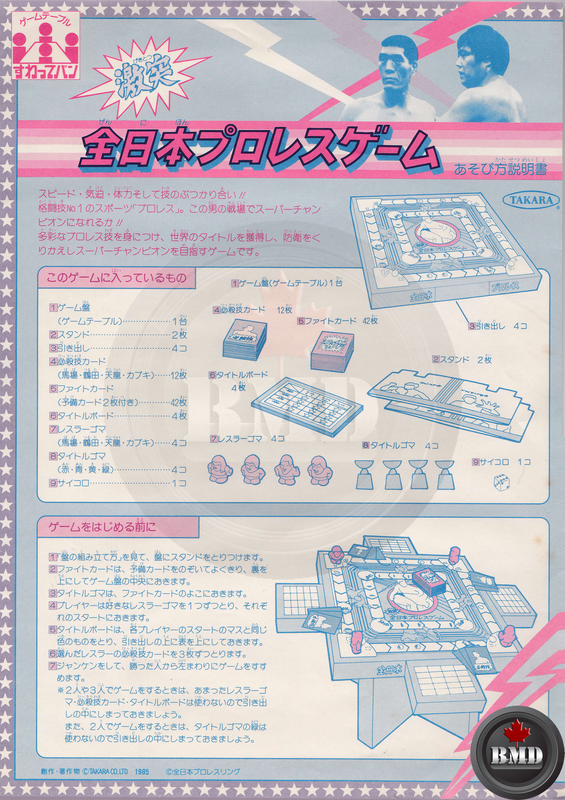
The two page instruction manual which goes over board construction, the included
pieces and instructions on how to play the game (in Japanese).
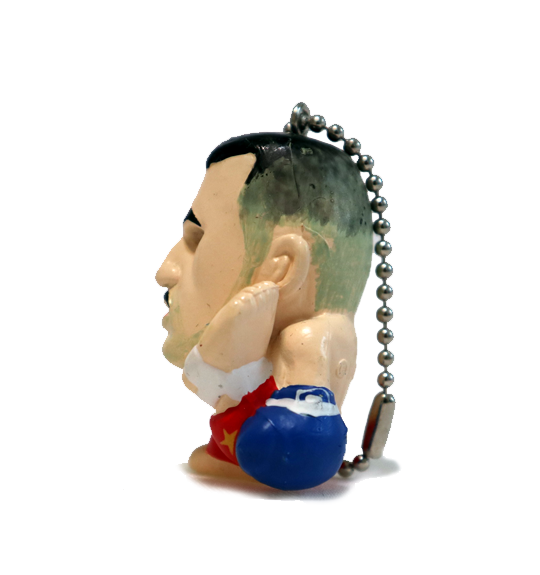
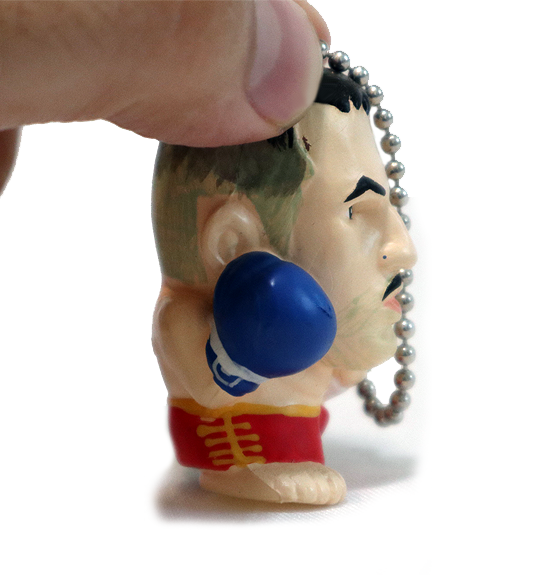
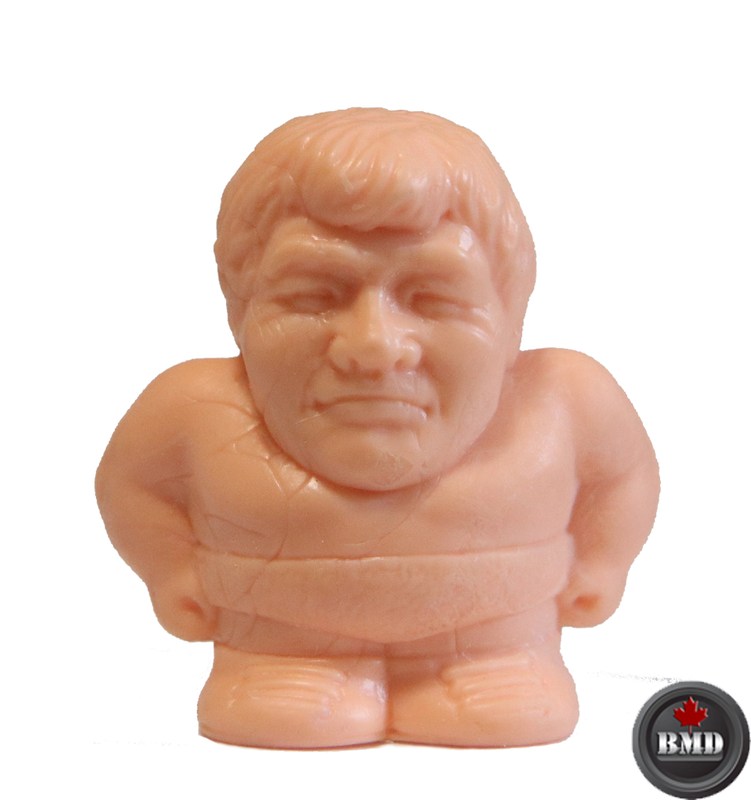
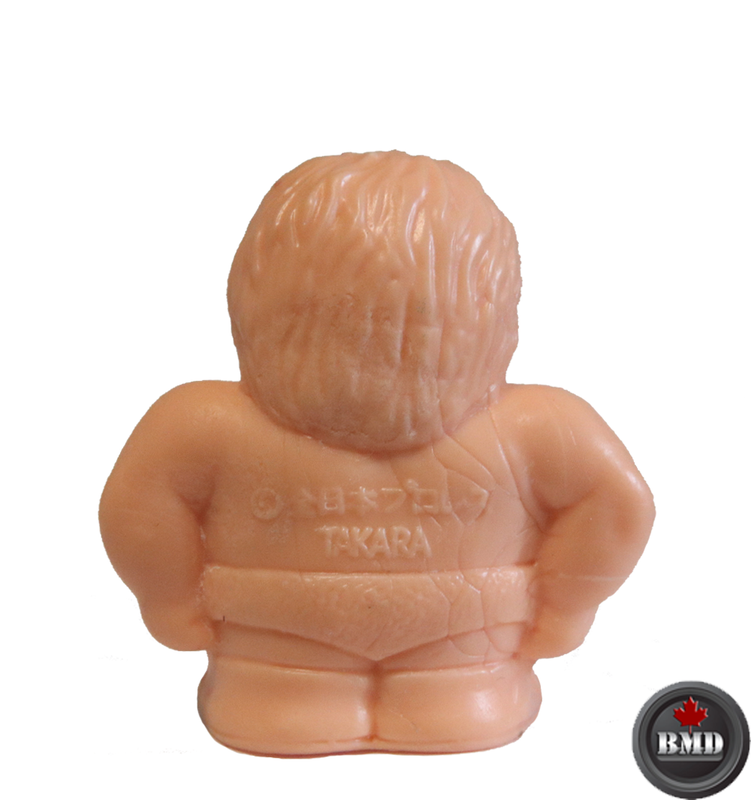
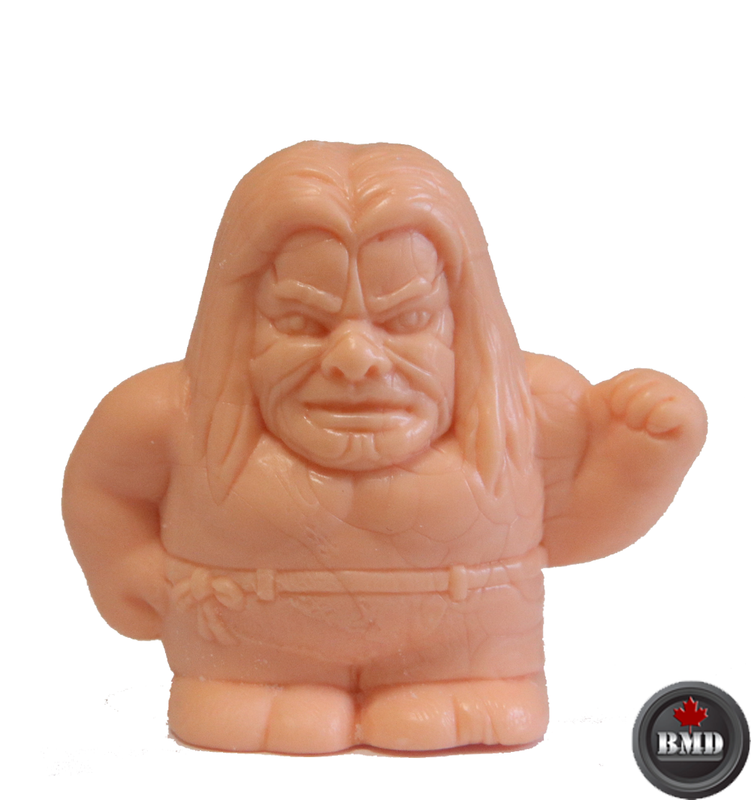
Exclusive to the board game are four special keshi-style figures:
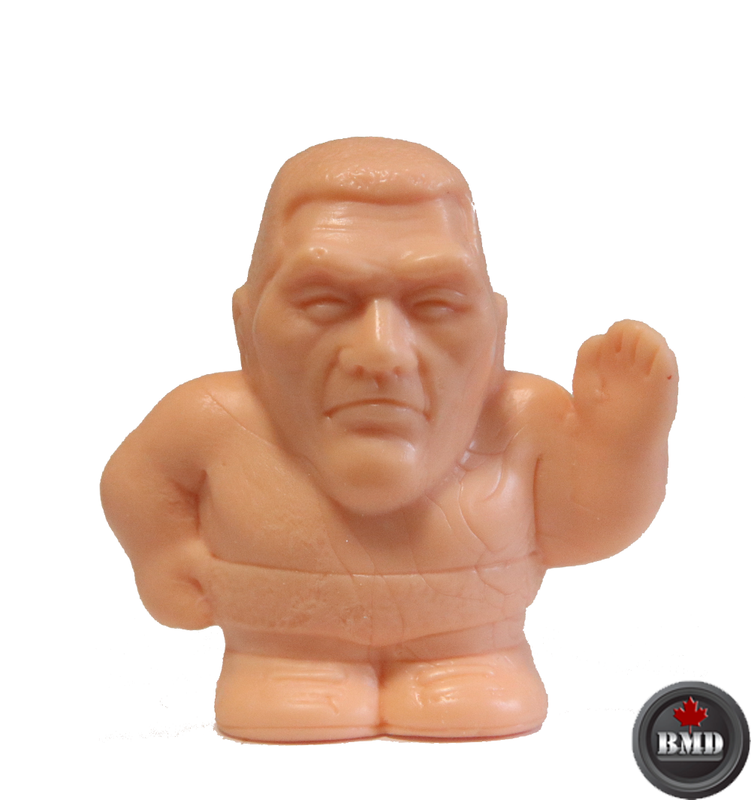
Giant Baba with chop pose.
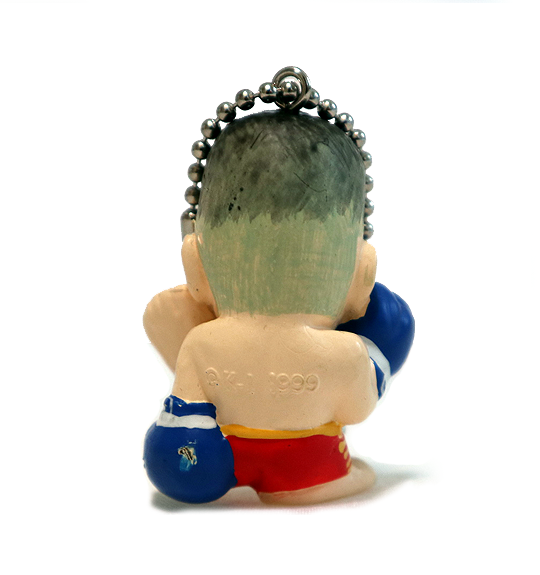
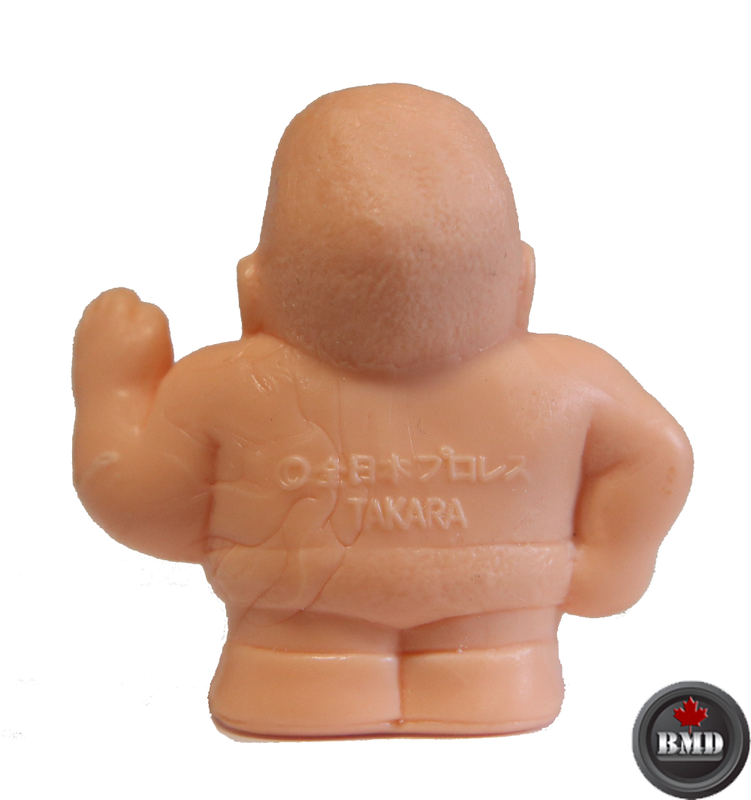
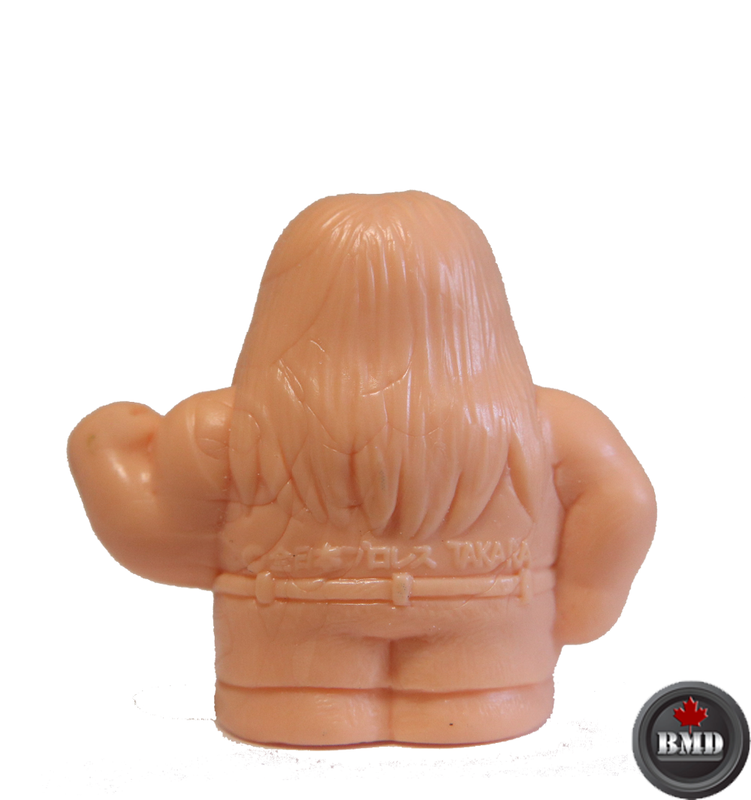
The back of each Keshi figure reads "(C) 全日本プロレス TAKARA"
(Copyright All Japan Pro-Wrestling TAKARA).
TAKARA's Keshi game pieces are some of the largest and bulkiest Keshi
figures ever created in the 1980's; easily towering over Popy's 1982 Series
1 Abdullah The Butcher figure.
Next up is Giant Baba's tag team partner, protege and fellow legend: Jumbo
Tsuruta!
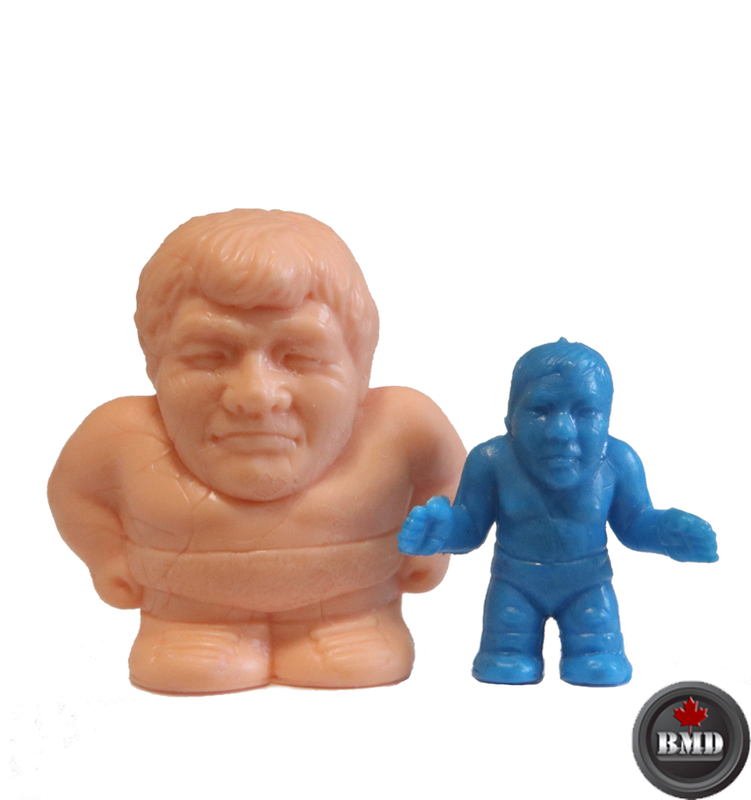
When compared to an early 1980's Jumbo Tsuruta Keshi.
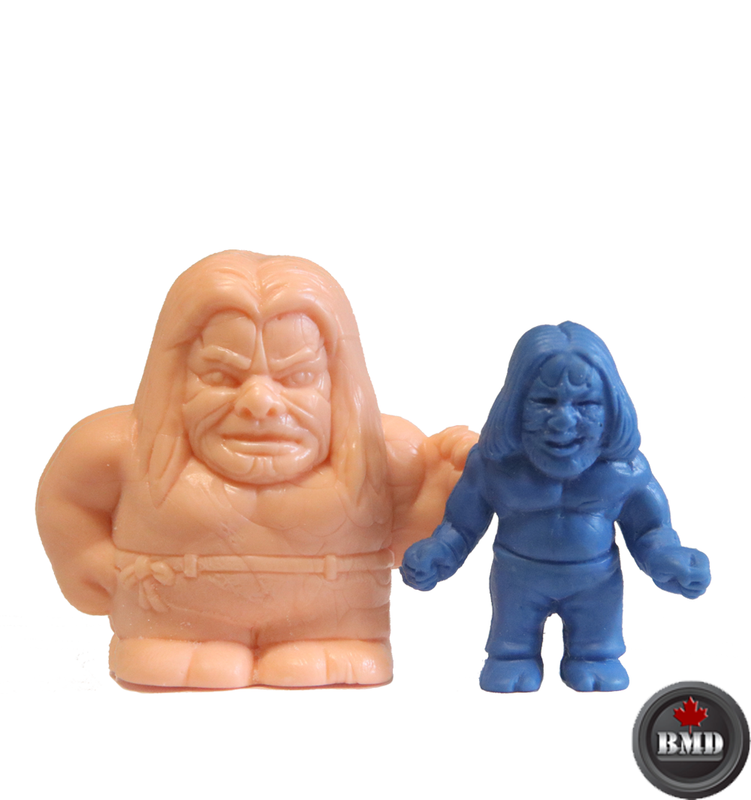
My absolute favorite figure from the set is The Great Kabuki (who also
looks a lot like Greg "The Hammer" Valentine here ...The Greg Kabuki?!)!
Without a doubt, the level of detail of each figure is a major step up from
TAKARA's earlier New Japan set in just about every way possible.
When stood next to the earliest Great Kabuki keshi.
Unfortunately, my copy came with a duplicate Jumbo Tsuruta figure (if anyone
has the Genichiro Tenryu figure from this set, leave a comment!).
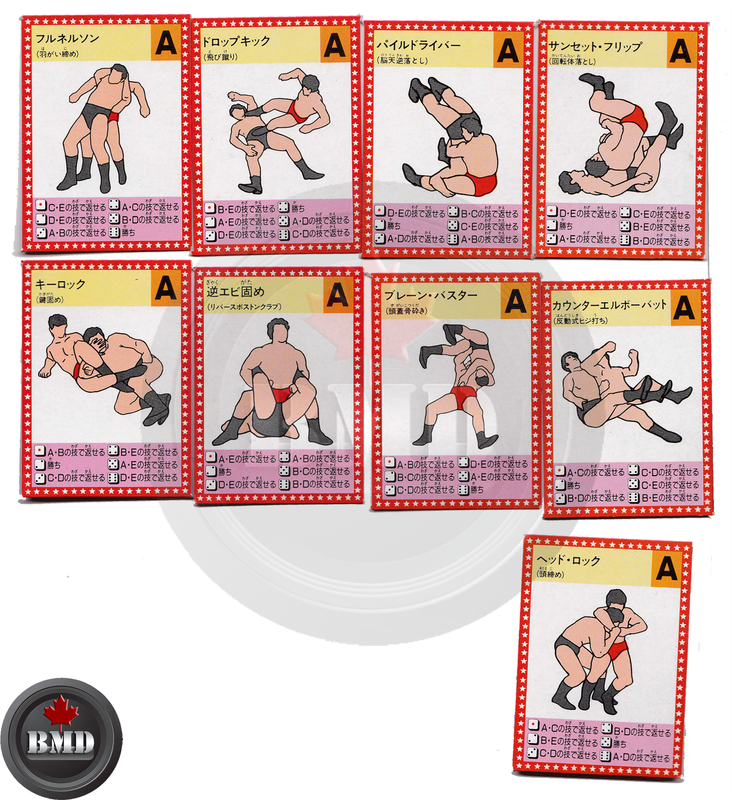
Let's take a look at the included "FIGHT CARDS":
The A card set reads (from left to right):
1) Full Nelson 2) Dropkick 3) Piledriver 4) Sunset Flip
5) Keylock 6) Boston Crab 7) Brainbuster 8) Counter Elbow Pat (reversal)
9) Headlock
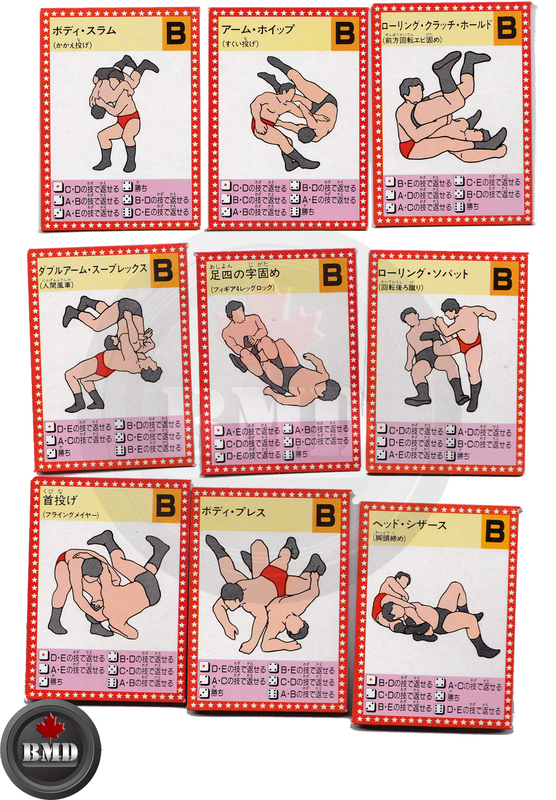
The B card set reads (from left to right):
1) Body Slam 2) Arm Drag 3) Rolling Clutch Hold (Rollup)
4) Double Arm Suplex 5) Figure Four Leglock 6) Rolling Sobat
7) Flying Mare (Snapmare) 8) Body Press 9) Head Scissors
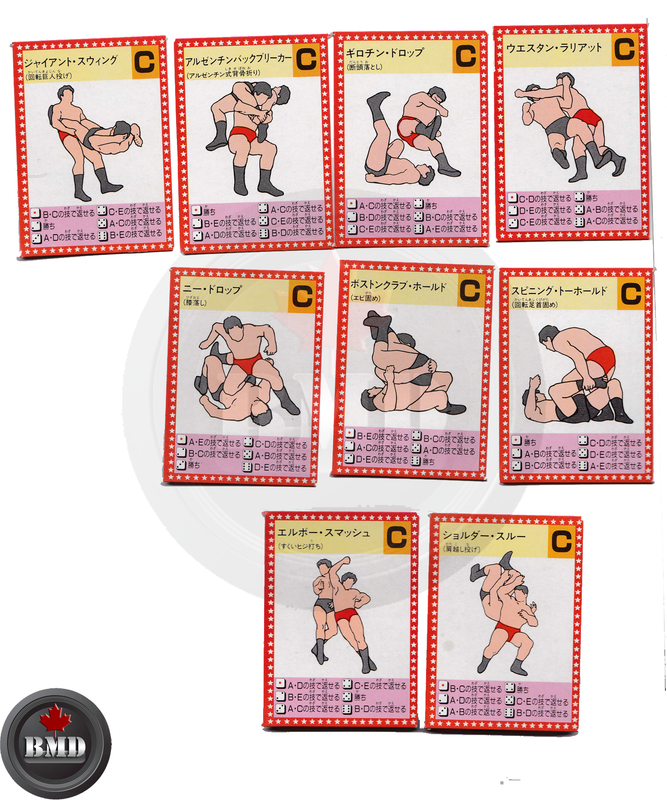
The C card set reads (from left to right):
1) Giant Swing 2) Argentine Backbreaker 3) Guillotine Leg Drop 4) Western Lariat
5) Knee Drop 6) Boston Crab Hold 7) Spinning Toe Hold
8) Elbow Smash 9) Shoulder Throw
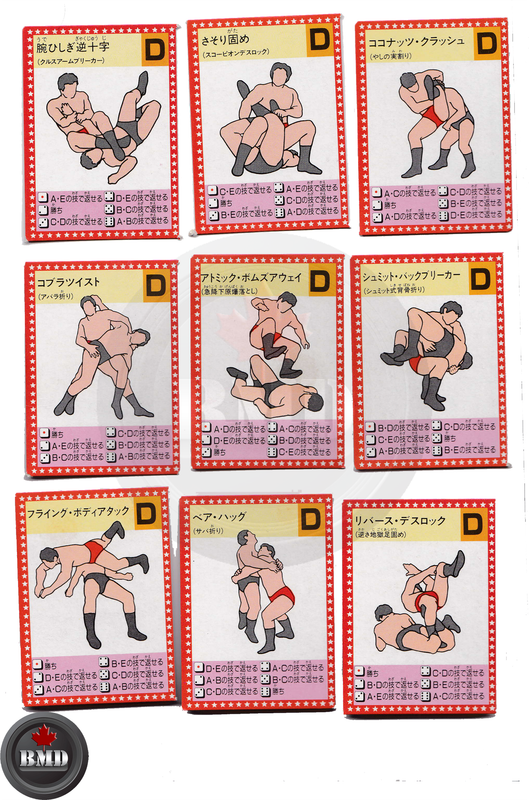
The D card set reads (from left to right):
1) Armbar 2) Sasori Gatame (Scorpion Deathlock/Sharpshooter) 3) Coconut Crush
4) Cobra Twist 5) Atomic Bombs Away (Double leg stomp from top ropes)
5) Schmidt Backbreaker 6) Flying Body Attack (Flying Crossbody)
8) Bear Hug 9) Ribas Deathlock (Indian Deathlock)
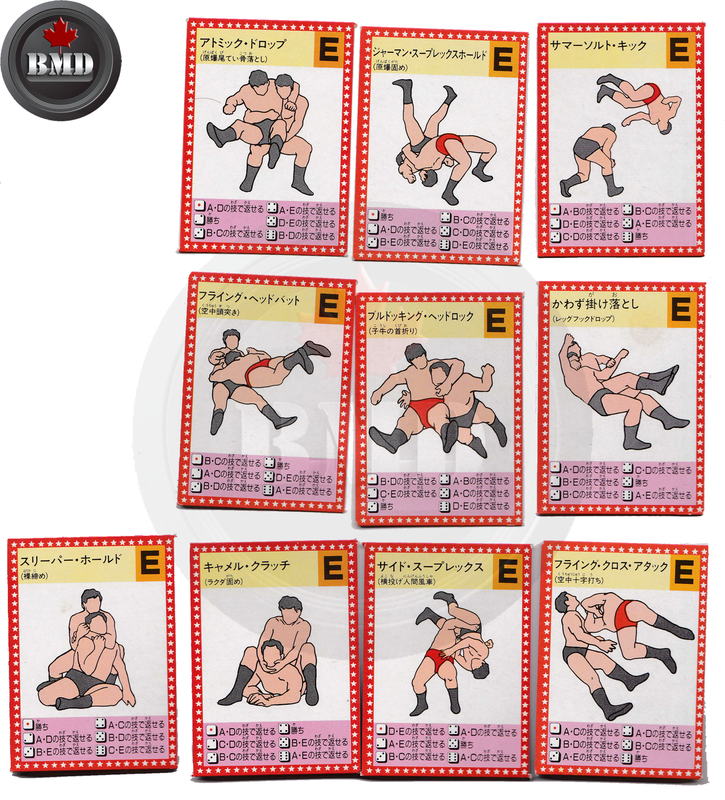
The E card set reads (from left to right):
1) Atomic Drop 2) German Suplex Hold 3) Somersault Kick
4) Flying Headbutt 5) Front Headlock (Bulldog) 6) Russian Leg Sweep
7) Sleeper Hold 8) Camel Clutch 9) Side Suplex 10) Flying Cross Chop
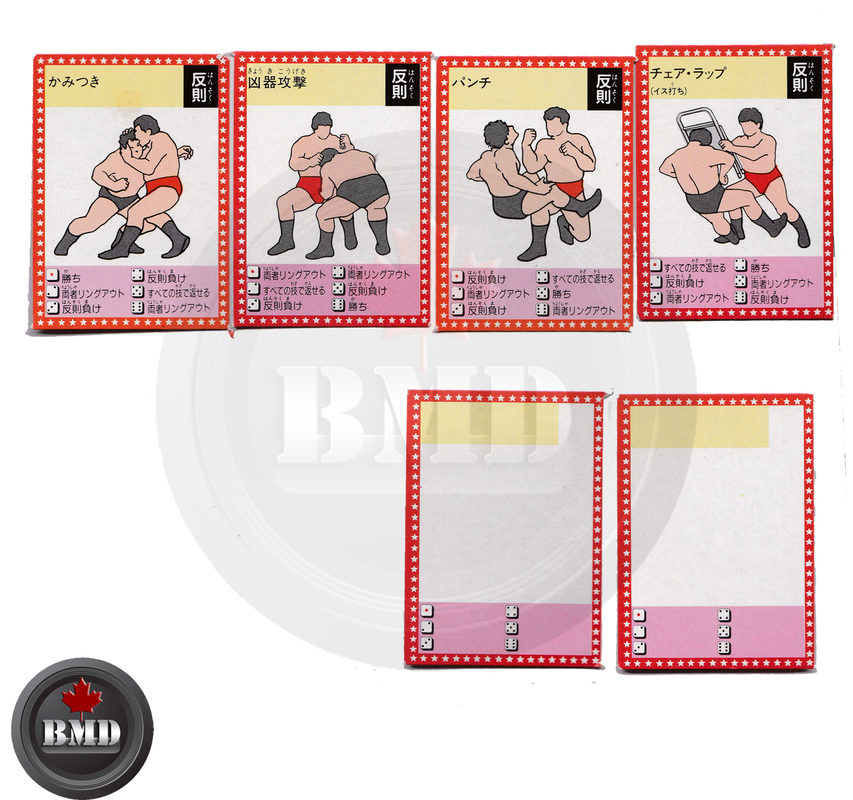
There also seems to be what look like penalty cards which use illegal tactics.
I would imagine these cards detract points or force a player to move several
spaces back once a card from this set is drawn.
There also seems to be two blank cards. Quite possibly a factory error or
just simply a missed move.
The cards for this set are (from left to right):
1) Head bite 2) Hair pull 3) Punch (which looks more like a throat
thrust) 4) Chair shot
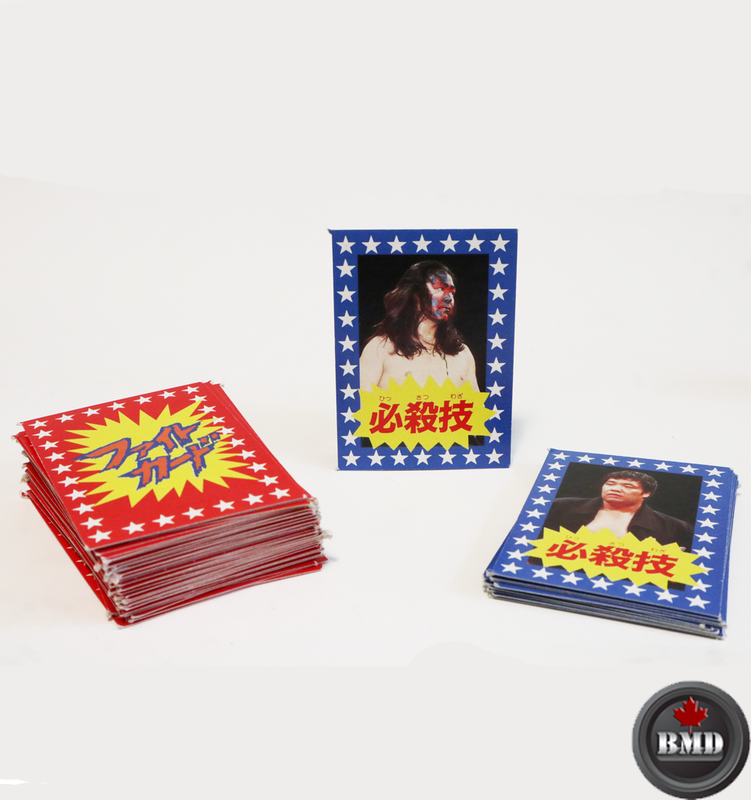
Besides the red "Fight Cards", there are also special, blue-coloured cards
called "DEATH BLOW" cards.
The Death Blow cards represents the signature moves used exclusively
by the four included Wrestlers.
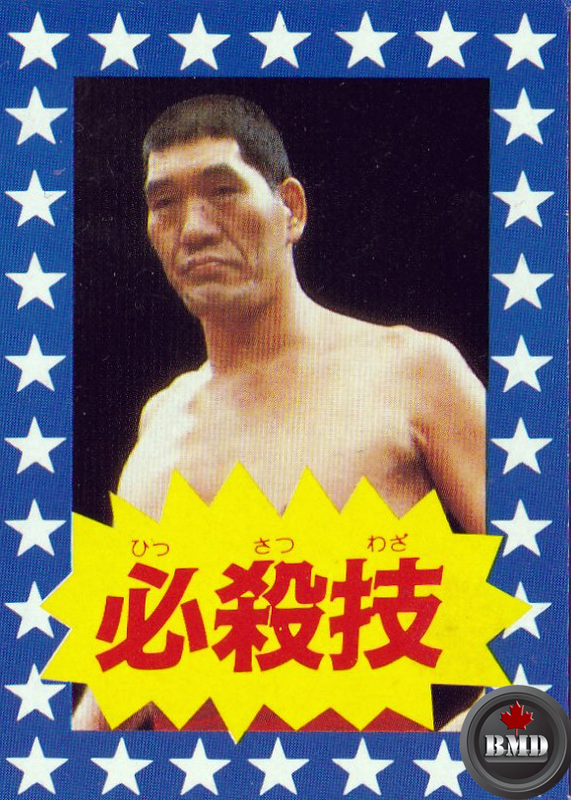
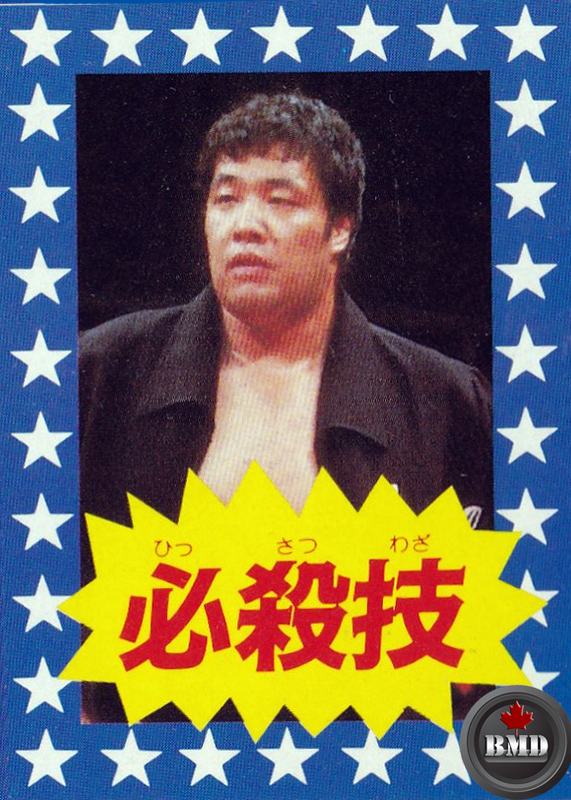
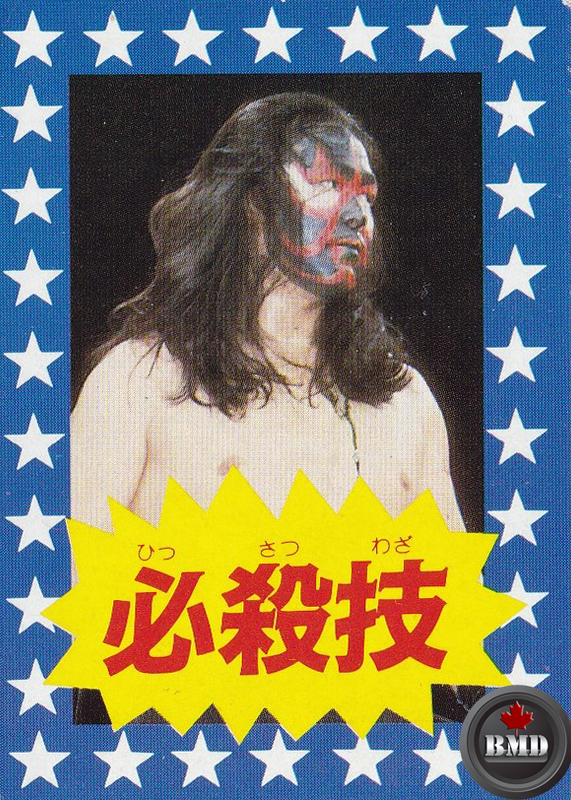
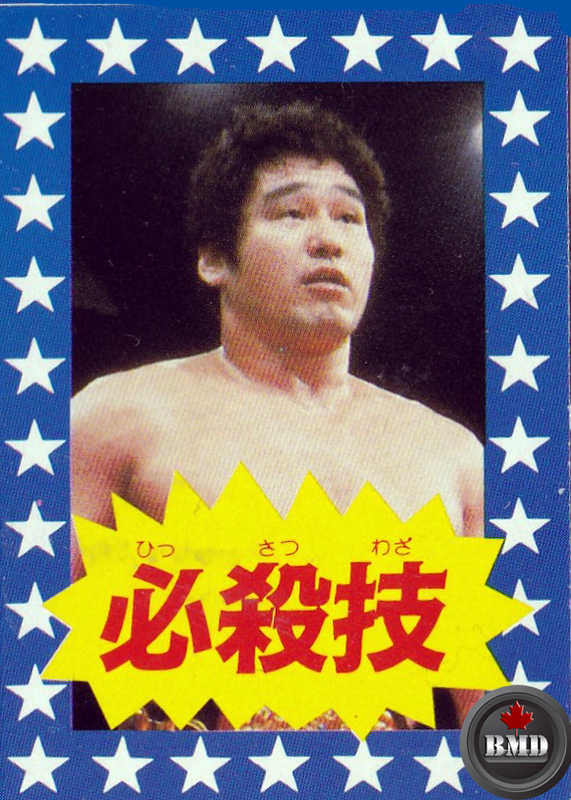
(Clockwise: Giant Baba, Jumbo Tsuruta, The Great Kabuki and Genichiro Tenryu).
Let's take a look at each Wrestler's Death Blow cards:
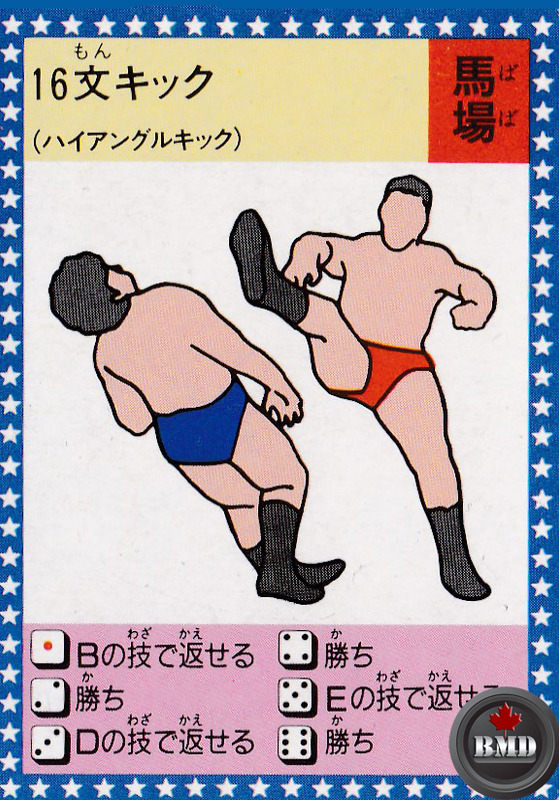
To help players even further, each Death Blow card contains the Wrestler's
name and game colour in the top right corner. Each Wrestler has three
Death Blow cards.
The first card is Giant Baba's "16 inch Kick (High Angle Kick)".
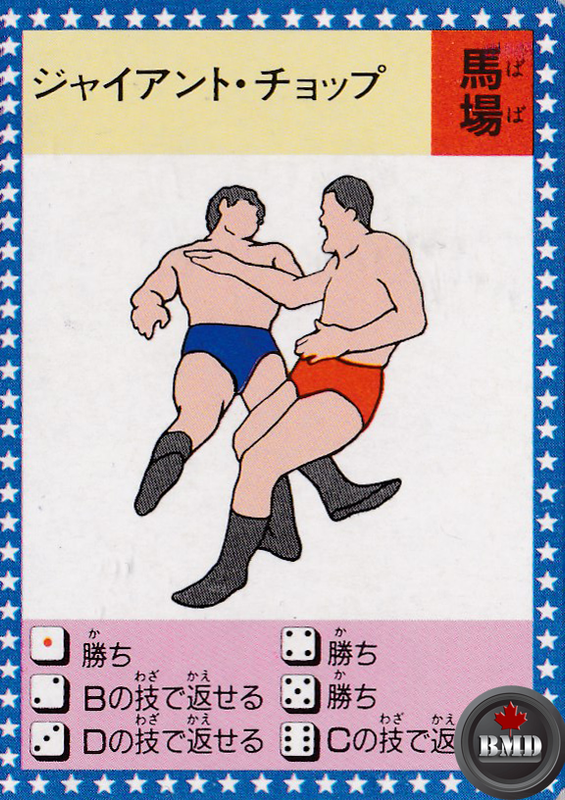
The second Death Blow card is Giant Baba's "Giant Chop".
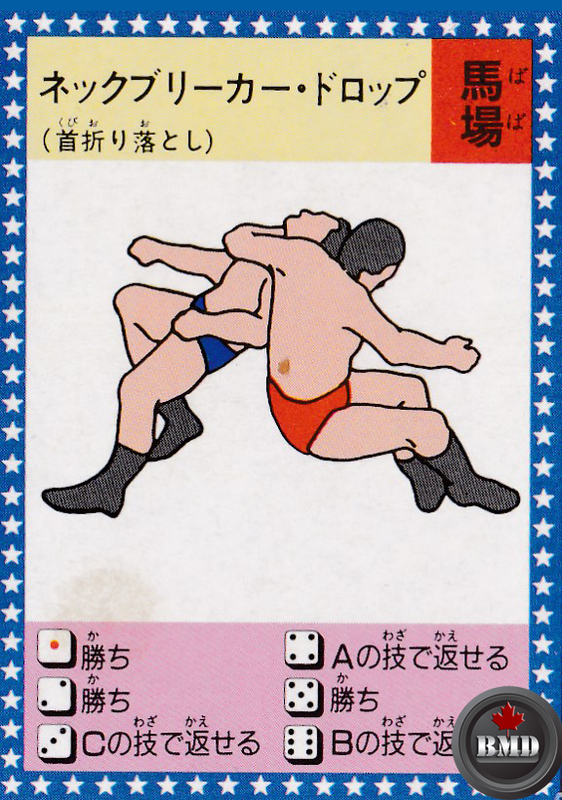
Giant Baba's third Death Blow card is the "Neck Breaker Drop
(Running Neck Breaker)".
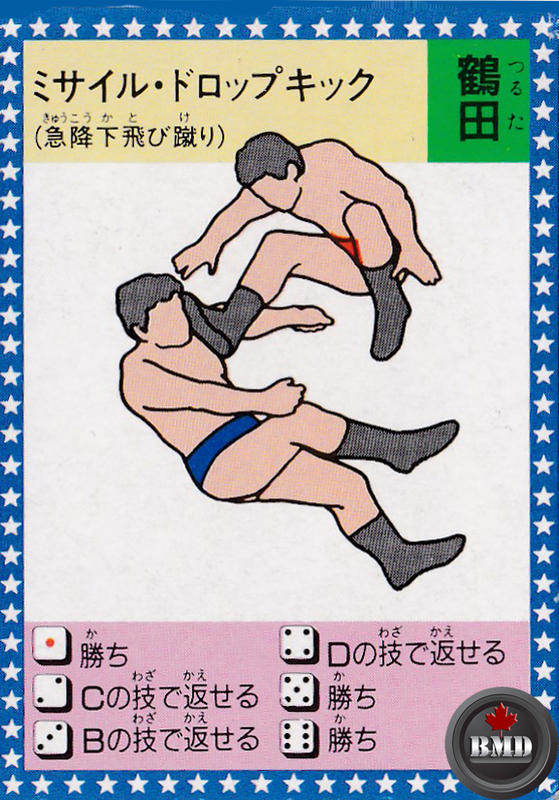
The 4th Death Blow card is Jumbo Tsuruta's "Missile Dropkick".
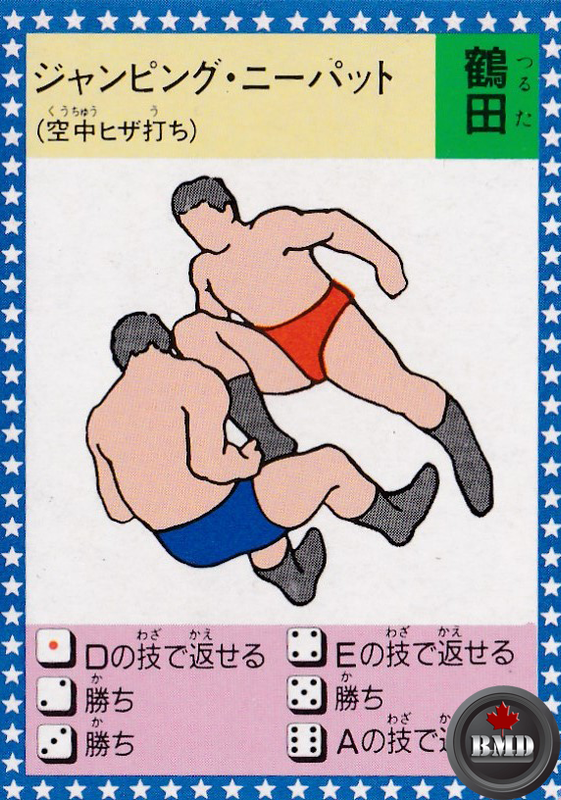
Next up is Jumbo Tsuruta's "Flying Knee Pat".
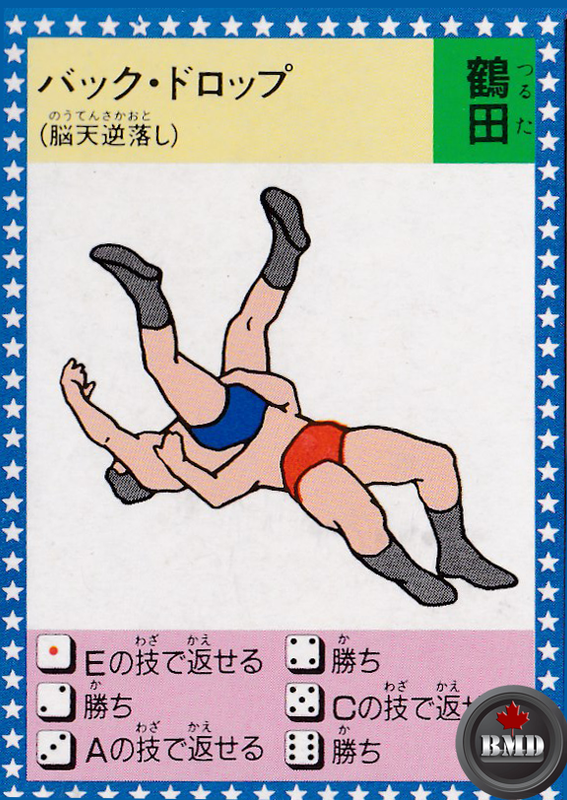
Jumbo's third Death Blow card - "Backdrop".
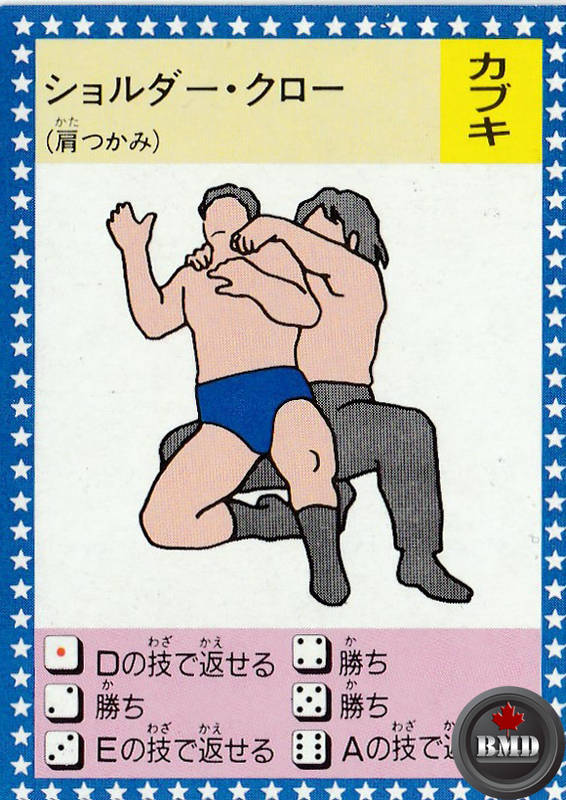
Unlock the mysteries of the orient with The Great Kabuki's first
Death Blow card "Shoulder Claw" (nerve hold).
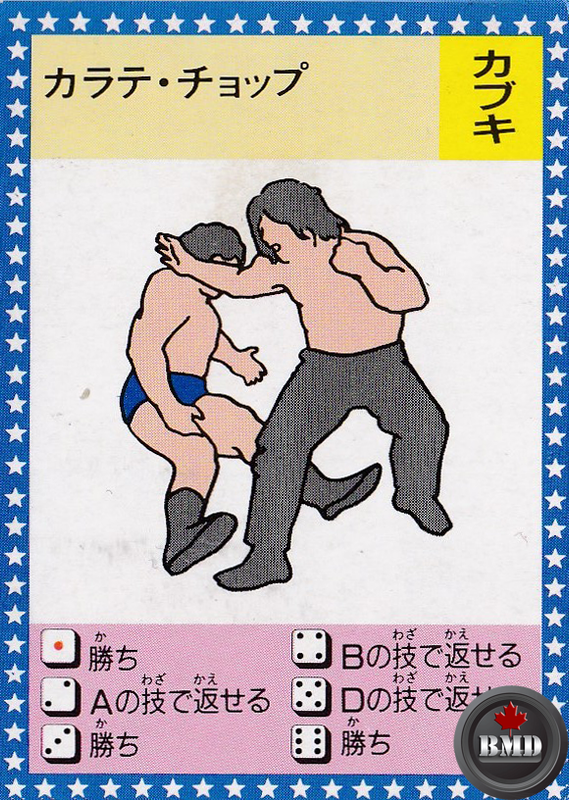
Kabuki has a chop of his own with Death Blow card #2 "Karate
Chop".
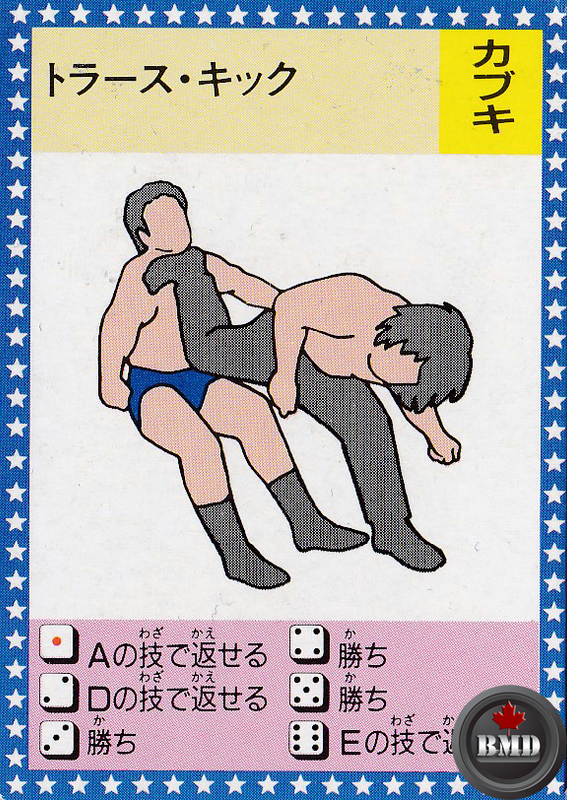
Kabuki's final Death Blow card "Thrust Kick".

The backside design of the "Fight Card" and score cards.
Closing thoughts:
The All Japan Pro-Wrestling Game was All Japan's response
to rival promotion New Japan Pro-Wrestling's board game which came out a few
years prior in 1982 (both of which use game cards and keshi).
Collectors should also look for TAKARA's Giant Baba and Stan Hansen
championship belt figures that were released the previous year in 1984.
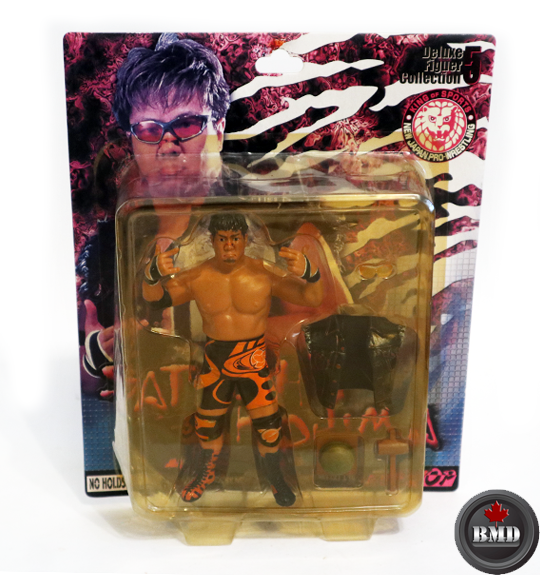
To this day, TAKARA/TOMY are still creating Pro-Wrestling collectibles.
One of the most recent and collectible is New Japan Pro-Wrestling's plush
Teddy Bear line.