Continuing to share obscure Japanese Wrestling collectibles with the world, I present four more sofubi figures:
Blog #281 Imperial Pro-Wrestling Federation figure review.
Imperial Pro-Wrestling Federation is a line of sofubi figures that were released by Japanese toymaker Utsugiyo in 2015.
Each figure stands about 4.5 - 5 inches (which is less than half the size of older Sofubi figures released in Japan). The design of the figures are meant to resemble the traditional Bullmark sofubi figures from the 60's and early 70's.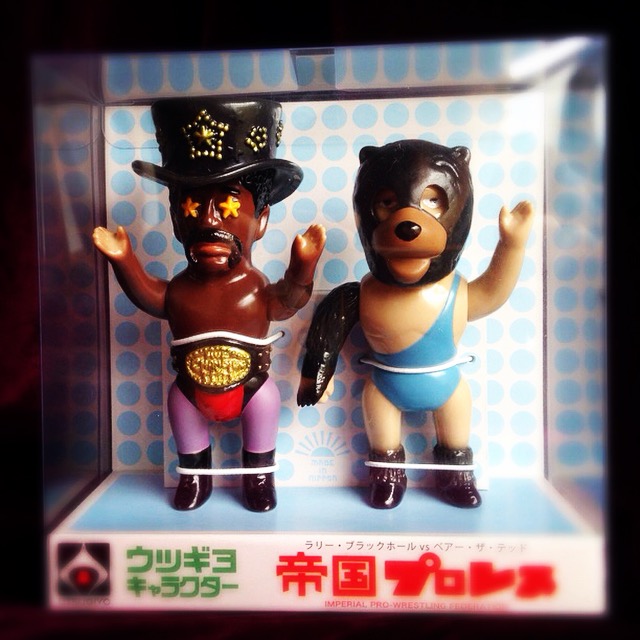
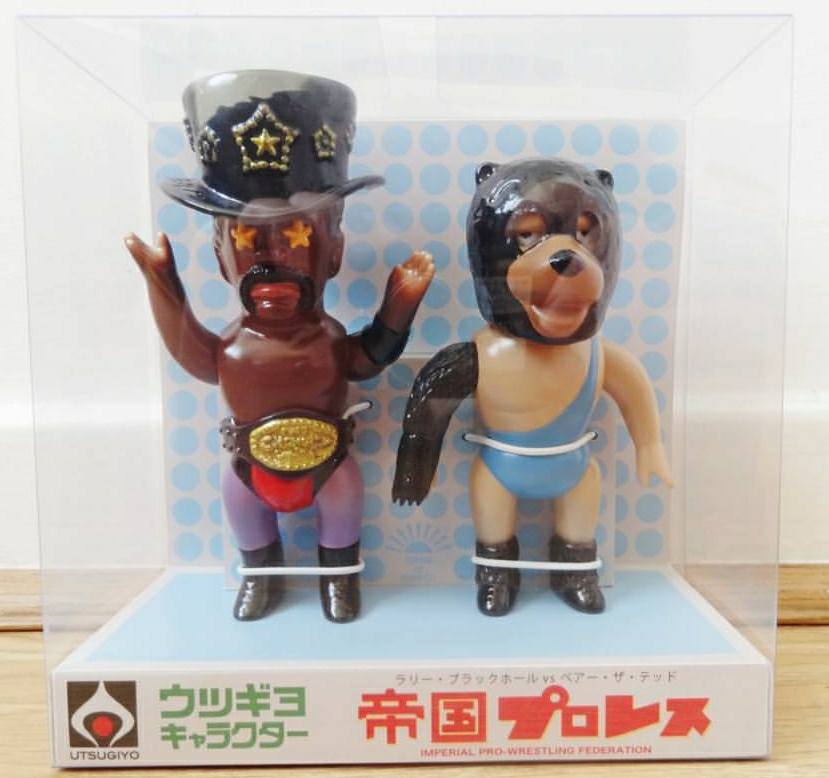
Design-wise, Utsugiyo states that the Champion Series two-pack features two protagonists: Larry Blackhole and Bear the Ted. 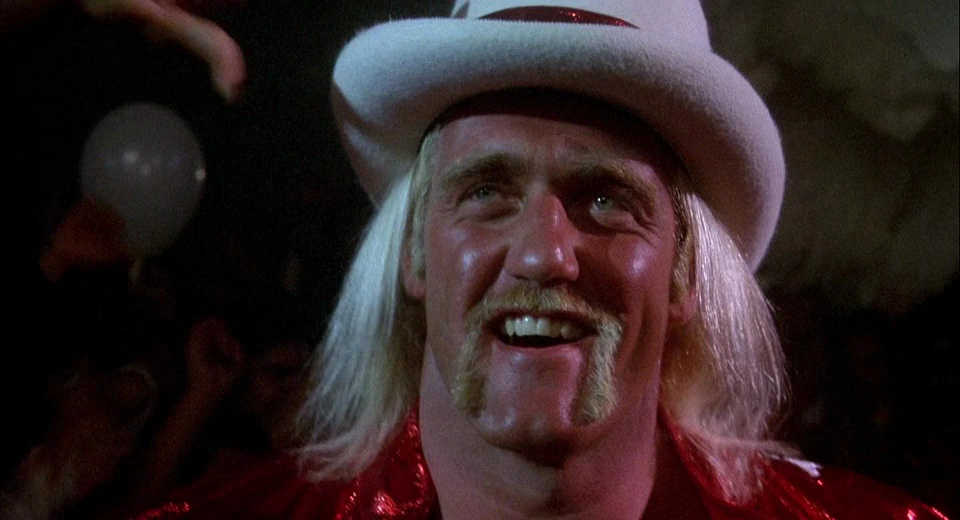
Personally speaking, I think Larry is based on Thunderlips. The hat and handlebar mustache, plus IGWP-inspired belt seem reminiscent of Hulk's likeness. Additionally, I feel Bear the Ted is a tribute to Tiger Mask and Bruiser Brody (note Ted's furry boot coverings).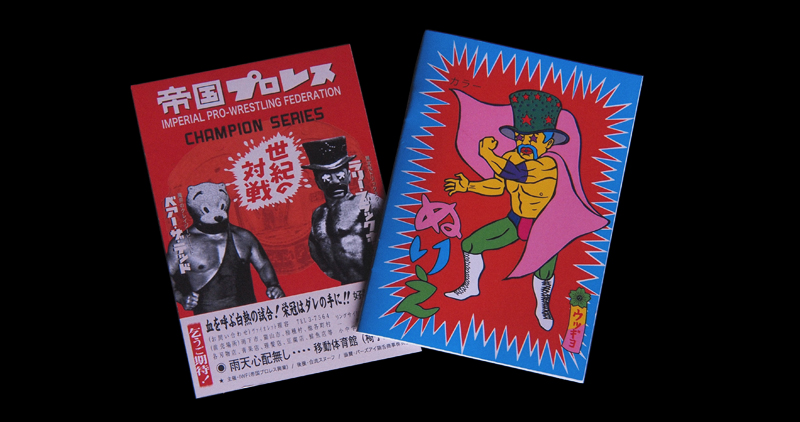
The Champion Series two-pack originally sold for 14,000 yen ($117 USD), which also came with a colouring book and poster. The poster's design was meant to replicate the look of classic Puroresu posters from the 1960's (specifically, the JWA).
Just like Thunderlips in Rocky III, Blackhole also features a cape of his own.
Only 27 sets were created, and anyone who didn't pre-order by May 7th had to be entered into a lottery in hopes of bagging the pair.
If you thought $117 for two miniature sofubi's was a tad much, be prepared to feast your eyes on the following: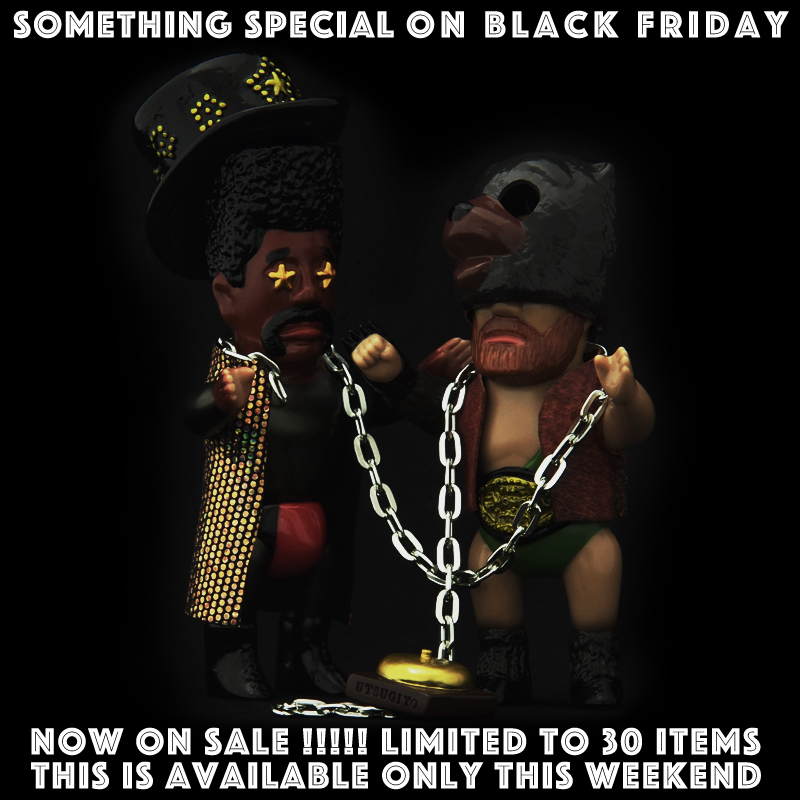
Utsugiyo released a special variant set that was only available over the weekend.
Unlike the original Champion Series set, this special two-pack included multiple removable accessories. Teddy's vest chains and beard look reminiscent of Bruiser Brody here.
Released in 2018, this special set was sold for a jaw dropping 49,999 yen ($367 USD plus shipping!). Welcome to the expensive world soft vinyl 'designer art toys'. 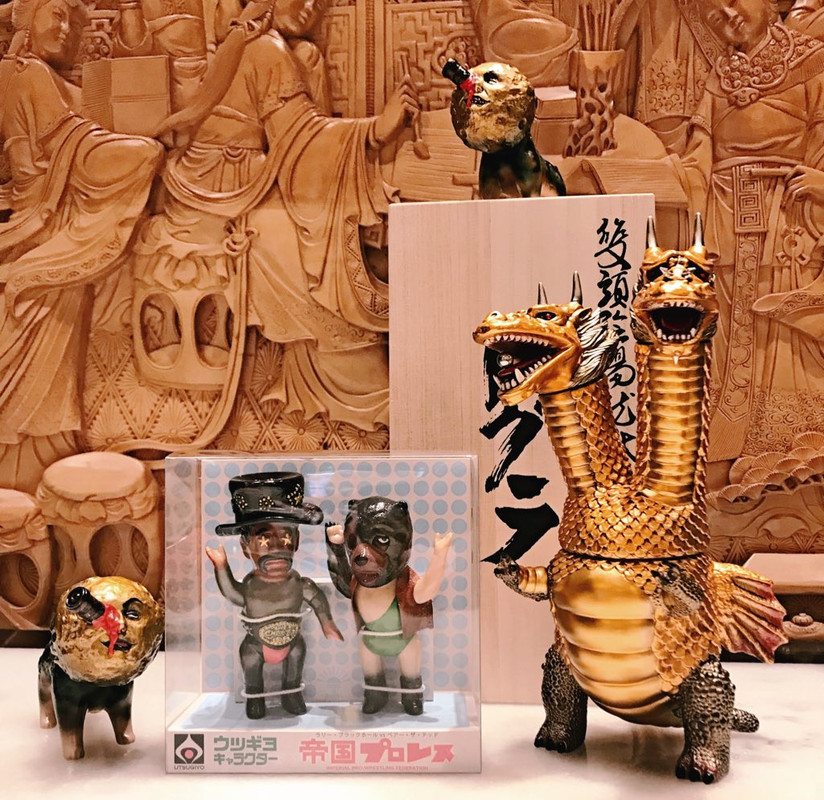
The only known photo I could find of the packaged Black Friday version. I wonder if the extra accessories are tucked away inside the packaging, or were removed at the last second? We may never know.
At 1 to $400+, would you consider hunting down these designer art Wrestling figures?
Sunday, 20 October 2024
Imperial Pro-Wrestling Federation figure review

Pro-Wrestling Ring capsule figure set review
Blog #265 - Pro-Wrestling Ring capsule figure set
If gashapons/capsule toys are your thing, you may get a kick out of the Pro-Wrestling Ring set.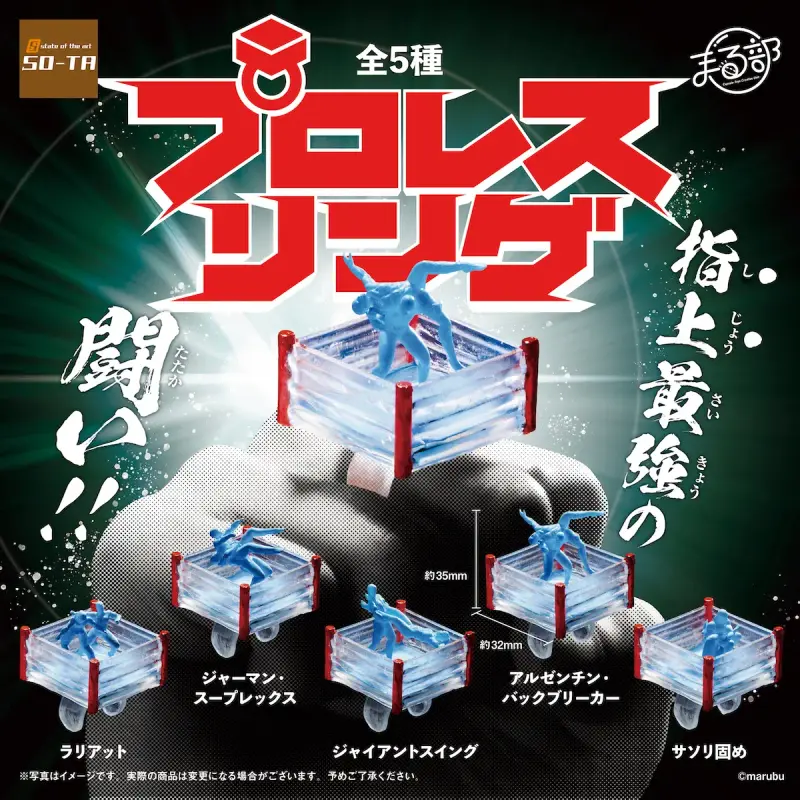
The Pro-Wrestling Ring set was released by Marubu in 2022. There are five ring sets to collect.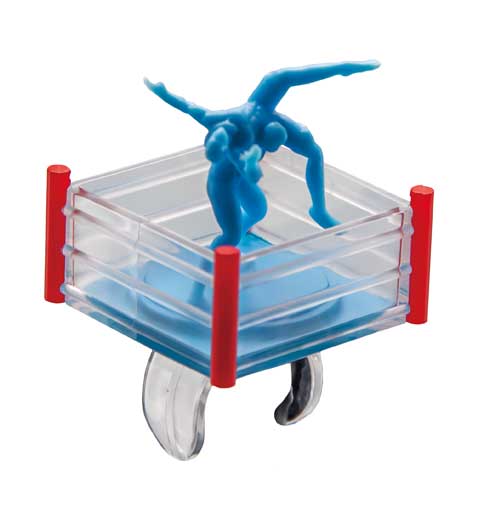
Argentine Backbreaker.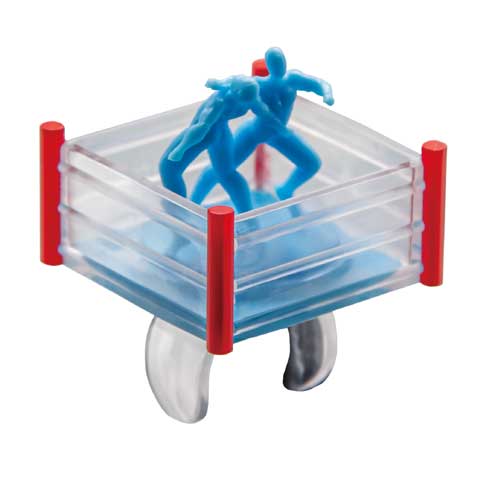
Lariat.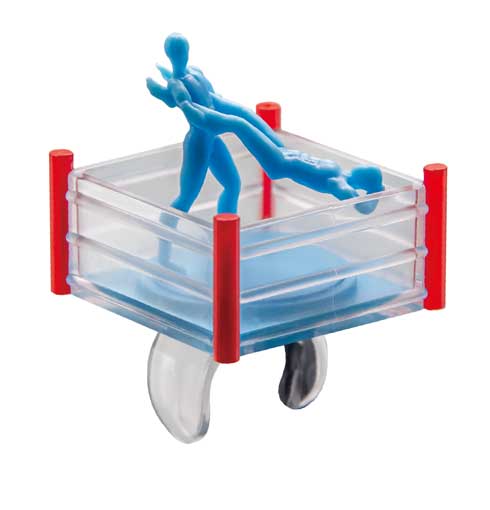
Giant Swing.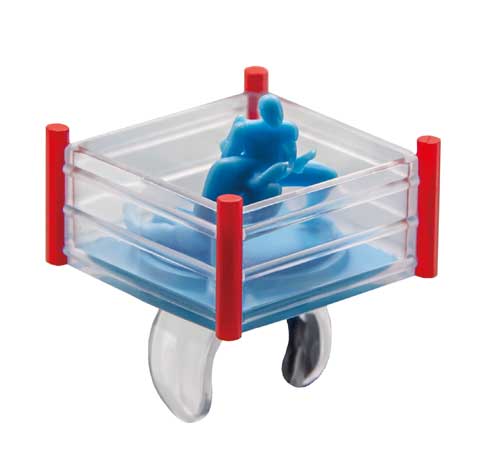
Sasori-gatame. 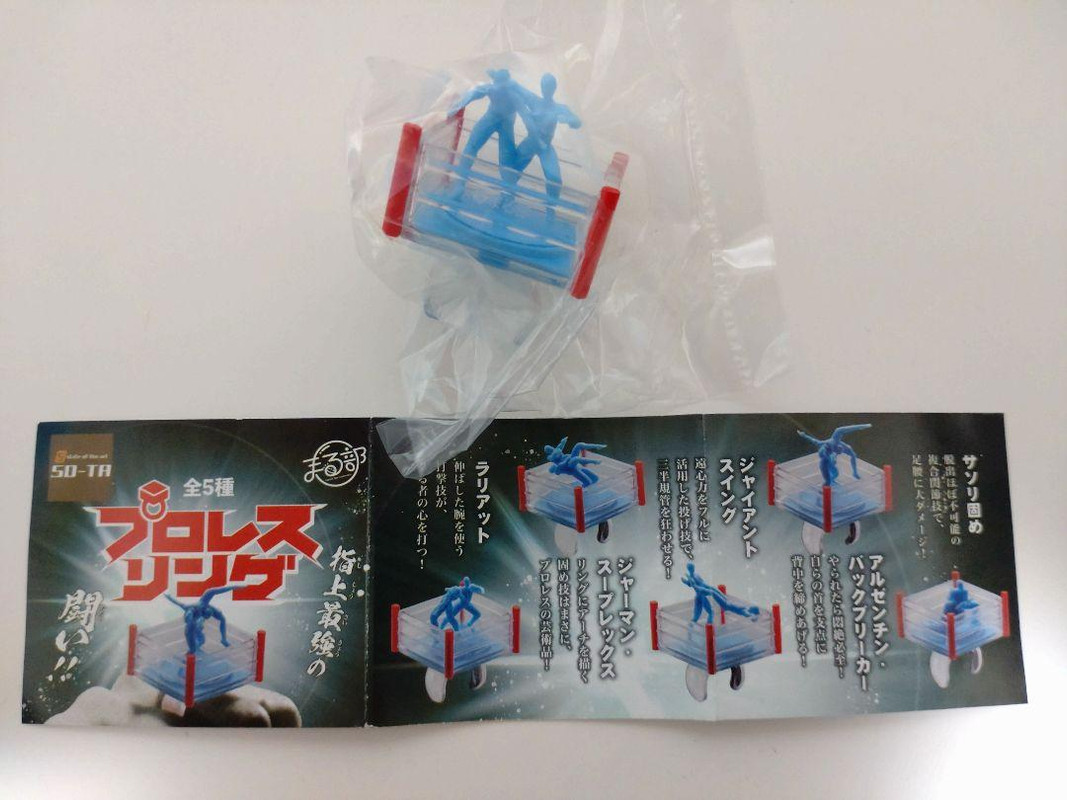
Like other gashapons, each figure comes with a mini booklet showcasing all five ring sets to collect.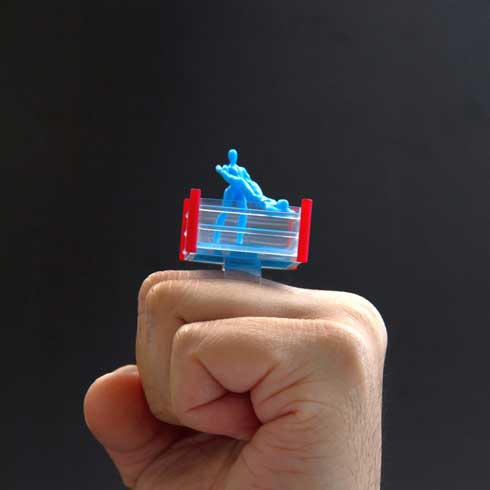
Each ring comes with a grasp at the bottom; allowing collectors to wear the ring like a ringpop.
Present a matching ring to your beau and this set could make ideal wedding rings (or not...).
Saturday, 31 August 2024
16d Collection Terry Funk figure review
Outside of the realms of WWE merchandising, Terry Funk has been included in numerous
figure lines over the years. Most prominently, the lion's share of those depictions can be
found overseas exclusively in Japan.
From POPY's iconic Superstars figure line to Clockworks' Beyond The Mat movie exclusive,
BoFord's Martial Arts Box collection, and even Bandai's seemingly endless assortment of
keshigomu eraser figures, fans of the Texas Bronco have plenty of figures to choose from.
Today, we'll be taking a look at the newest Terry Funk depiction from Japan. Blog #262
laces up against the 16d Collection Terry Funk sofubi figure.

Legendary rivals reunite in the 16d line.
hardcore legend, this particular figure is based on Terry's late 1970's - early 1980's run in All
Japan Pro-Wrestling.
At the time, Terry and his brother Dory Funk Jr. were considered two of the promotion's top
foreign babyfaces.

writing clearly, they'll have to rotate Terry's arms. Like the 16d Giant Baba figures, I found
moving Terry's arms to be very quite tedious at first. Though, with a little persistence, it is
possible.
Another thing I discovered that the GoodSmile shop doesn't tell you is that Terry's wrists are
also articulated; both being able to rotate a full 360 degrees.
In terms of articulation, Terry features movable arms, wrists, neck and waist.

In the world of Puroresu, The Funks' bomber jackets from this era are considered holy grails
among collectors. Often times selling for thousands of dollars to diehard fans.
The Great Kabuki himself was gifted one of these jackets by Dory Funk Jr. himself, along with
one of Stan Hansen's iconic cowboy hats. Two treasures the legend displays in his BIG DADDY restaurant in Japan.

Like most 16d figures, the sole of Terry's boots contains a copyright from the Wrestler himself.
In Funk's case, the license is a posthumous one; being the first figure released after Terry's
passing.

D.O.B.: July 30th, 1944
Birthplace: America, Indiana
Debut: December 9th, 1965
Height/Weight: 188cm (6'2), 118kg (260lbs)
Signature moves: Spinning Toe Hold, Rolling Cradle, Texas Clover Hold
(Texas Cloverleaf).
Closing thoughts:
After years of waiting, it's nice to see Terry finally added to the 16d line. Like a majority
of HAO's craftmanship, I feel the 16d figure depiction is one of the most realistic representations
of Terry to date. Terry's resemblance is spot-on in soft vinyl form.
Here's hoping we'll get Dory Funk Jr. (who just earned the distinction of being the oldest Wrestler
to Wrestle at the age of 83) along with other gaijin legends added to the 16d line in the future.
Saturday, 27 May 2023
Grape Brain X Great Muta sofubi figures review
In the realm of Japanese Wrestling merchandise, few competitors have received as many
figures as The Great Muta. With striking facepaint, intricately-detailed ring masks,
an endless variety of phantasmagorical entrance attires, along with a penchant for
influencing countless Wrestlers with his innovative in-ring techniques, it's no wonder
that the 'Pearl of The Orient' continues to remains an indelible icon in the world of
professional Wrestling.
Our next batch of figures pay homage to Muta's early years, with a crossover project
sure to turn heads. Blog #236 summons Grape Brain's Great Muta sofubi figures.
Enter the Grape Brain Genius
Grape Brain is a Japanese artist who is best known for his characters Origiri and Norikun.
Known as the "2 mouth genius boy doctor", Norikun casts a sinister presence with
bangs obscuring one of Nori's eyes. Norikun also includes a second face - a monstrous,
alter-ego that is located at the back of Nori's head.
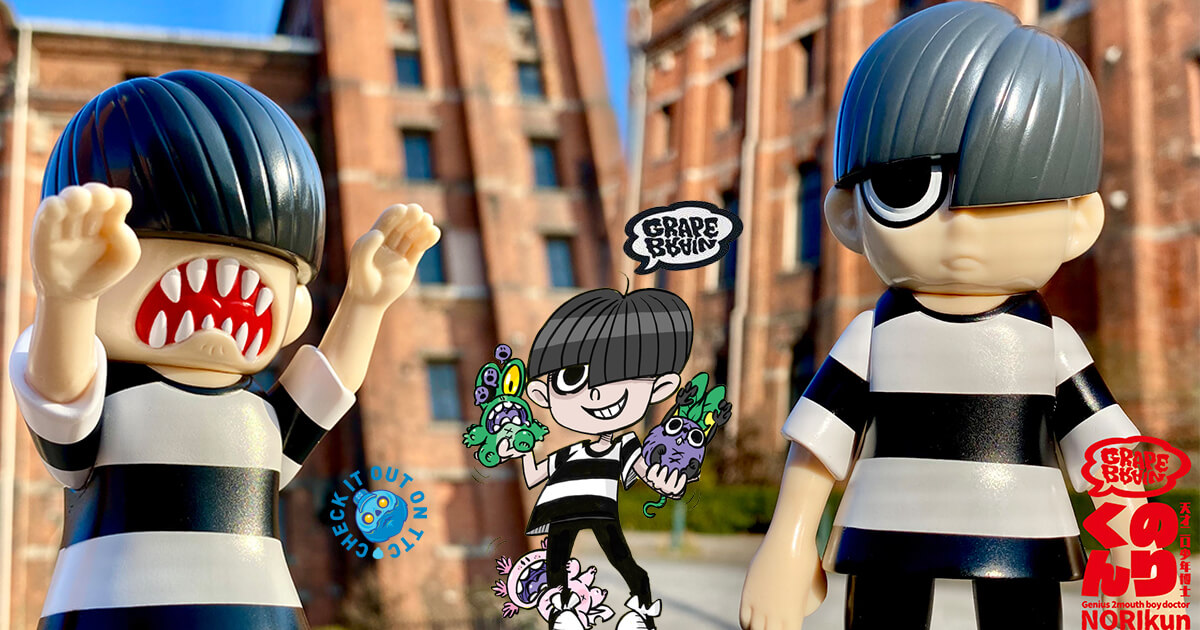
By turning Norikun's head, collectors can display either one of Nori's personalities.
Visually, Norikun's appearance reminds me of the mid 90's early 2000's cartoon animation
found on Nickelodeon or Cartoon Network. Cartoons like Dexter's Lab and, later, Teen
Titans comes to mind.
Enter the Grape Brain Great Muta crossover
Capitalizing on The Great Muta's 2023 retirement run, Grape Brain, in conjunction with
Pro-Wrestling NOAH, created a series of soft vinyl figures inspired by the Wrestling legend.
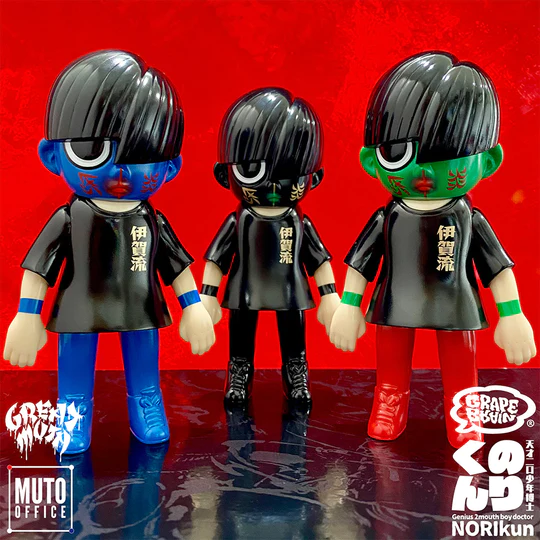
Following the trend of other designer toy brands such as BearBrick, KAWS, Kidrobot
and, in extension, even Funko POPS!, Grape Brain has redesigned Norikun to resemble
The Great Muta, as he appeared in the late 80's to early 90's.
Each Norikun figure stands 14cm or 5.5 inches tall and is made of soft vinyl.
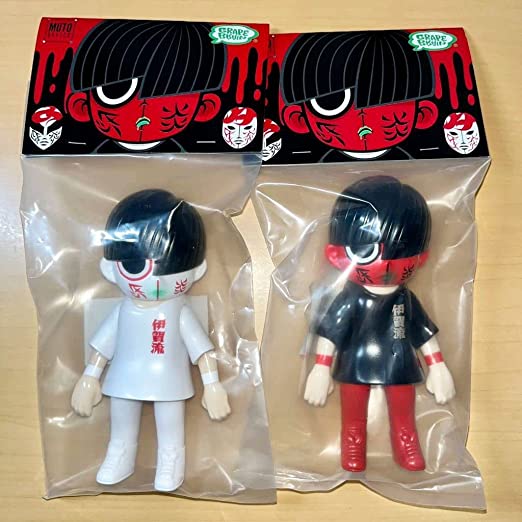
In the traditional style of sofubi figure packaging from the 1960's and 1970's, the Grape
Brain Great Muta figures come in simple shrinkwrap packaging with attached cardboard
backings.
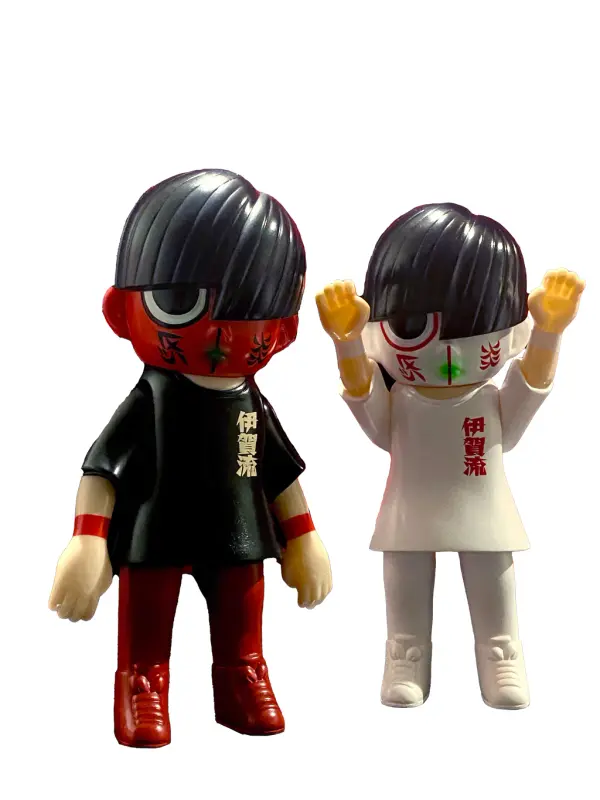
In terms of articulation, only the arms and head can be rotated.
I love how the Norikun figures ever have green lips, a nod to Muta's poison mist attack.
From Pro-Wrestling NOAH's official shop, the following text reads
"Great Muta X Norikun Sofubi NEW colour ver."
The text also mentions the website price of 11,000 yen (roughly $80 USD) per figure.
With five colour variants available (Black, Blue, Green, White and Red), acquiring
each variant would cost collector's over five hundred dollars.
Since the Norikun Great Muta figures were made in very limited numbers, each edition
sold out rather quickly. The few examples of Grape Brain's work that have made it to
the secondary market now fetch upwards of five hundred dollars per figure!
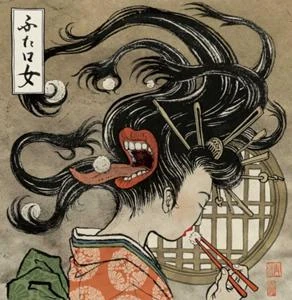
My theory is that the monstrous head at the back of Norikun's skull is a reference
to the Japanese yokai legend of Futakuchi Onna; an early example of a split
personality imbued with supernatural powers.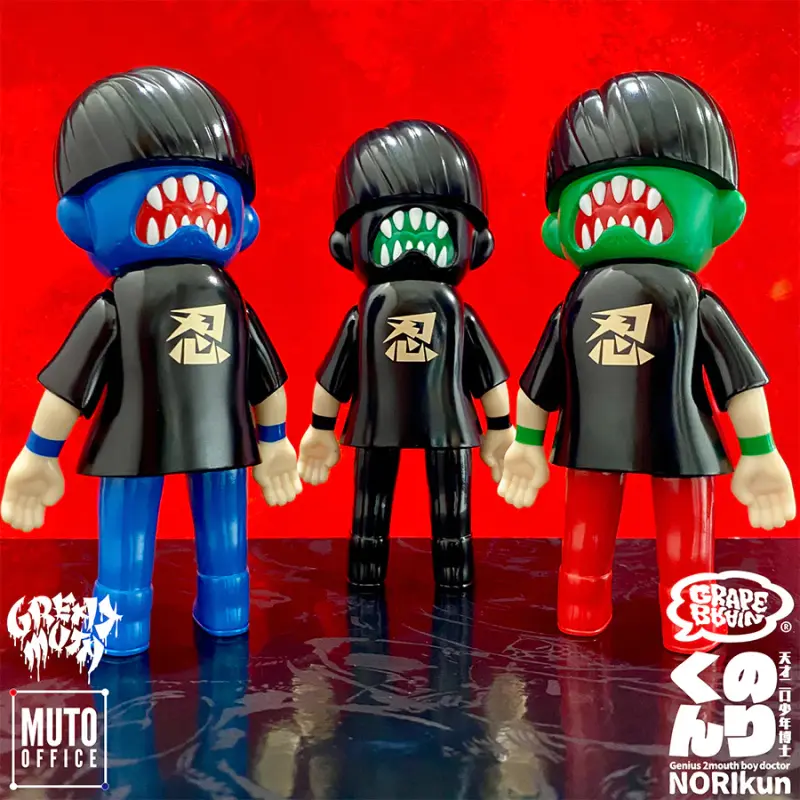
The Japanese Kanji on the front of Norikun's shirt reads '伊賀流', which translates
to Iga-Ryu. One of two historically significant ninja clans in Japan.The text alludes
to the Great Muta's early entrance attires, which were based on classical Ninja hoods.
The writing on the back of the Norikun figure's shirt reads '忍' (Ninja).
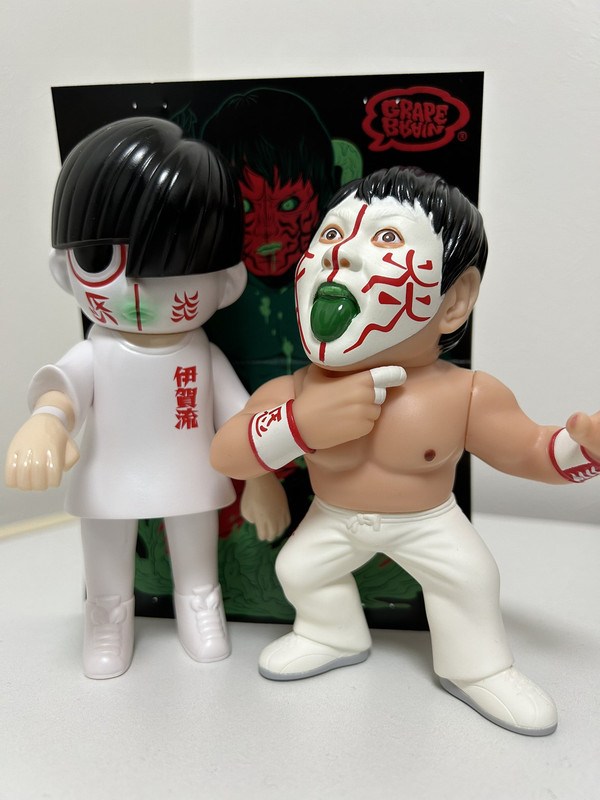
When displayed next to 16d Collection's Great Muta (white paint ver.) sofubi figure.
Closing thoughts:
Only the most hardcore of Great Muta fans will consider purchasing the Grape
Brain Norikun Great Muta figures. As renown as Grape Brain's work may be
in the art community, their merchandise isn't as recognizable as designer art toys
made by more recognizable brands. The rather steep base price of 11,000 yen per
figure is also a hard bargain to reason with as well.
Should the Grape Brain Muta variants ever made it to the secondhand market,
collectors can expect paying at least double to triple the original retail price;
making these soft vinyl oddities even more costly in the long run.
Wednesday, 14 July 2021
Character Product Ebessan DX figure review
If comedy Wrestling is more of your forte, perhaps this next Japanese figure review may
peak your interest.
Blog #170 hams it up with the Ebessan Deluxe figure by Character Product.

The Ebessan (better known these days as "Kikutaro") figure was released in the mid
2000's by Character Product as part of their deluxe figure line.
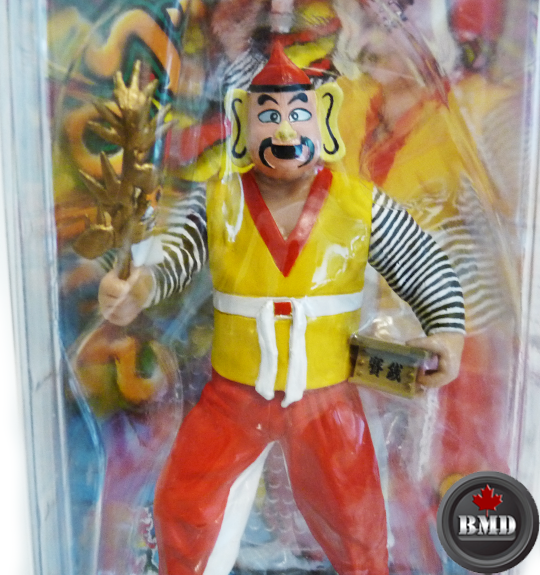
Along with an acrylic display base and name plate, Ebessan also comes with two
removable entrance accessories. A handful of golf leafs in Ebessan's right hand and
a box of coins in Ebessan's left.
Since Ebessan is based on the God of Good Luck from Japanese mythology, I've read
that Ebessan the Wrestler would throw coins from this box out to the audience during
his entrance. In fact, you can see coins being tossed on the front of the packaging's
illustrations.
Sadly, there are no coins inside the box.
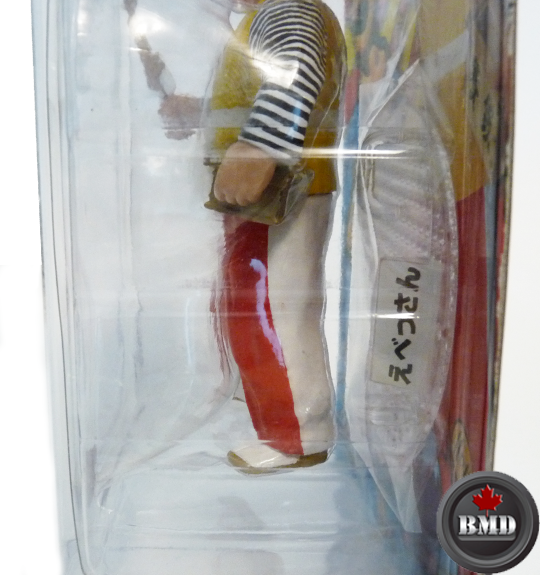
Ebessan is dressed in his mid 2000's Osaka Pro Wrestling era attire.
A side shot of the packaging reveals the acrylic display base and matching Wrestler name
plate. Ebessan's name is written in Japanese Hiragana as "えべっさん" (Ebessan).
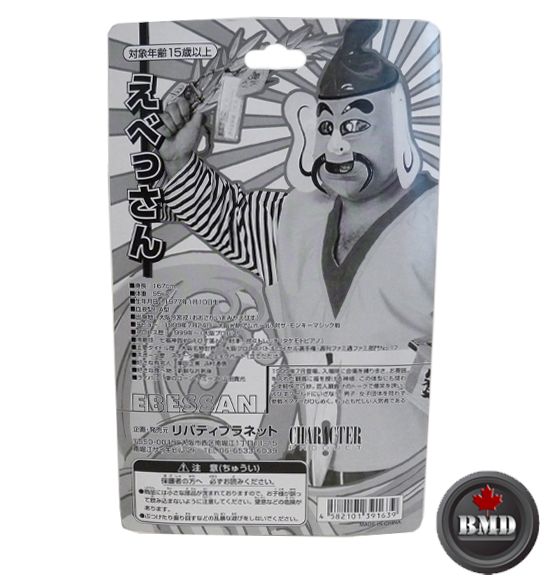
Behind the laughter, Ebessan/Kikutaro is also a gifted Wrestler. Being able to win over
crowds with his charisma and Wrestling know-how when given the opportunity.
Character Product would release a number of different Ebessan figures over the years;
usually in the form of special two-packs with Puroesu's legends such as Jushin Thunder
Liger and Keiji Mutoh.
As it stands, this is the only single-packed Ebessan/Kikutaro action figure (and a fine
one at that). The colourful, vibrant colours & packaging, Ebessan's unmistakable ring
mask and the deluxe presentation all make for a worthwhile addition to any Pro-Wrestling
collection.
Tuesday, 13 July 2021
Toukon Shop Super Star Figure Collection List
Welcome back to the largest online database of Japanese Pro-Wrestling collectibles on the
web. Here you will find thousands of product photos, stories and the historical significance
behind the items posted here.
Whenever possible, I try to provide entire figure lists from just about every series I cover
in this blog. Though, it's not always easy.
Unlike your typical Classic Superstars or Bone Crushing Action figure lines, Japanese figures,
for the most part, don't include lists of figures to collect on the back of most packaging.
Today's blog covers one of Japan's most common figure series. Blog #163 glosses over
Toukon Shop's Super Star Figure Collection line.
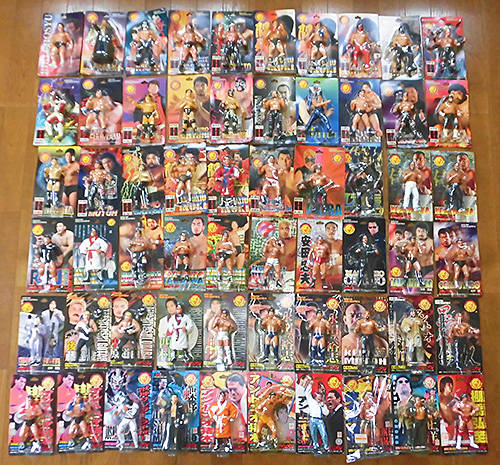
A majority of boxed examples from the Super Star Figure Collection Line.
The Toukon Shop Super Star Figure Collection (I wonder if NJPW was inspired by the WWF's
use of the term "Superstars" at the time?) line originally ran from 1997 to 2002 with deluxe figures being produced into 2004.
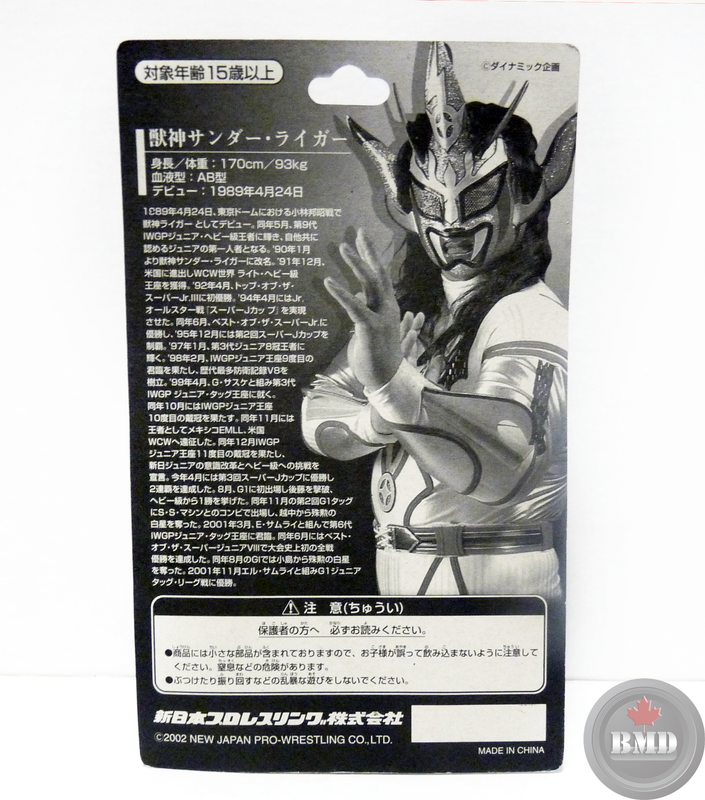
Typically, the packaging for every figure in Toukon Shop's Super Star Figure Collection
line contains a photo of the Wrestler depicted along with the Wrestler's stats in-ring
accomplishments.
Features like group photos of the figures to collect from a particular line aren't present
in Toukon Shop's figures making it harder to keep track of them.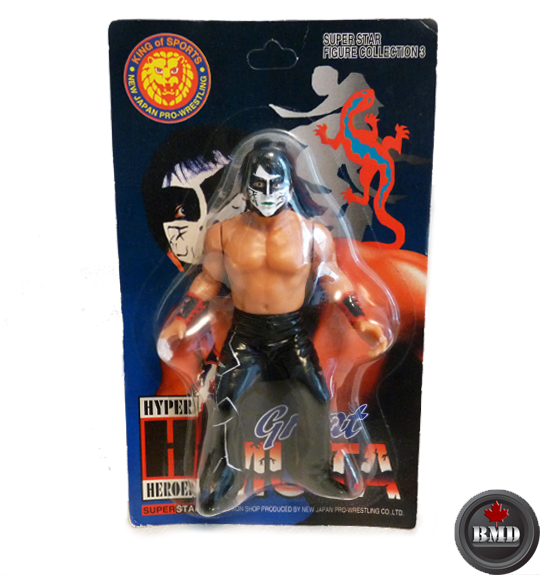
Though, one helpful feature Toukon Shop did include is a numbering system included
on every figure after Riki Choshu.
In the above example, Great Muta is #3; being the third figure created in the Super Star
Figure Collection line.
In the below list, I've broken down the entire line by year (to give some semblance of
a series). I've also included Toukon Shop's various subsets including the Official Bronze
Figures, Deluxe line and special two packs.
Super Star Figure Collection
Known in Japan as "スーパースター・フィギュア ・コレクション".
1997
1. Riki Choshu
2. Masahiro Chono - The first figure in the line to contain the "Hyper Heroes"
logo on the packaging.
3. Great Muta (White Paint)
_________________________________
1998
4. Kensuke Sasaki
5. Shinya Hashimoto
6. Antonio Inoki (Red Towel)
6. Antonio Inoki (Blue Towel)
7. Great Muta (Red Paint)
8. Great Muta (NWO)
9. Hiroyoshi Tenzan
10. Jushin Thunder Liger
10. Jushin Thunder Liger (Clear Red)
10. Jushin Thunder Liger (Clear White)
11. Tatsumi Fujinami
12. Koji Kanemoto
13. Shinjiro Ohtani
_________________________________
1999
14. Kendo Kashin
15. Kazuo Yamazaki
16. El Samurai
17. Manabu Nakanishi
18. Satoshi Kojima
19. Masa Saitoh
20. Yuji Nagata
21. Keiji Mutoh
22. Hiro Saitoh
23. Antonio Inoki (NWF Belt)
24. Antonio Inoki (Red gown)
25. Seiji Sakaguchi
26. Akira - This would be the last figure in the line to contain the "Hyper Heroes"
on the packaging.
_________________________________
2000
27. Jushin Thunder Liger (Black)
28. Shiro Koshinaka (White Pants)
28. Shiro Koshinaka (Black Pants)
29. Riki Choshu (Black Shirt)
30. Antonio Inoki (White Gown)
31. Junji Hirata
32. Tatsuhito Taikawa
33. Tatsumi Fujinami (Belt)
34. Kazuyuki Fujita
35. Tadao Yasuda
36. Masahiro Chono (Tracksuit)
37. Takashi Iizuka
38. Osamu Kido
39. Hidekazu Tanaka
_________________________________
2001
40. Tatsutoshi Gotoh
41. Michiyoshi Ohara
42. Osamu Nishimura
43. Minoru Tanaka
44. Yuji Nagata (Blue Trunks)
44. Yuji Nagata (Blue and White "Ambitious" Trunks)
45. Keiji Mutoh (Bald with shirt)
46. Antonio Inoki (Homeless)
47. Kokushi Muso
_________________________________
2002
48. Antonio Inoki (Red Towel - 30th Anniversary Packaging)
48. Antonio Inoki (Blue Towel - 30th Anniversary Packaging)
49. Jushin Thunder Liger (Silver and White)
49. Jushin Thunder Liger (Clear Blue)
50. Masahiro Chono (Overcoat - Re-Release)
51. Antonio Inoki (Orange Gown)
52. Antonio Inoki (Yellow Tights)
53. Antonio Inoki (Announcer)
54. Kensuke Sasaki (Shaved Head)
55. Masahiro Chono (Short Top)
55. Hiroshi Tanahashi (Both Chono and Tanahashi have the same volume number.
I assume it was a typo.)
_____________________________________________________
Official Bronze Type Figure
Known in Japan as "オフィシャル・ブロンズ・タイプ・フィギア".
1998
Antonio Inoki (Gown)
Antonio Inoki (with NWF Belt)
Keiji Mutoh
Masahiro Chono
Jushin Thunder Liger
Masa Saitoh
Kensuke Sasaki
Shinya Hashimoto
_____________________________________________________
Deluxe Figure Collection (DX) Series
Known in Japan as "新日・デラックス・フィギュア・コレクション"
1999
1. Great Muta (Dragon)
2. Power Warrior
_____________________________________________________
2000
3. Great Muta (Cyber - Silver Paint)
3. Great Muta (Cyber - White paint)
4. Kendo Kashin (With Belt)
_____________________________________________________
2001
5. Satoshi Kojima (Entrance Vest)
6. Hiroyoshi Tenzan (Purple Entrance attire)
7. Don Frye
8. Kazuyuki Fujita (With IWGP Belts)
_____________________________________________________
2002
9. Jushin Thunder Liger (With Entrance Cape)
Great Khali vs Giant Silva
Keiji Mutoh & Masahiro Chono
_____________________________________________________
2003
10. Antonio Inoki (Enzuigiri)
11. Yoshihiro Takayama
12. Kantaro Hoshino
13. Hiroyoshi Tenzan (Mecha Tenzan)
14. Manabu Nakanishi (MMA Attire)
15. Tiger Mask IV
_____________________________________________________
2004
16. Shinsuke Nakamura
17. Josh Barnett
_____________________________________________________
Special Figure Two packs
1998
Keiji Mutoh & Masahiro Chono
_____________________________________________________
2000
Great Muta vs Great Nita
Break Bunny Figure set with Junior IWGP Belts
_____________________________________________________
2001
Antonio Inoki vs Masa Saitoh
_____________________________________________________
2002
Antonio Inoki vs Karl Gotch - the only two pack with the 30th anniversary logo.
Around 1999, Toukon Shop began creating figures for Wrestling promotions other
than New Japan Pro-Wrestling. Since Toukon Shop is also the name of New Japan's
official merchandise stores, Toukon Shop decided to create a separate figure manufacturer
name as "Charapro" (later "Character Product").
Character Product would begin making licensed figures for Wrestlers such as:
Genichiro Tenryu (who was competing under the WAR promotion at the time),
Atsushi Onita (who was working special matches for NJPW),
The Great Sasuke (Michinoku Pro-Wrestling),
Masakatsu Funaki (PANCRASE),
Tiger Mask (Freelance)
and Akira Maeda (RINGS) among other notable Japanese talent.
By 2003, Character Product had made an exclusive deal to produce figures for
All Japan Pro-Wrestling. A deal that lasted until 2007 with the last official wave
of Pro-Kaku Heroes Mini Big Head figures.
Since then, with All Japan Pro-Wrestling long past it's former glory, and with
licensed Wrestlers from other promotions splintering off, it is believed that
Character Product morphed back into Toukon Shop, New Japan Pro-Wrestling's
in-house figure maker by 2008.
Friday, 9 July 2021
Banpresto Masakatsu Funaki figure review
As the second instalment in a set of reviews covering Banpresto's Real Figure In
Battledome line, Blog #162 focuses on another figure from the Battledome set:
Masakatsu Funaki.
The late 80's and early 90's brought upon a major shift in combat sports. The burgeoning
MMA scene was reshaping the very definition of toughness in Japan. RINGS, UWFI,
K-1 and PANCRASE were the top shoot fighting promotions throughout Japan during
the era.
Banpresto took note of shoot fighting's popularity in Japan and added three fighters
to the Real Figure roster: Koji Kitao (who was competing for NJPW at the time),
UWFI's Yoji Anjo and PANCRASE's Masakatsu Funaki.
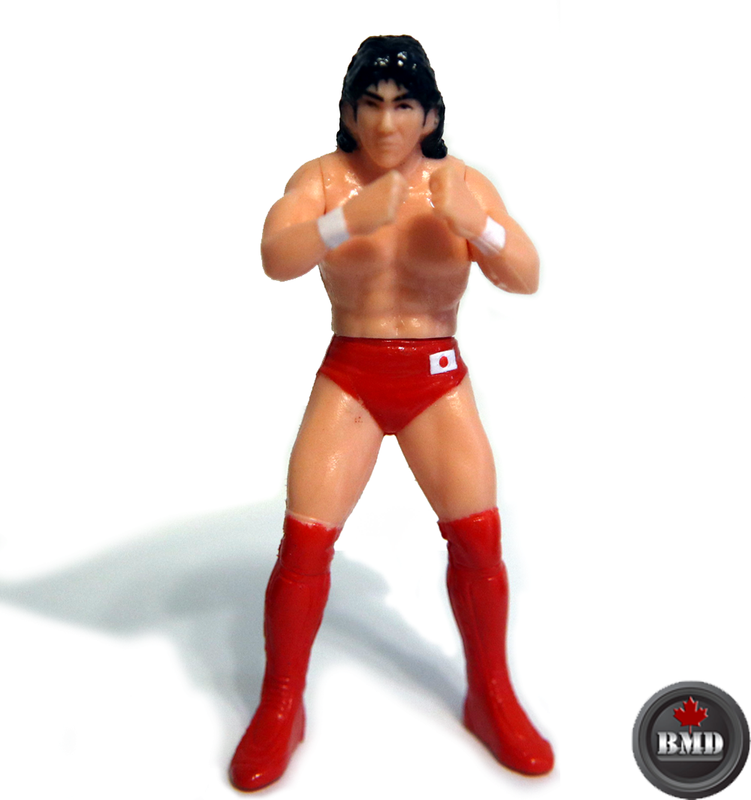
Masakatsu's very first figure adaptation.
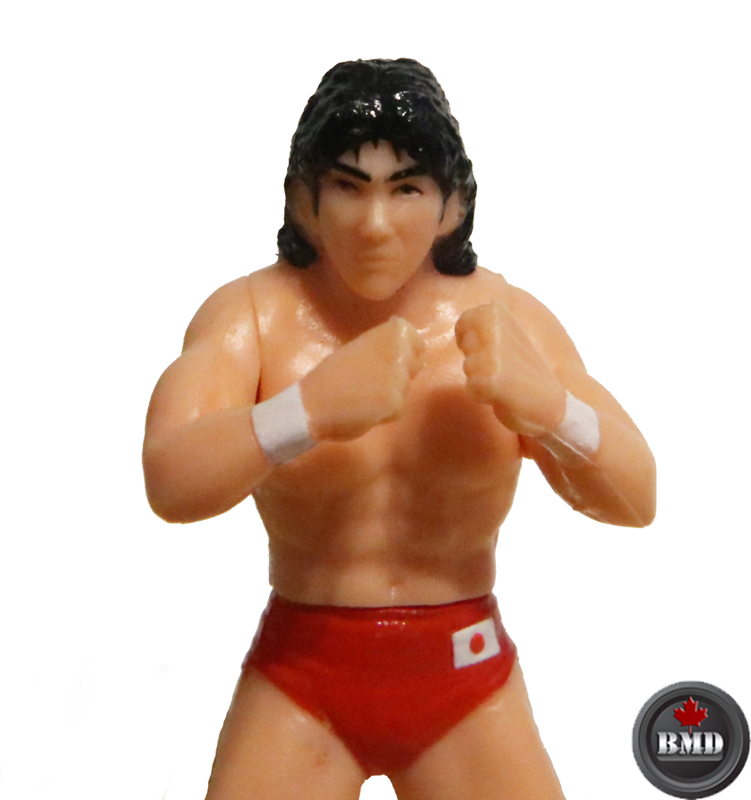
Funaki is pictured in his early 1990's look; complete with long hair and Japanese flag
on his ring trunks.
Even with the limited detail given to a Japanese capsule toy, Masakatsu Funaki's likeness
is recognizable.
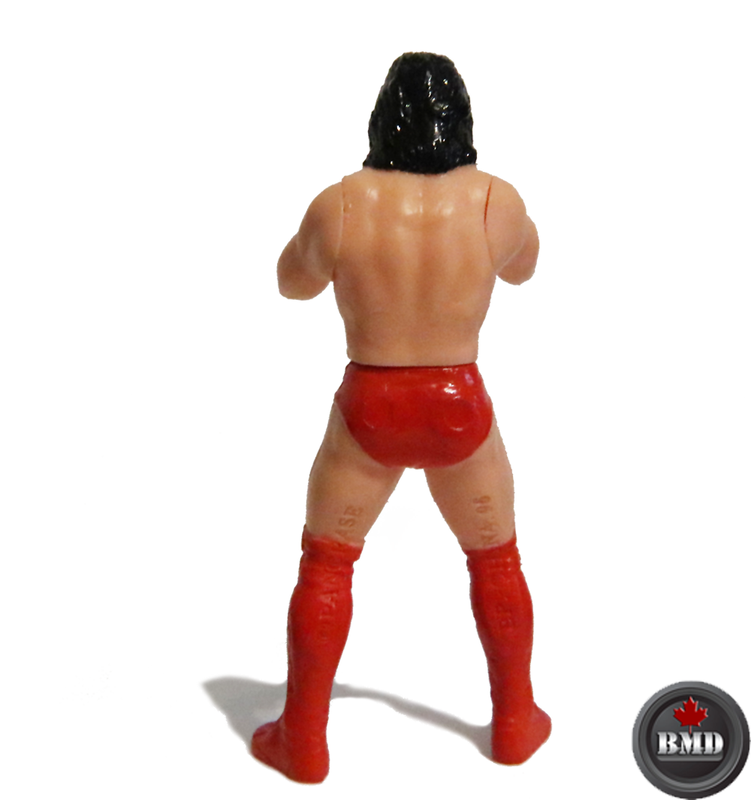
As a model kit, the Funaki figure contains removable arms and an upper torso.
Funaki stands about 3 inches tall and is noticeably smaller in scale when compared
to other Japanese action figures which regularly stand at 5 inches in height.
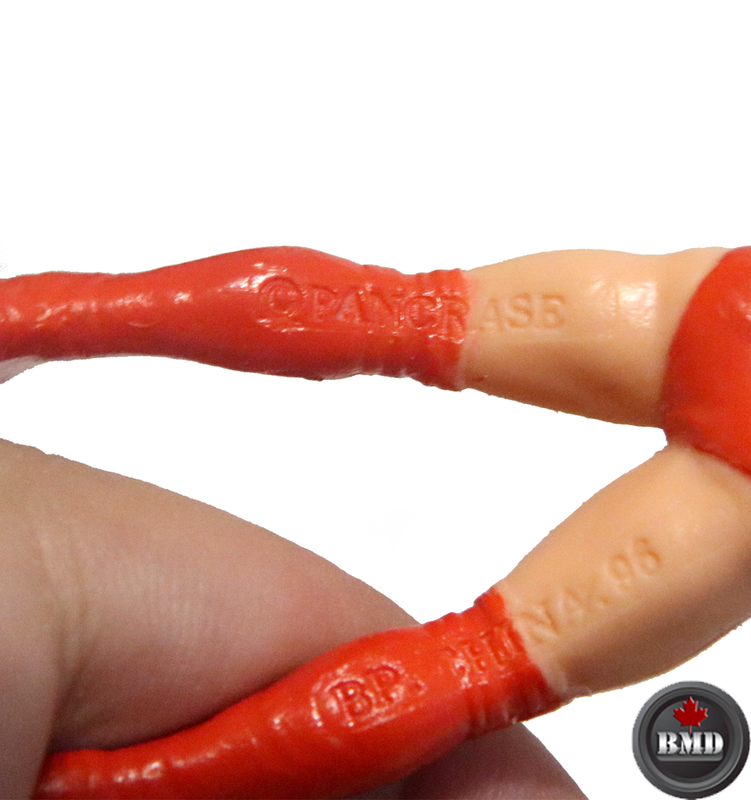
The copyright stamp on the back of Funaki's thighs reads:
BP CHINA 96"
"BP" standing for Banpresto and the year (1996) in which the figure was made.
Closing thoughts:
For PANCRASE fans, you can't go wrong with the earliest known Masakatsu Funaki
figure.
Though, the rarest figure from Banpresto's Real Figure In Battledome line has to be Jushin
Thunder Liger. In my experience, the Liger from this set rarely comes up for auction.
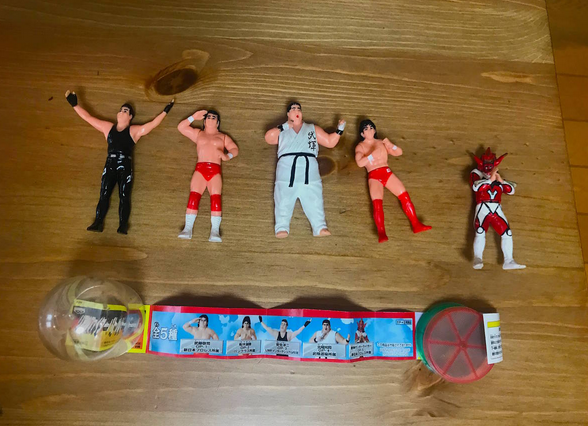
The complete five figure set. Left to right: Yoji Anjo, Keiji Mutoh, Koji Kitao, Masakatsu Funaki
and Jushin Thunder Liger.
Also pictured are the original pamphlet and gashapon capsule that came with each figure.
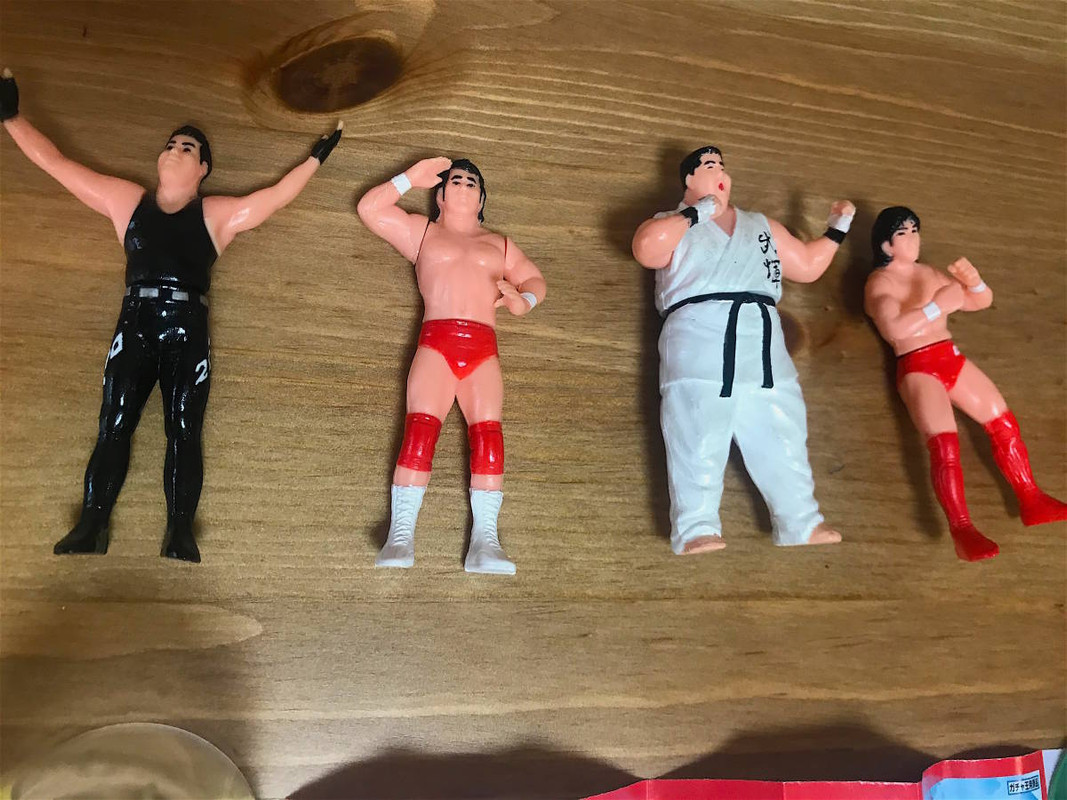
The only known figures of Yoji Anjo and Koji Kitao. Koji Kitao is pictured in his mid 90's
Karate Gi. Yoji Anjo contains his nickname "Mr. 200%" along his ring tights.
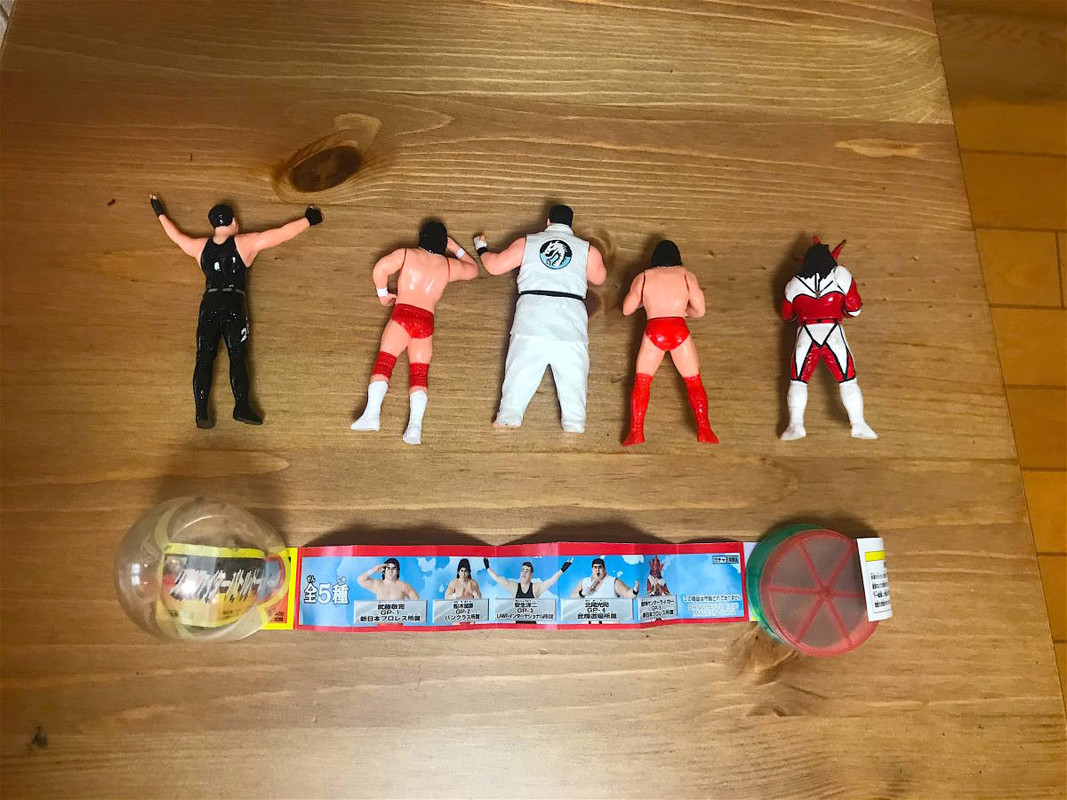
I especially like the sea monster design on the back of Kitao's Karate Gi.
Wednesday, 7 July 2021
Super Star Figure Collection Deluxe Jushin Thunder Liger figure review
This next review will be focusing on another spectacular figure from the world of Puroresu.
A masked legend that has shown up many times in this blog already, without further adieu,
Blog #157 is all about Toukon Shop's Deluxe Jushin Liger figure.
.png)
Released in 2002, Jushin Thunder Liger is the ninth figure in Toukon Shop's Deluxe
Figure line.
After four years of using the same figure sculpt, seeing a brand new Liger action
figure created from scratch is a welcomed change.
.png)
While the sculpt is phenomenal, I feel the paint job here is a bit sloppy around
Liger's mask.The intricacies and complex features of Liger's mask are marred
by a paint job that bleeds into other areas.
.png)
Scuff marks aside, Jushin Liger's deluxe accessory is his chest armour and cape.

The cape and chest armour are split into two separate accessories which connect together
once attached to the Liger figure.
Maybe it was just the example that I had or the effects of almost 20 years of ware, but
I encountered considerable difficulty trying to keep Liger's cape accessory attached
connected (similar instance to some Ultimo Dragon Charapro figures).
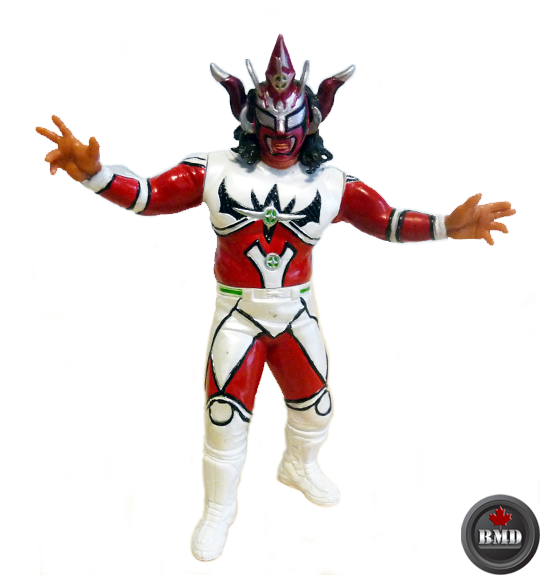
The deluxe Liger figure comes with a new sculpt intended to replicate Liger's entrance.
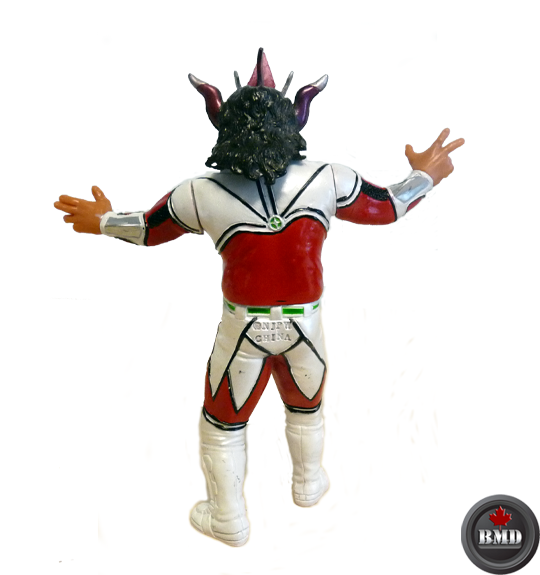
Around the same time, Character Product would release a special two pack featuring the
deluxe Liger in two separate variants (regular and repainted into his Black Liger persona).
While the two-packs do contain a humorous Ebessan dressed as Liger, Liger comes bundled
without his entrance cape accessory.
In terms of production, the Deluxe Liger would be the last single-packed action figure
released of the Hyper Beast God before Toukon Shop/Character Product's closure.
All-in-all, a decent Liger figure that makes a cool display piece. If you do plan to purchase
this figure in the wild, I advise making sure the figure comes with both portions of it's cape
(and is hopefully not superglued together).
Friday, 19 March 2021
Pro-Wrestling Keshi from Japan Part 9
A lot has changed over the last few years since our last blog post. From the devastating effects of the Corona Virus to the ensuing collapse of many businesses as a response to the global pandemic. 2020
is a year that many of us would rather forget.
While this blog is going to stay up as a resource for other Puroresu figure collectors, there's still plenty of items left to cover. Which brings us to today's figure review - an unfinished draft that goes back to 2019 and another look at the wonderful world of keshigomu figures.
Better late than never, right?

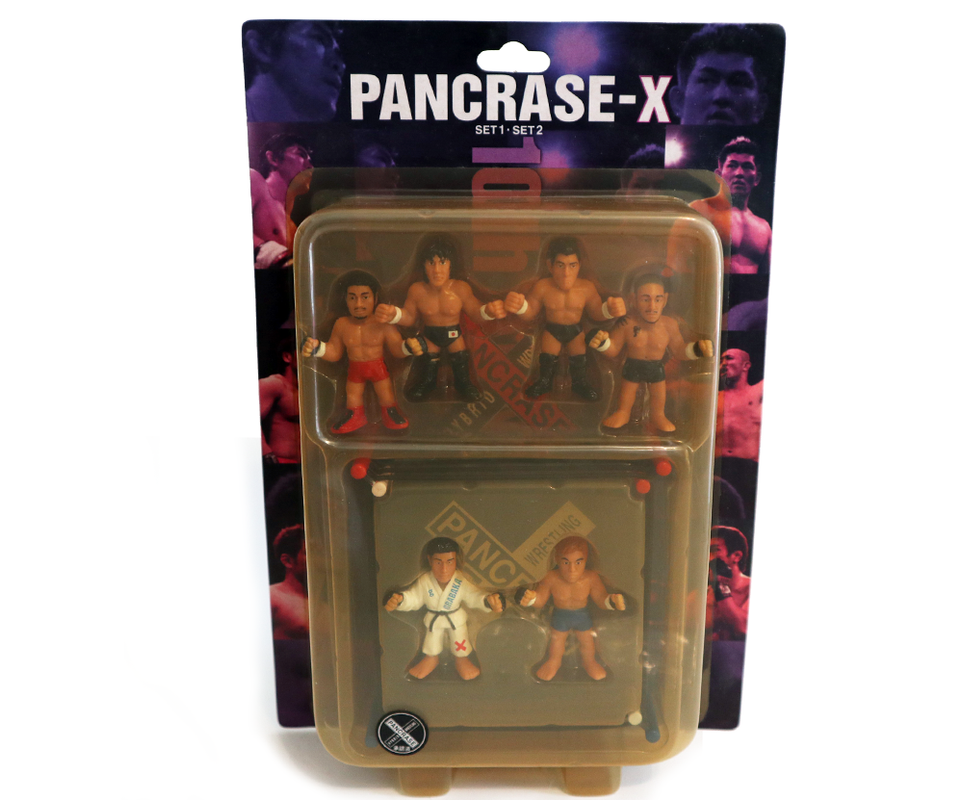
All six figures are re-releases from Character Product's 2001 line of Keshigomu eraser figures with
one important little addition: they've been painted.
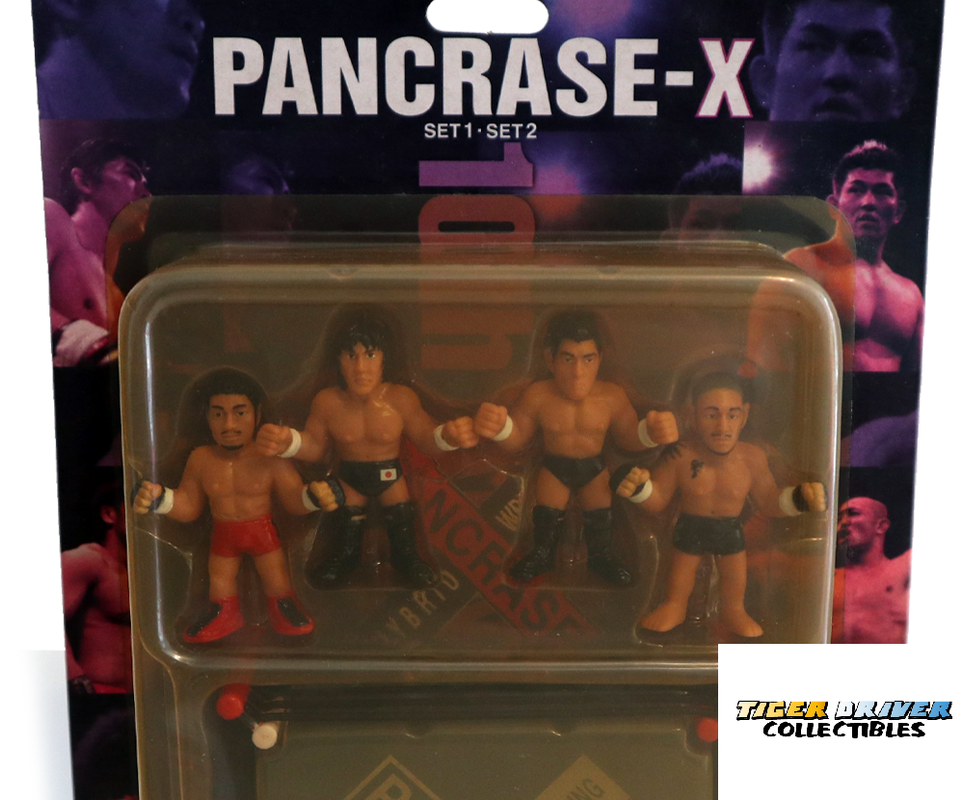
From left to right: Ikuhisa Minowa, Masakatsu Funaki, Minoru Suzuki and Kengo WatanabE
From the Japanese flag on Maskaatsu Funaki's trunks to the chest and shoulder tattoo on Kengo Watanabe, the paint job on these small figures is immaculate.
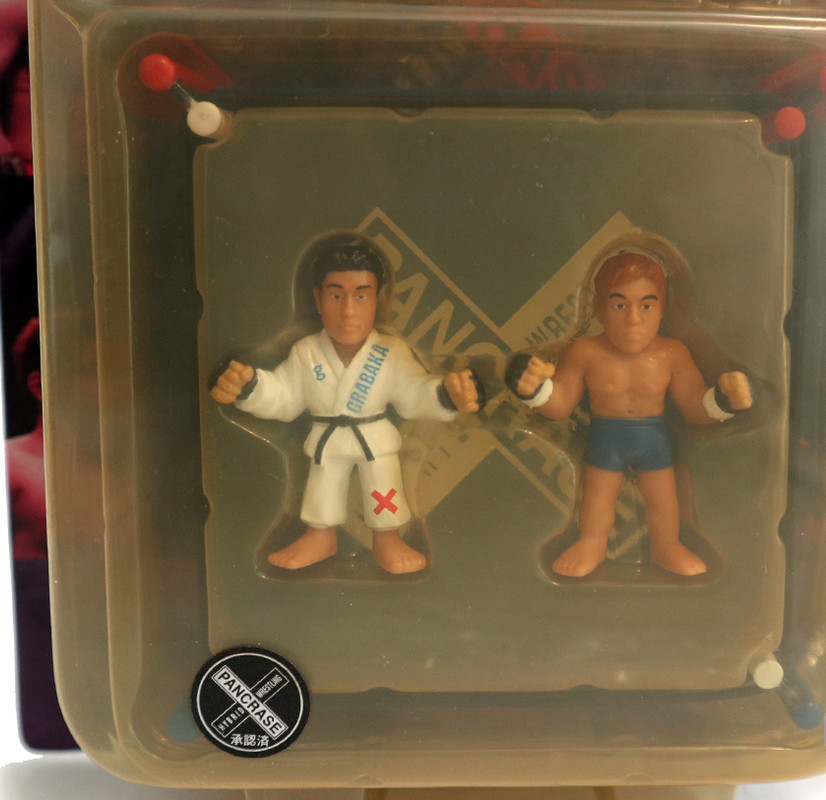
On the left is Sanae Kikuta. On the right is Yuki Kondo. Both fighters fought each other on May 18th, 2003 in Kanagawa Japan for the Hybrid 5 event. The event served as a title defence for Kikuta's 2001 Light Heavyweight Championship victory.
The decals on Kikuta's gi (complete with a Pancrase X on Kikuta's left pant leg) are appreciated.
Also enclosed is an exclusive Pancrase ring which I believe is a similar scale to the various ring sets that were made available with Character Product's series of Pro Kaku Heroes Mini Big Head Figures.
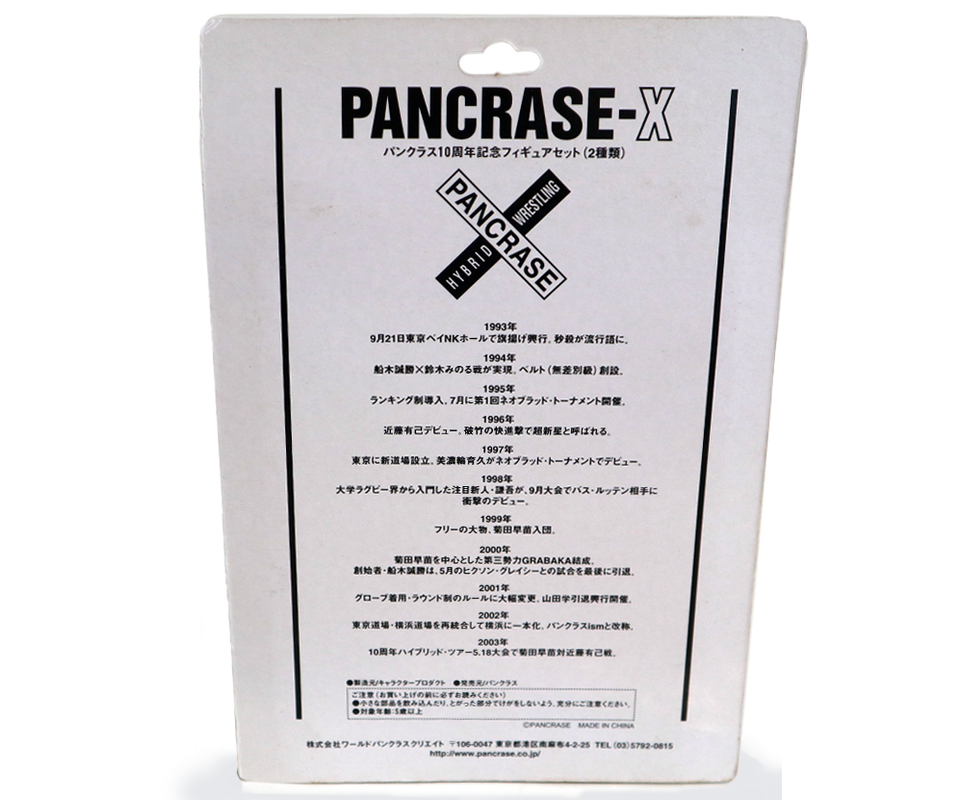
"PANCRASE - X
Pancrase 10th Anniversary Figure Set (2 kinds)
Year 1993
The flag-raising event was held at Tokyo Bay NK Hall on September 21. Killing in seconds became a buzzword.
Year 1994
The match between Minoru Suzuki and Masakatsu Funaki was held. The belt (non-discriminatory weight class) was established.
Year 1995
Introduced the ranking system and held the 1st Neo-Blood Tournament in July.
Year 1996
Yuki Kondo debuted and was called a supernova with his breakneck success.
Year 1997
New dojo established in Tokyo. Ikuhisa Minowa debuts at the Neo-Blood Tournament.
Year 1998
Kengo Watanabe, a hot newcomer from the college rugby world, makes his debut against Bas Rutten in the September tournament. Shocking debut.
Year 1999
Sanae Kikuta, a big freelance player, joins the team.
Year 2000
A third force, GRABAKA, is formed with Sanae Kikuta at the center.
Founder, Masakatsu Funaki retired after his match with Hickson Gracie in May.
Year 2001
The rules of GRABAKA were changed to gloves and rounds, and Manabu Yamada retired.
Year 2002
Tokyo Dojo and Yokohama Dojo were reintegrated into Yokohama, and renamed Pancrase ISM.
Year 2003
Sanae Kikuta fights against Yuki Kondo at the 10th Anniversary Hybrid Tour 5.18."
Closing thoughts:
Going back to the heyday of keshi figures in the 1980's, hobbyists young and old alike would paint their own keshi figures. Fast forward two decades later and Character Product have done all of the heavy lifting themselves with the company's own painted figures.
Though, Character Product wasn't the only company releasing painted Keshi figures. By 2003, BANDAI would release their own painted Keshi figures as part of the Ultimate Muscle Micro
Wrestler line outside of Japan.
As the back of the packaging states, there is also a second set that features different colour variants for the included figures.

All in all, an essential set for Pancrase purists and a brief glimpse of what could have been if only more legends were added to Character Product's line of keshigomu figures.