Showing posts with label pro wrestling figures. Show all posts

Saturday, 24 July 2021

Pro-Gressa The Great Sasuke Deformed Sofubi figure review

For our next entry, we'll be partying like it's 1999. Blog #198 focuses on Pro-gressa's highly-
obscure and very collectible Great Sasuke Deformed Sofubi figures.
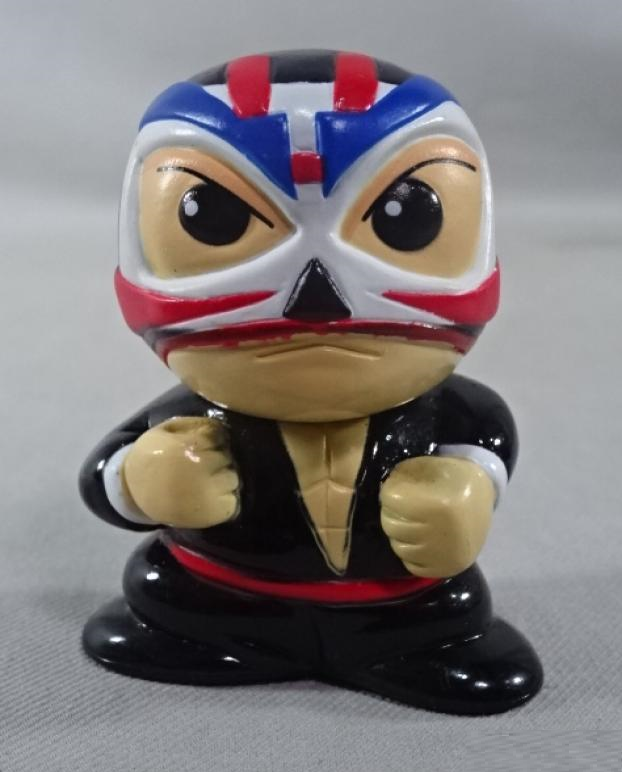


Known in Japan as "みちのくプロレス ザ・グレート・サスケ DEFORMED ソフビ人形"
(Michinoku Pro-Wrestling The Great Sasuke Deformed Sofubi figure), this funny looking
fellow was originally released in 1999 by a company in Japan called PRO-GRESSA.

As the name suggests, the Great Sasuke figure is a soft vinyl figure and stands at 60mm
(2.3 inches) in height.

Fans of this particular figure will be pleased to know there are several different figure variants
beyond Sasuke's natural mask colours to collect. Variants such as:
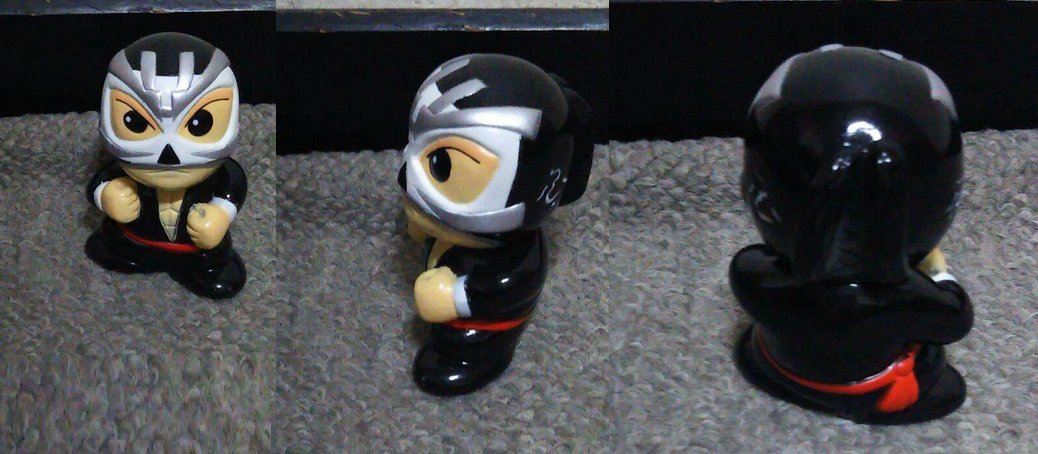

Silver mask variant.
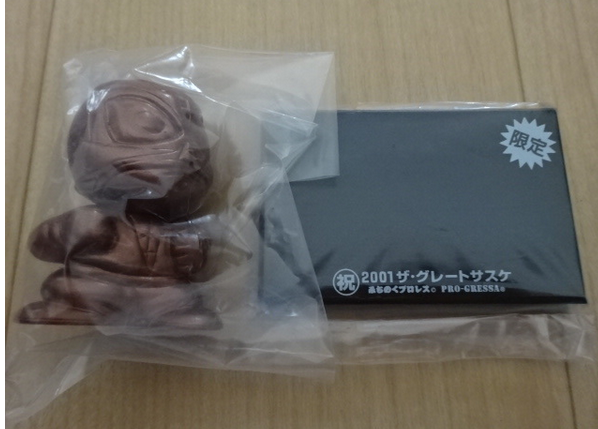


A special bronze type colour variant which was released in 2001. The included packaging
mentions "限定" (Limited edition) in the top right corner while the text at the bottom reads:

"(祝) 2001 ザ・グレート サスケ               ( (Celebration) 2001 The Great Sasuke
みちのくプロレス (C) PRO-GRESSA"   
Michinoku Pro-Wrestling (C) PRO-GRESSA)


And, if three variants weren't enough for you. How about:
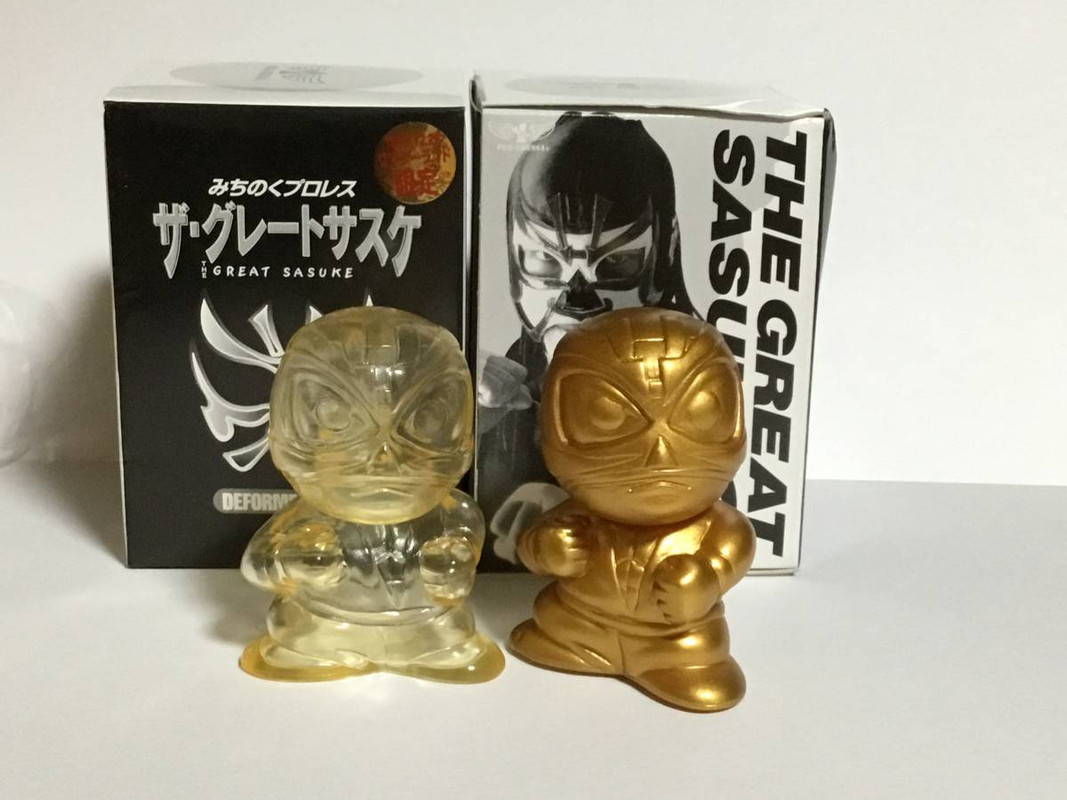

The clear and gold versions?
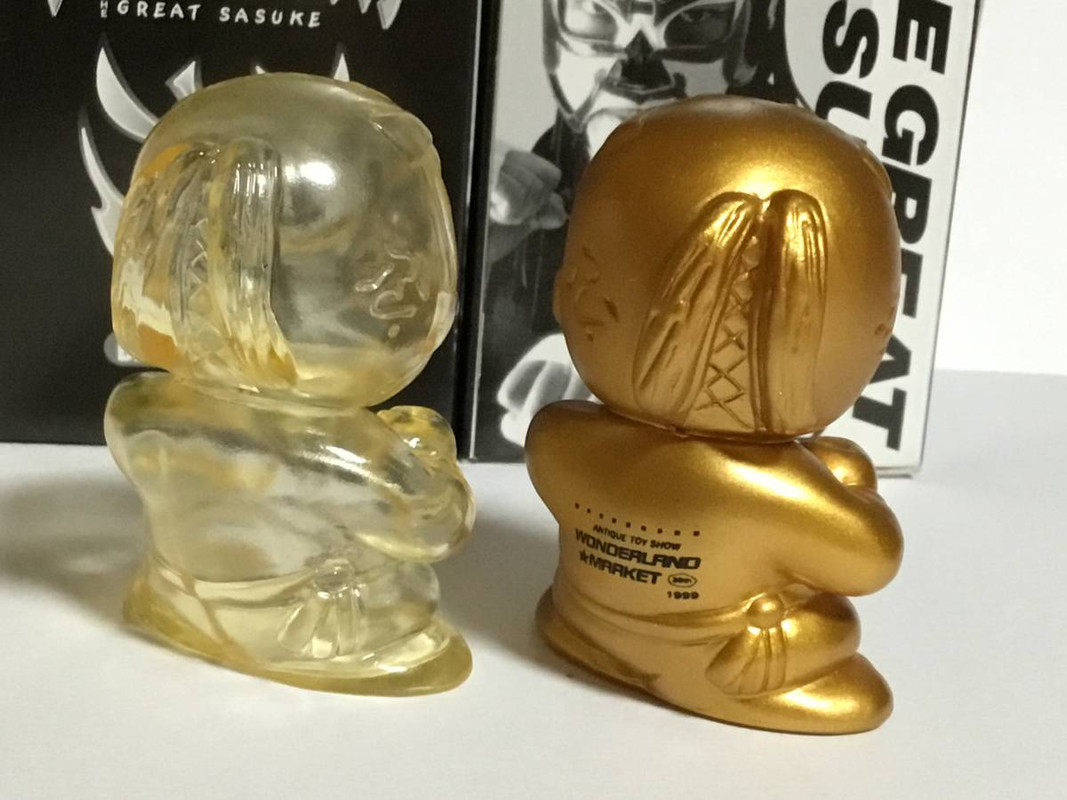


The gold version is extra special as it's another event exclusive.
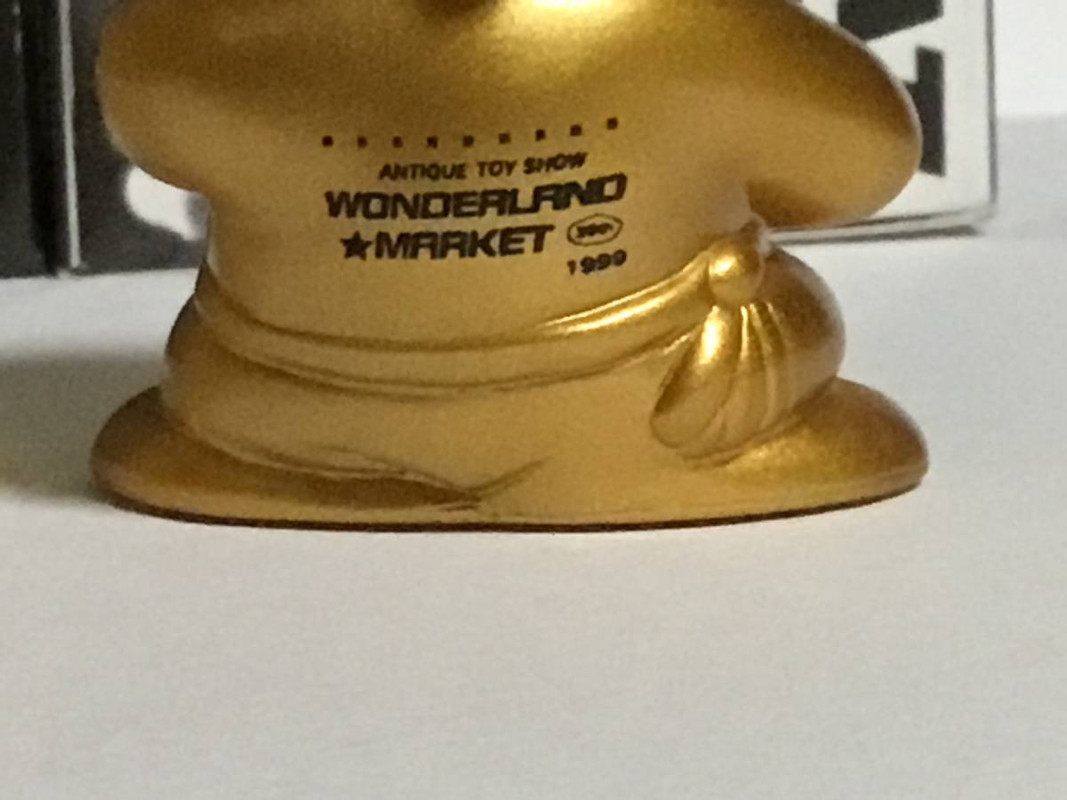


The gold version was only available exclusively at the Wonderland Market Antique Toy
Show back in 1999.

Talk about predating Funko and their slew of Comicon exclusives 11 years in advance!
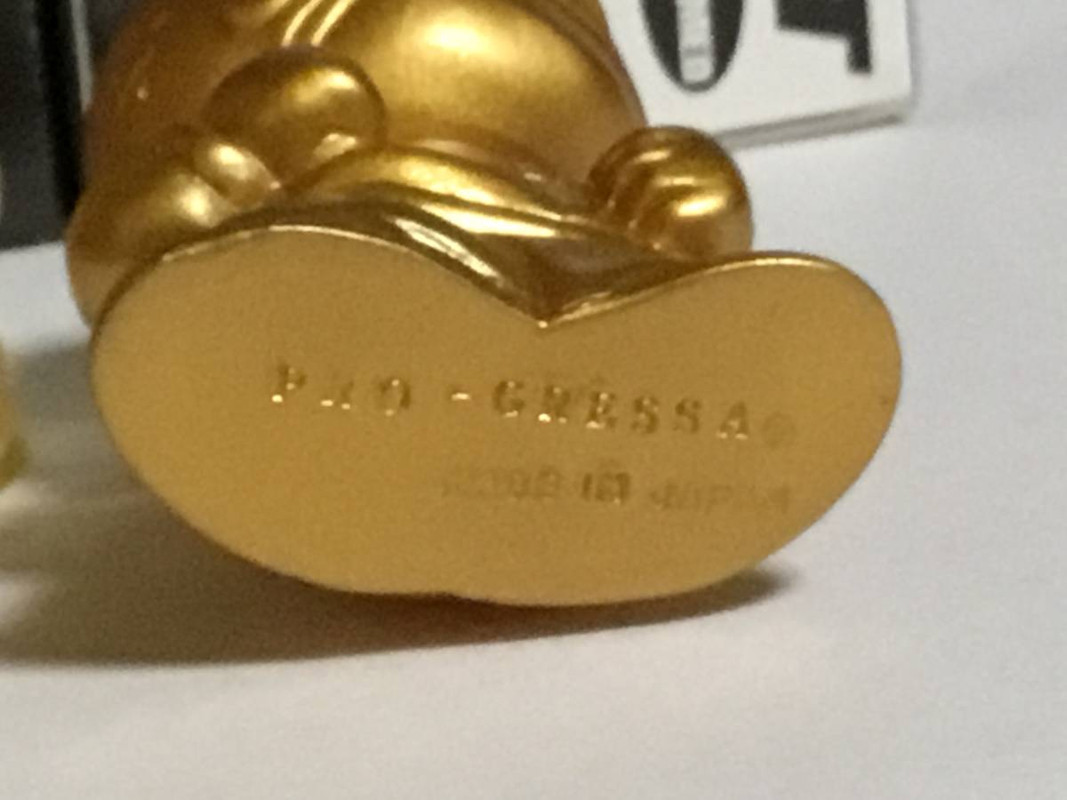


The bottom of each figure contains Pro-Gressa's stamp and "Made in Japan".
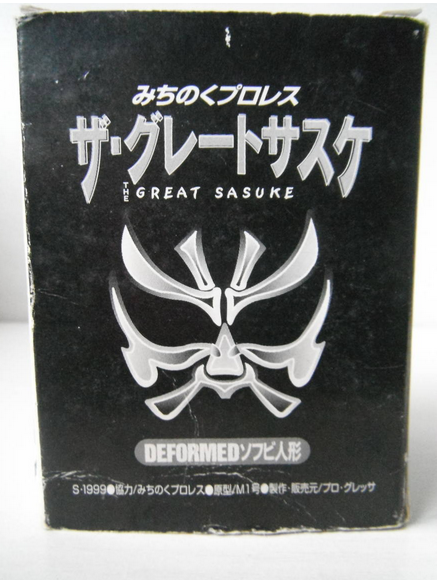


A look at the packaging the Sasuke figures come in. Again, the packaging reads:

"みちのくプロレス                     (Michinoku Pro-Wrestling
ザ・グレート サスケ                   The Great Sasuke

DEFORMED
ソフビ人形"        DEFORMED Sofubi Figure).


But, there's still two more variants remaining:


The Super J Cup coloured & translucent figure exclusive.
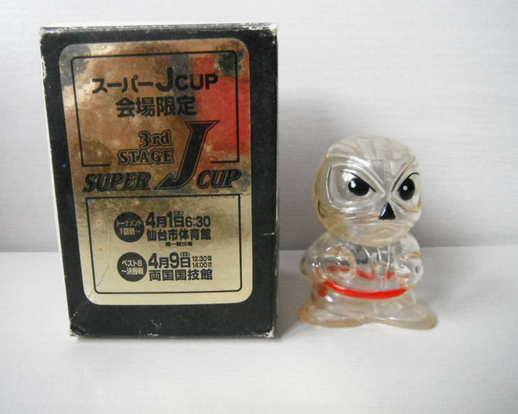


Right off the bat, the Super J Cup version contains a beautiful gold foil label on the front
of the packaging.

The provided text was promoting the scheduled dates for Super J-Cup tournament which was
organized by the Michinoku Pro-Wrestling promotion on April 1st and April 9th, 2000.
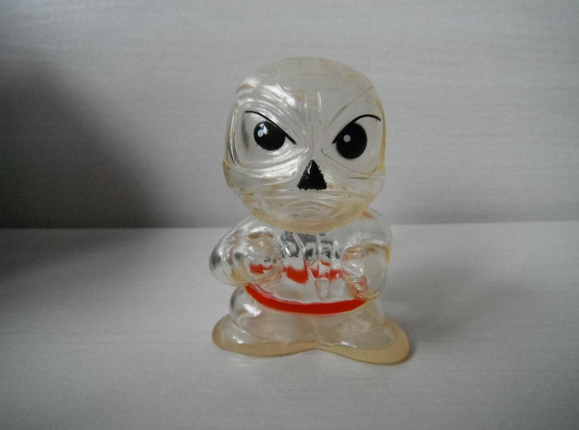


What sets the J-Cup variant apart from the other translucent Great Sasuke figure is the added
colouring for Sasuke's waistband, eyes and nose portions.
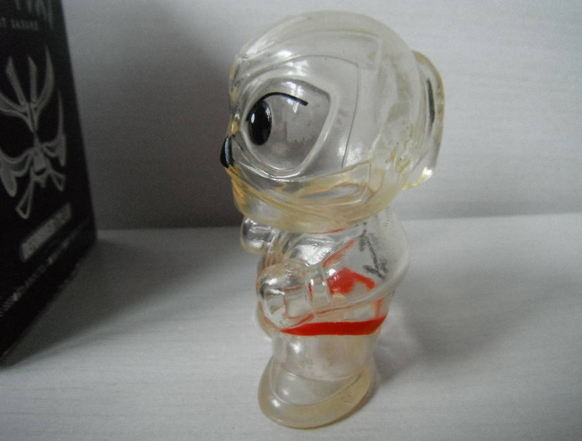

Sadly, a common problem with clear figures is the chance of discoloration. In the above
case, certain parts of the Sasuke figure have turned tan in colour.

In the past, I've noticed similar instances with clear white figures made by Toukon Shop/
Character Product such as: Genichiro Tenryu, Akira Maeda and Jushin Thunder Liger.


Again, the specific is added as a graphic of this event exclusive variant.
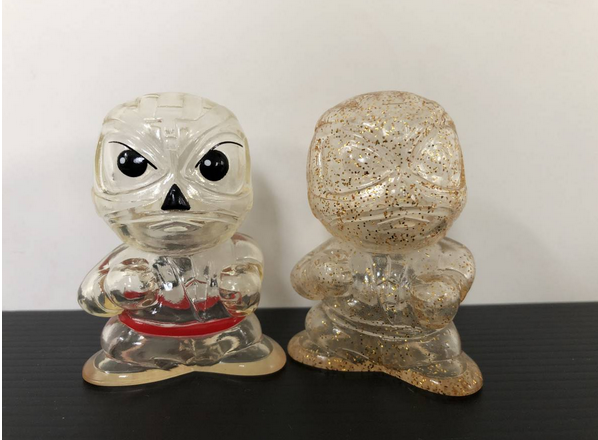


The Super J-Cup also had a second exclusive variant in the form of a glittered version!

At first, I thought the glitter version was a custom figure, but....
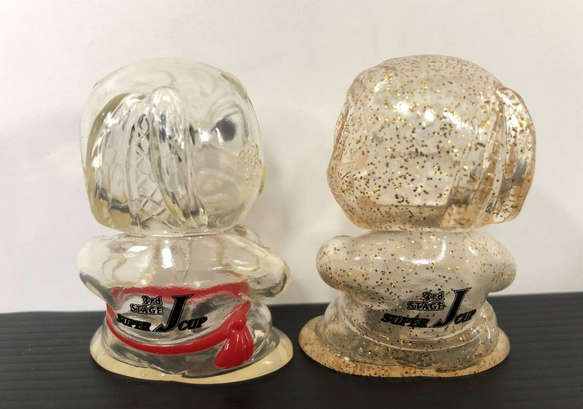


...the glitter version also contains the Super J-Cup 3rd stage event decal on the back of the
figure.

I assume the packaging was strategically blind-box style, so, you never knew which exclusive
you were going to get (and, thus, enticing the consume to purchase more boxes).

Chronologically, the figures release dates would be:

1999 - The Great Sasuke
            The Great Sasuke (silver ver.)
            The Great Sasuke (clear ver.)
            The Great Sasuke (Gold ver.)

2000 - The Great Sasuke (Clear J-Cup ver.)
            The Great Sasuke (Glitter J-Cup ver.)

2001 - The Great Sasuke (Bronze ver.)


Closing thoughts:


Seven different versions of the same figure, three event exclusives (that I know about) and
one figure line made in a design similar to today's Funko Pops. Would you collect them all?

Though, one company still wins the variant game: Character Product's Great Muta action figure
with a staggering nine different versions of the same mould (and about 19 if you count all of
the matching Mini Big Head Muta variants)!

We still have lots of Pro-gressa figures to look at. So, stay tuned...


Saturday, 17 July 2021

NITTO Hulk Hogan Model Kit from Japan

One of the absolute highlights of discovering Japanese Pro-Wrestling figures is the art of
uncovering rare gems from decades past.

Figures of recognizable foreign faces that appeared in Japanese figure lines long before the
WWF even thought about merchandising. The world's first Andre The Giant figure? Japan.
The Funks? Japan. Harley Race, Stan Hansen, Bob Backlund, Bruiser Brody and Abdullah
The Butcher? Yep. You guessed it ...all first made in Japan.

Today, we'll be adding another figure first to the list. Be prepared to say your prayers and
eat your vitamins with Blog #185 which puts the Leg Drop on the Nitto Hulk Hogan model
kit.


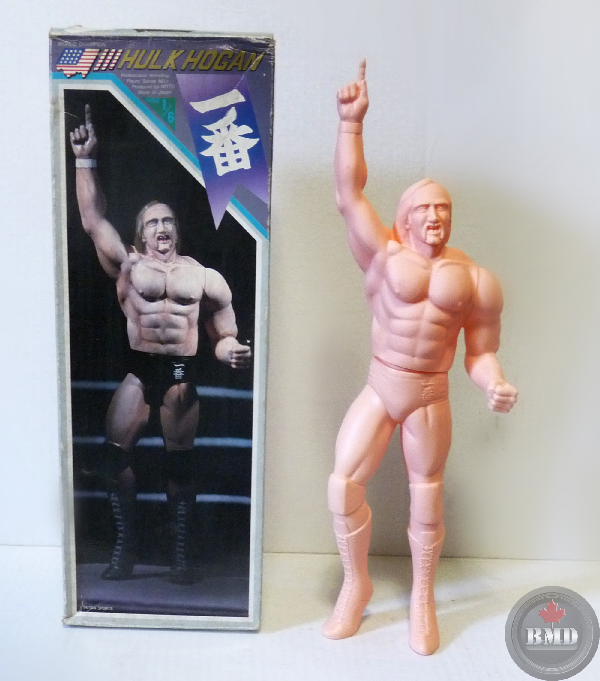
Hulk Hogan Nitto Model Kit


Known in Japan as "ハルク・ホーガン ニットーソフビフィギュア" (Hulk Hogan
Nitto Sofubi Figure).


Long before the dawn of Hulkamania in the west, Hulk Hogan was a prominent star
in Japan under the New Japan Pro-Wrestling promotion. As such, Japanese Toy Maker
Nitto decided to release a model kit based on the Immortal One as part of the company's
Professional Wrestling Series.


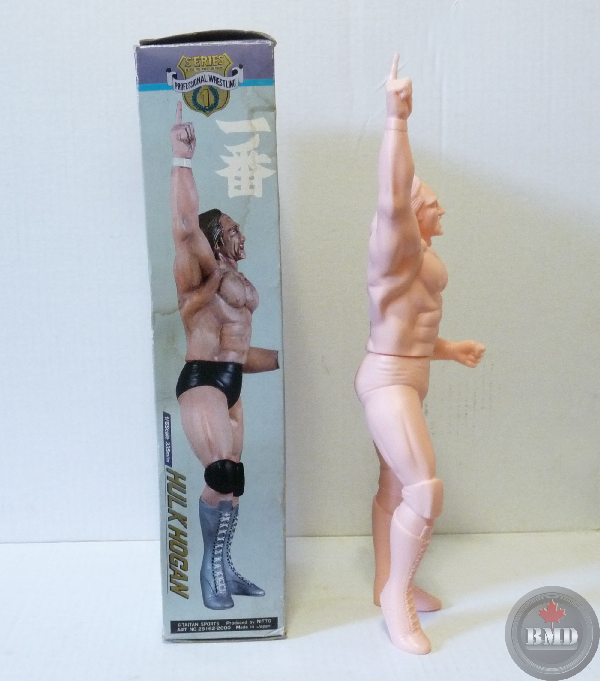
The unpainted Hogan model kit stands 33.5 cm (13 inches tall).

The front of the box features a painted picture of Hogan in his New Japan era ring attire
which consisted of black trunks inscribed with the Japanese Kanji "一番" (Ichiban
which means "Number One"). If you look closely, the kanji for Ichiban is moulded
into the Hogan model's ring trunks.

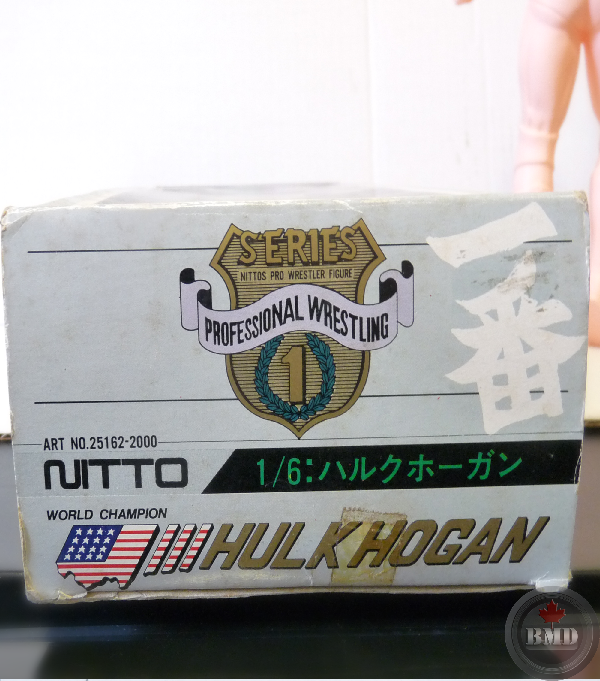
Ichiban also appears on the top right of the packaging next to Hogan's name.


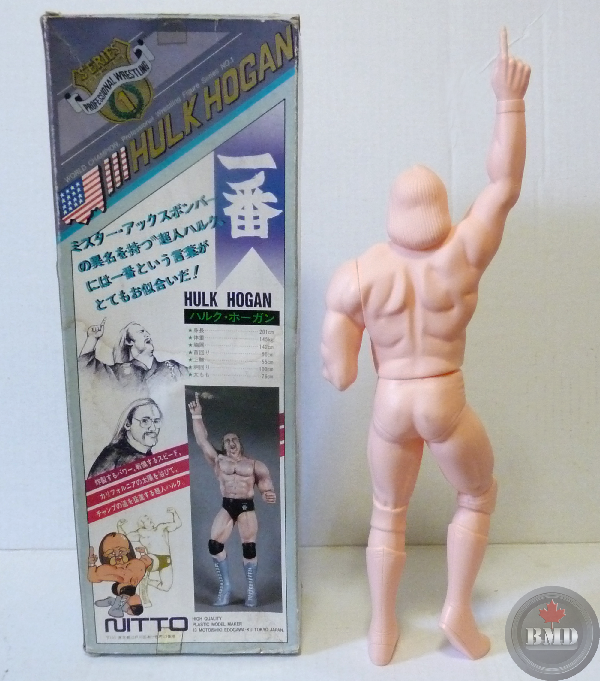
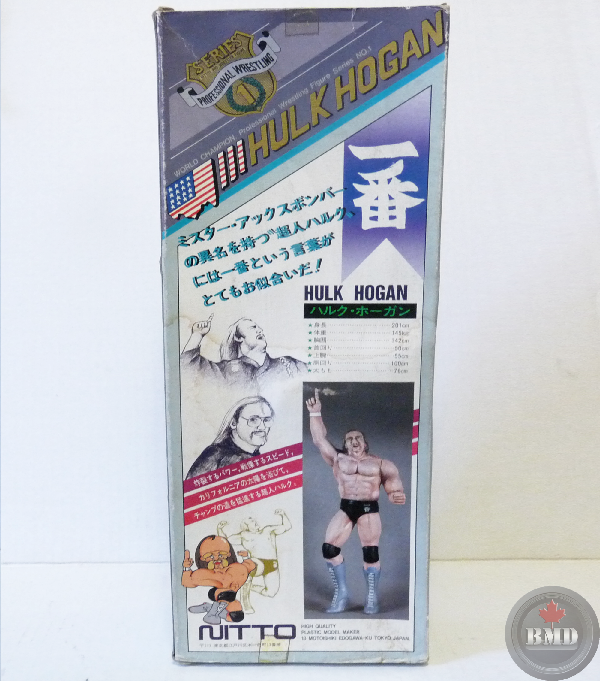
The back of the box contains many great illustrations of Hulk Hogan along with a goofy
caricature at the bottom left corner.


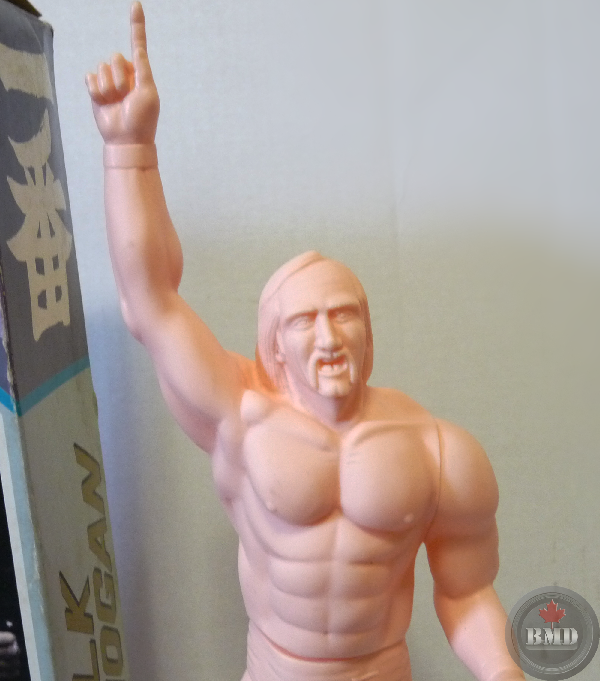
Just in case you didn't know he was number one, Hogan is sculpted with an upwards
finger point.


The Nitto Hulk Hogan model kit predates Hogan's first action figure (which was made by
POPY) by one whole year in 1980.


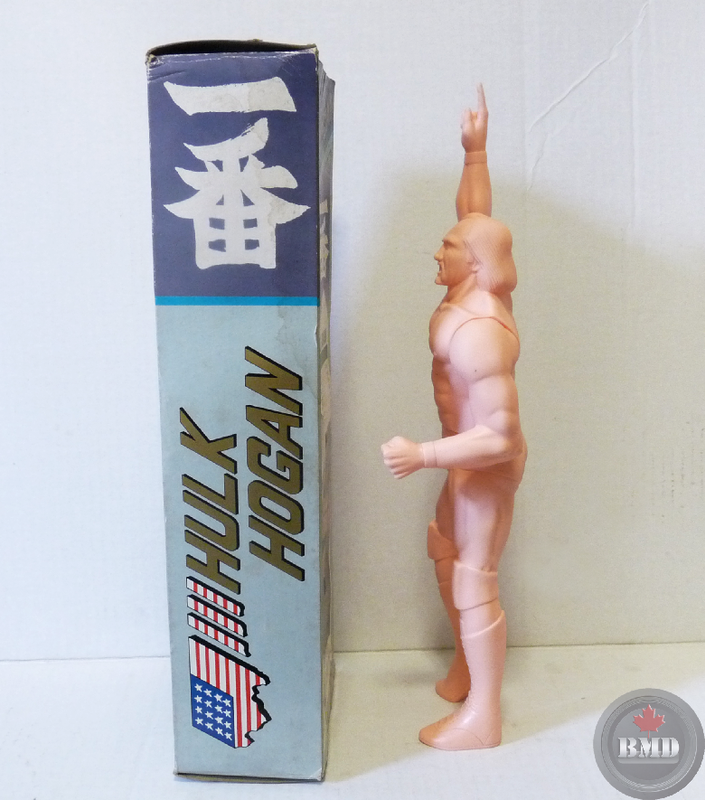
Interestingly, the bottom portion of the side of the packaging mentions the Hogan model kit
was licensed by "TAITAN SPORTS" (they were going for Titan Sports - WWE's parent company).


The middle-right of the box strangely lists Hogan's various physical attributes such as
height, weight and muscle measurements.

The description in Japanese even refers to Hogan as "Mr. Axe Bomber" - a nod to Hogan's
Axe Bomber (Lariat) finisher in Japan.


Closing thoughts:


Despite being released one year prior to the incredibly valuable POPY Hulk Hogan Super
Pro-Wrestling Series action figure, the Nitto Hulk Hogan model kit is more common (and
less valuable) than one might think.

Compared to a whole line of blister-carded action figures, unpainted model kits are, for better
or worse, a niche market for collectors at best. The biggest testament to this statement are the
number of unpainted Hogan model kits that still pop up for sale across the web 41 years after
the Nitto Hogan model kit's initial release.

As to my knowledge, Hulk Hogan was the only Pro-Wrestler added to Nitto's Professional
Wrestling Series.

Though, at 13 inches tall, made of hard, durable plastic (whereas most Japanese figures are
made of a cheaper PVC material these days) and one of the very few examples of Hogan
crafted in his pre-WWF attire, the Hulk Hogan Nitto model kit is still a great figure to own
and an early example of how Japan was always one step ahead of the curb when it came to
marketing.


Wednesday, 14 July 2021

Character Product Keiji Mutoh DX Figures review

At one point in time, the Triple Crown Championship belts were considered by many
to be the absolute pinnacle of Pro-Wrestling. An opinion that was substantiated by
the near-flawless craftsmanship and high-caliber work rate of the All Japan Pro-
Wrestling roster. The arduous task of unifying all three championships during the
peak of All Japan's relevance in the 1990's made for many historic fights for the
Triple Crown.

Legends like Mitsuharu Misawa, Toshiaki Kawada, Kenta Kobashi, Stan Hansen,
Big Van Vader and Dr. Death Steve Williams all come to mind instantly when most
Puroresu fans think of the Triple Crown belts. The figureheads and stars of All Japan
that set a new standard of excellence for the Pro-Wrestling industry in the 1990's.

Epic stories of strength and determination, the act of overcoming insurmountable
obstacles and  the resonating aura of those who managed to rise above the competition.
The ring served as the canvas and the Triple Crown Belts were the greatest Tri-fecta of
Championship titles to hold in all of Pro-Wrestling.

Today we'll be taking a look at three very popular figures that contain the prestigious
Triple Crown belts. Blog #171 covers the Character Product Keiji Mutoh DX Figures.


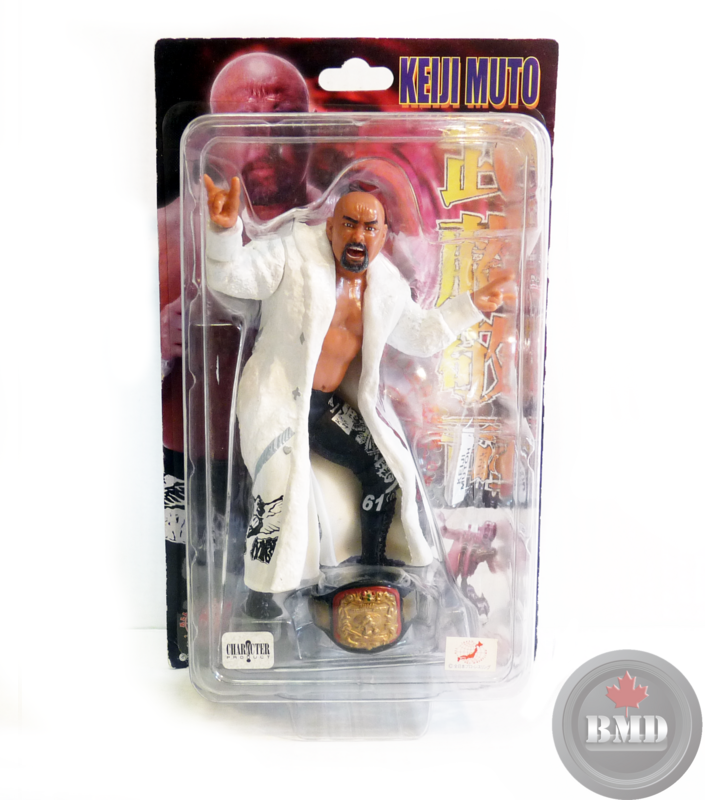
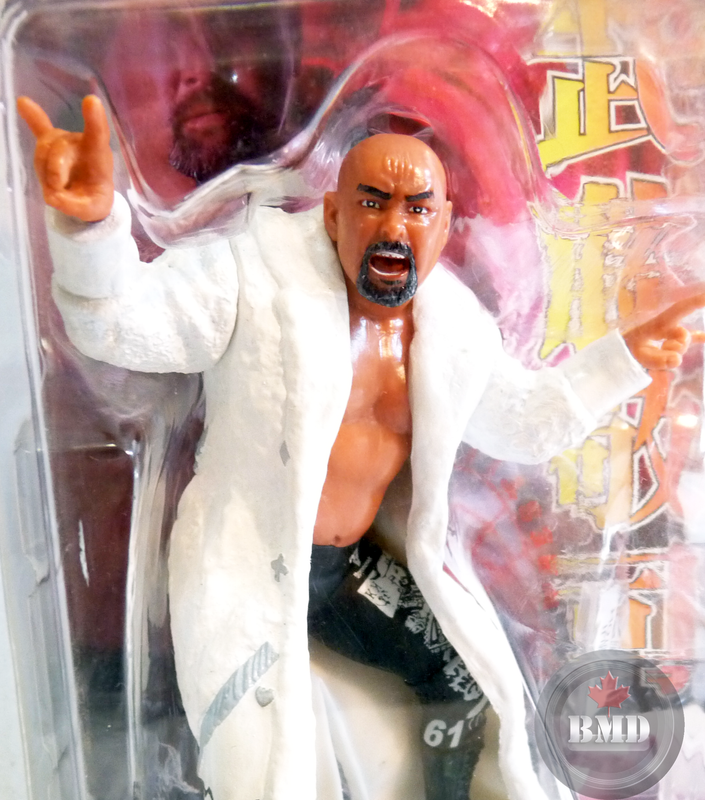
The first deluxe figure variant we'll be looking depicts Keiji Mutoh in his entrance attire.


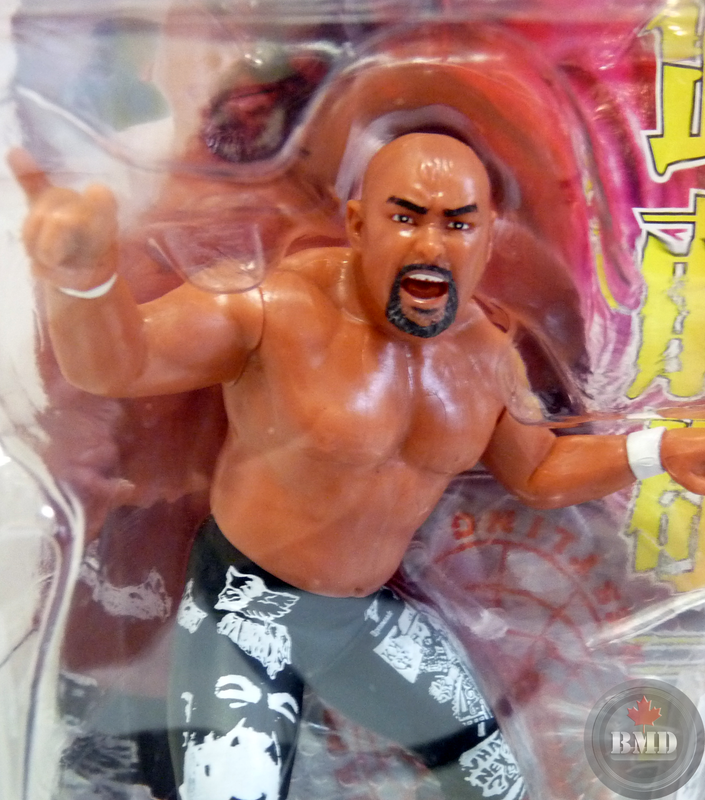
Keiji Mutoh is sculpted in his iconic "Pro-Wrest LOVE" pose. The overcoat Keiji Mutoh
contains  "Cross Wizard" era decals (a series of designs Mutoh would start wearing around
2001).


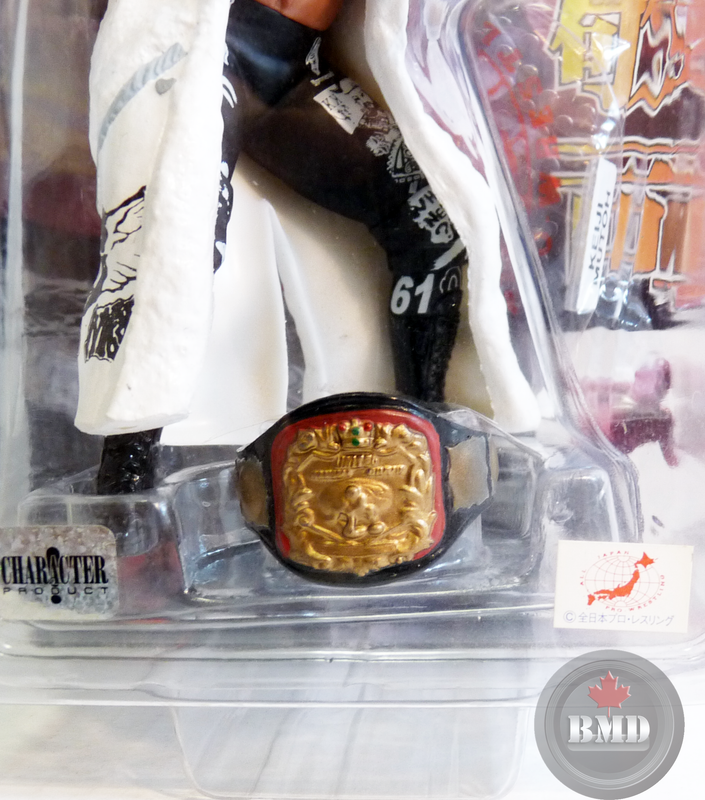
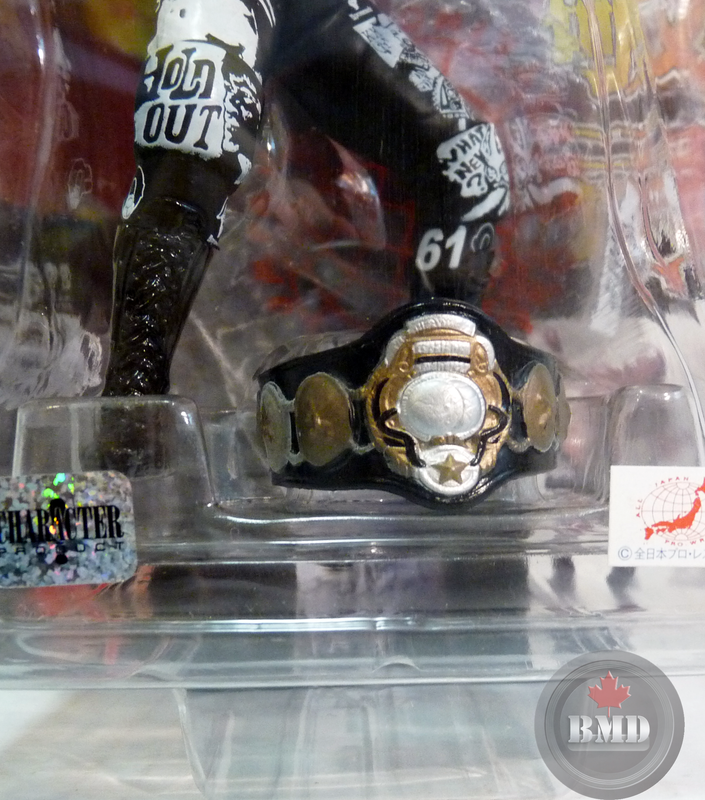
The first Triple Crown belt is the NWA United National Championship.

Fellow legends who held the NWA United Championship before being unified into the
Triple Crowns includes: Antonio Inoki, Genichiro Tenryu, Harley Race, Billy Robinson,
The Sheik, Abdullah The Butcher and Stan Hansen.

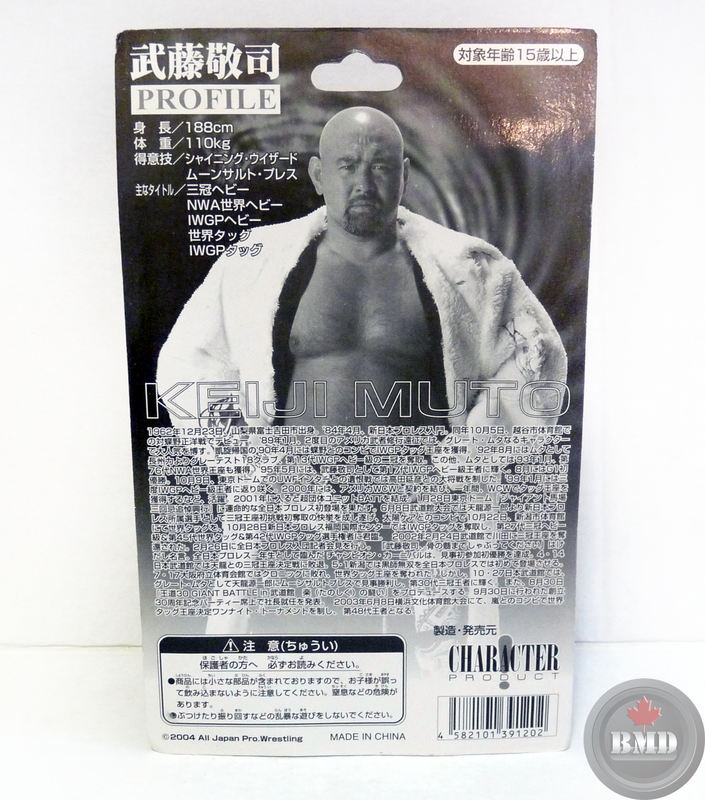
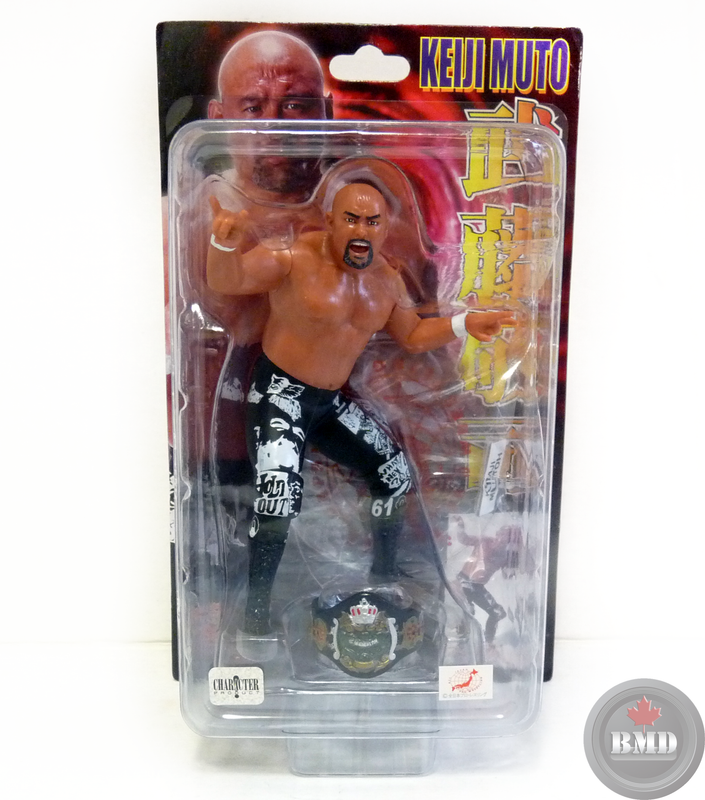
All three variants contain the same packaging front and back.

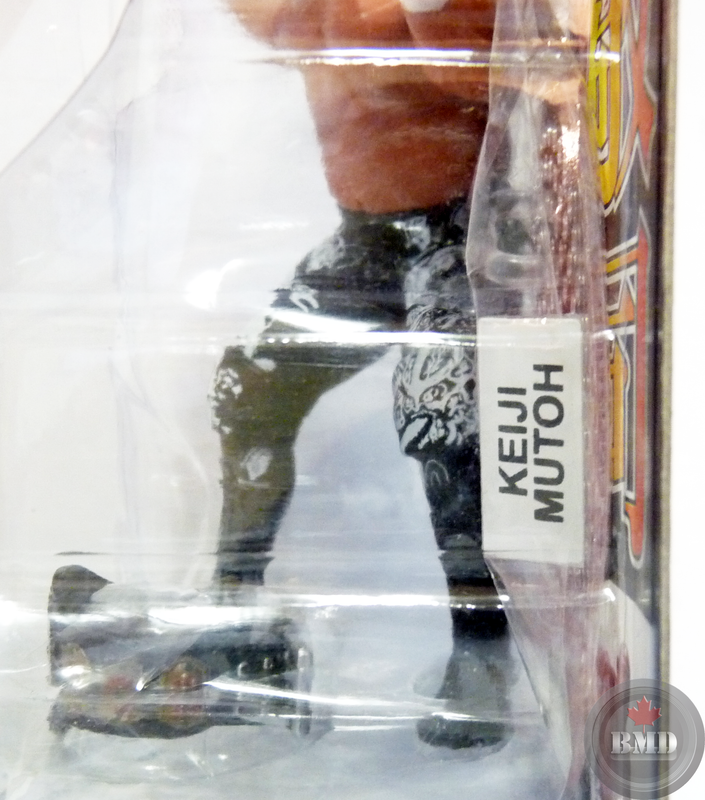
Keiji Mutoh's profile stats read:

"Height: 188cm (6'2)
Weight: 110kg
Signature moves: Shining Wizard
                             Moonsault Press
Titles: Triple Crown Belt
            NWA World's Strongest belt
            IWGP Belt
            World's Strongest Tag
            IWGP Tag"


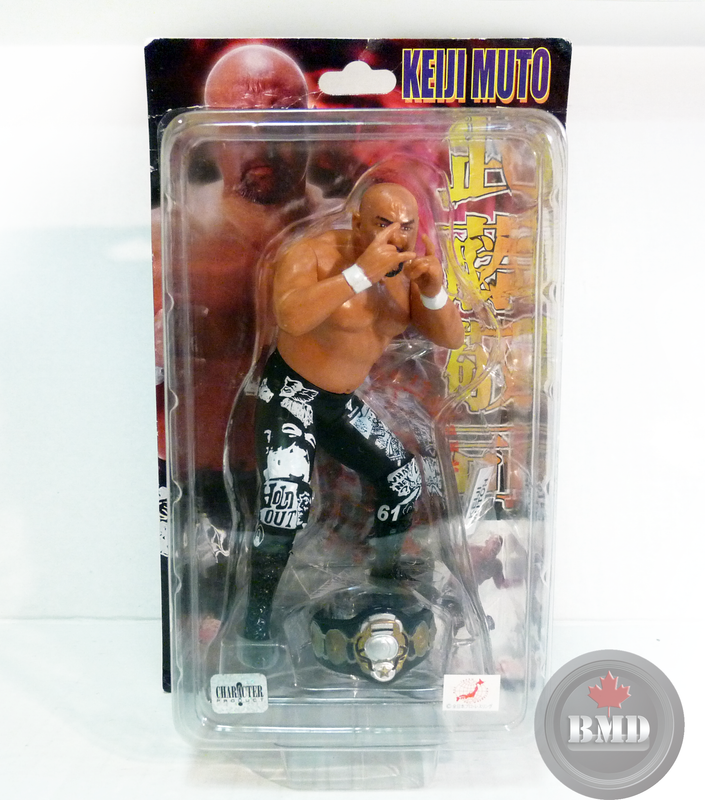
The second figure variant depicts Keiji Mutoh-sans overcoat. The sculpted of this variant
shows Keiji Mutoh about to perform his Pro-Wrest LOVE pose (by kissing his hands).

Some Japanese stores refer to this variant as the "KISS Pose".


The same "KISS" pose Keiji Mutoh figure was also packaged with Mitsuharu Misawa in a
limited edition deluxe double pack (which you can read my review on here).

As you can see from the above picture, (even though Keiji Mutoh is performing a kiss), Mutoh
contains the same head sculpt as his entrance attire variant.


The second Triple Crown belt is the PWF World Heavyweight Championship.

In the 16 year time-span that the PWF Championship existed before unification, legends
like Giant Baba, Jumbo Tsuruta, Stan Hansen, Abdullah The Butcher and Riki Choshu
all held the PWF Championship.

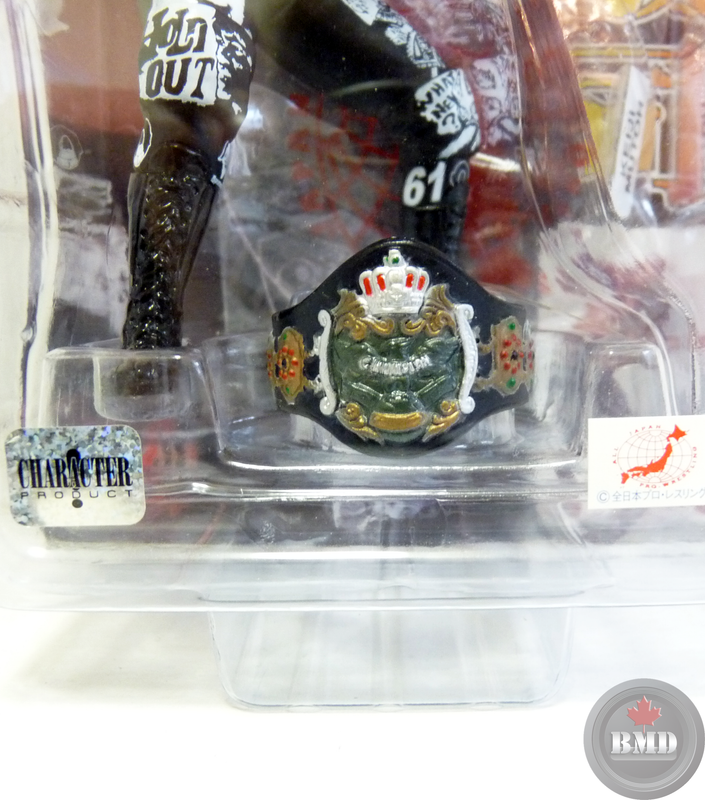
Keiji Mutoh's right kneepad reads "HOLD OUT", a nod to Mutoh's old New Japan Pro
-Wrestling theme song. Mutoh's left kneepad contains 61 and 0. 610 in a certain Japanese
numerical system spells out "MUTOH".

Mutoh's tights contain more decals of the Cross Wizard design.


The third and final deluxe variant features Keiji Mutoh performing the Pro-Wrest LOVE
pose without his overcoat.

The third Triple Crown belt is the NWA International Heavyweight Championship belt.
The most prestigious and oldest of the three belts going back to 1957.

The NWA International belt was brought to Japan by "The Undefeated Iron Man" Lou
Thesz. Rikidozan's defeat of Thesz during this era helped establish Japan's credibility
in the Wrestling world.

Other legends who held the NWA International belt include: Gene Kiniski, Bobo Brazil,
Dory Funk Jr., Stan Hansen, Bruiser Brody, Giant Baba and Kintaro Oki (who single-
handedly held the NWA International title for a combined total of 3,052 days!)


All three versions contain the same face sculpt and identical upper/lower torso.


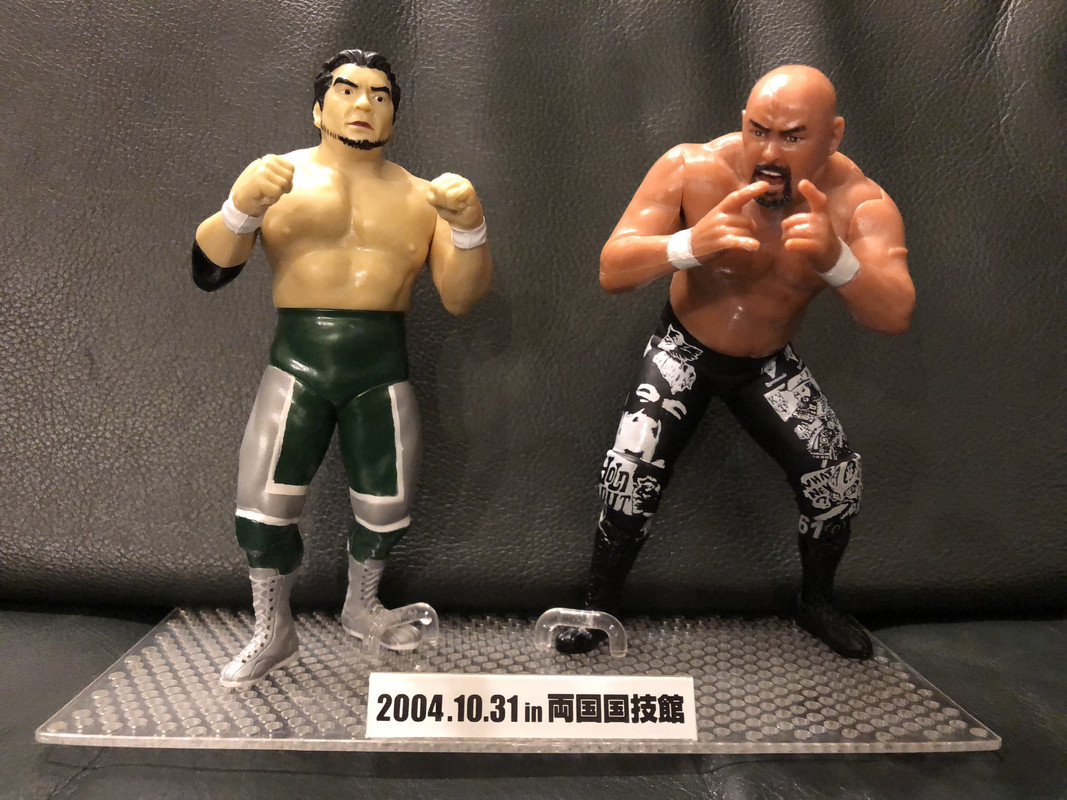
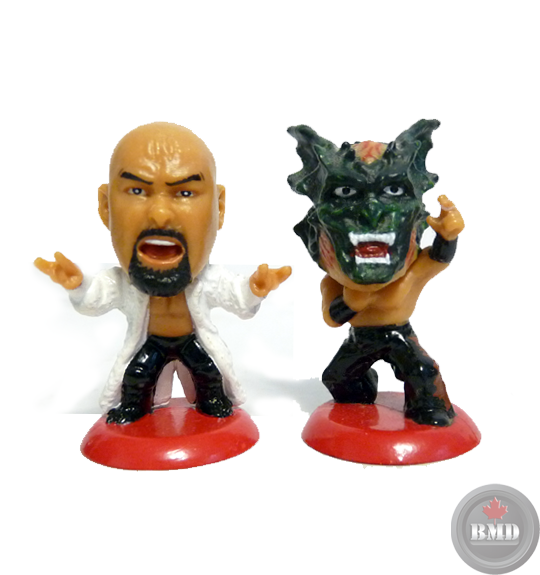
                              Mini Big Heads Vol. 4. Keiji Mutoh (Entrance ver.) and Great Muta
                              (Devil ver.) figures.


The same Keiji Mutoh head sculpt and pose were shrunken down into minifigure form
as part of the fourth volume of Character Product's Pro-Kaku Heroes Mini Big Head
Figures line in 2004.


I find the paint job on the Triple Crown belts to be shoddy at best. Especially since
Character Product had been producing Pro-Wrestling action figures for 7 years by
this point in the company's existence.


As deluxe figures, each variant comes with an acrylic display base, name plate and figure
holders that attach to the base.


Closing thoughts:

Released in 2004, the deluxe Keiji Mutoh set would be the first action figures made in
Mutoh's likeness under the Character Product banner.

While it's nice having three different variants to collect, Character Product could have
realistically bundled all three belts and alterations into one package (or two packages at
tops) if they felt inclined enough to do so.

Take for example Character Product's Kokushi Muso DX figure - which contained about 10
different accessories including a bonus pair of removable arms and entrance attire (which
was also released one year earlier in 2003) or Toukon Shop's Kazuyuki Fujita DX figure
which came bundled with two IWGP Heavyweight Championships back in 2001.

Technically speaking, Toshiaki Kawada was the actual reigning Triple Crown champion at
the time of the DX Keiji Mutoh figure's release. Though (with all due respect to Kawada)
I can see why Character Product decided to place the Triple Crown belts with three Keiji
Mutoh figures instead. After all, Mutoh was All Japan's president at the time and already
a two time Triple Crown champion. Not to mention, a major star in New Japan Pro-
Wrestling for well over a decade.


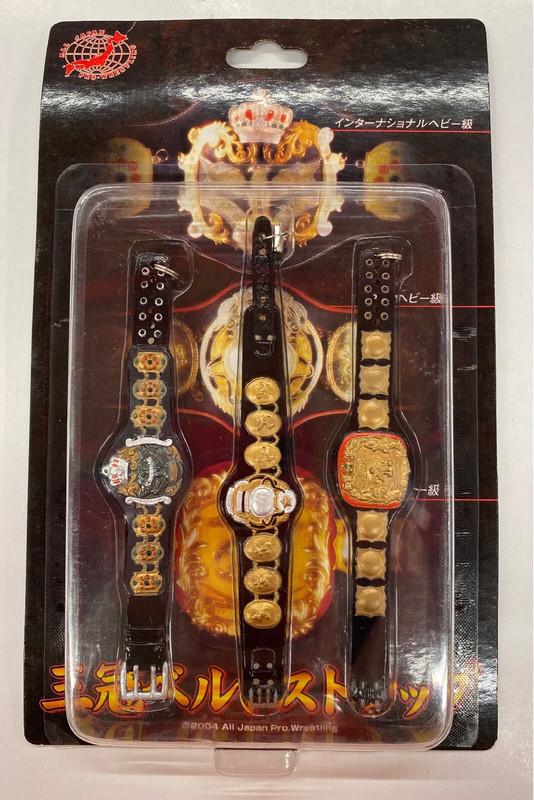
For collectors who don't feel like pursuing the Keiji Mutoh DX figure variants, Character
Product also released the Triple Crown belts separately as a special three pack the same year;
using the same belts bundled with the Mutoh figures. The only difference is the added keychain
rings on the tips of each belt.

Though, with the soaring costs of Japanese figures on the secondhand market, I don't recommend
purchasing the three belt set for the $200 average they currently go for.


Tuesday, 13 July 2021

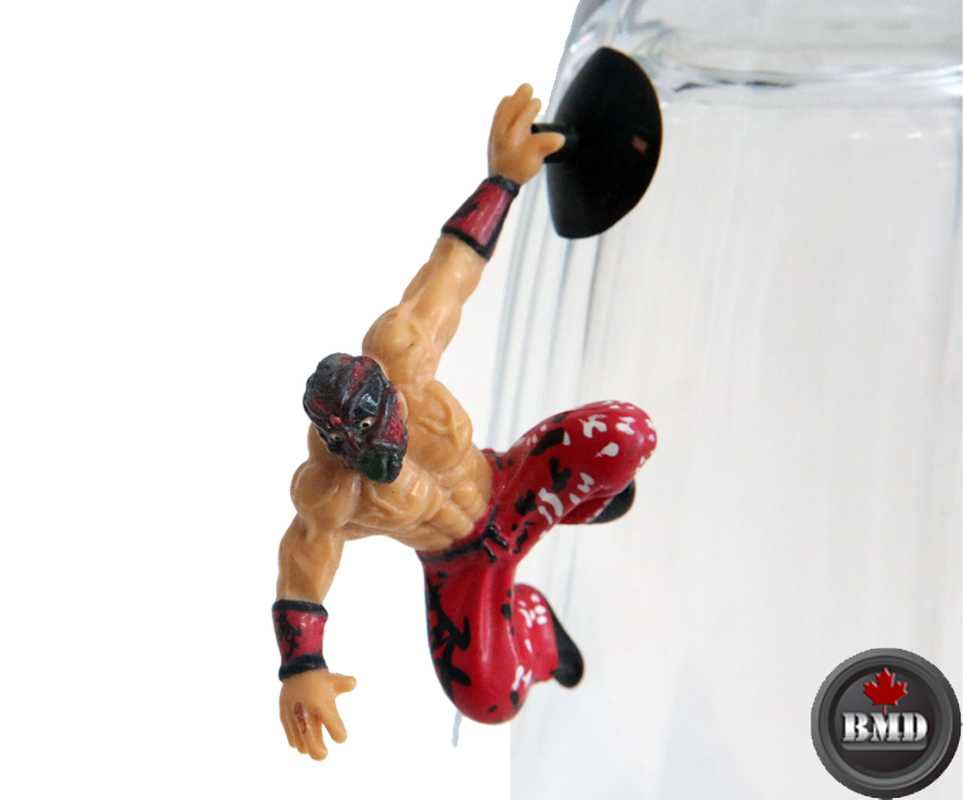
Great Muta Suction Cup figure review

Walloping websnappers! Let's jump right in to another figure obscurity many Wrestling collectors
may not be aware of.  Blog #166 takes a swing at the Great Muta suction cup figure.


In 2002, Keiji Mutoh shocked the Wrestling world by jumping from New Japan Pro-Wrestling
to rival promotion All Japan Pro-Wrestling. As the Great Muta, Keiji Mutoh would defeat
AJPW legend Genichiro Tenryu to become the 30th Triple Crown winner on October 27th,
2002.

With a highly-publicized promotion change, taking over as AJPW president and winning
the Triple Crown for the second time by that point, plenty of merchandising based on Mutoh's
new Spider gimmick would be in the works.


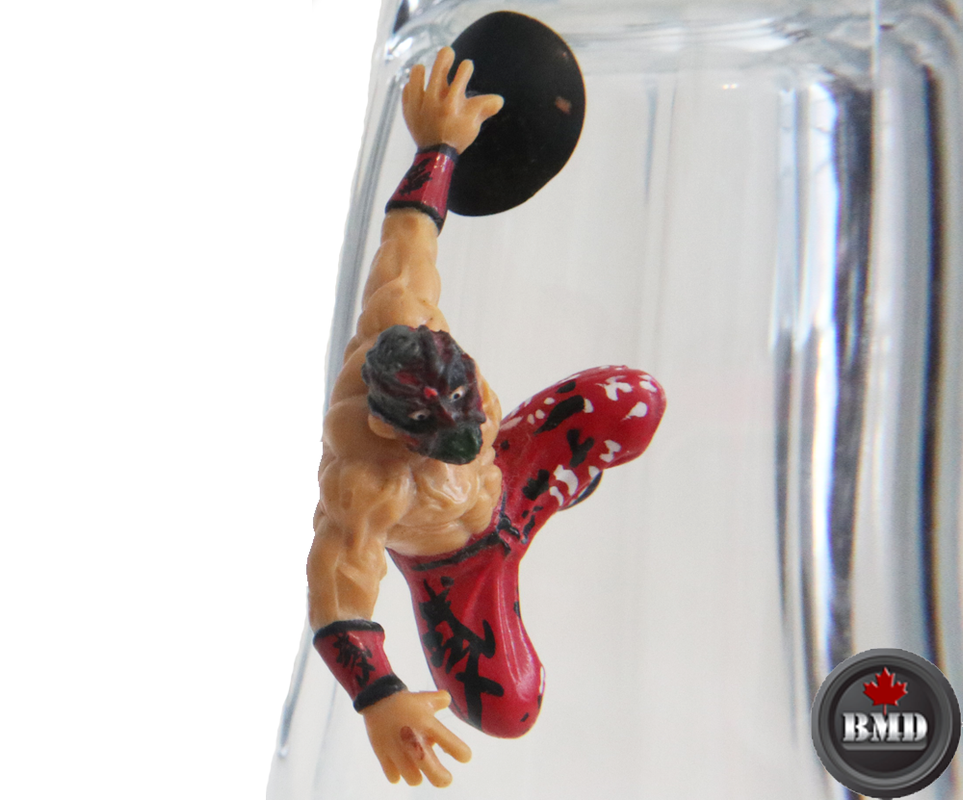
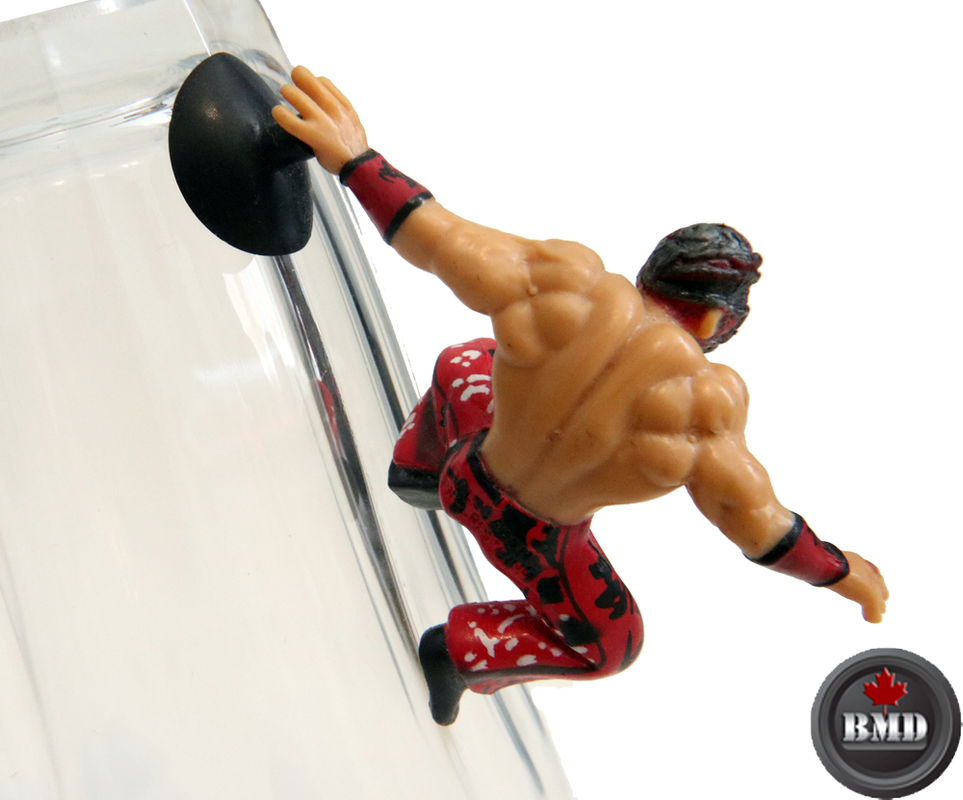
The 2 and half inch figure is the only known suction cup figure of The Great Muta that comes
to mind.

If you haven't guessed already, the Muta suction cup figure was most likely inspired by
Spider-man.


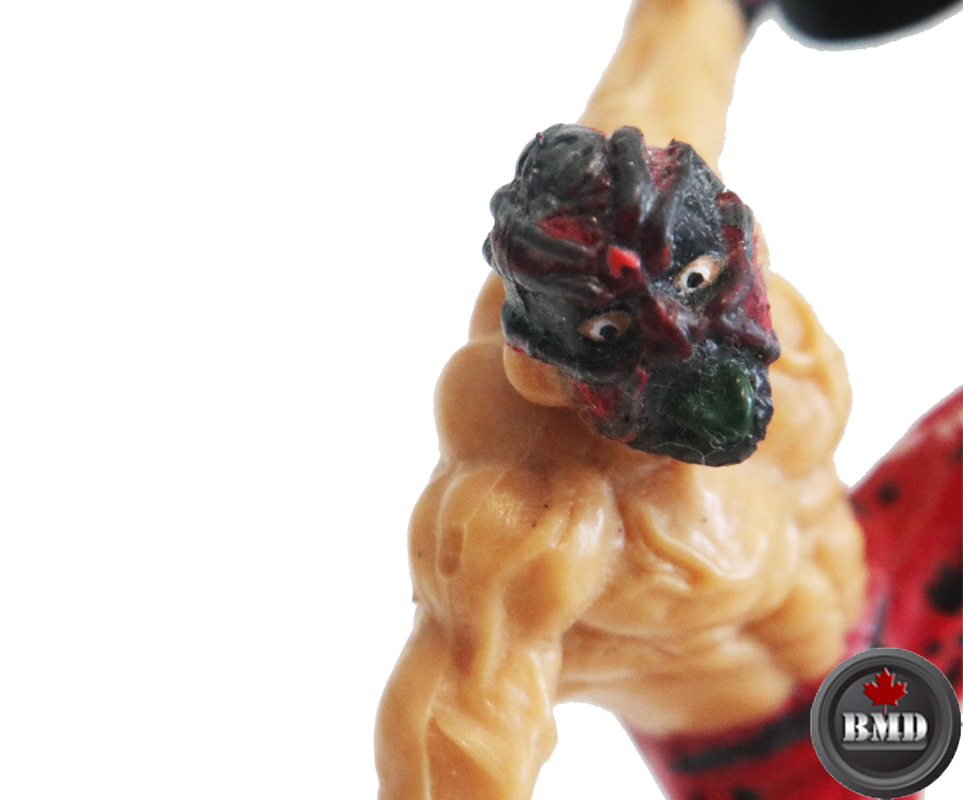
While the detail isn't the best for a figure of this size, Muta's bug eyed stare and green, poison
-misted tongue are figure staples for Muta.


Face sculpt-wise, not Spider Muta's most glorious moment in figure form.


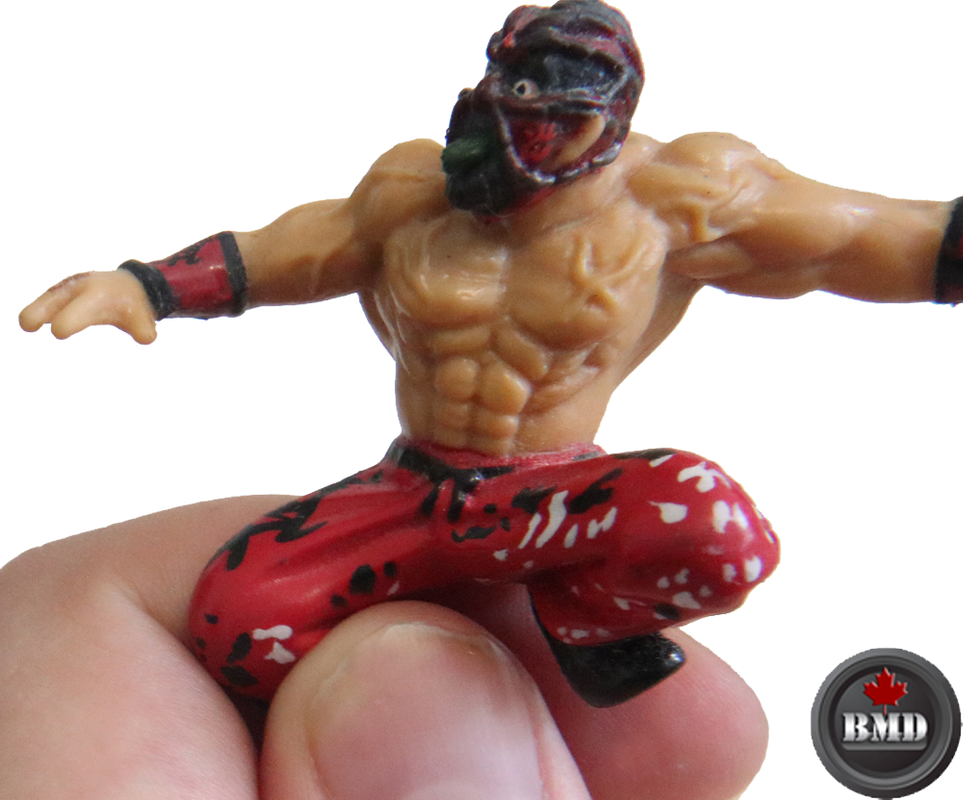
Muta's overly-exaggerated superhero physique brings to mind the WCW and Marvel
figures made by Toy Biz from the 1990's.


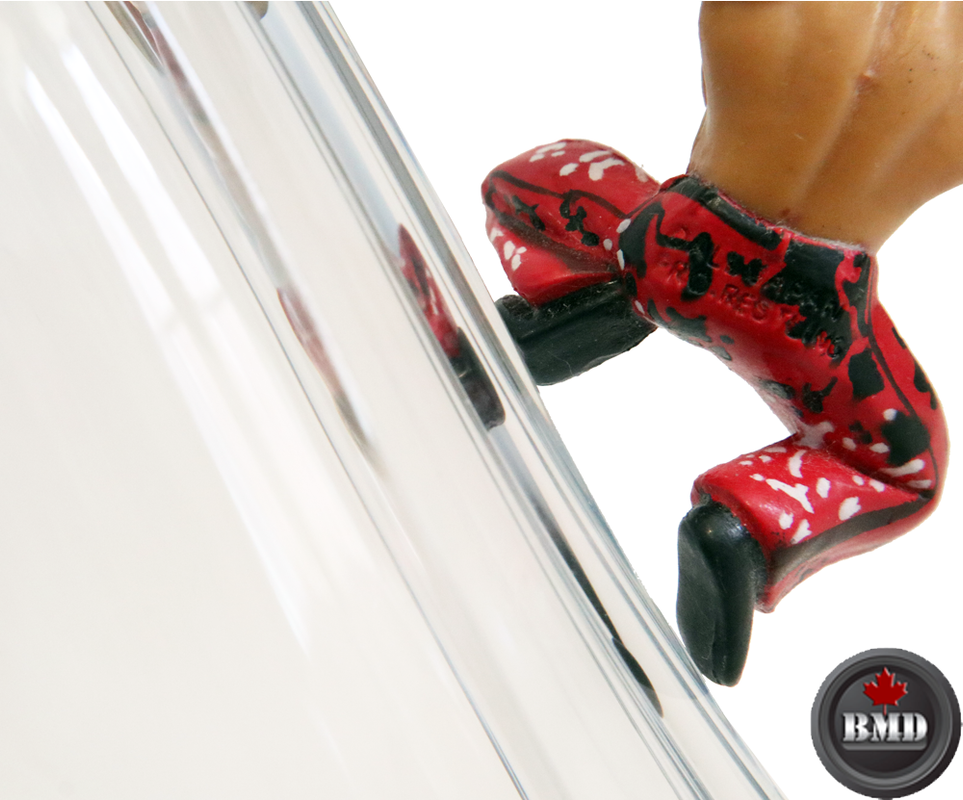
The suction cup sticks to just about any surface. I found the best results with glass and acrylic
surfaces as intended.

The suction cup on Muta's left hand cannot be removed.


The back of the Muta figure contains an All Japan Pro-Wrestling stamp on the back.


Closing thoughts:

The Great Muta suction cup figure, odd and interesting as it may be is not one of my
favourite depictions of Muta in his spider attire. Nor is it the worst (that distinction
goes to Character Product's Great Muta spider Bobblehead with ring).

I've read in the past that this figure was a Japanese prize item; available only in certain
vending machines as a gashapon or crane prize games exclusively in Japan. In that
regard, I tend to be more lenient on this minifigure.

The true saving grace of the Great Muta suction cup figure is it's overly-exaggerated
superhero physique ...and the fact that someone was inspired enough to create a figure
of Muta imitating everyone's favourite web-sling superhero.

Friday, 9 July 2021

Banpresto Masakatsu Funaki figure review

As the second instalment in a set of reviews covering Banpresto's Real Figure In
Battledome line, Blog #162 focuses on another figure from the Battledome set:
Masakatsu Funaki.

The late 80's and early 90's brought upon a major shift in combat sports. The burgeoning
MMA scene was reshaping the very definition of toughness in Japan. RINGS, UWFI,
K-1 and PANCRASE were the top shoot fighting promotions throughout Japan during
the era.

Banpresto took note of shoot fighting's popularity in Japan and added three fighters
to the Real Figure roster: Koji Kitao (who was competing for NJPW at the time),
UWFI's Yoji Anjo and PANCRASE's Masakatsu Funaki.


Masakatsu's very first figure adaptation.


Funaki is pictured in his early 1990's look; complete with long hair and Japanese flag
on his ring trunks.

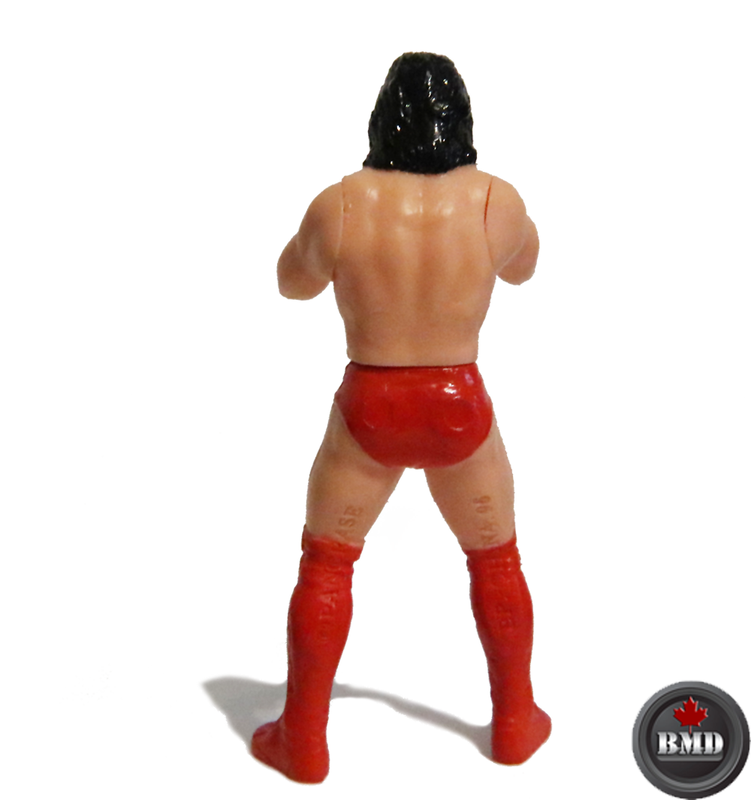
Even with the limited detail given to a Japanese capsule toy, Masakatsu Funaki's likeness
is recognizable.


As a model kit, the Funaki figure contains removable arms and an upper torso.

Funaki stands about 3 inches tall and is noticeably smaller in scale when compared
to other Japanese action figures which regularly stand at 5 inches in height.

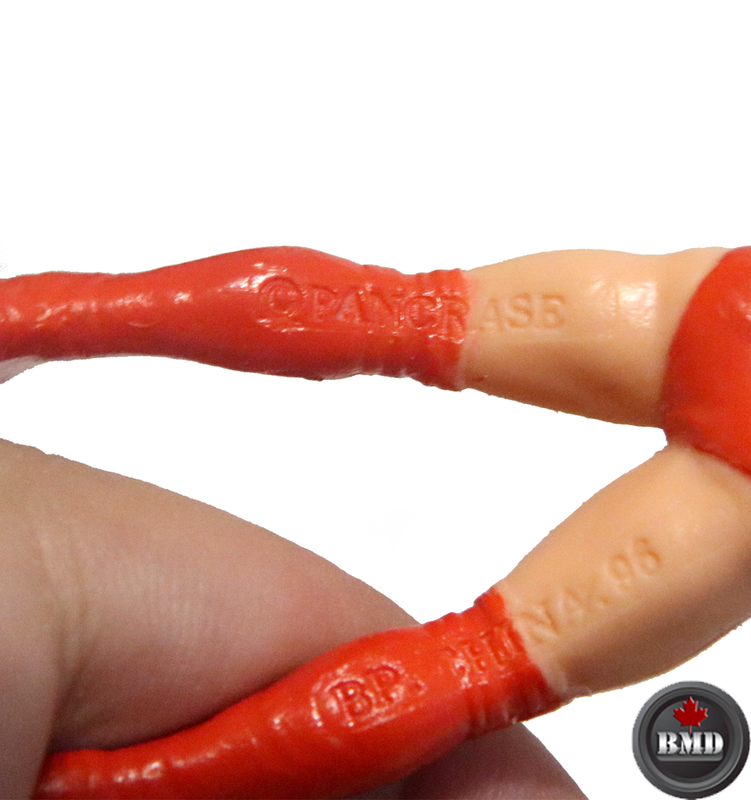
The copyright stamp on the back of Funaki's thighs reads:

"(C) PANCRASE

BP CHINA 96"

"BP" standing for Banpresto and the year (1996) in which the figure was made.


Closing thoughts:

For PANCRASE fans, you can't go wrong with the earliest known Masakatsu Funaki
figure.

Though, the rarest figure from Banpresto's Real Figure In Battledome line has to be Jushin
Thunder Liger. In my experience, the Liger from this set rarely comes up for auction.


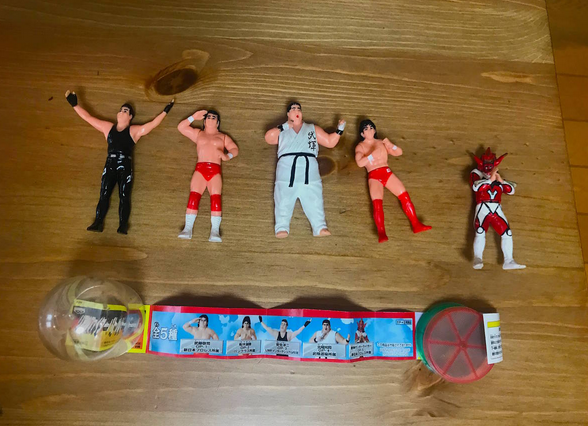
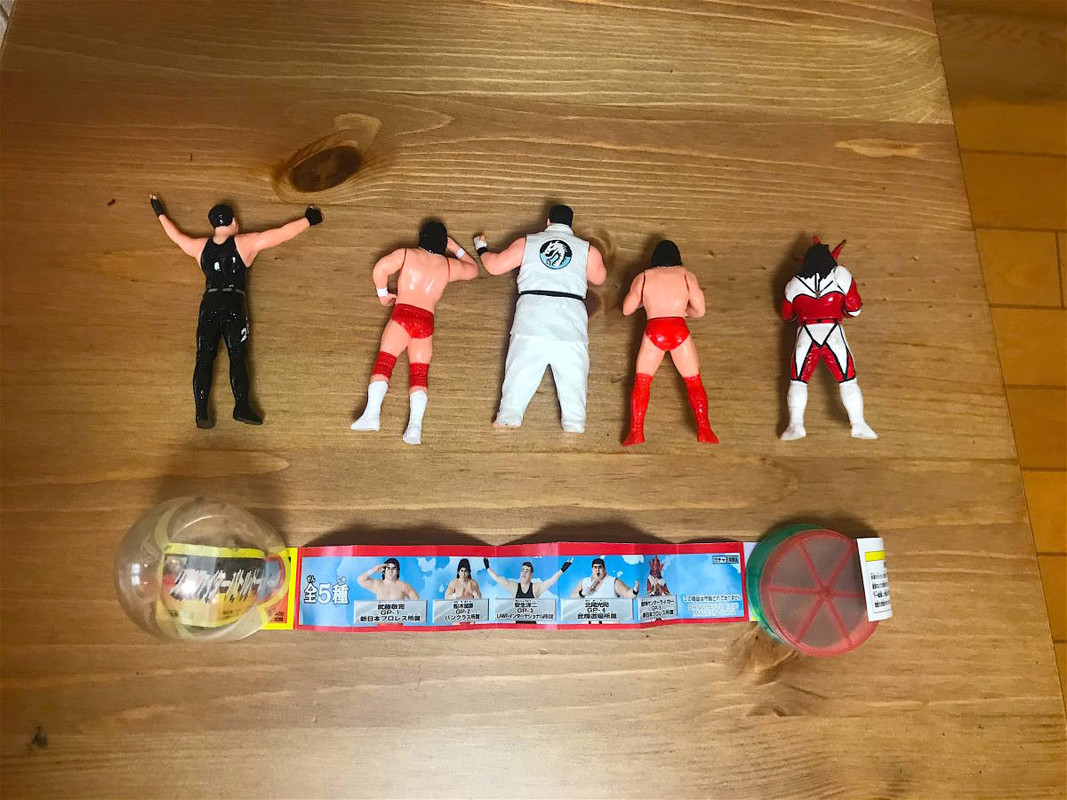
The complete five figure set. Left to right: Yoji Anjo, Keiji Mutoh, Koji Kitao, Masakatsu Funaki
and Jushin Thunder Liger.

Also pictured are the original pamphlet and gashapon capsule that came with each figure.


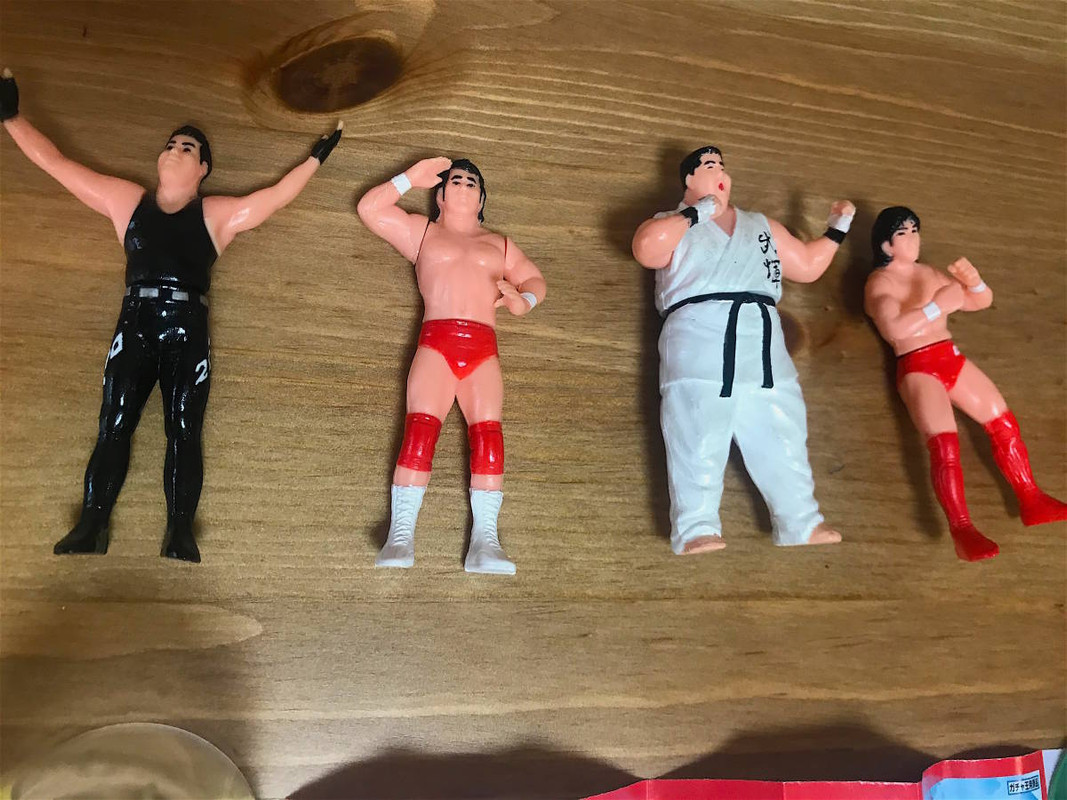
The only known figures of Yoji Anjo and Koji Kitao. Koji Kitao is pictured in his mid 90's
Karate Gi. Yoji Anjo contains his nickname "Mr. 200%" along his ring tights.


I especially like the sea monster design on the back of Kitao's Karate Gi.


Friday, 10 August 2018

Bob Sapp HAO Collection figure review


Continuing our coverage of the popular HAO Collection line, our next feature figure
is of the beast himself: Bob Sapp!

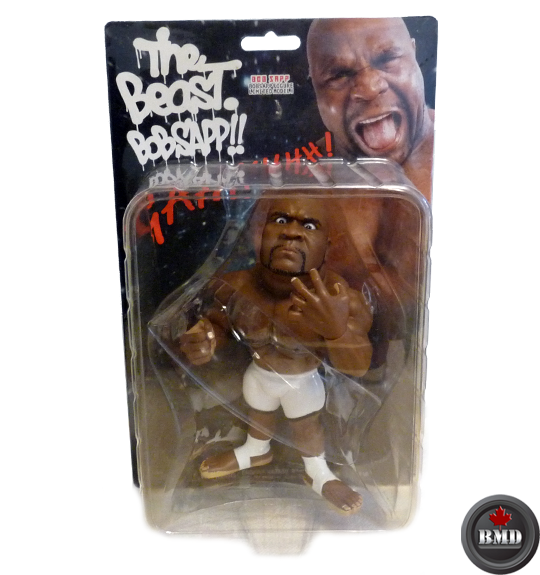
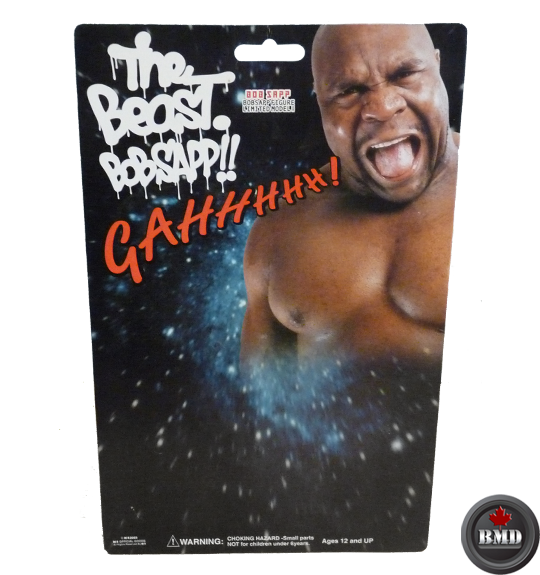
Even Sapp's packaging is intimidating!
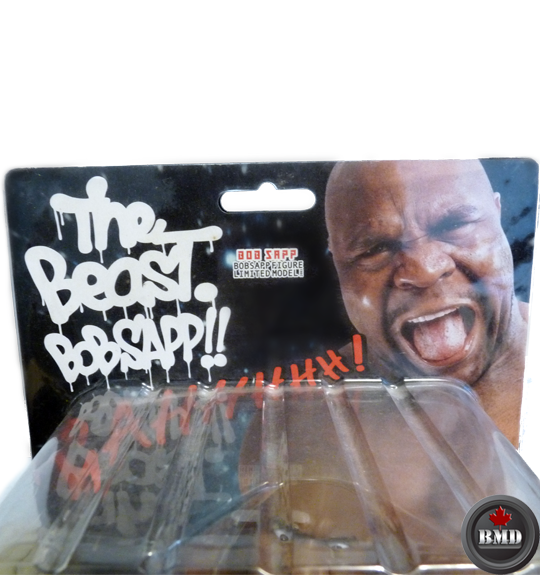
Right from the get go, the packaging of the Bob Sapp HAO figure immediately
jumps out at you with large, intimidating graphics of Sapp shouting.
                  
"Bob Sapp Figure Limited model"

                            
The front and back of the packaging state that this figure is a limited edition.
It is also worth noting that this figure was only released in Japan.


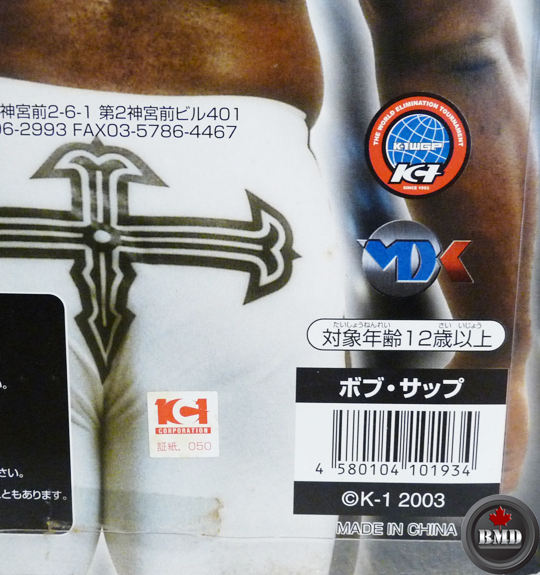
As a exclusive from the first wave of HAO figures, this rarity was licensed by
the K-1 mixed martial arts promotion (which Bob competed for at the time).

                                 
Jumbo Bob Sapp trading card, anyone?

As with other HAO figures, the cardboard backing can be slipped off easily
(without damaging the packaging) revealing a large, full colour graphic of
Sapp that can be displayed on it's own.


"What did you say about the Longest Yard?!"
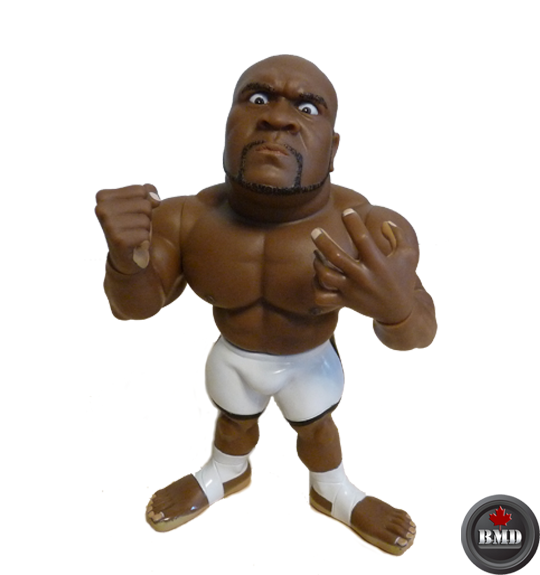
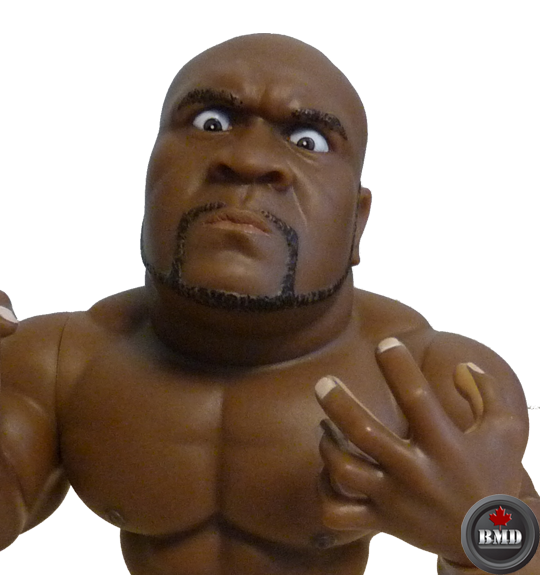
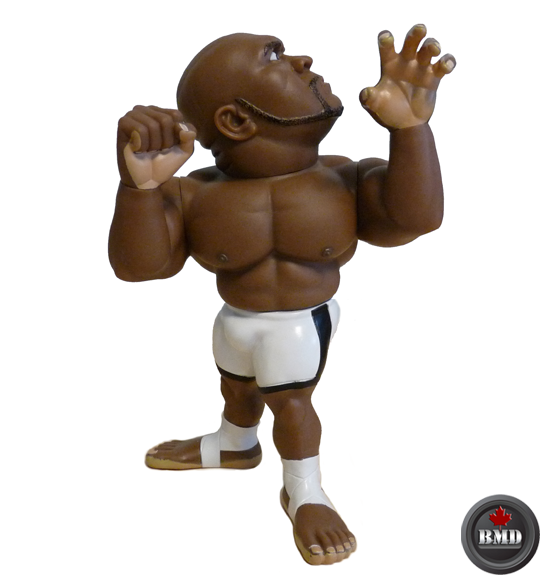
The Bob Sapp HAO Collection figure is made of soft vinyl and features
Sapp sculpted with his signature (and terrifying) stare!  


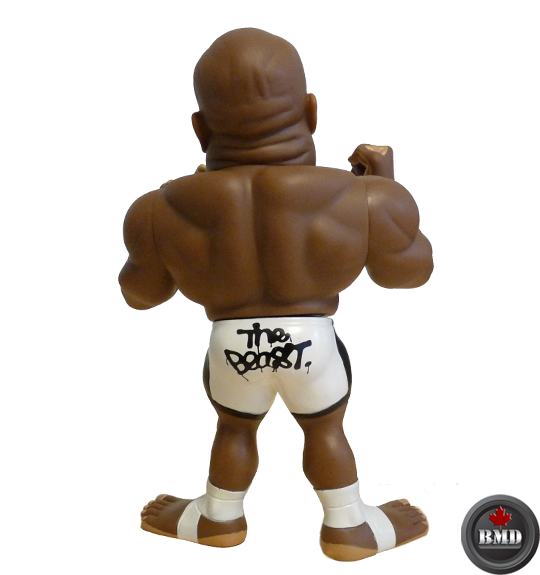
All in the (nick)name.

                           
The back of Sapp's ring trunks prominently display Sapp's nickname in black font.
The same font is also used on the front of the packaging.

Ready for a stompin'
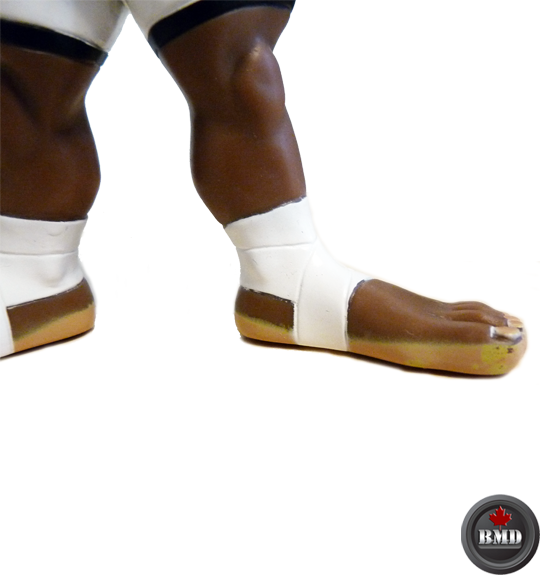
The Bob Sapp HAO figure also features MMA styled foot taping.
A master on the dance floor, too!

                               
The Bob Sapp HAO Collection figure includes articulation at the neck, arms, wrists
and waist.
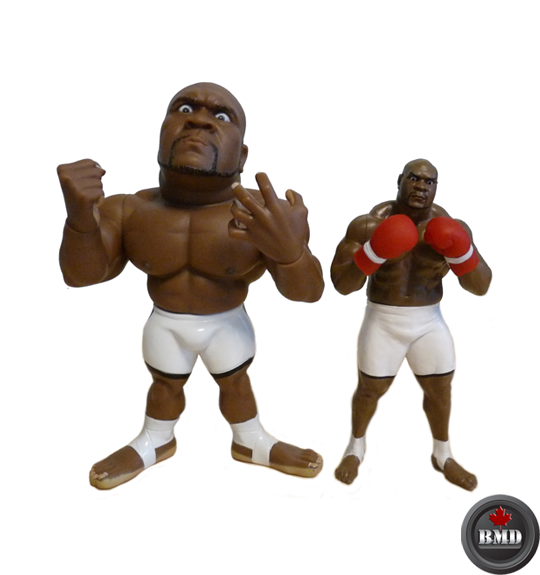
When placed next to the Bob Sapp action figure (by Character Product).

Closing thoughts:            

Just like the man himself, the HAO Collection Bob Sapp figure is larger than life.
Standing just under 8 inches (20cm) tall; this figure literally towers over most
Wrestling (especially Japanese) and mixed martial arts collectibles!

In their original six year run, HAO would only release one Bob Sapp soft vinyl
figure as part of their HAO Collection line; making this limited edition, Japanese
exclusive a considerable collector's item. "GAHHHH!"