Outside of the realms of WWE merchandising, Terry Funk has been included in numerous figure lines over the years. Most prominently, the lion's share of those depictions can be found overseas exclusively in Japan.
From POPY's iconic Superstars figure line to Clockworks' Beyond The Mat movie exclusive, BoFord's Martial Arts Box collection, and even Bandai's seemingly endless assortment of keshigomu eraser figures, fans of the Texas Bronco have plenty of figures to choose from.
Today, we'll be taking a look at the newest Terry Funk depiction from Japan. Blog #262 laces up against the 16d Collection Terry Funk sofubi figure.
Legendary rivals reunite in the 16d line.
While most of the Terry's figures veer towards the tail-end on the Dirty Funker's career as a hardcore legend, this particular figure is based on Terry's late 1970's - early 1980's run in All Japan Pro-Wrestling.
At the time, Terry and his brother Dory Funk Jr. were considered two of the promotion's top foreign babyfaces.
Terry's name is written on the front of his jacket. Though, if collectors want to appreciate the writing clearly, they'll have to rotate Terry's arms. Like
the 16d Giant Baba figures, I found moving Terry's arms to be very
quite tedious at first. Though, with a little persistence, it is possible.
Another thing I discovered that the GoodSmile shop doesn't tell you is that Terry's wrists are also articulated; both being able to rotate a full 360 degrees.
In terms of articulation, Terry features movable arms, wrists, neck and waist.
'Texas Broncos' is written on the back of Terry's entrance jacket.
In the world of Puroresu, The Funks' bomber jackets from this era are considered holy grails among collectors. Often times selling for thousands of dollars to diehard fans.
The Great Kabuki himself was gifted one of these jackets by Dory Funk Jr. himself, along with one of Stan Hansen's iconic cowboy hats. Two treasures the legend displays in his BIG DADDY restaurant in Japan.
Like most 16d figures, the sole of Terry's boots contains a copyright from the Wrestler himself. In Funk's case, the license is a posthumous one; being the first figure released after Terry's passing.
The side of the packaging reveals Terry's profile: D.O.B.: July 30th, 1944 Birthplace: America, Indiana Debut: December 9th, 1965 Height/Weight: 188cm (6'2), 118kg (260lbs) Signature moves: Spinning Toe Hold, Rolling Cradle, Texas Clover Hold (Texas Cloverleaf).
Closing thoughts:
After years of waiting, it's nice to see Terry finally added to the 16d line. Like a majority of HAO's craftmanship, I feel the 16d figure depiction is one of the most realistic representations of Terry to date. Terry's resemblance is spot-on in soft vinyl form.
Here's hoping we'll get Dory Funk Jr. (who just earned the distinction of being the oldest Wrestler to Wrestle at the age of 83) along with other gaijin legends added to the 16d line in the future.
Continuing to share obscure Japanese Wrestling collectibles with the world, I present blog #260 which squares off against Utsugiyo's Imperial Pro-Wrestling Federation figures.
The Imperial Pro-Wrestling Federation figures are a line of soft vinyl figures that were released by Japanese toymaker Utsugiyo in 2015.
Each figure stands about 4.5 - 5 inches (which is less than half the size of older Sofubi figures released in Japan). The design of the figures are meant to resemble the traditional Bullmark sofubi figures from the 60's and early 70's.
Design-wise, Utsugiyo states that the Champion Series two-pack features two protagonists: Larry Blackhole and Bear the Ted.
Personally speaking, I think Larry is based on Thunderlips. The hat and handlebar mustache, plus IGWP-inspired belt seem reminiscent of Hulk's likeness. Additionally, I feel Bear the Ted is a tribute to Tiger Mask and Bruiser Brody (note Ted's furry boot coverings).
The Champion Series two-pack originally sold for 14,000 yen ($117 USD), which also came with a colouring book and poster. The poster's design was meant to replicate the look of classic Puroresu posters from the 1960's (specifically, the JWA).
Just like Thunderlips in Rocky III, Blackhole also features a cape of his own.
Only 27 sets were created, and anyone who didn't pre-order by May 7th had to be entered into a lottery in hopes of bagging the pair.
If you thought $117 for two miniature sofubi's was a tad much, be prepared to feast your eyes on the following:
Utsugiyo released a special variant set that was only available over the weekend.
Unlike the original Champion Series set, this special two-pack included multiple removable accessories. Teddy's vest chains and beard look reminiscent of Bruiser Brody here.
Released in 2018, this special set was sold for a jaw dropping 49,999 yen ($367 USD plus shipping!). Welcome to the expensive world soft vinyl 'designer art toys'.
The only known photo I could find of the packaged Black Friday version. I wonder if the extra accessories are tucked away inside the packaging, or were removed at the last second? We may never know.
At 1 to $400+, would you consider hunting down these designer art Wrestling figures?
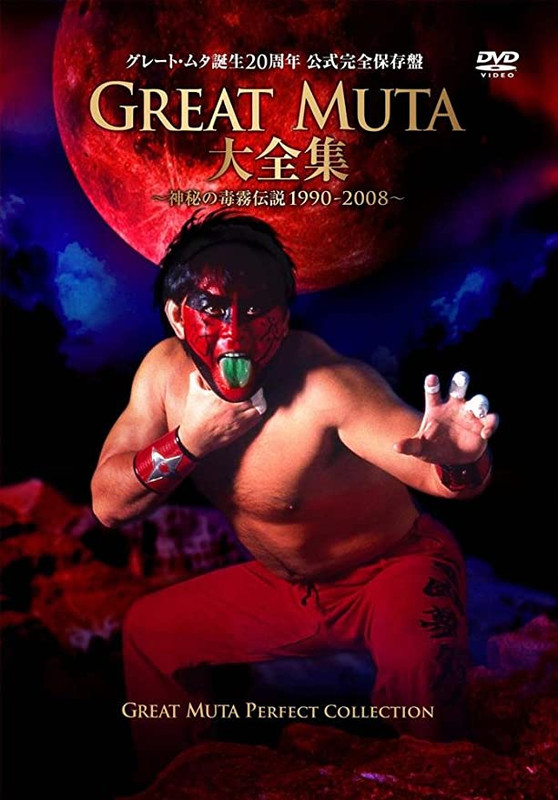
In the realm of Japanese Wrestling merchandise, few competitors have received as many figures as The Great Muta. With striking facepaint, intricately-detailed ring masks, an endless variety of phantasmagorical entrance attires, along with a penchant for influencing countless Wrestlers with his innovative in-ring techniques, it's no wonder that the 'Pearl of The Orient' continues to remains an indelible icon in the world of professional Wrestling.
Our next batch of figures pay homage to Muta's early years, with a crossover project sure to turn heads. Blog #236 summons Grape Brain's Great Muta sofubi figures.
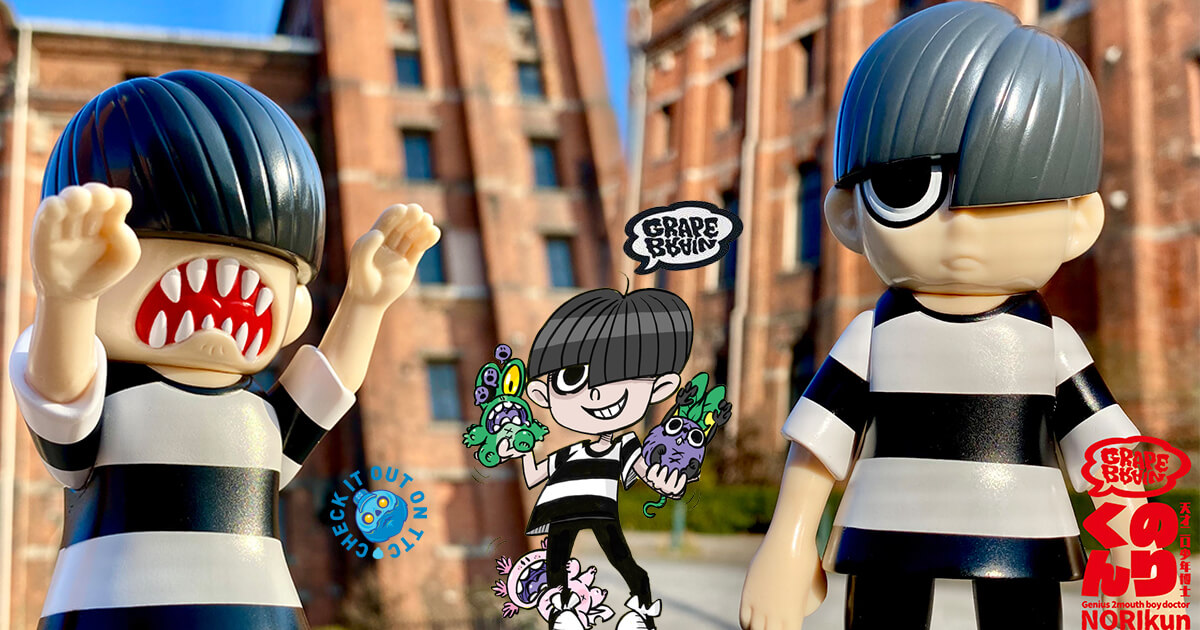
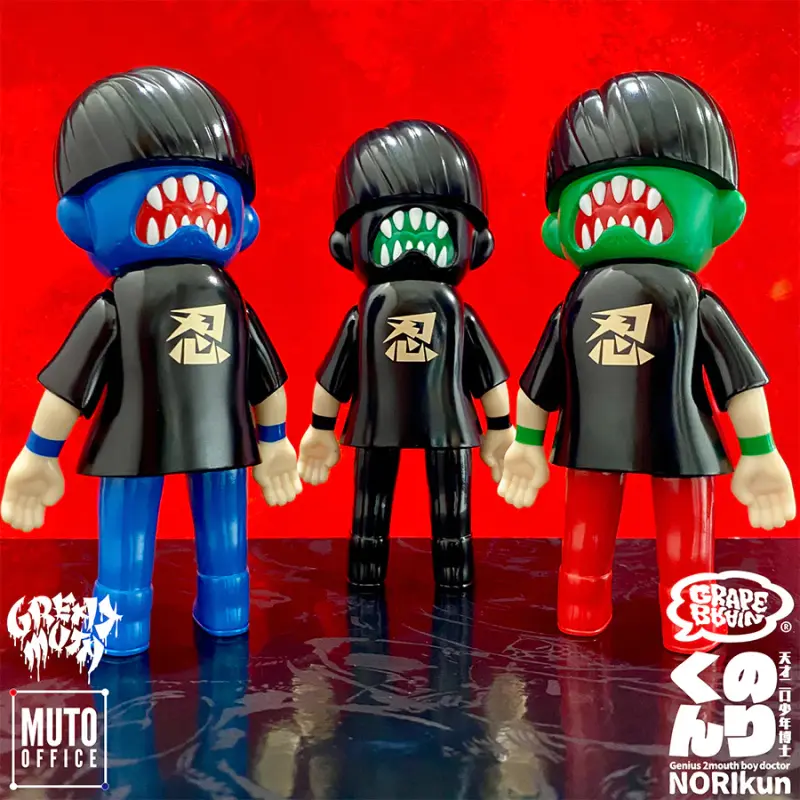
Enter the Grape Brain Genius Grape Brain is a Japanese artist who is best known for his characters Origiri and Norikun. Known as the "2 mouth genius boy doctor", Norikun casts a sinister presence with bangs obscuring one of Nori's eyes. Norikun also includes a second face - a monstrous, alter-ego that is located at the back of Nori's head.
By turning Norikun's head, collectors can display either one of Nori's personalities.
Visually, Norikun's appearance reminds me of the mid 90's early 2000's cartoon animation found on Nickelodeon or Cartoon Network. Cartoons like Dexter's Lab and, later, Teen Titans comes to mind.
Enter the Grape Brain Great Muta crossover
Capitalizing on The Great Muta's 2023 retirement run, Grape Brain, in conjunction with Pro-Wrestling NOAH, created a series of soft vinyl figures inspired by the Wrestling legend.
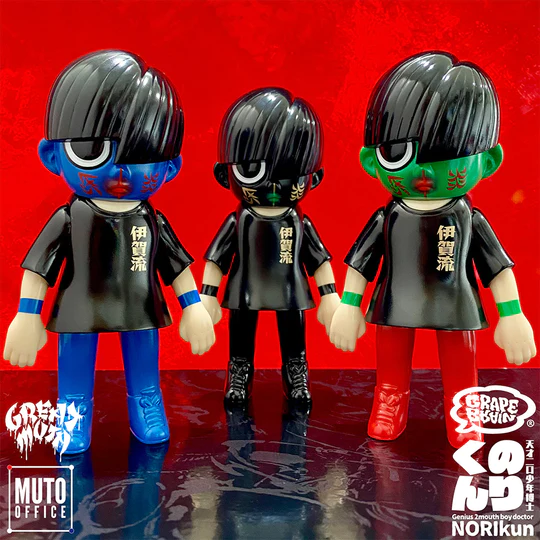
Following the trend of other designer toy brands such as BearBrick, KAWS, Kidrobot and, in extension, even Funko POPS!, Grape Brain has redesigned Norikun to resemble The Great Muta, as he appeared in the late 80's to early 90's.
Each Norikun figure stands 14cm or 5.5 inches tall and is made of soft vinyl.
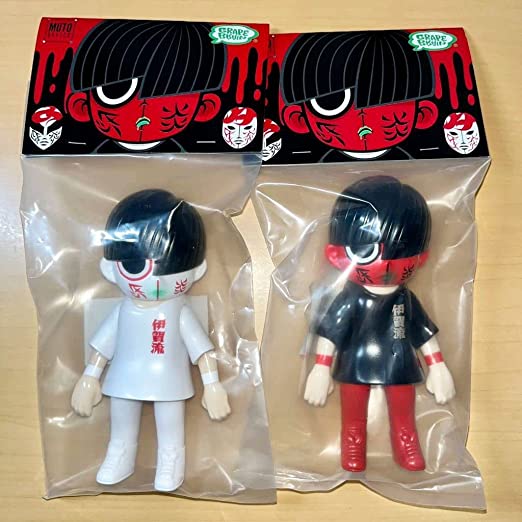
In the traditional style of sofubi figure packaging from the 1960's and 1970's, the Grape Brain Great Muta figures come in simple shrinkwrap packaging with attached cardboard backings.
In terms of articulation, only the arms and head can be rotated.
I love how the Norikun figures ever have green lips, a nod to Muta's poison mist attack.
From Pro-Wrestling NOAH's official shop, the following text reads "Great Muta X Norikun Sofubi NEW colour ver."
The text also mentions the website price of 11,000 yen (roughly $80 USD) per figure. With five colour variants available (Black, Blue, Green, White and Red), acquiring each variant would cost collector's over five hundred dollars.
Since the Norikun Great Muta figures were made in very limited numbers, each edition sold out rather quickly. The few examples of Grape Brain's work that have made it to the secondary market now fetch upwards of five hundred dollars per figure!
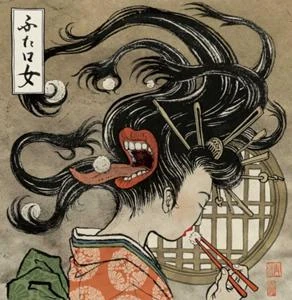
My theory is that the monstrous head at the back of Norikun's skull is a reference to the Japanese yokai legend of Futakuchi Onna; an early example of a split personality imbued with supernatural powers.
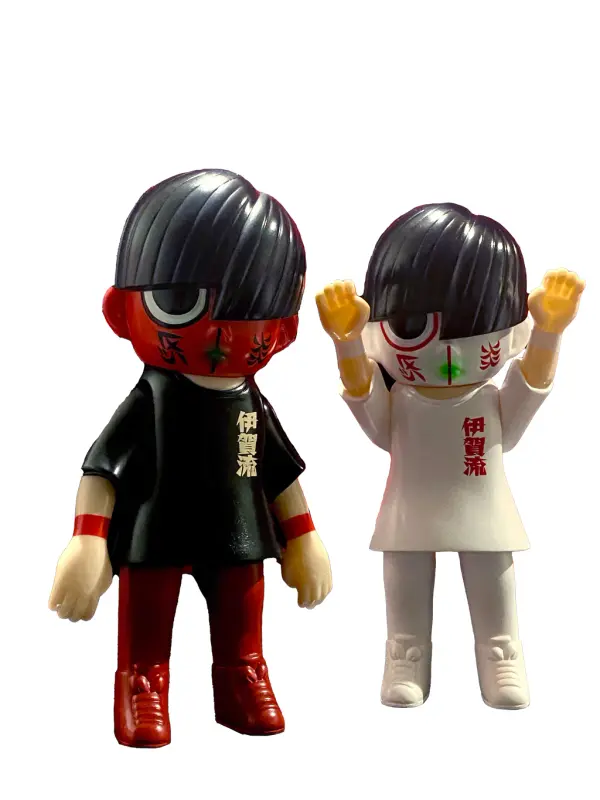
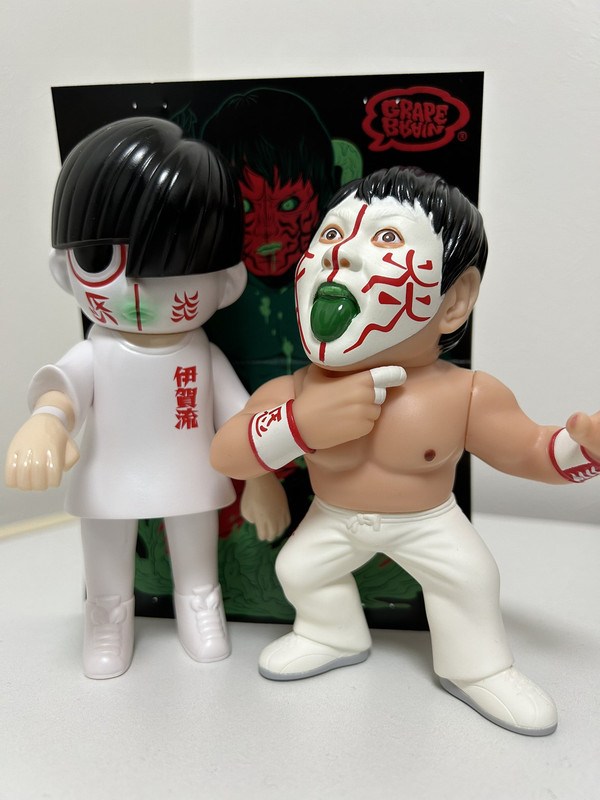
The Japanese Kanji on the front of Norikun's shirt reads '伊賀流', which translates to Iga-Ryu. One of two historically significant ninja clans in Japan.The text alludes to the Great Muta's early entrance attires, which were based on classical Ninja hoods.
The writing on the back of the Norikun figure's shirt reads '忍' (Ninja).
When displayed next to 16d Collection's Great Muta (white paint ver.) sofubi figure.
Closing thoughts:
Only the most hardcore of Great Muta fans will consider purchasing the Grape Brain Norikun Great Muta figures. As renown as Grape Brain's work may be in the art community, their merchandise isn't as recognizable as designer art toys made by more recognizable brands. The rather steep base price of 11,000 yen per figure is also a hard bargain to reason with as well.
Should the Grape Brain Muta variants ever made it to the secondhand market, collectors can expect paying at least double to triple the original retail price; making these soft vinyl oddities even more costly in the long run.
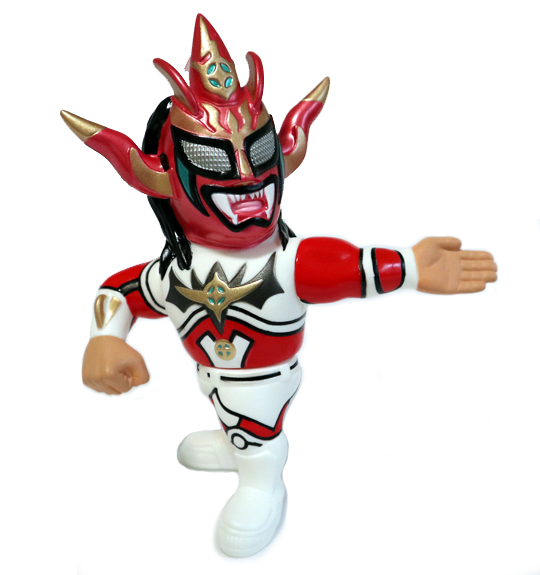
In the realm of Japanese Wrestling figures, there are few Wrestlers who can match the popularity and merchandising appeal of Jushin Thunder Liger.
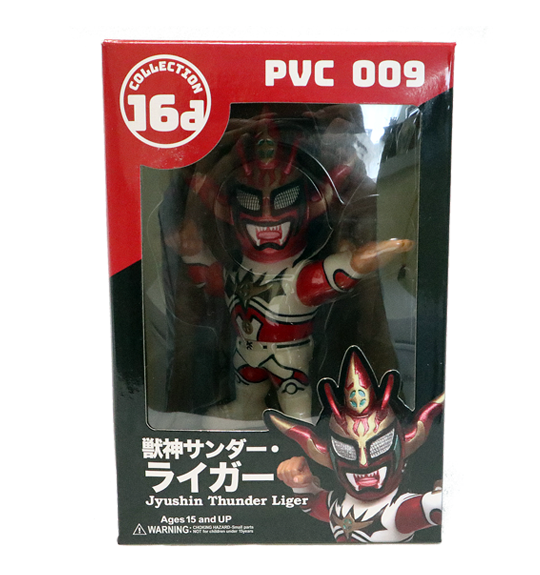
The Beast God returns once again for Blog #217 which covers the 16d Jushin Thunder Liger figure.
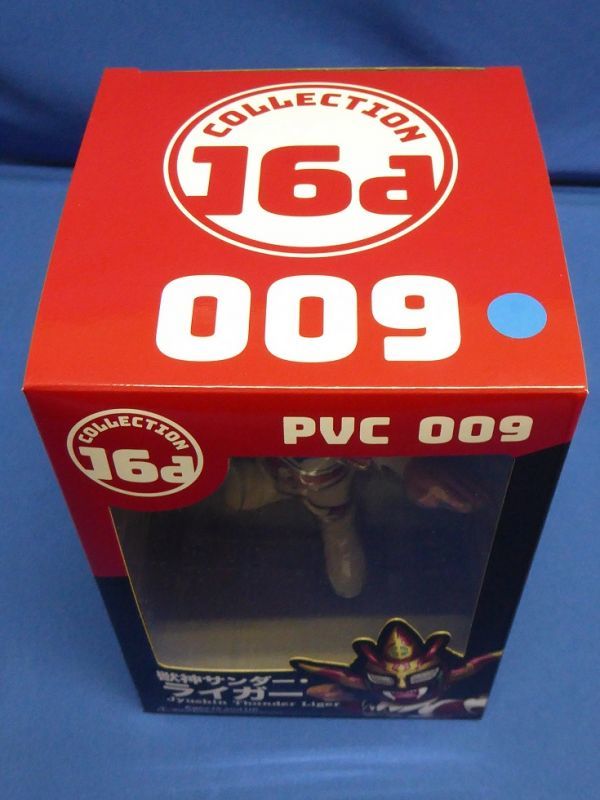
Announced on September 6th 2019 (for pre-order) and officially released on December of the same year, Jushin Thunder Liger is the 9th figure in the 16d collection.
Today, we'll be looking at the standard colour variant.
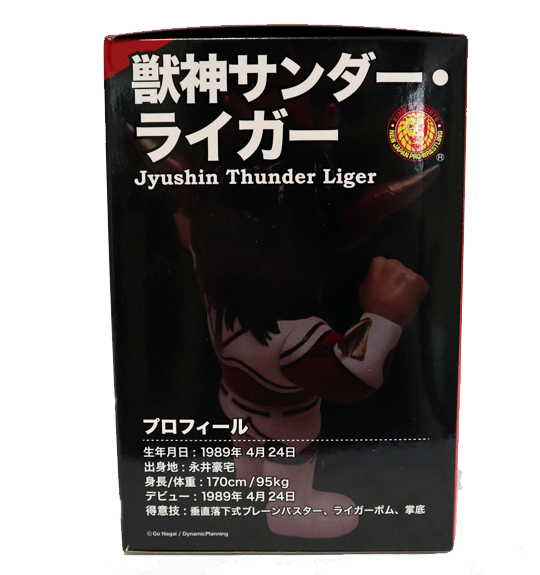
The right side of the packaging reads:
"Jushin Thunder Liger
Profile ................................................................................................................................... Date of Birth: April 24th, 1989 (the birth of the Liger character in Wrestling form) Birthplace: Go Nagai's house (the creator of the Manga/Anime Jushin Liger character) Debut: April 24th, 1989 Signature Moves: Vertical Drop Brainbuster, Liger Bomb, Palm Bottom"
The very bottom of the box also contains the text
"(C) Go Nagai / Dynamic Planning". Dynamic Planning being the company Go Nagai operates in association with the Jushin Liger namesake.
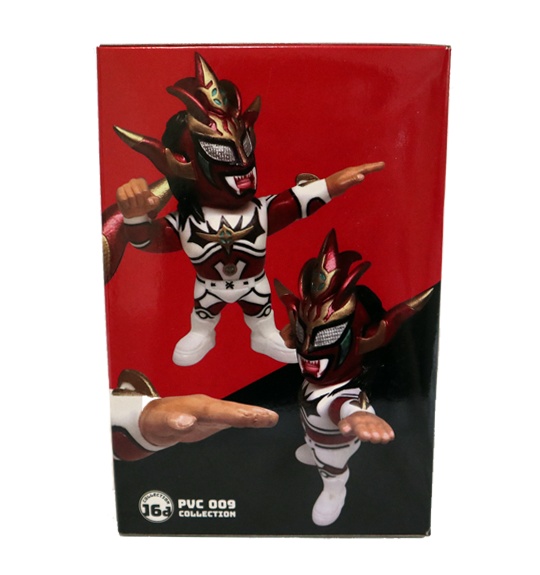
The opposite side of the packaging displays high quality photos of Liger.
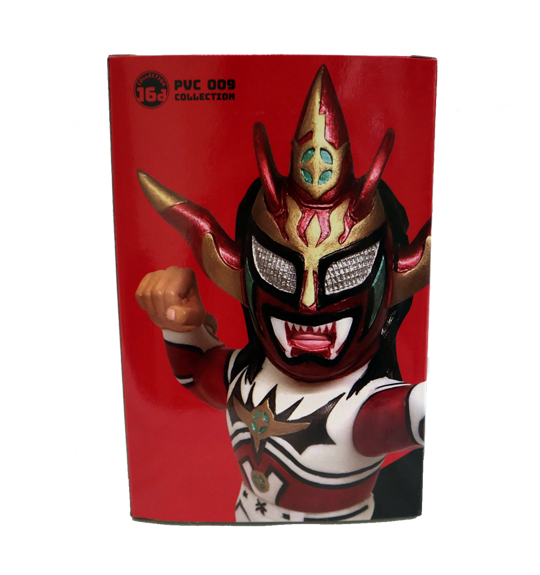
The back of the box has one close-up shot of the Beast God.
The only difference in packaging between the two Liger variants is the coloured sticker at the top of the box. In this case, the standard colour contains a gold sticker.
The second variant (referred to as the "limited edition color") contains a blue sticker at the top of the packaging.
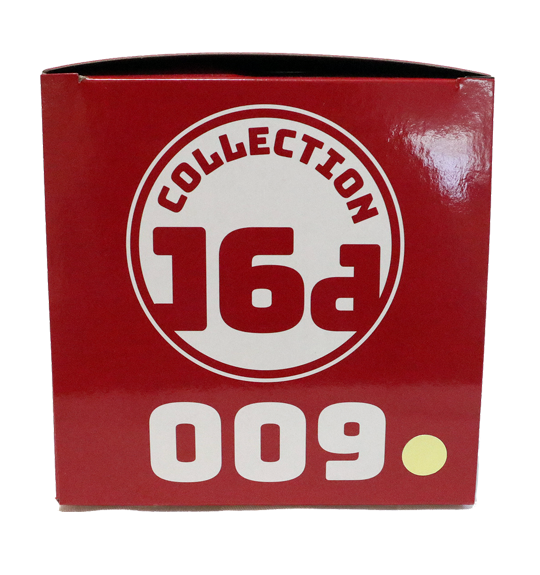
The bottom of the box contains Dynamic Planning, 16d's parent company and mention of the Liger figure being made of soft vinyl (PVC).
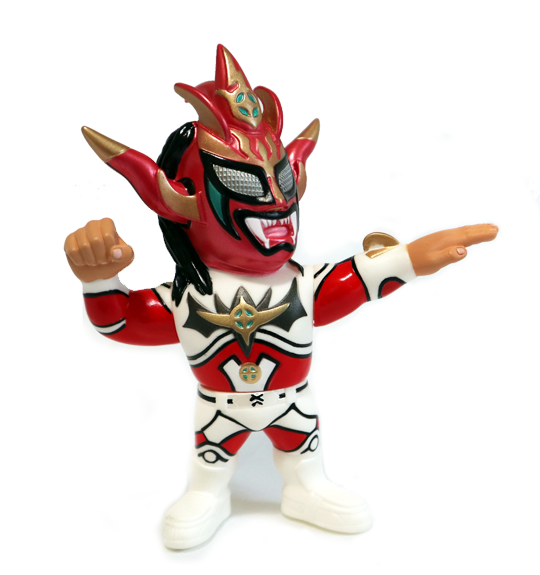
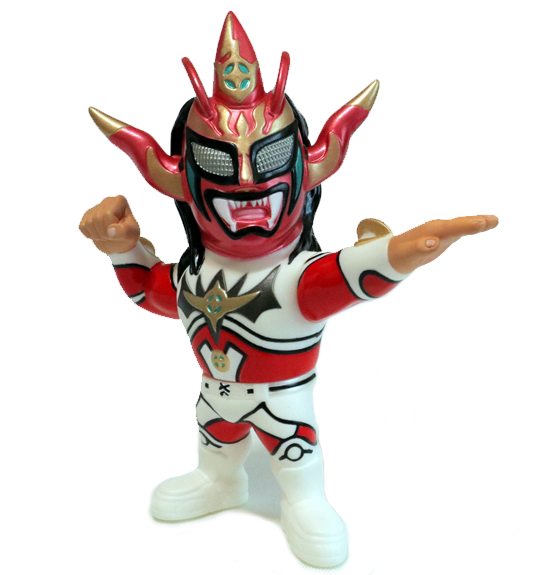
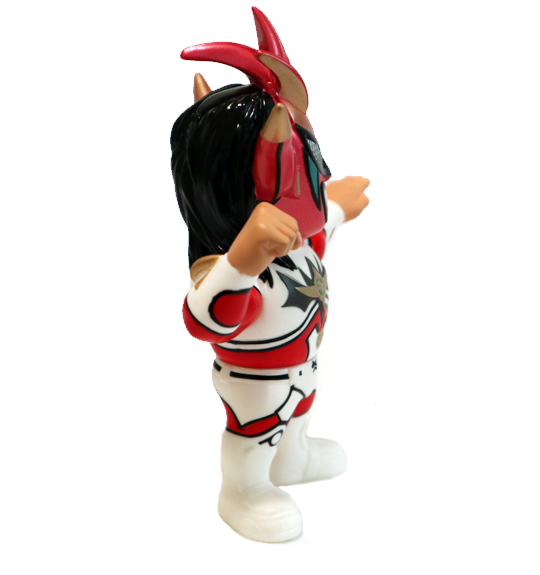
Ever the character, the soft vinyl Jushin Thunder Liger figure is sculpted in a flexing pose.
Jushin Thunder Liger was sculpted by renown figure maker HAO. This would be the third figure sculpted by HAO (the last being released in two variants back in the mid 2000's as part of the HAO Collection).
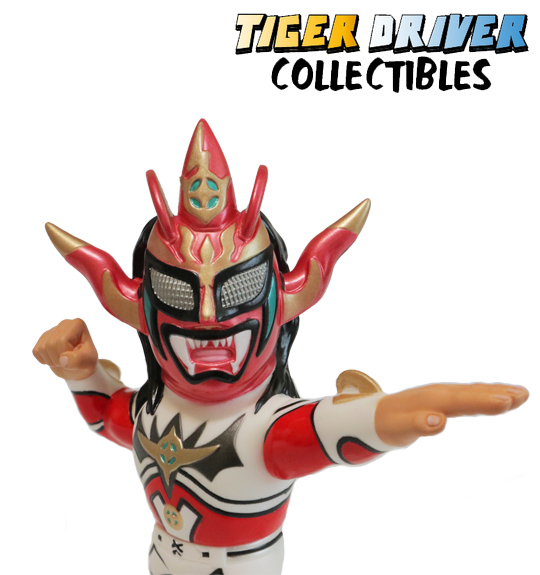
The detailing with Liger's mask is well painted and accurate.
Even the grainy glitter-like effect is present in Liger's chest plate.
Liger stands 13.5cm in height (5.3 inches).
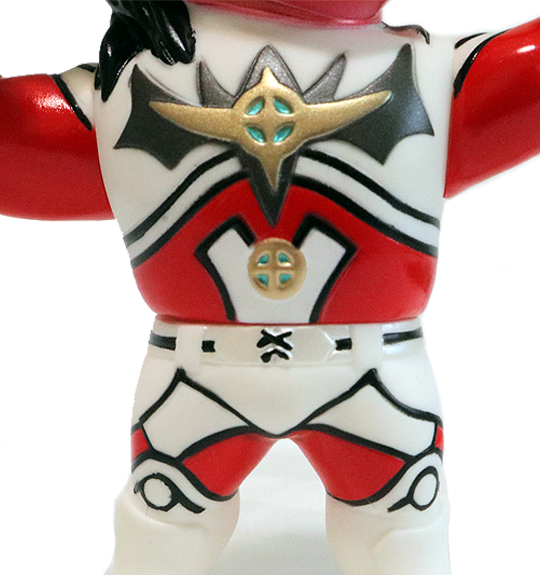
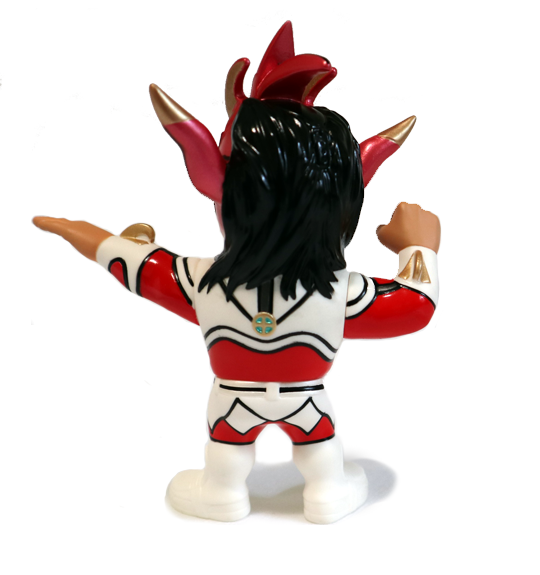
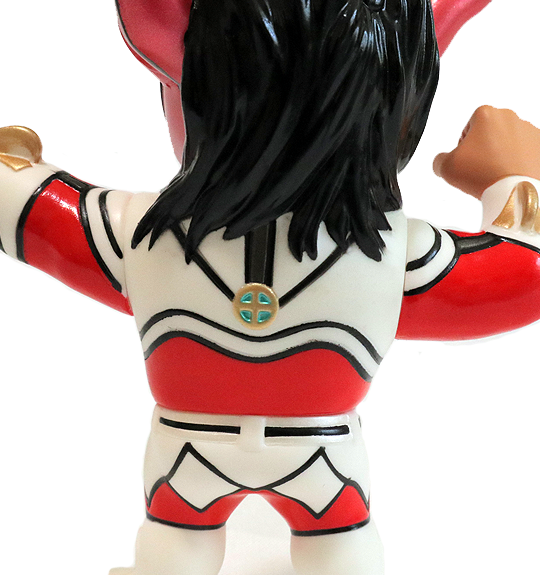
The intricacies of Liger's instantly-recognizable ring attire continues onto the back of the Liger figure.
Go Nagai and Dynamic Planning are once again referenced on the bottom of the 16d Liger figure.
In terms of movable pieces, Jushin Liger contains articulation at the shoulders and waist.
Closing thoughts:
Jushin Thunder Liger combines the colourful attire of a modern day superhero with the allure of a Wrestling legend. A figure, in my humble estimation, that could even appeal to toy collectors who aren't fans of Pro-Wrestling or Go Nagai's work.
While smaller in scale compared to HAO Collection's Jushin Liger figure from about 14 years ago (which are taller at 6 inches in height for comparison's sake), the detail for the 16d figure equivalents I personally feel are superior.
Collectors should keep an eye out for the limited edition 16d Liger variant which features blue highlights on Liger's mask and ring attire. Though, as a scarce piece, the limited edition usually sells for double the price of the standard variant from what I seen in the past.
Less than a month later, Jushin Liger would retire from being an active Pro-Wrestler on January 5th, 2020; ultimately following Genichiro Tenryu, Riki Choshu and Abdullah The Butcher in regards to figures made by 16d around the time of each legend's retirement.
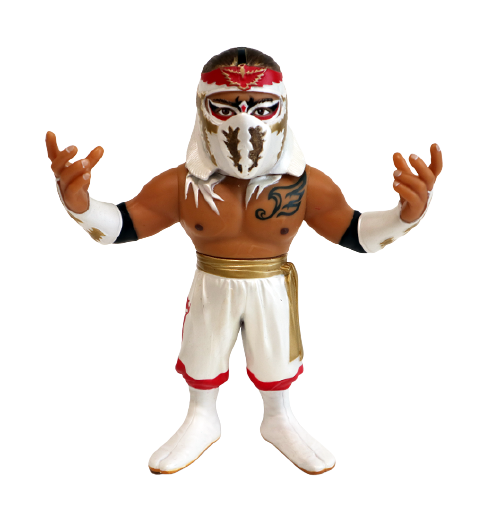
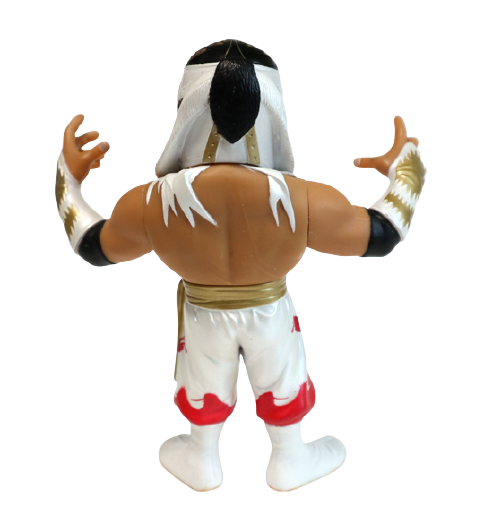
For Blog #205, we'll be rising like a Phoenix with HAO Collection's Hayabusa (White Ver.) figure.
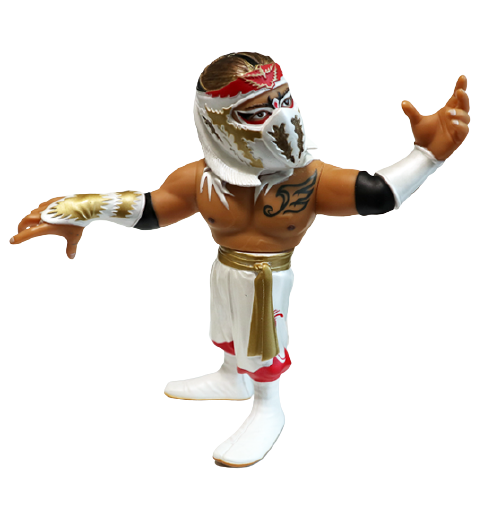
In 2005, Japanese toymaker HAO Arts Office added Hayabusa to their HAO Collection line of soft vinyl figures. Hayabusa came in two variants: the standard red variant and the white version.
The white Hayabusa version is a limited edition with an estimated production run (in typical Japanese figure fashion) of only 500 pieces.
Hayabusa is sculpted in a "spreading wings" taunt.
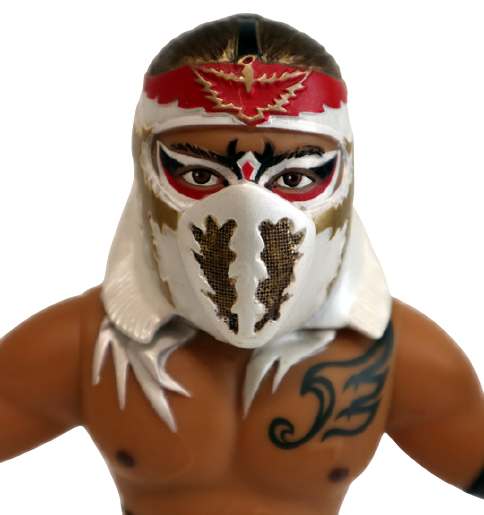
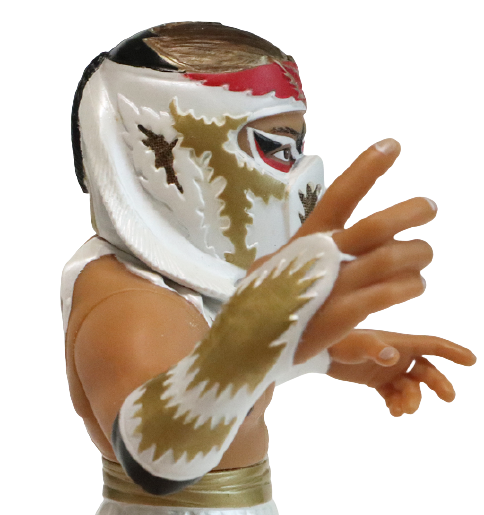
Hayabusa's unique ring mask is a mixture of traditional ninja garb mixed with a phoenix motif.
Even the facepaint Hayabusa around Hayabusa's eyes has been faithfully recreated. The same can also be said for the large wing tattoo on Hayabusa's chest. I believe this is also the first (and only figure example) that contains Hayabusa's chest tattoo.
A nod to Hayabusa's hardcore matches in FMW, the HAO Hayabusa figure's upper torso is covered with gig marks.
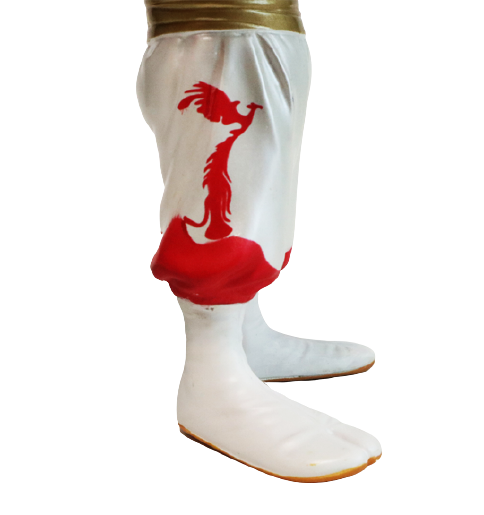
Hayabusa's pant legs contains a red phoenix decal.
Even Hayabusa's Japanese tabi footwear (which are commonly associated with ninja attire) is present.
A similar design is also available in Mogura House's Hayabusa DX figure.
The detail continues with Hayabusa's ponytail, pants decals and even the lace holes in Hayabusa's mask.
The gig marks continue on the back of the Hayabusa figure.
I can't think of too many Japanese figures outside of Hayabusa and Keiji Mutoh/The Great Muta that contain body scars.
Gold foil paint accents adorn Hayabusa's mask, arm guards and waistband.
The arm guards themselves contain a feather-like design going back to Hayabusa's Phoenix motif.
HAO were even kind enough to include the ear holes of Hayabusa's mask with a mesh-like design for the darker paint.
Hayabusa stands about 6 inches tall in height; making him one of the largest Hayabusa figures available (next to the 12 inch INSPIRE Hayabusa figure and FMW Hayabusa plush figures, of course).
Articulation, the Hayabusa HAO figure contains moving joints at the waist, arms and neck.
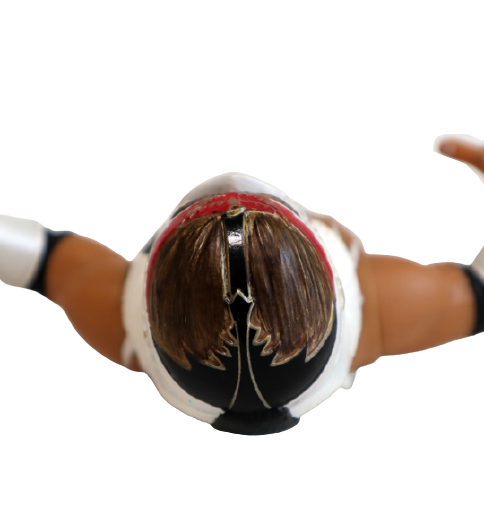
The top of Hayabusa's mask with slicked back hair and gold accents.
Closing thoughts:
From his complex mask design, era-accurate ring attire, chest tattoo and gnarly body scars, the HAO Collection Hayabusa figure is easily the most detailed collectible you can find of the hardcore legend. At about 6 inches tall, it's also one of the largest Hayabusa figures you can buy today.
Out of the original HAO Collection figure line, Hayabusa was the the only hardcore Wrestler to be included; a star of the original FMW who stands alone in the HAO Collection.
Maybe one day 16d and HAO will get around to making figures of other Japanese hardcore legends such as Atsushi Onita, Tarzan Goto, Megumi Kudo, Mitsuhiro Matsunaga or even Mr. Pogo to name a few.
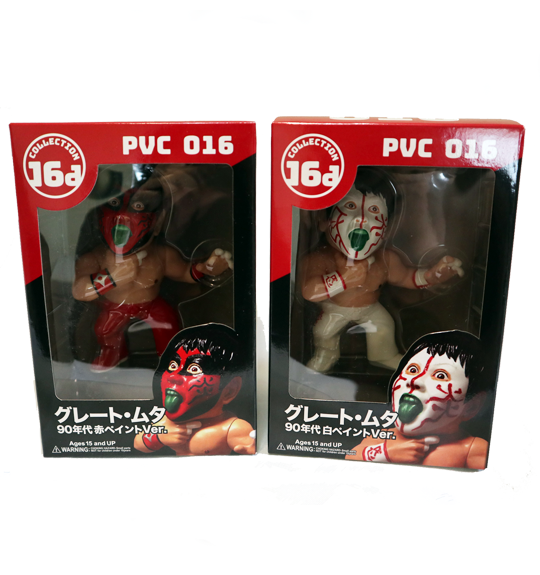
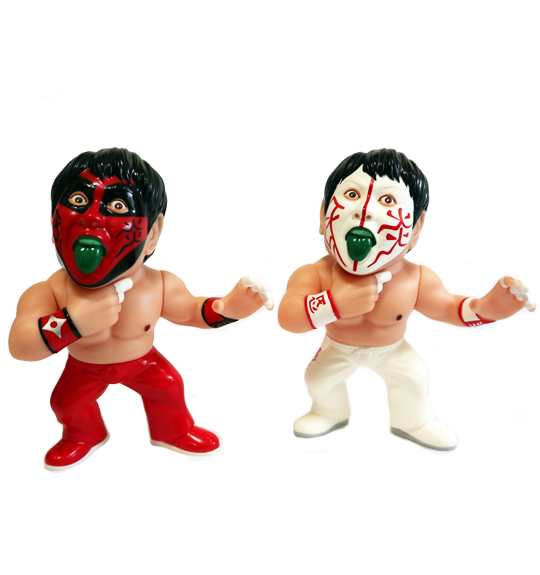
Today, we're returning back to a familiar destination with 16d's soft vinyl series. Blog #203 applies the Muta Lock on the 16d Collection Great Muta figures. On October 13th, 2020 Japanese toymaker 16 Directions announced the upcoming release of The Great Muta as part of the company's soft vinyl figure collection.
A video of the 16d Great Muta figure prototype that was uploaded on October 19th, 2020.
Great Muta would be officially released three months later in January of 2021; becoming the 16th Wrestler overall to be featured in the 16d Collection.
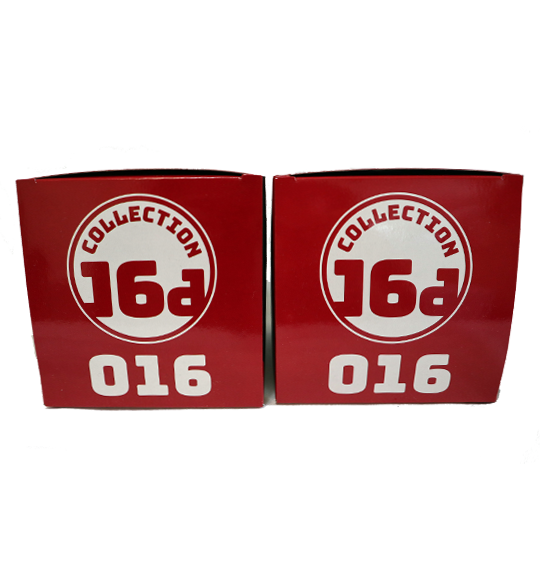
I like how both figure variants come in different packages while mentioning the specific figure variant in Japanese.
The front of the packaging for both variants translates to: グレート・ムタ (Great Muta 90年代赤ペイント Ver. 90's Red Paint Ver.)
グレート・ムタ (Great Muta 90年代白ペイント Ver. 90's White Paint Ver.)
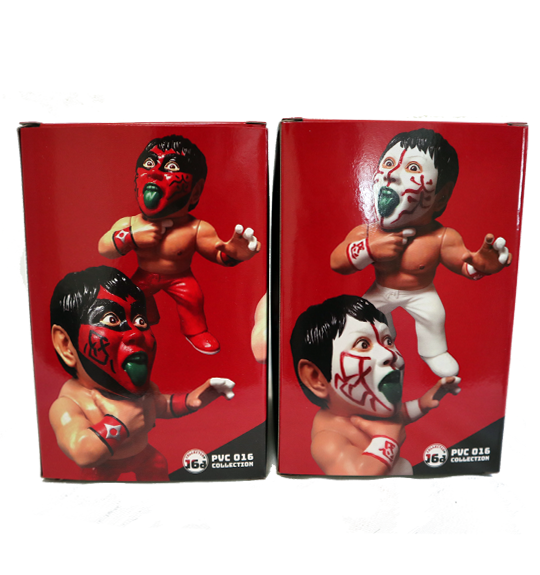
The left side of each variant's respective packaging. Again featuring different shots of both figures.
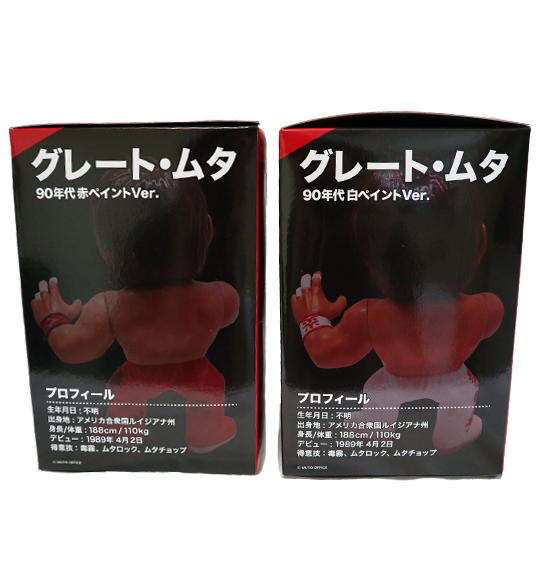
The right side of the packaging contains Muta's stats and a brief dossier.
The text reads:
"PROFILE ................................. Date of birth: Unknown Birthplace: Louisiana, United States Height/Weight: 188cm (6'2") / 110kg (242lbs) Debut: April 2nd, 1989 (As The Great Muta) Signature moves: Poison Mist, Muta Lock, Muta Chop"
In actuality, Great Muta's "birthplace" and debut happened a month prior on March 12th 1989 against Cougar Jay in Atlanta, Georgia.
The backs of both packages.
I'm pretty sure the sculpt for the 16d Great Muta figures were heavily inspired by this photo.
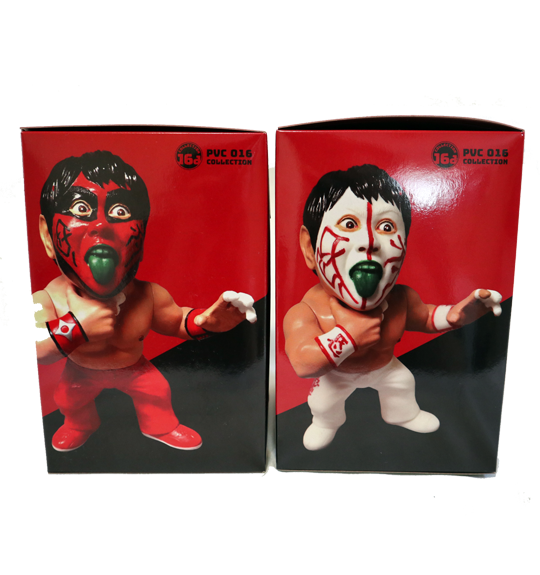
The tops of both packages. Unlike the Abdullah The Butcher or Jushin Thunder Liger 16d figures, there are no coloured stickers placed on the top of the boxes to help differentiate figure variants.
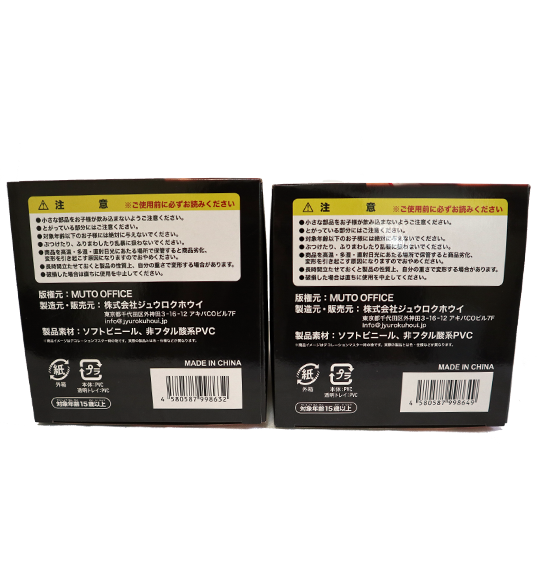
The bottom of both boxes contains the standard safety precautions, 16d's parent company, the material of the vinyl figures and a copyright licensing from Keiji Mutoh's new merchandising company and online store MUTO OFFICE.
Now, on to the figures themselves:
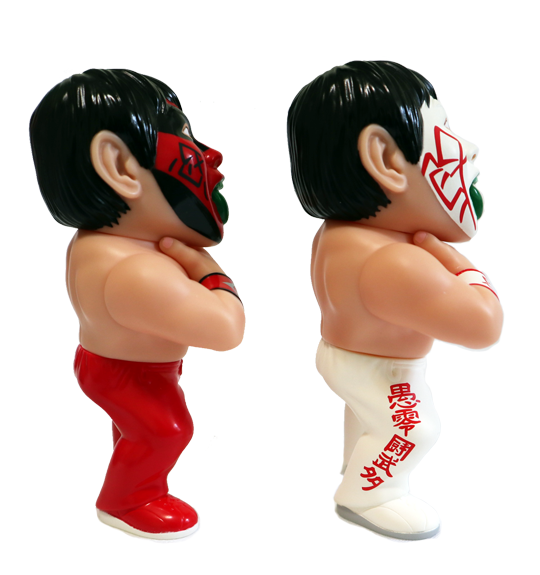
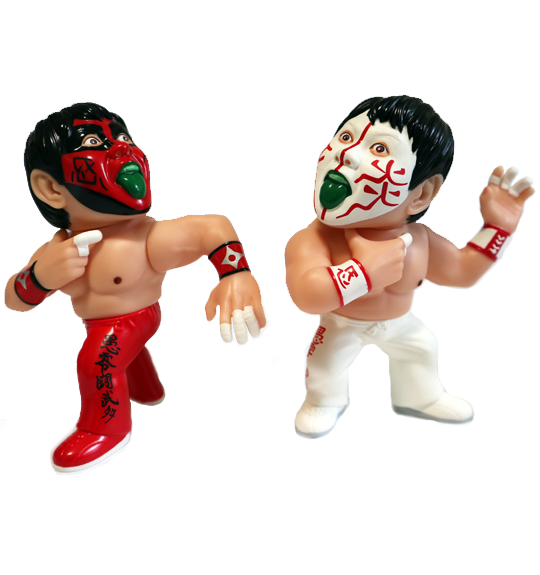
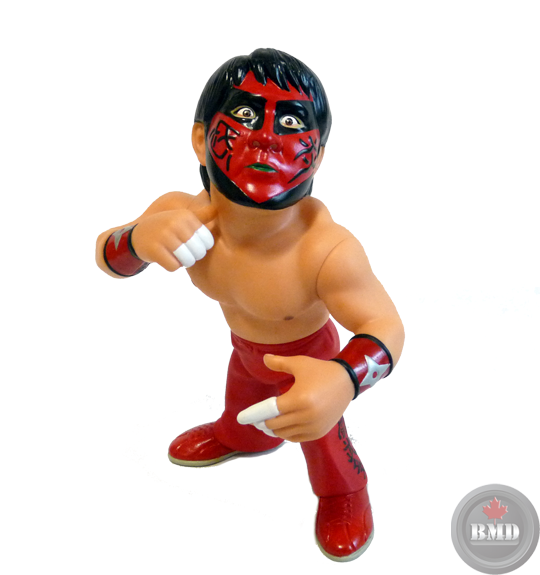
The Great Muta 16d figures are based on The Great Muta's early 1990's New Japan Pro-Wrestling appearance and were created by renown figure sculptor HAO (Keiichi Hao).
The white paint variant is listed as an online exclusive.
I especially love Muta's sculpted pose here. With the green teeth and tongue, Muta is ready to spray his patented Poison Mist!
The white paint variant contains the following text on the figure's right pant leg:
"愚 Gu 零 Rei 闘 Tou 武 Mu 多 Ta
Put all the Japanese kanji together and you have "Great Muta".
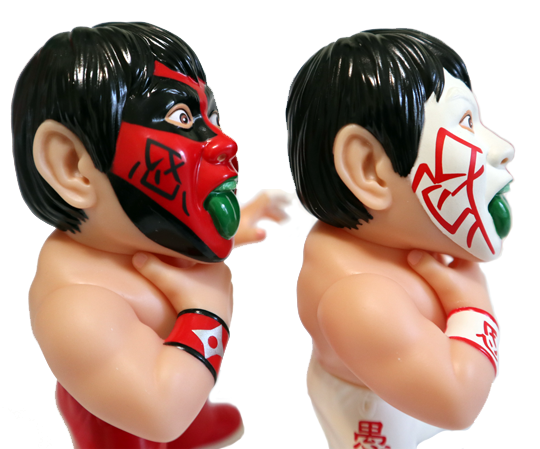
The Kanji on Muta's right cheek reads "忍" (Shinobi); a reference to Muta's Ninja characteristics.
The white paint variant has a noticeably larger version of the Kanji scrawled across Muta's cheek.
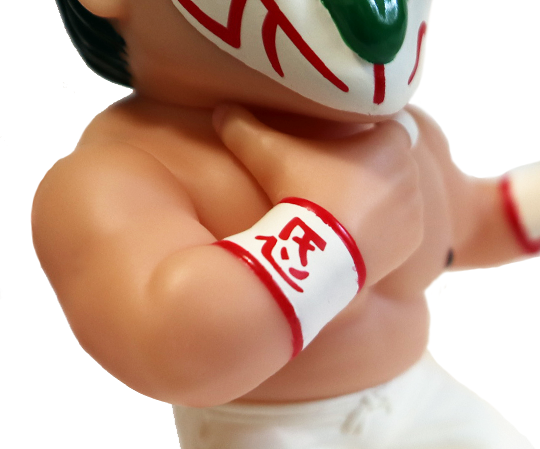
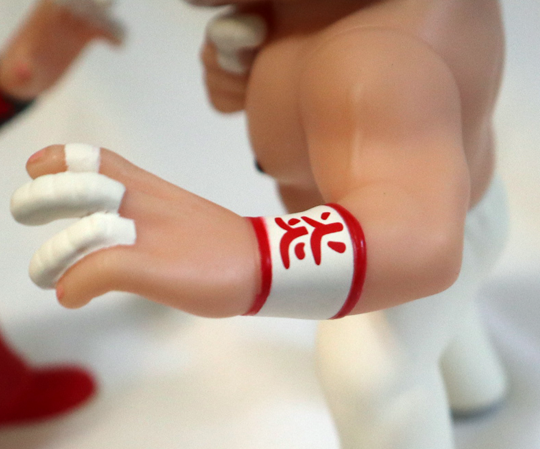
While the red paint version has a ninja star on both wristbands, the white paint variant has the kanji "Shinobi" repeated once again on Muta's right wristband.
The Kanji on the left side of Muta's cheek reads "炎" (fire, flames).
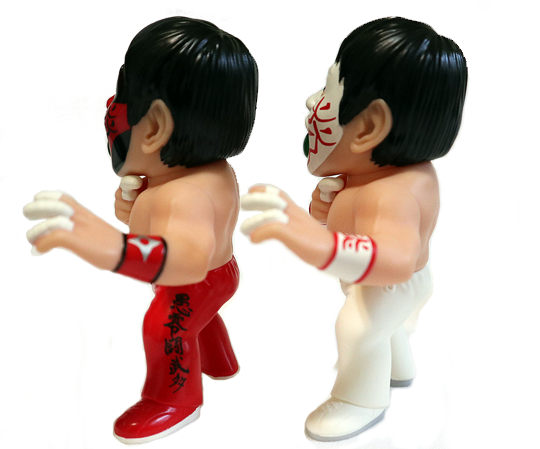
Along the red variant's pants, the same text (Great Muta) has been written in black.
Both variants contain finger tape. The white variant also contains the kanji "Fire/Flames" on the figure's right wristband (parallel to the same kanji on the white version's face).
If you look closely, you may notice Muta's bicep scar, too!
The Great Muta 16d figures stand approximately 12.5 cm (4.9 inches) tall.
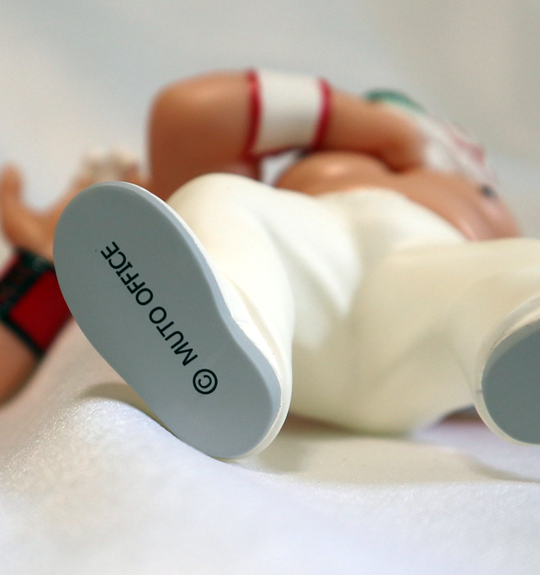
The sole of both figures contains Keiji Mutoh's MUTO OFFICE stamp.
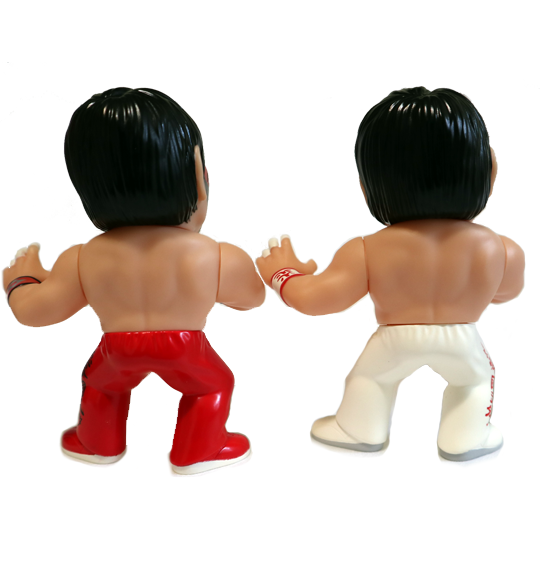
Both figure variants are articulated at the left arm, neck and waist. The right arm (while still slightly poseable) is pretty much fixed in place.
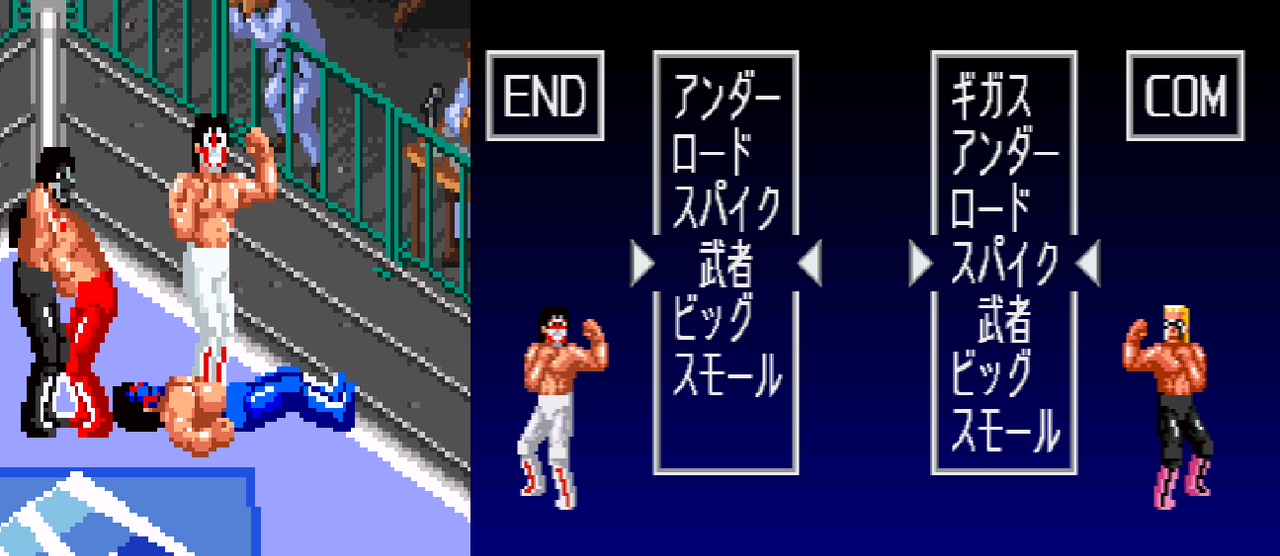
In Super Fire Pro Wrestling III Final Bout/Easy Type (1993) on the Super Famicom, Blade Musha (Great Muta)'s white and red attire is featured as the 2nd player costume. The same costume is also available as Muta's fourth attire in the follow up title Super Fire Pro Wrestling Special (1994).
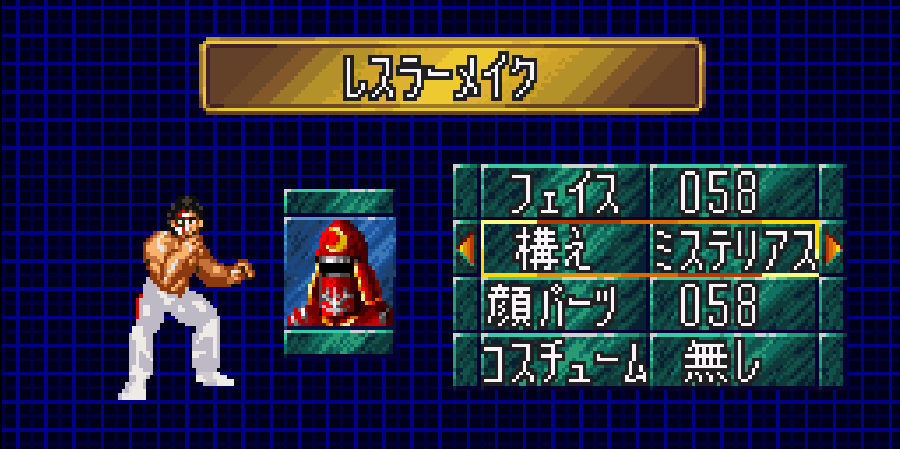
Using the Edit mode, it is also possible to recreate Muta's white and red attire in Super Fire Pro Wrestling X/X Premium (1996).
Other than a few unofficial video game appearances, this is the first time the Great Muta received a figure in his white and red ring attire colours.
The last time Great Muta's classic facepaint look was sculpted by HAO was in the mid 2000's as part of HAO's black card series.
Scale-wise, the HAO Great Muta figure stands noticeably taller at about 6 to 7 inches in height when compared to it's 16d counterparts.
The HAO version (while removing articulation in Muta's neck) offers two extra points of articulation from the wrists.
Closing thoughts:
When I first began collecting Wrestling figures from Japan, the two brands that I started with were Character Product's Mini Big Heads and Toukon Shop's action figures. Then I purchased my first HAO figure (The Great Muta classic facepaint black card series ver.) and was blown away.
Whereas most Japanese action figures stand about 5 inches tall, I wasn't prepared for the HAO figures which regularly stand between 6 to 8 inches in height. The attention to detail, figures available and resealable packaging instantly converted me into a fan of HAO's work.
While the 16d figures aren't as tall as the original HAO ones from nearly 20 years ago, they still contain the same charm and attitude of their taller counterparts. The same can be said for the 16d Great Muta figures. A cooler pose, better facial expression and two variants to collect. What's not to like?
When I reviewed the Genichiro Tenryu retirement figure back in 2017, I praised the overall design of HAO's work and welcomed the idea of more figures being produced in this style. Ten days later, Tetsuya Naito was announced as the first official figure in the 16d lineup and the 16d Collection line has continued to gain momentum ever since.